
Cracked Concrete Fence Post — Why It Splits & What It Means
A hairline or open crack runs down the face of a concrete post, sometimes with rust staining or a flaking corner.
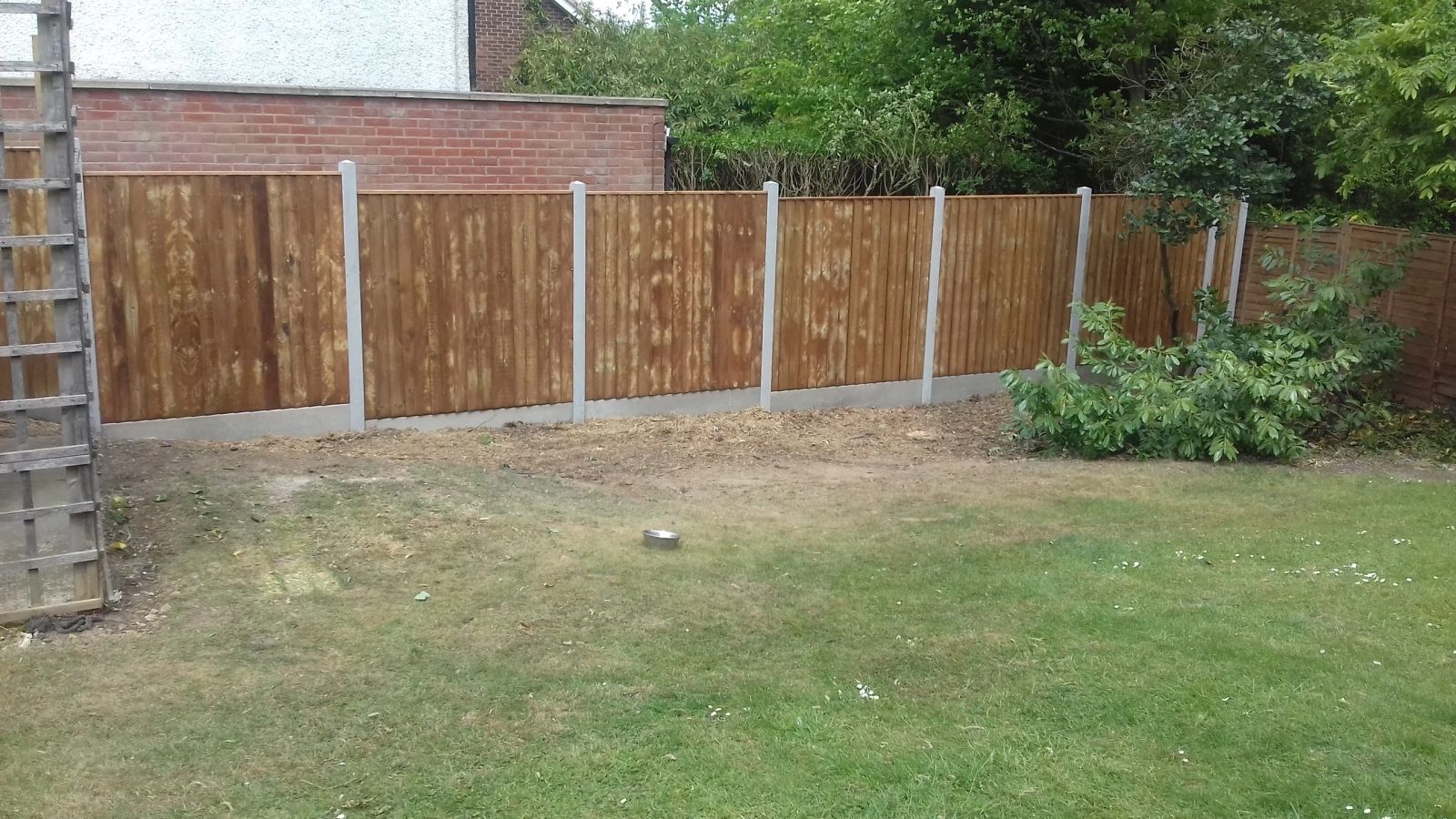
Concrete posts fail differently from timber ones. They do not rot, so people assume they last forever, but the steel reinforcement inside them can corrode — and when it does it expands, splitting the concrete from the inside out.
That is why a rust-stained crack matters more than a wide-looking surface crack. One is the post coming apart; the other is often cosmetic.
Causes we typically find
Reinforcement corrosion
Water reaches the internal steel through a crack or a shallow cover of concrete. The rusting steel expands and levers the post apart, leaving a straight vertical crack with brown staining.
Frost spalling at ground level
The wettest few inches of the post freeze and thaw repeatedly, flaking the surface off corner by corner.
Shear at the panel slot
Slotted posts are thinnest where the slot is cut. A hard sideways load in a gale can crack a post right across at that weak line.
Impact damage
A reversing vehicle, a mower or a falling branch chips a corner, exposing the aggregate and letting water in.
Movement in the footing
If the concrete footing has been undermined by clay shrinkage or a soakaway, the post takes bending loads it was never meant to carry.
Check it yourself
- 1
Look for brown or orange staining in the crack — that is corroding steel, and it means the post is deteriorating rather than just marked.
- 2
Run a key or screwdriver along the crack. If material crumbles away easily and you can see steel, the post is past repair.
- 3
Push the top of the post firmly. Any rocking or a crack that visibly opens and closes means it is no longer structurally sound.
- 4
Check whether the crack passes through the panel slot; posts cracked at the slot usually fail in the next high wind.
- 5
Compare it with the other posts in the run — if several are spalling at ground level, they were probably all cast in the same batch and will follow each other.
Fix options
Monitor and leave
A shallow surface crack, no rust, post rigid
We mark it and note it, rather than charging you to replace something still doing its job. Worth a look again after a hard winter.
Replace the single post
Rust staining or a slot crack, rest of the run sound
The panels either side are eased out, the old post and its footing broken out and a new post concreted in. The awkward part is always getting the footing out without damaging the neighbouring bays.
Change the post system
Repeated failures along one boundary
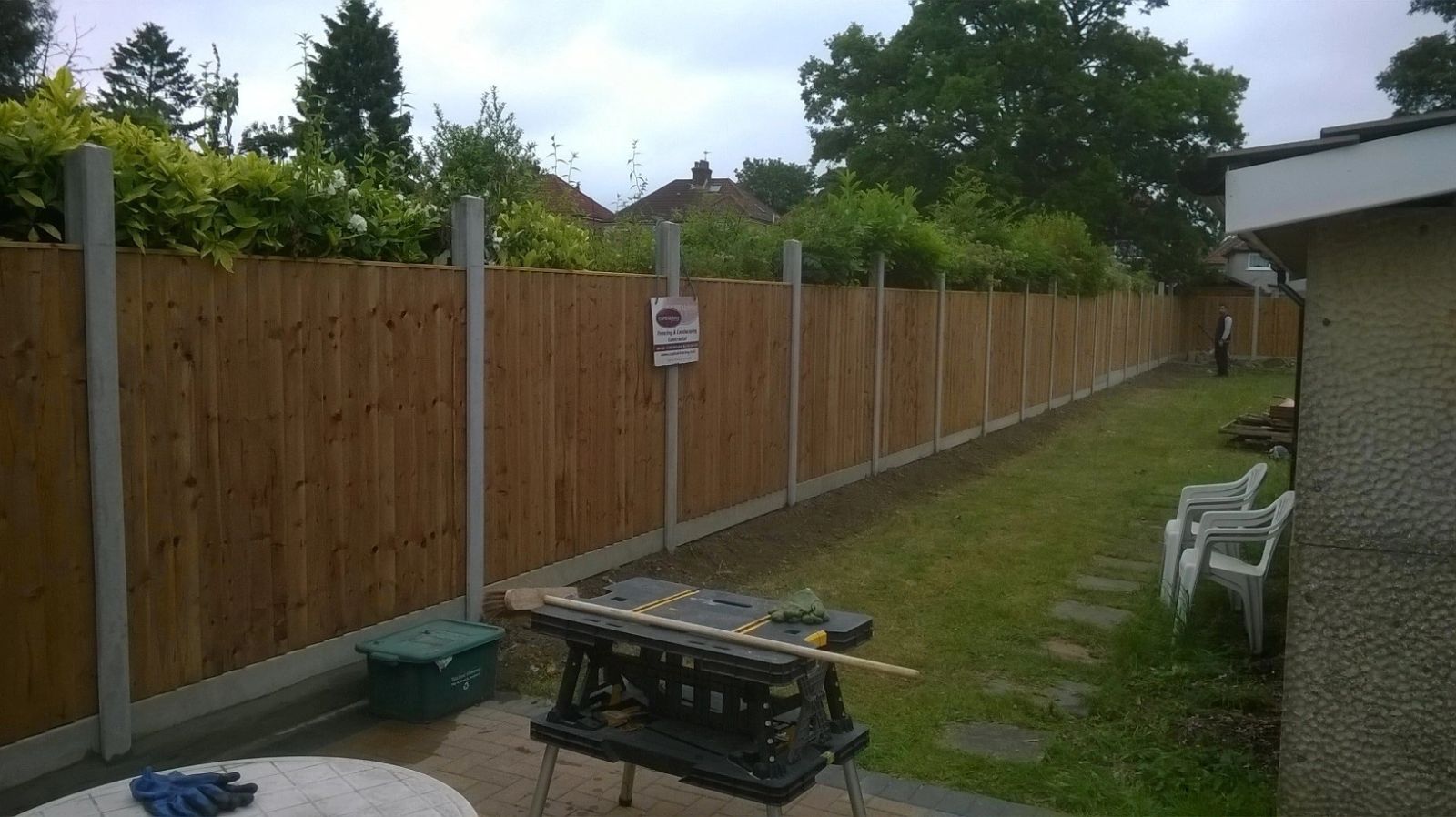
Where concrete posts keep splitting we often move that run to timber posts in metpost-free concrete footings, or to heavier-section posts, depending on exposure and what the neighbour's side looks like.
Rebuild the run
Multiple posts spalling and panels tired
Replacing posts one at a time on a run that is failing generally costs more over two or three years than doing the run once, and we will tell you when that is the case.
Prevention
- Keep soil, bark and borders off the base of the post so it can dry between spells of rain
- Repoint or fill impact chips early, before water reaches the reinforcement
- Use heavier-section posts on exposed and wind-funnelled boundaries rather than the lightest available
- Avoid stacking materials or leaning ladders against slotted posts, which loads them across their weakest line
Frequently asked
Can a cracked concrete post be repaired rather than replaced?
A cosmetic chip can be filled. Once the internal steel is rusting, no filler stops it — the corrosion continues under the repair, so the post needs replacing.
How urgent is a crack through the panel slot?
Treat it as urgent. That is the thinnest part of the post, and slot cracks are the ones we most often get called out to after a gale.
Do I have to replace the panels as well?
Not usually. Panels can normally be eased out and re-used, provided they are sound and not brittle with age.
Is concrete actually better than timber for posts?
It lasts longer in wet ground and resists rot, but it is heavier, harder to alter and less forgiving when it does fail. Which one is right depends on the boundary, not on one being universally better.
Whose responsibility is the post if it is on a shared boundary?
That depends on your deeds and the boundary marks, and we are not qualified to rule on it. What we can do is tell you exactly what has failed so you can have an informed conversation with your neighbour.