
Acoustic Fencing
Acoustic Fencing for Road, Rail and School Noise
An acoustic fence works on mass and sealed joints, not the panel style — a heavy, gap-free screen close to the noise source does more than any 'acoustic' label on its own.
Ask about acoustic fencing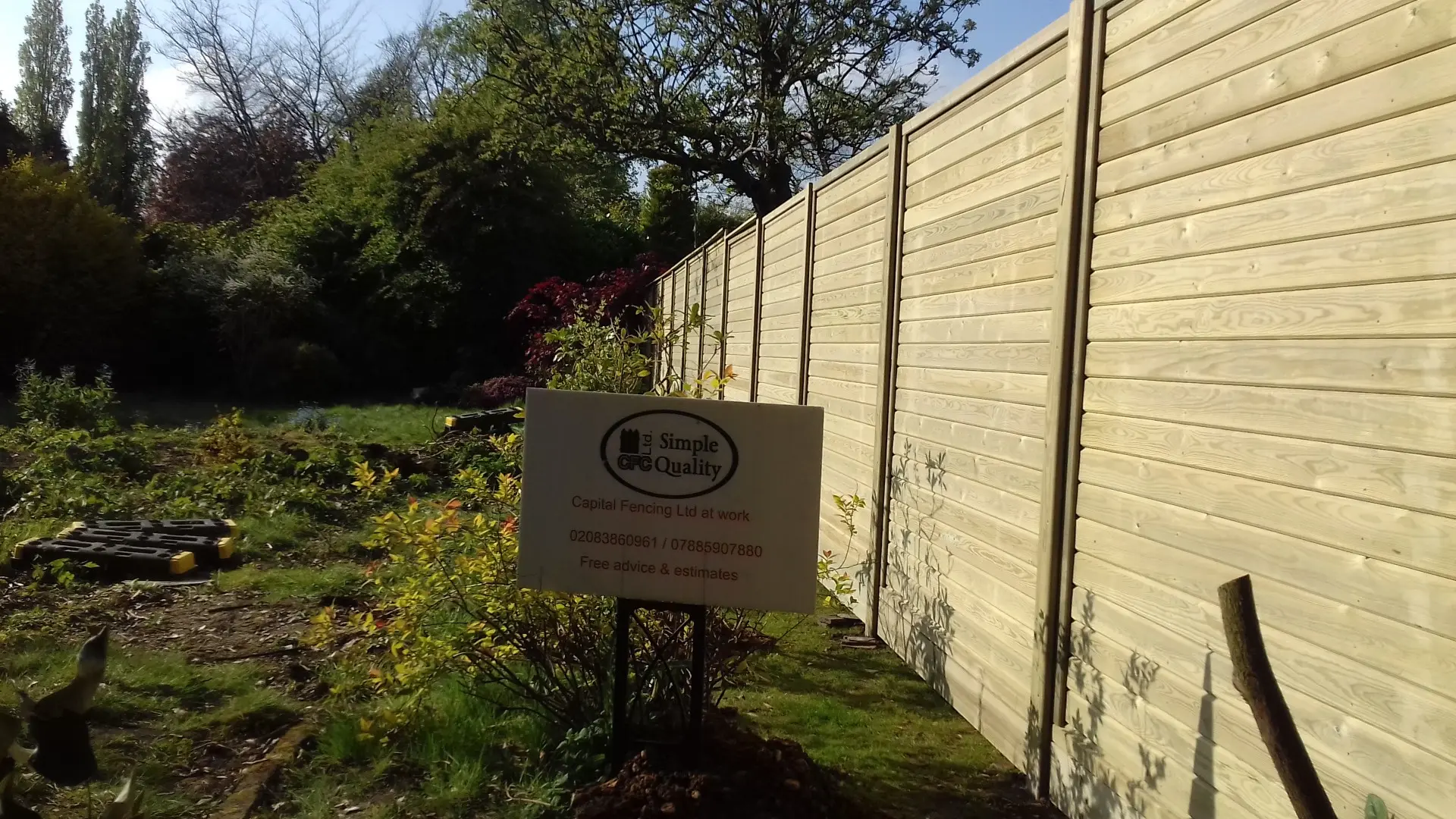
Most enquiries we get for acoustic fencing come from gardens backing onto a main road, a railway cutting or a school playground, where the existing boundary is either too low, too light, or too full of gaps to do anything useful against noise.
We're upfront that a garden fence is not a purpose-built noise barrier engineered to a tested rating — it's a domestic boundary built using the same mass-and-seal principles that noise barriers use, scaled to what's actually achievable on a residential post line.
The mass-and-seal principle
Sound is reduced by mass — a heavier, denser panel reflects and absorbs more than a light one — and by continuity, meaning gaps, low sections or a fence that stops short of the actual noise path undo most of the benefit. A tall, heavy, fully-sealed run close to the source will always outperform a taller but gappy or lightweight one.
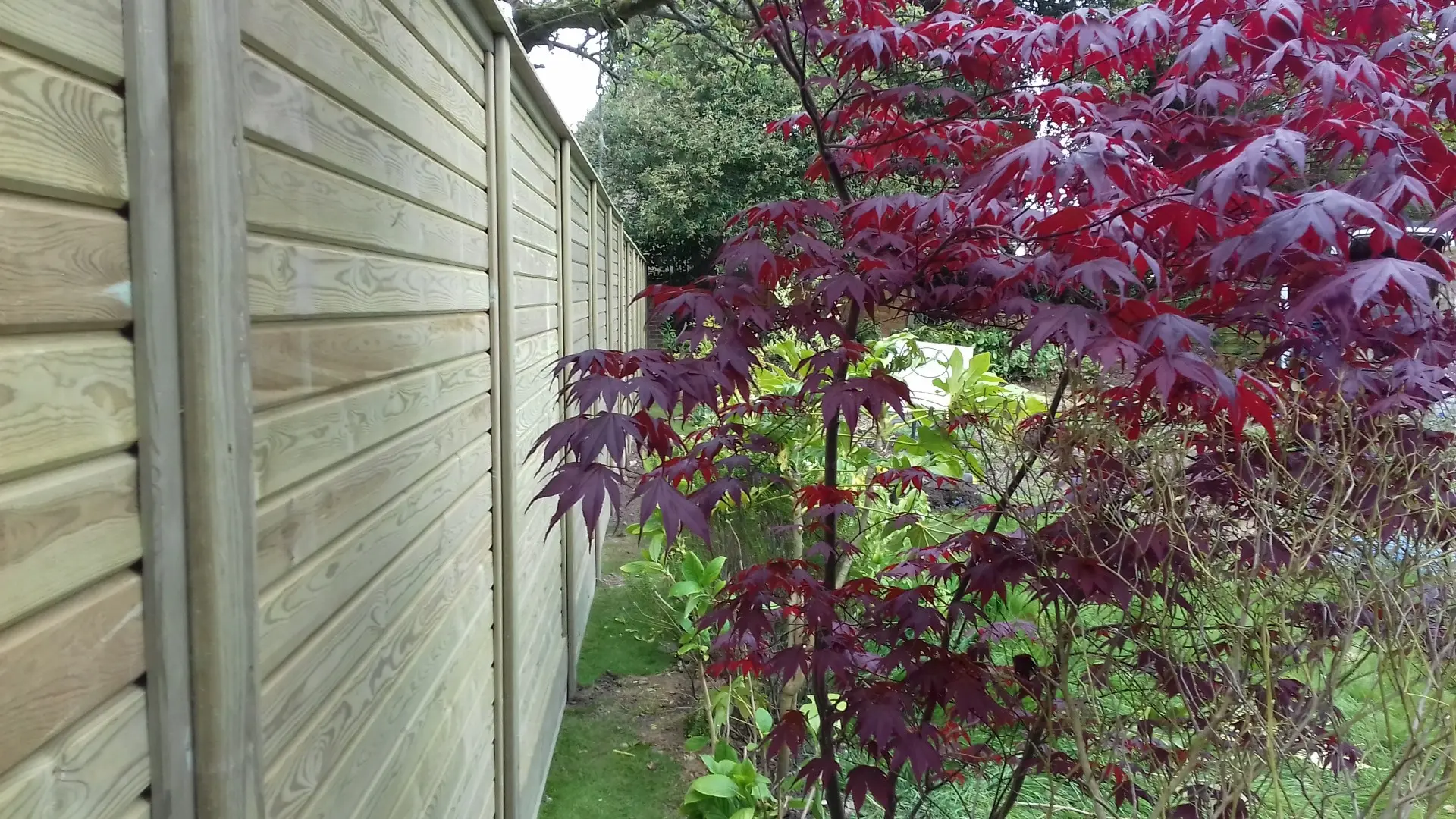
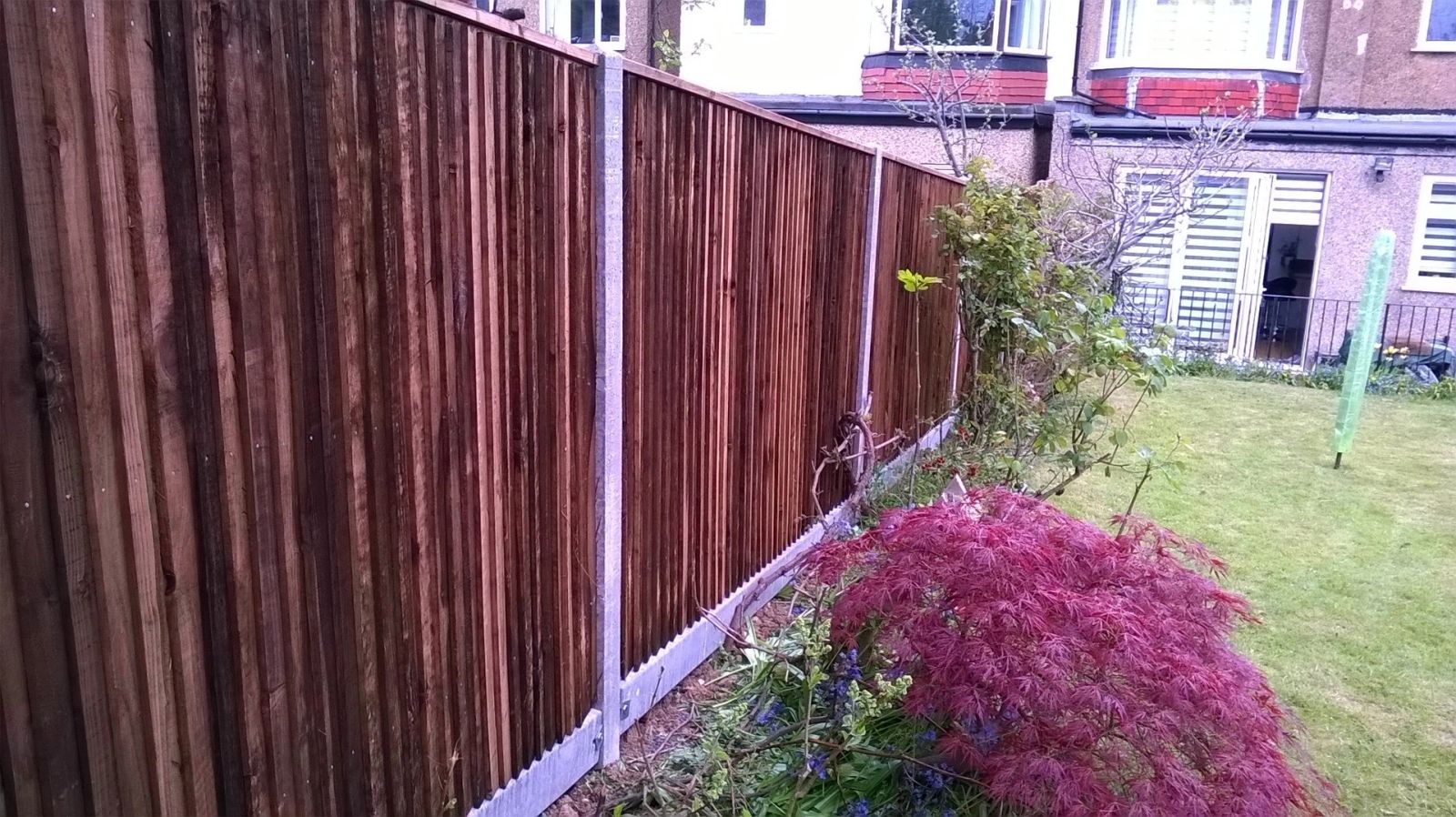
This is why a standard lap-panel fence, which is built from thin overlapping boards with gaps at every joint, does very little acoustically even at height, while a solid, jointed timber screen with no light showing through does noticeably more even at a shorter run.
Tongue-and-groove with mineral wool infill
Our standard acoustic spec is a double-skin tongue-and-groove or shiplap panel with a mineral-wool infill layer between the two timber faces, built onto a solid concrete-post frame with no gaps at posts, base or cap. The mineral wool absorbs rather than simply reflects, and the airtight T&G jointing stops sound leaking through panel joins the way a lap-panel fence does.
Height still matters — the fence needs to break the direct line of sight to the noise source, not just sit at a standard garden height — so we measure from the actual source (road surface, rail line or playground level) rather than assuming a stock height will do the job.
- Double-skin tongue-and-groove or shiplap boarding, no visible gaps
- Mineral-wool infill between the timber skins
- Solid gravel boards and sealed post junctions — a gap at the base undoes the wall above it
- Height set from the actual noise source, not a standard garden fence height
When it's needed
The clearest cases are gardens directly abutting a busy A-road or dual carriageway, houses backing onto a railway cutting where trains pass at speed, and rear gardens next to a school playground where playtime noise is the specific complaint rather than constant traffic drone.
It's less useful where the noise comes from above the fence line — flight paths, for instance — or where the boundary is set well back from the source with buildings or other obstructions already breaking the sound path; in those cases a fence upgrade may add little for the cost.
Method
We build the frame first on concrete posts set to the same depth as a heavy-duty closeboard run, then fix the inner skin, pack the mineral wool infill while it's accessible, and close with the outer skin so the infill is fully enclosed and protected from weather. Joints between bays are lapped rather than butted so there's no continuous straight-through gap.
Honest limits of what a fence can achieve
We don't quote a specific decibel reduction as a guarantee, because the real-world result depends on the noise source, the garden's shape, reflective surfaces nearby and where you're standing relative to the fence — factors we can't control or promise in writing. Where a customer has measured a result themselves after installation, we note that as their own observation, not our claim.
A fence also does nothing for noise that reaches the house directly through windows or over the roofline — for a genuinely noisy boundary, glazing and internal soundproofing usually need to be part of the conversation too, and we'll say so rather than oversell the fence on its own.
What we don't do
We don't install engineered, tested acoustic barrier systems to a specified dB rating — that's specialist acoustic-engineering work, usually for highways authorities, and needs an acoustic consultant's design. We also won't promise a specific noise reduction figure for a domestic garden fence, because it isn't something we can measure or guarantee in advance.
Acoustic fencing by town
Noise sources and boundary rules vary street by street — pick your town for the specifics.
Frequently asked
How much quieter will my garden actually be?
We won't promise a figure — the result depends on the source, the garden layout and where you're standing. What we can promise is the mass-and-seal build method that gives the best realistic result for a domestic fence.
Is acoustic fencing just a taller fence?
No — height matters, but a taller fence full of gaps does less than a shorter, fully sealed, double-skin one. Continuity of the seal matters as much as height.
Can you add mineral wool to my existing fence?
Only if the existing frame and posts are sound enough to take the extra weight of a second skin — we'll assess that on site rather than assume.
Will this help with railway noise specifically?
It helps with the audible pass-by noise at ground level if the fence breaks the sightline to the track; it won't do much for vibration, which travels through the ground rather than the air.
Do I need planning permission for a taller acoustic fence?
The same height rules apply as any boundary — we check whether your specific site needs permission before we design the height.
Is this the same as what motorway noise barriers use?
The principle is the same — mass and sealed joints — but motorway barriers are engineered and tested to a specified rating; a domestic acoustic fence uses the same principle at residential scale, not the same certified product.
Get My Free Quote — 24h Response
No callout fee · Free site visit · Friendly local team covering London & Hertfordshire.
Pay by debit or credit card, bank transfer or cash once the work and price are agreed. No deposit taken online.