
Fencing, Gate & Decking Guides
Straight answers on cost, materials, planning rules and maintenance — written from what we actually find on site.
Costs & pricing
Reading a Fencing Quote: What Sets the Price?
A fencing quote is really four separate line items dressed up as one number — the boarding itself, the post system holding it up, how far a crew has to carry materials, and what happens to the old fence.
What Does a Bespoke Wooden or Metal Gate Cost?
Gate pricing is dominated by the opening size, the timber or steel section, and the ironmongery — not by the design drawing.
What Does Garden Decking Cost?
Around half of a good decking price is under the boards. Substructure, levelling and ventilation are what decide whether a deck lasts five years or twenty.
Fencing Cost Per Metre: A Straight Comparison
Per-metre pricing lets you compare fence types on equal terms, but the figure only means anything once you know what's inside it.
Fence Panel Cost by Type: A Panel-Level Breakdown
Panel price is only half the story: what you pay per panel changes sharply depending on whether fitting, posts and gravel boards are included.
Metal and Security Fencing: What It Costs and Why
Metal fencing costs more up front than timber, but on a 25 year view it's frequently the cheaper option once repainting and replacement are factored in.
Why Fencing Quotes for the Same Garden Vary So Much
A wide spread between quotes usually reflects different specifications, not different honesty, and the trick is finding out which spec you're actually buying.
How Much Should I Expect to Pay for a New Fence?
Most homeowners want one number. In practice a new fence is priced from four things: the style of boarding, the posts underneath it, how easily materials reach the boundary, and what happens to the fence that is already there.
What Am I Actually Paying For, Per Metre of Fence?
A per metre rate is a bundle. Unbundling it tells you whether two quotes are genuinely comparable or whether one has simply moved costs somewhere you cannot see.
Fence Panel Prices: What You Get for the Money
Panel prices spread widely because panels are built very differently. Thickness of board, number of rails and how the frame is fixed together tell you far more about value than the ticket price does.
Garden Gate Prices, From Simple Side Gates Upwards
Gate prices are driven by three things people rarely ask about: the width of the opening, the weight the hinges have to carry, and whether the frame it hangs on is sound.
Decking Costs: Softwood, Hardwood or Composite?
Boards are the visible cost and rarely the decisive one. What sits under the deck, and how level the ground was to begin with, often matters more to the final figure than which board you pick.
Comparisons
Closeboard vs Panel Fencing: Which Should You Choose?
Closeboard is stronger, longer-lived and follows uneven ground; panels are cheaper, faster and easier to replace one at a time.
Composite vs Timber Fencing: An Honest Comparison
Composite buys you fifteen-plus years without staining at roughly double the up-front cost; timber is cheaper, warmer-looking and easier to repair.
Composite vs Hardwood Decking
Hardwood gives you natural grain and repairability; composite gives you grip, stability and no annual oiling. Shade and maintenance appetite decide it.
Concrete vs Timber Fence Posts
Posts decide how long a fence lasts. Concrete outlives timber comfortably; timber looks better and takes fixings anywhere.
Closeboard Fencing, Explained Properly
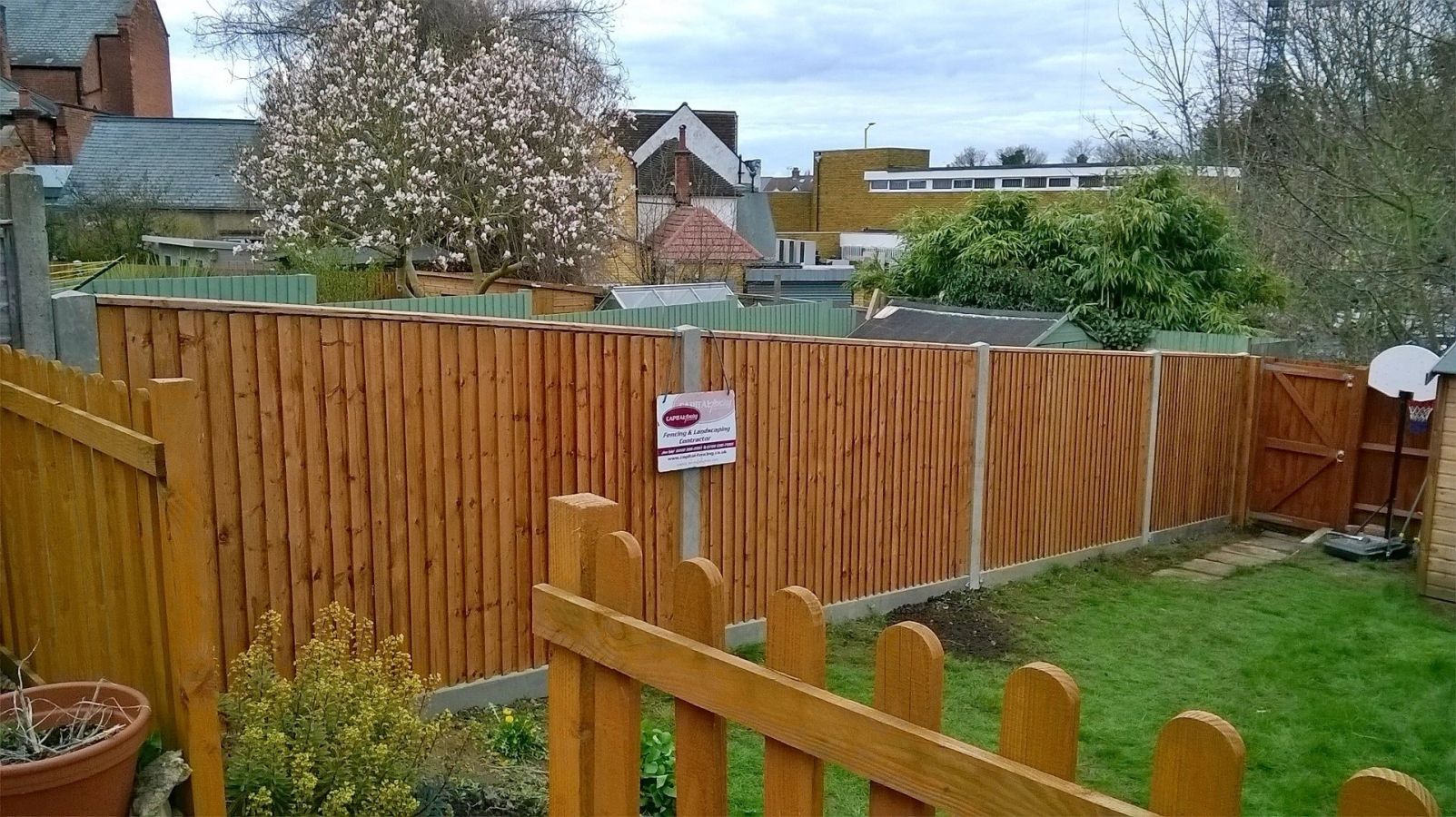
Closeboard is a built fence rather than a bought one. Feather edge boards nailed over arris rails between posts, with a gravel board at the base, is the specification we fit more than any other.
Closeboard or Panel Fencing: Which Suits Your Garden?
Panels win on speed and up front cost. Closeboard wins on strength, on sloping or awkward ground, and on being repairable board by board rather than panel by panel.
Composite Fencing: The Honest Pros and Cons
Composite fencing removes the maintenance and most of the guesswork, and asks for a considerably larger cheque at the start. Whether it is worth it depends on how long you intend to stay.
Concrete or Wooden Posts: The Choice That Decides Everything
Fences almost always fail at the post, not the panel. That single fact is why post choice matters more than boarding style to how long your fence stands.
Lap, Closeboard, Slatted or Hit and Miss?
Four styles, four different jobs. Privacy, wind, appearance and budget rarely point at the same panel, so it is worth knowing what each one is actually good at.
Buying a Wooden Gate: What to Ask Before You Order
A wooden gate is a piece of joinery that has to stay square while being pushed, pulled and rained on. Timber, bracing and ironmongery decide whether it does.
Metal or Timber? Choosing Between Two Very Different Fences
These are not really competitors. Timber is a privacy fence, metal is a boundary and security fence, and the right question is which job you need doing.
How it's done
How a Fence Installation Actually Works, Step by Step
Survey, written quote, agreed date, strip-out, set posts, build, clear away — with the two decisions you should make before we arrive.
When Is the Best Time of Year to Replace a Fence?
Late winter and early spring are the practical sweet spot — before growth, before storm season repeats, and before summer lead times stretch.
Wind-Resistant Fencing for Exposed Gardens
A solid fence is a sail. On exposed plots, permeable designs plus heavier posts at tighter centres solve what stronger panels can't.
Gate Hardware: Hinges, Latches and Getting It Right
Gates fail at the ironmongery and the post long before the joinery gives up. Rate the hinges for the leaf, and set the post for the swing.
Decking Substructure: Joists, Spacing and Ventilation
Boards are the visible half. Joist centres, airflow and drainage decide whether a deck stays flat and dry.
What Should a Fencing Quote Actually Include?
A proper fencing quote is a checklist in disguise, and most of the items on it are easy to confirm with one phone call before you sign anything.
Choosing Fencing for an Exposed or Windy Site
An exposed site needs a different set of decisions from a sheltered garden, starting with how much wind the fence is designed to let through rather than block.
Comparing Fencing Quotes Without Getting Caught Out
Comparing quotes is not about finding the lowest figure, it is about making three quotes describe the same job so the figures mean something.
Fencing a Sloping Garden Without It Looking Wrong
There are two proper ways to fence a slope, stepped and raked, and one improper way, which is forcing standard panels onto a gradient and leaving triangular gaps underneath.
How Long Will My Fence Take to Fit?
A straightforward garden boundary is usually a day or two on site. What stretches it is what comes out of the ground, not what goes into it.
Getting Your Garden Ready for the Fencers
An hour of preparation the evening before saves real time on site, and time on site is what you are paying for.
Why a Metal Gate Drops and Starts Catching
A metal gate that has started dragging or catching has almost always moved at one of three points: the hinge pin, the pier or post carrying it, or the frame of the gate itself. Which one it is decides whether this is an adjustment or a rebuild.
Gate Latch Not Lining Up? Here Is Why
A latch that no longer meets its keeper is rarely a faulty latch. In most cases the gate or its post has moved a few millimetres and the hardware is simply reporting it.
Electric Gate Will Not Close: Common Causes
An automated gate that opens but refuses to close is usually obeying its safety system rather than failing. The commonest single cause is a photocell beam that is dirty, misaligned or blocked.
Gate Keypad or Intercom Stopped Working
An access device that has gone dead is either not receiving power, not sending its signal, or sending a signal the gate cannot act on because the gate itself is at fault.
One Wobbly Post in an Otherwise Sound Fence
A single loose post in a fence that is otherwise firm has one of three causes: the concrete has broken away from the post, the post has failed inside the concrete, or there was never enough concrete there to begin with.
Feather Edge Boards Coming Loose or Springing Off
Loose feather edge boards are usually a fixing story: nails placed where the timber splits, plain steel fixings corroding, or boards that were fitted too wet and shrank away from their nails.
Rules & permissions
Fence Height Rules and Planning Permission
2m at the rear, 1m where the boundary adjoins a highway — with important exceptions for conservation areas, listed buildings and covenants.
Who Owns the Fence? Boundary Responsibility Explained
Your title plan and its T-marks decide responsibility — not the common myth about the left-hand boundary.
Fencing and Gates in Conservation Areas
In conservation areas the material and detail matter as much as the height — traditional close-board, painted picket and railings are the safe ground.
Fence Blown Down in a Storm: What to Do First
The first hour after a fence comes down is about safety, not blame, and the liability question usually takes longer to answer than people expect.
Which Side of the Fence Is Mine? How to Find Out
There is no rule that the left hand fence is yours. The only reliable answer sits in your title deeds and the plan attached to them, and sometimes even they are silent.
How Tall Can I Build My Fence?
Two metres is the general figure most gardens work to, one metre applies where a boundary adjoins a highway, and both can be overridden by conditions attached to your particular property.
Do I Need Planning Permission for a New Fence?
Most replacement fences at the same height need no permission at all. Permission enters the picture with extra height, front boundaries next to a road, and properties where permitted development has been removed.
Can My Neighbour Fix Things to My Fence?
If the fence is yours, the general position is that nobody has a right to fix anything to it without your agreement. In practice, whether it causes damage matters more than the principle.
Sharing the Cost of a Boundary Fence With Next Door
Sharing a fence cost is a negotiation, not an entitlement. Where the deeds are silent, a clear proposal and a written agreement do more than any argument about principle.
The Storm Has Taken the Fence Down. Now What?
First make it safe, then photograph everything, then work out ownership before spending. Insurance for fences is far less generous than most people expect.
Care & longevity
How Long Should a Garden Fence Last?
Panels on timber posts: often under a decade. Closeboard on concrete posts with gravel boards: comfortably double that.
Fence Maintenance and Treatment: A Simple Schedule
Two short jobs a year — a spring check and a treatment coat every second year — add several years to a timber fence.
Should You Repair or Replace Your Fence?
Judge the posts, not the panels. Sound posts mean repair; posts snapping at ground level mean the clock has run out.
How Many Years Should a Fence Actually Give You?
Lifespan is set less by the boarding than by three things: the posts, whether timber ever sits in wet soil, and whether anyone treats it.
Repair It or Replace It? A Straight Answer
The deciding factor is nearly always the posts. Sound posts make almost anything else a repair, failing posts across a run make repairs a way of spending twice.
Looking After a New Fence in Its First Few Years
A new fence needs very little, but the little it needs has timing attached. Treating too early on freshly treated timber is as unhelpful as leaving it too long.
Rust on Railings and Metal Gates: What Matters
Surface rust and structural rust look similar from a few feet away and mean completely different things. The test is not how much rust you can see, it is whether sound metal is left underneath it.
Rust Stains Down a Fence: Where They Come From
Orange staining on a fence is nearly always iron reaching wet timber: sprinkler or bore water, corroding nails, or a metal fitting above the mark. The stain is a symptom, and the source is usually directly above where it starts.
Composite Fence Boards Bowing or Rippling
Composite boards move with temperature, and bowing is almost always a sign that movement was not allowed for: gaps too tight, spans too long, or fixings that pinned the board instead of letting it slide.
Creaking Deck Boards: What the Noise Means
A creak is friction. Either a board is rubbing against a fixing that has loosened, or two boards are rubbing each other, or the frame beneath is moving. Only the third is a structural concern.
Fixing a specific problem?
Diagnosis and repair options for the faults we're called out to most.
- Leaning fence
- Rotten fence post
- Storm damage
- Broken panel
- Rotten gravel boards
- Waterlogged ground
- Tree roots
- Gap under fence
- Green algae
- Warped panels
- Fence too low
- Sagging gate
- Gate won't close
- Rotten gate
- Slippery decking
- Rotten decking
- Bouncy decking
- Cracked concrete fence post
Get My Free Quote — 24h Response
No callout fee · Free site visit · Friendly local team covering London & Hertfordshire.
Pay by debit or credit card, bank transfer or cash once the work and price are agreed. No deposit taken online.