
Fencing on Waterlogged or Clay Ground
Post holes fill with water while digging; posts fail early; ground stays soft most of the winter.
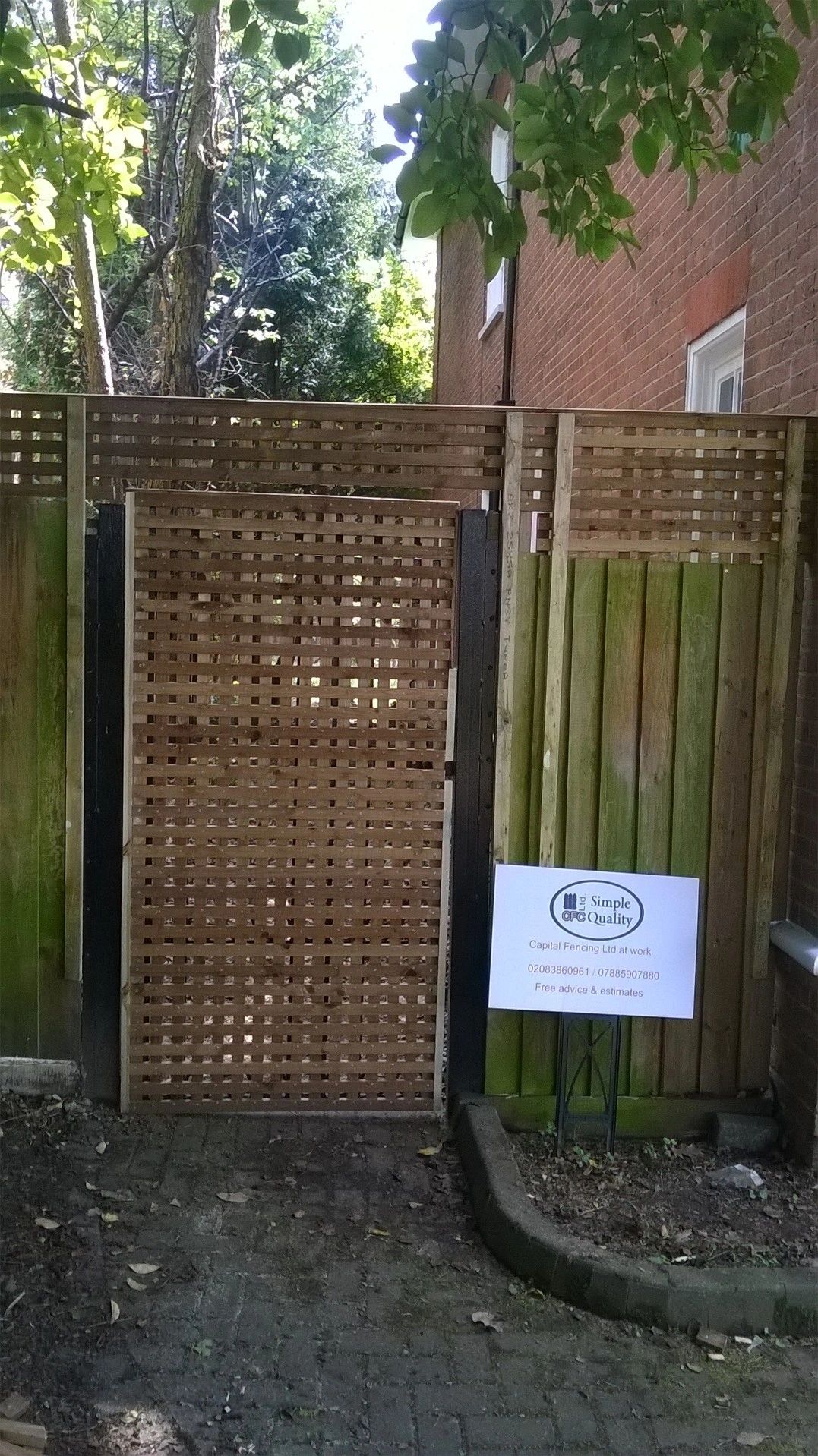
Some plots simply hold water — clay, low-lying river-side gardens and made ground are all common in the areas we cover. A standard post detail will not last on them, and the fix is technique rather than expensive materials.
Causes we typically find
High water table
The hole is below the water line for months at a time, so the post never dries.
Clay 'bathtub' effect
Concrete poured into clay creates a sealed bowl that traps water around the post.
Compacted or made ground
Water cannot percolate away, so it collects wherever a hole has been dug.
Check it yourself
- 1
Dig a test hole 600mm deep and see how quickly it fills or holds water.
- 2
Note whether previous posts failed at the same depth along the run.
- 3
Check where surface water runs during heavy rain — the fence line is often the low point.
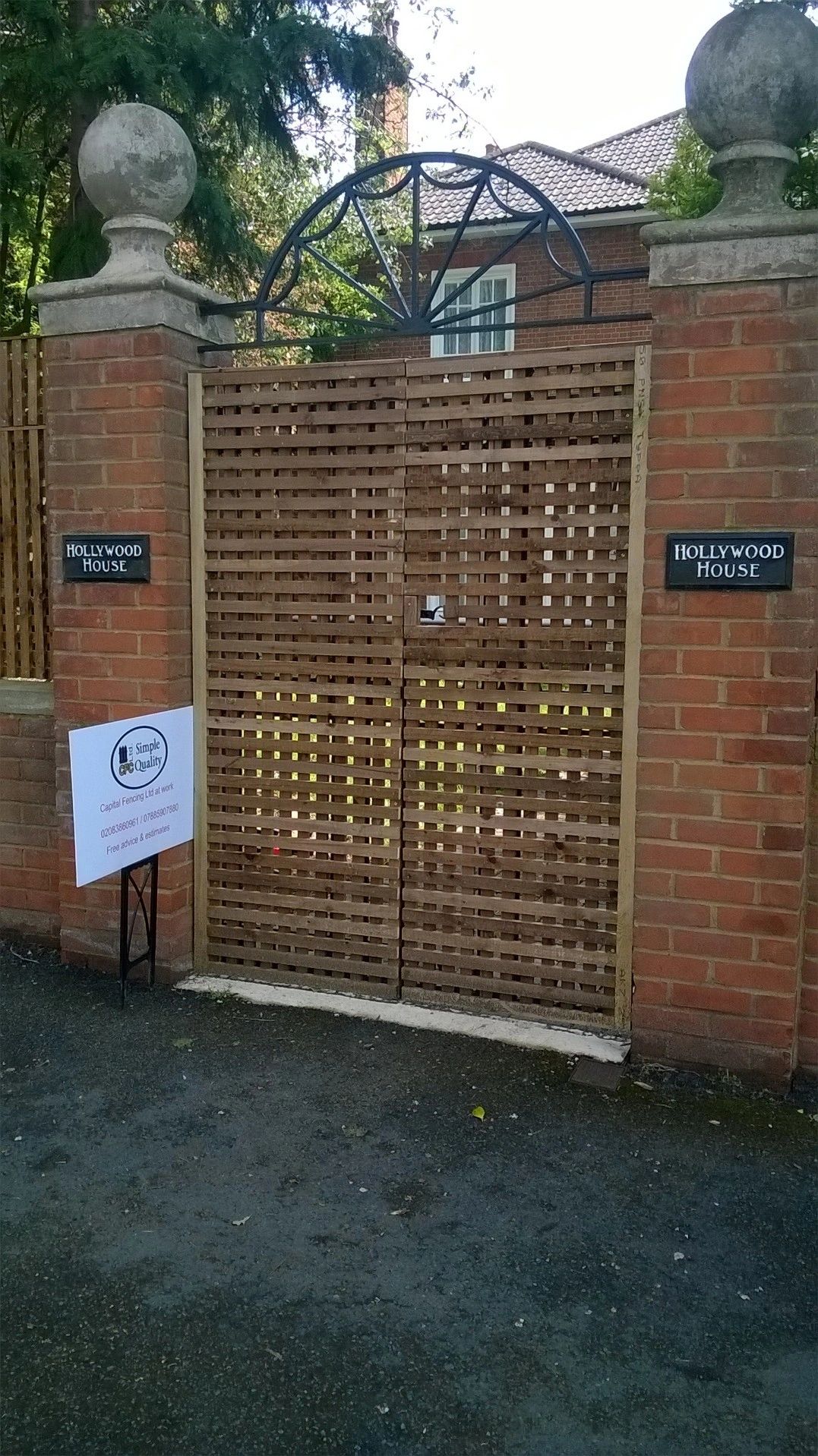
Fix options
Concrete posts and gravel boards
Any persistently wet boundary
Removes timber from the wet zone entirely — the single most effective answer on these plots.
Deeper bases with a drainage layer
Timber posts are required for appearance or gates
Hardcore beneath the post, a shaped concrete collar to shed water outwards, and extra depth.
Pumping and staged pours
The hole fills faster than you can work
Water is pumped out and the base placed in stages so the mix isn't compromised.
Post-and-rail with driven posts
Rural or green-belt boundaries
Driven posts without concrete can outperform set posts in soft ground, and suit stock-proof lines.
Prevention
- Never pour concrete into standing water and hope
- Shape the top of the collar so water runs away from the post
- Consider a French drain where the fence line collects surface run-off
Frequently asked
Can you fence a garden that floods?
Yes — we raise the timber above the flood line on concrete boards and posts, which is exactly what riverside plots need.
Should posts be concreted at all in clay?
Yes, but with a drainage layer beneath and a shed collar above — not sealed into a bowl.
Will a wet plot cost more to fence?
Sometimes, where pumping or deeper bases are needed. We flag it at the survey, not afterwards.
Is composite better on wet ground?
The aluminium post system is genuinely advantageous where timber posts have failed repeatedly.