
Serving Hertford
Hertford Fence Repairs
Most fence repairs are one of four jobs — a post, a panel, a gravel board or a full spurred run — and knowing which one you actually need is what keeps the bill down.
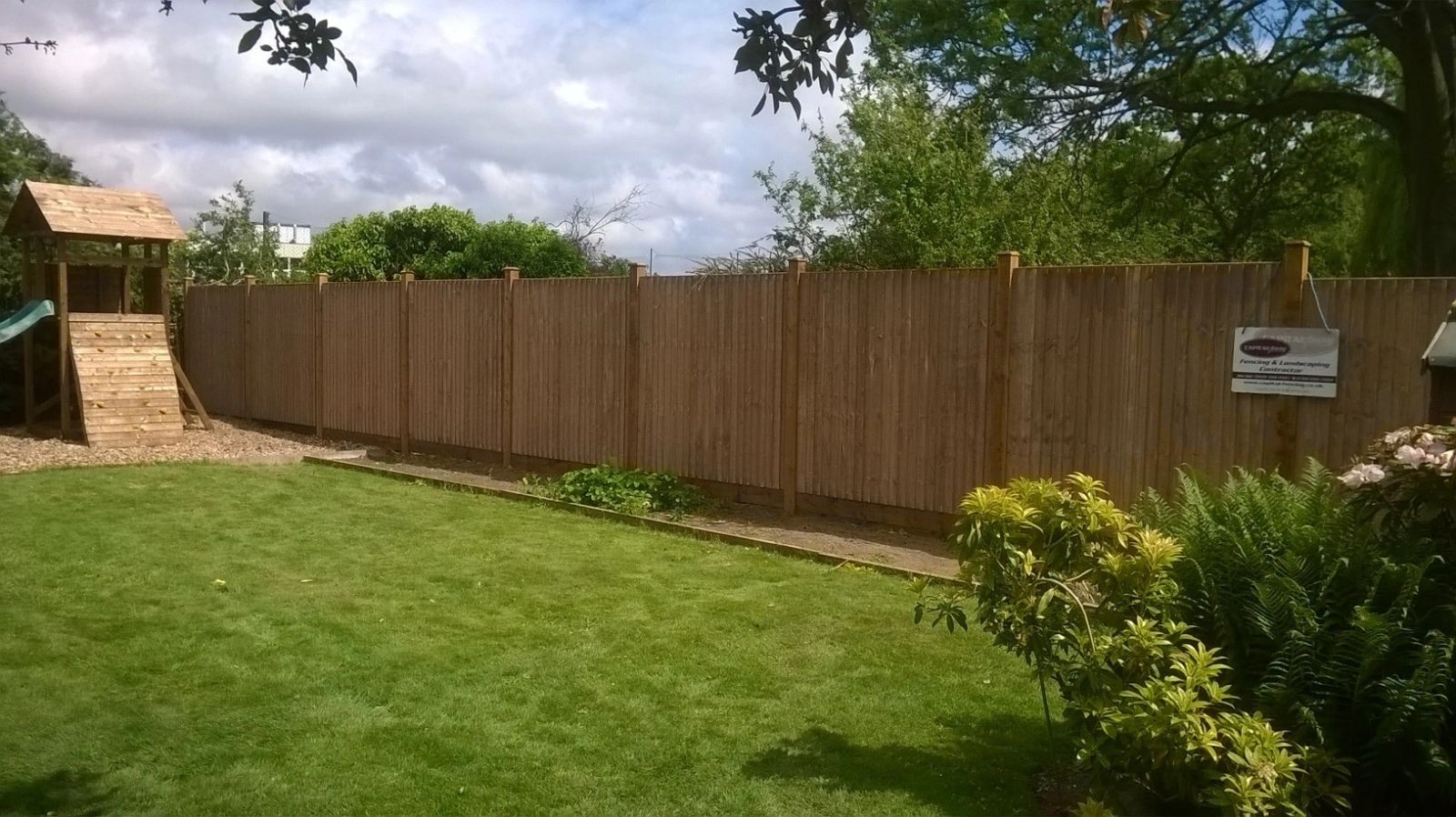
A run that's leaning uniformly along several bays usually points to a common cause — waterlogged ground, wind loading from one direction, or an original footing depth that was too shallow — rather than a fault with any single post. That's the starting point for most fence repairs work we quote in Hertford. Queens Road, Bengeo Street Hertford Castle grounds The conservation area through Castle Street limits visible boundary materials to traditional close-board or painted picket to protect the historic street scene. Hertford's old town sits in a bowl where the River Lea and River Beane meet, on ground that lies close to the water table on the streets nearest Mead Lane.
Why this comes up in Hertford
Within reach of Hertford North & Hertford East, Hertford's georgian and victorian townhouses in the centre, with newer estates on the bengeo and sele farm sides throw up a fairly consistent brief: a timber sleeper retaining wall bulges where the soil behind it has built up more pressure than the wall's bracing or embedded posts were designed to hold, often after prolonged rain has saturated the retained ground. Hertford falls under East Hertfordshire District Council, in the SG13 postcode area, neighbouring ware.
Straightening a leaning run
A run that's leaning uniformly along several bays usually points to a common cause — waterlogged ground, wind loading from one direction, or an original footing depth that was too shallow — rather than a fault with any single post.
Straightening involves resetting posts along the affected bays rather than pulling the fence back into line at the top, since forcing the panels straight without addressing the post bases just reintroduces the lean.
Drainage as a repeat cause of failure
Where a post has failed at the base, poor drainage around that specific spot is often the underlying reason rather than simple age — a low point that collects rainwater rots a post from the ground up years before the timber above shows any sign of it.
A repair that resets the post without addressing the drainage at that point risks the same failure recurring within a few seasons.
Addressing a retaining sleeper wall that has started to bulge
A timber sleeper retaining wall bulges where the soil behind it has built up more pressure than the wall's bracing or embedded posts were designed to hold, often after prolonged rain has saturated the retained ground.
A wall bulging only slightly can sometimes be reinforced with additional bracing posts driven in behind it, but a wall bulging enough that sleepers have visibly separated at their joints usually needs partial or full rebuilding with proper drainage behind it.
Fixing a post that has rotated in its concrete base
A post can twist within a slightly oversized or cracked footing without leaning, so the panels either side pull out of square even though the post still stands upright, which is easy to miss on a quick visual check.
Repair means breaking out enough concrete to free the post, resetting it square to the run, and packing and re-pouring rather than trying to twist it back while still gripped by the old footing.
Patching a section of mesh that has been cut or torn
A cut or torn section of chain-link or welded mesh is normally patched by weaving or wiring in a new panel of matching mesh gauge rather than trying to splice the damaged wires back together.
Matching wire gauge and mesh aperture matters for security fencing, since a patch in a coarser gauge than the surrounding mesh is both visibly obvious and a weaker point than the rest of the run.
Temporary propping and making safe
Where a full repair can't happen immediately, a leaning panel or post can be temporarily propped or strapped to stop it falling further, which reduces risk without committing to the final repair method on the spot.
Temporary propping is treated as exactly that — a stopgap — since a prop left in place over a wet season can itself start to sink or shift in soft ground.
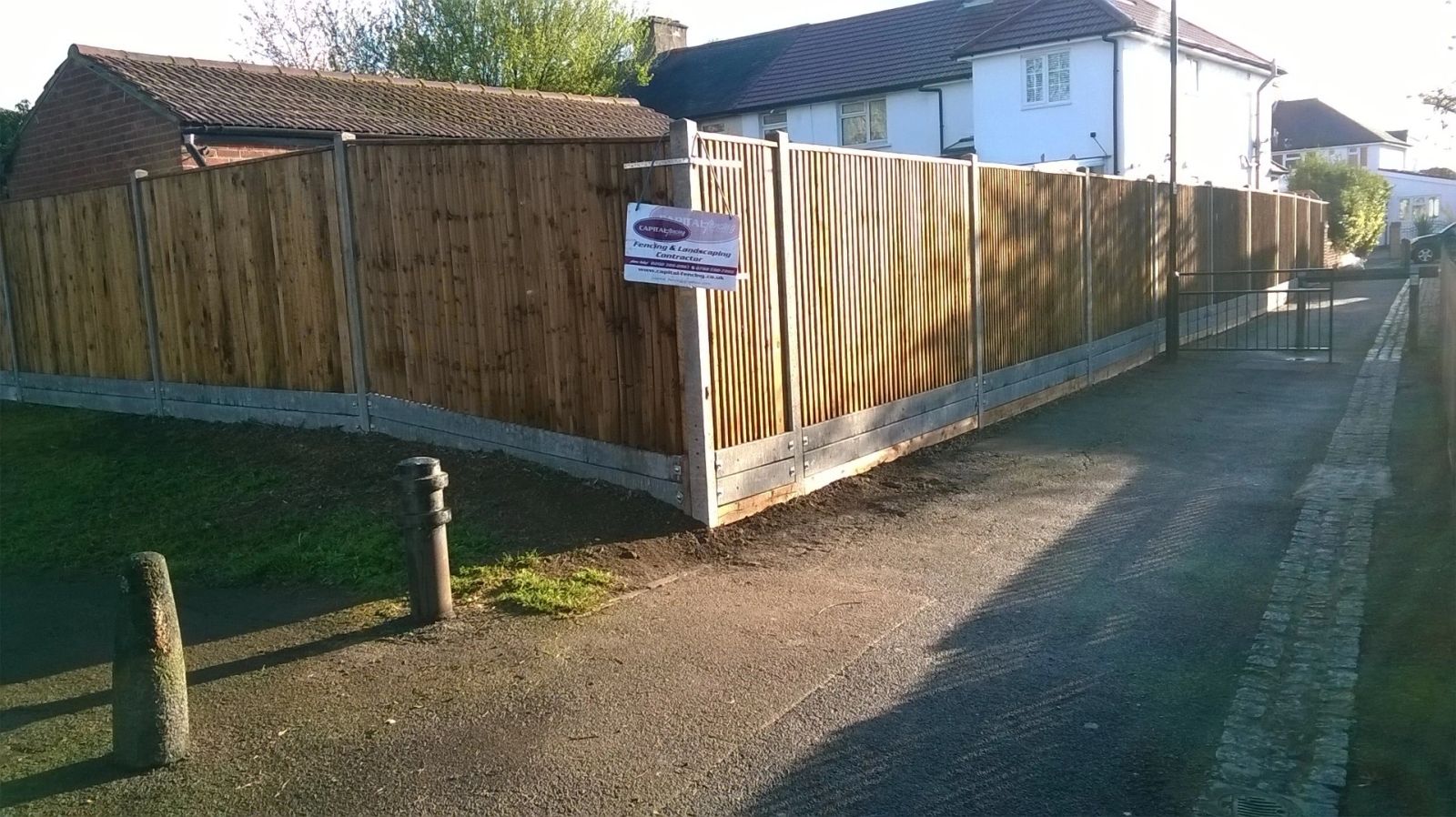
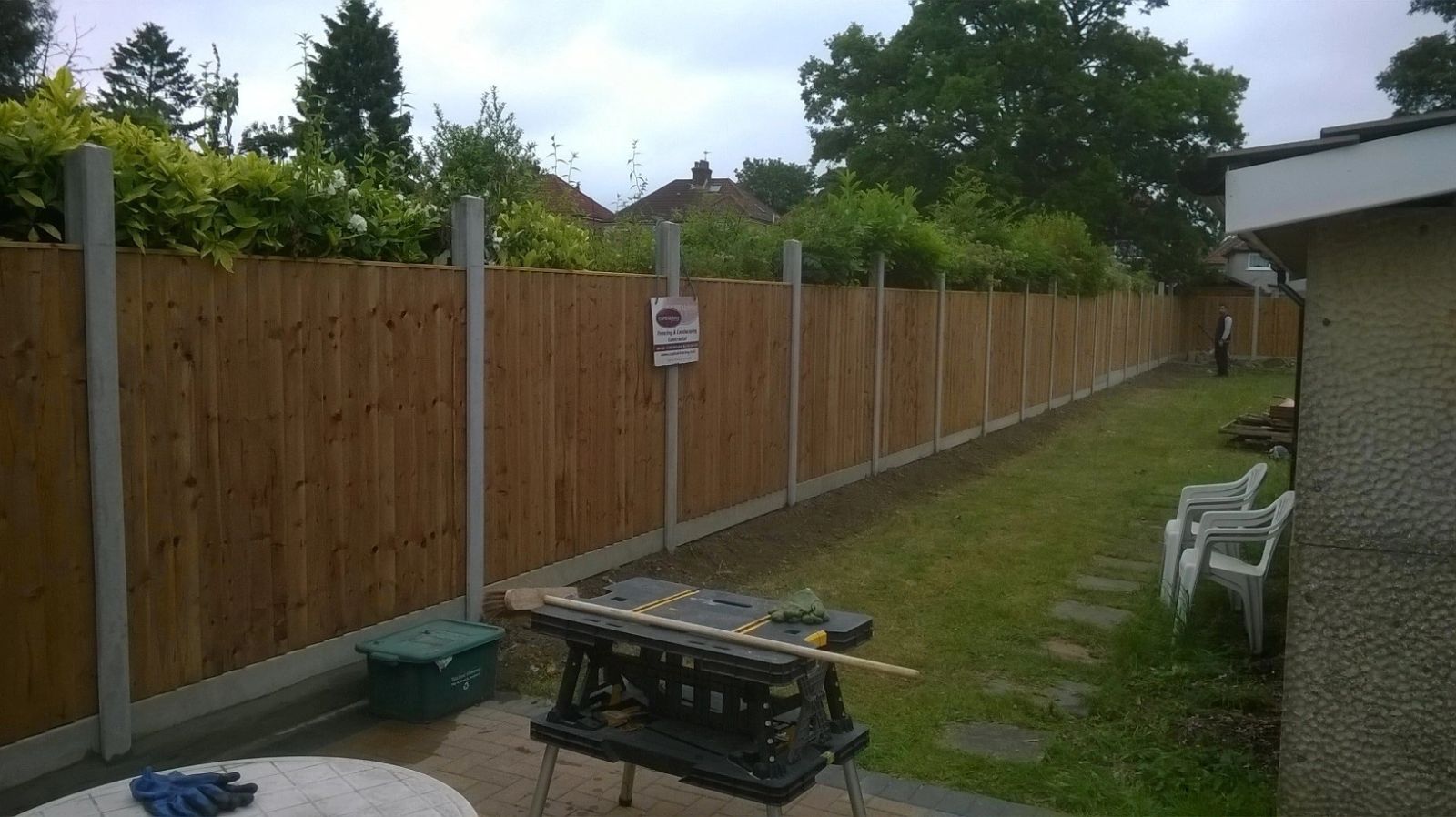
We've quoted this exact scenario repeatedly around Mead Lane industrial estate — a post can twist within a slightly oversized or cracked footing without leaning, so the panels either side pull out of square even though the post still stands upright, which is easy to miss on a quick visual check. Hagsdell Road, Port Vale McMullen brewery site The Bengeo ridge to the north sits on higher, better-draining ground than the river-level streets below it. The Bengeo ridge to the north sits on higher, better-draining ground than the river-level streets below it.
Frequently asked
How do tree roots damage a fence post without any visible impact?
A root growing under or beside the footing can lift or crack the concrete as it thickens, distorting the post's alignment even though the timber itself stays sound. Port Vale, Ware Road Hertford East station goods yard The Sele Farm and Foxholes estates were built over land reclaimed from the historic brewery works, and parking on the narrow streets around SG14 is limited.
What usually fails first on an arris rail?
The joint where the rail meets the post, since that mortise or bracket point traps moisture against end grain more than any other part of the rail.
Can a torn section of chain-link or wire mesh be patched rather than replaced?
Yes, provided the posts and straining wire are sound — re-tensioning and re-clipping the mesh usually addresses a localised tear or sag. The conservation area through Castle Street limits visible boundary materials to traditional close-board or painted picket to protect the historic street scene.
Is it worth switching to a concrete gravel board during a repair?
Often yes, since it removes the recurring rot point at ground level without needing to replace the panel above it.
When are stainless fixings worth using instead of galvanised?
Near the coast or with high-copper-content treated timber, where standard galvanised fixings corrode noticeably faster than they would inland.
What should be checked after a storm beyond the obviously damaged section?
The bays either side of the failure, since wind stress often weakens neighbouring sections that haven't visibly failed yet.
How do you decide whether to repair or fully replace a fence?
It generally depends on how much of the run is affected and how sound the unaffected sections are — a single failed post favours repair, while widespread rot across several bays favours replacement.
Can ivy or climbers actually damage a fence?
Yes — tendrils work into joints and between boards, prising fixings apart and trapping moisture against the timber underneath.
Get storm or wear-and-tear damage assessed
Send a photo or book a site visit — we'll tell you honestly whether it's a repair or a replacement before we quote either. We're on site around Hertford via A414 / A10 regularly.
Book a repair assessmentGet My Free Quote — 24h Response
No callout fee · Free site visit · Friendly local team covering London & Hertfordshire.
Pay by debit or credit card, bank transfer or cash once the work and price are agreed. No deposit taken online.