
How it's done
Adding a Gate to an Existing Fence
To add a gate to a fence, the section is taken out, proper gate posts are set in concrete, and a framed and braced gate is hung between them. Fence posts are rarely strong enough to carry a gate on their own.
A lot of gardens reach a point where a new gate makes sense: access to a side return, a way through to an allotment or back lane, or a second route for bins and bikes. The good news is that a gate can usually be added to an existing fence without replacing the whole run.
The detail that decides whether it lasts is the posts. This guide explains how a gate is fitted into a fence that is already there, and what to think about before you ask for a quote.
Choosing where the gate goes
Start with the route people and things will take. A gate should open onto a path or firm ground, not into a flower bed or up a slope that stops it swinging. Think about which way it opens, whether it needs to be wide enough for a mower or wheelie bin, and whether it should open into your garden or out.
If the fence is a boundary shared with a neighbour or opens onto a shared path, it is worth talking to them first. Our guides on who owns the fence and which side of the fence is yours cover the basics.
Why fence posts are not gate posts
A fence post only has to hold a panel upright against the wind. A gate post carries the whole weight of a gate on one side, plus the leverage every time it is opened and slammed. Hanging a gate from an ordinary fence post is the most common reason a new gate drops and starts catching on its latch within months.
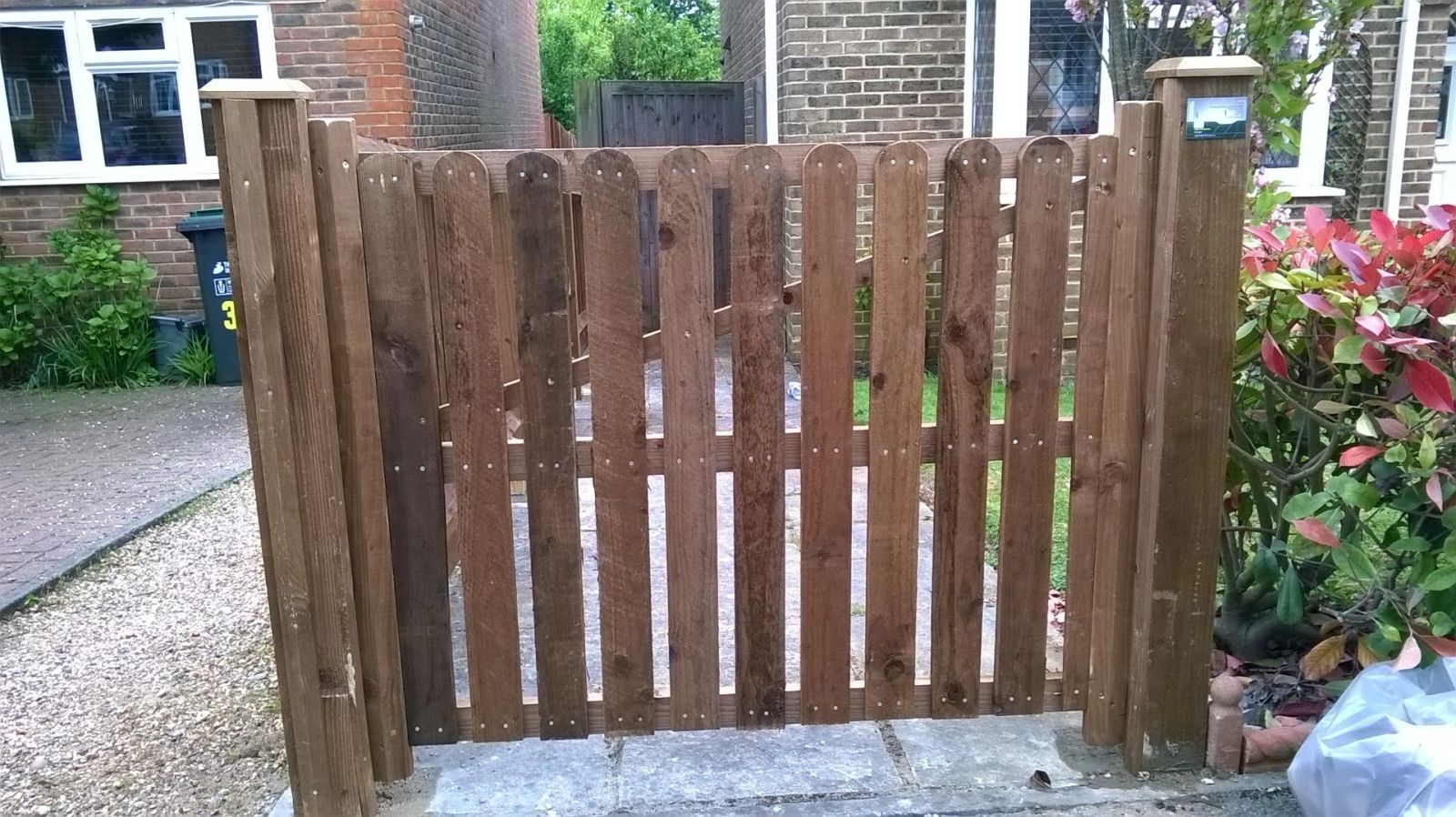
So the section of fence where the gate will go is taken out, and dedicated gate posts are set in concrete, deeper than a normal fence post and sized for the weight and swing of the gate.
Matching the gate to the fence
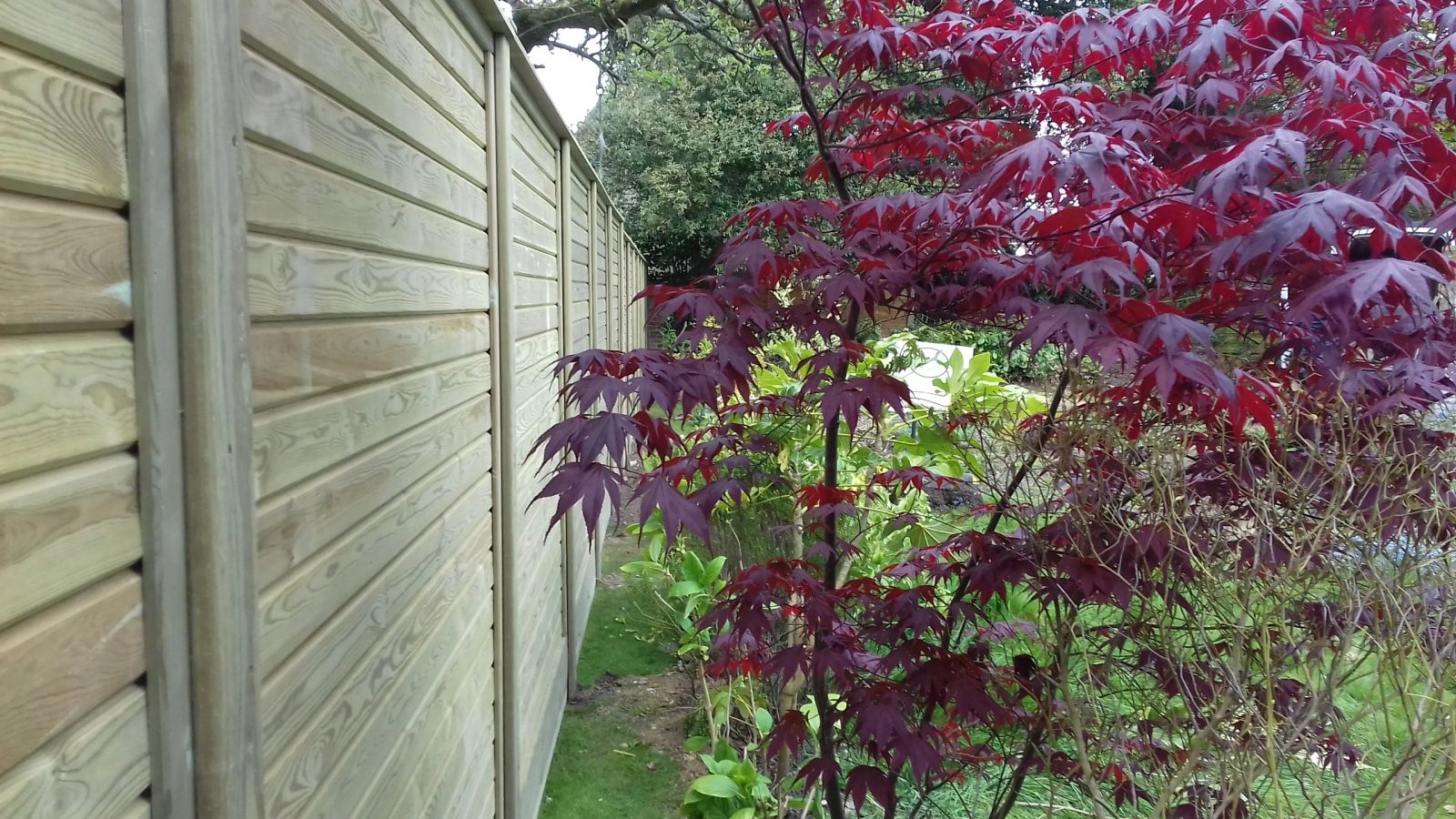
A gate can be made to match the fence around it, so the boarding lines up and it disappears into the run, or it can be a feature in its own right. Timber gates are built as framed and braced leaves with the brace running up towards the hinge side. They can be boarded to match closeboard or panel fencing, built as solid tongue and groove for privacy, or made up in hardwood.
Where the fence is metal, or where you want a steel gate in a timber fence, a galvanised and powder coated metal gate, or a steel frame with timber infill, is also possible.
Hinges, latches and bolts
The ironmongery is chosen for the gate, not whatever comes in the box. Heavier gates suit ball race or heavy strap hinges. A latch that works from both sides is handy on side gates; a lock or bolt adds security on a gate to the street or a back lane. A stop is fitted so the gate always closes to the same place.
- Hinges sized to the weight of the leaf
- Latch that works from the side you need
- Lock or bolts for gates onto lanes or the street
- A stop so the gate closes cleanly every time
Tidying the fence either side
When a section is cut out, the fence either side needs finishing properly so it does not become the weak point. The panels or boards are fixed to the new gate posts, gravel boards are refitted to keep timber off the soil, and the top line is checked so the gate sits neatly within the run.
If the fence itself is tired, with loose posts or soft timber, it may be worth doing the gate as part of a wider repair so everything is set out together.
Getting it priced
Photos of the fence where you want the gate, and of the ground either side, are a good start. A free site visit confirms the width, height, ground and posts, and you get a written quote covering the gate, the posts and the work to the fence around it.
Frequently asked
Can you put a gate in an existing fence?
Yes. The section is taken out, gate posts are set in concrete and a gate is hung between them.
Can a gate hang on an existing fence post?
It is not a good idea. Fence posts are not built to carry a gate, which is why a new gate usually gets its own posts.
Can the gate match my fence?
Yes. A timber gate can be boarded to match closeboard, panel or tongue and groove fencing.
Which way should a garden gate open?
Usually into your own garden, onto firm ground, with enough clearance for the swing over any path or slope.
Do I need my neighbour's agreement?
If the fence is theirs or shared, talk to them first. A gate on your own fence line is your decision.
Want this priced properly for your garden?
Free site visit across London and Hertfordshire, a written specification, and a fixed price. No obligation.