
Costs & pricing
Automatic Gates Cost: What Goes Into the Price
Last updated
The short answer
The cost of automatic gates is made up of two jobs: the gate and its posts, and the automation itself. The gate's size, material and weight, the posts or piers, the motor type, the power and cables to the gate, access controls such as a keypad, and the safety devices all add to the price. We build and hang gates ready for automation; a specialist installs the motors and electrics.
At a glance
- Gate side
- Size, material, weight, posts or piers
- Automation side
- Motors, controls, safety devices, power supply
- Ongoing
- Periodic servicing
- Who does what
- We build and prepare the gate; a specialist fits the automation
An automatic gate is a gate first and a machine second. Much of what decides the cost, and how long it keeps working, is settled before a motor is fitted.
Automatic gates are often priced as one figure, but they are two trades working together. One side is the gate, the posts and the hanging. The other is the motors, control box, wiring and safety equipment that make it move on its own.
We build and hang wooden and metal driveway gates across London and Hertfordshire prepared for automation, and work alongside the automation installer. We do not carry out the electrical installation ourselves. This guide explains what drives the cost on both sides, so the quotes you collect make sense.
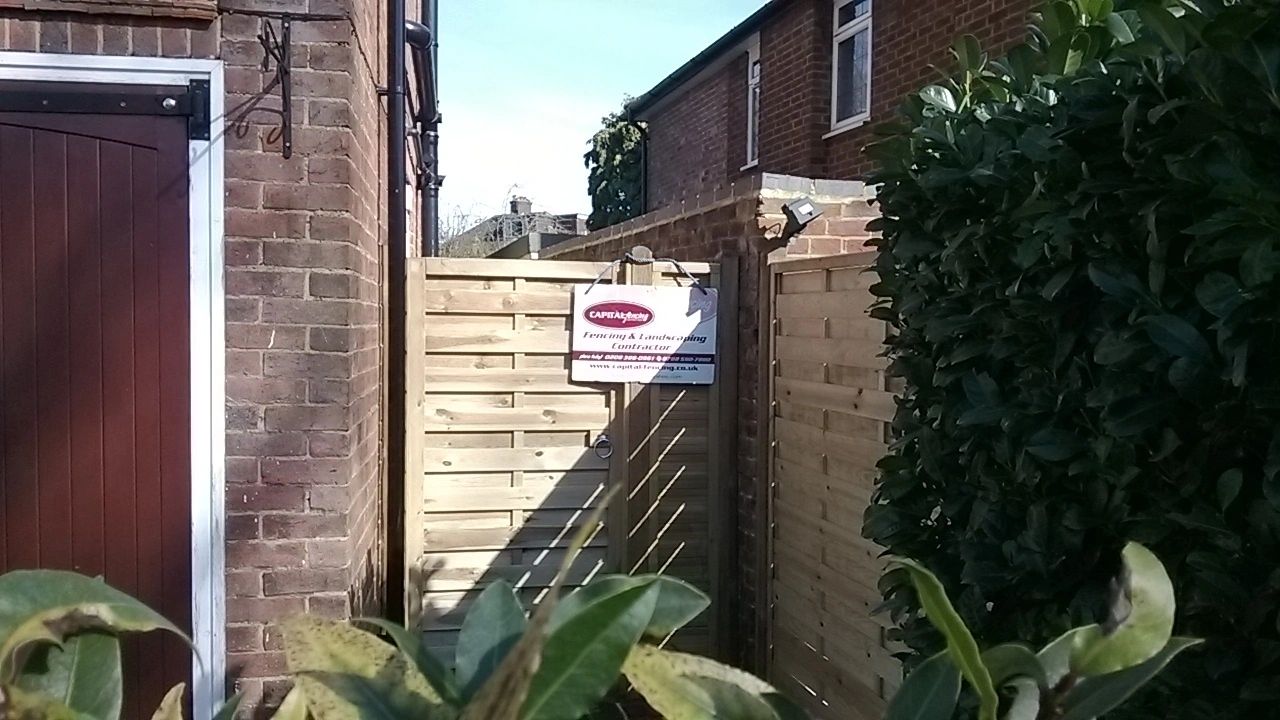
The gate itself
Width, height, material and design set the cost of the gate, and they also decide what the motors have to move. A heavy solid timber pair or a wide steel leaf needs more powerful automation than a light, open design. Timber gates are made in softwood or a hardwood such as iroko; metal gates are galvanised and powder coated. A gate that will be automated must be built and braced to stay square, because a motor will not cope with a leaf that has started to drop.
Posts, piers and hanging
Posts are where most gate failures start, and automation adds to the strain because the motor pushes and pulls on the leaf every time it runs. Steel posts sized to the leaf weight and concreted deep, or sound brick piers, are part of the cost of doing it properly. Hinges should be adjustable and suited to the leaf, and the gate has to swing or slide freely by hand before any motor goes on.
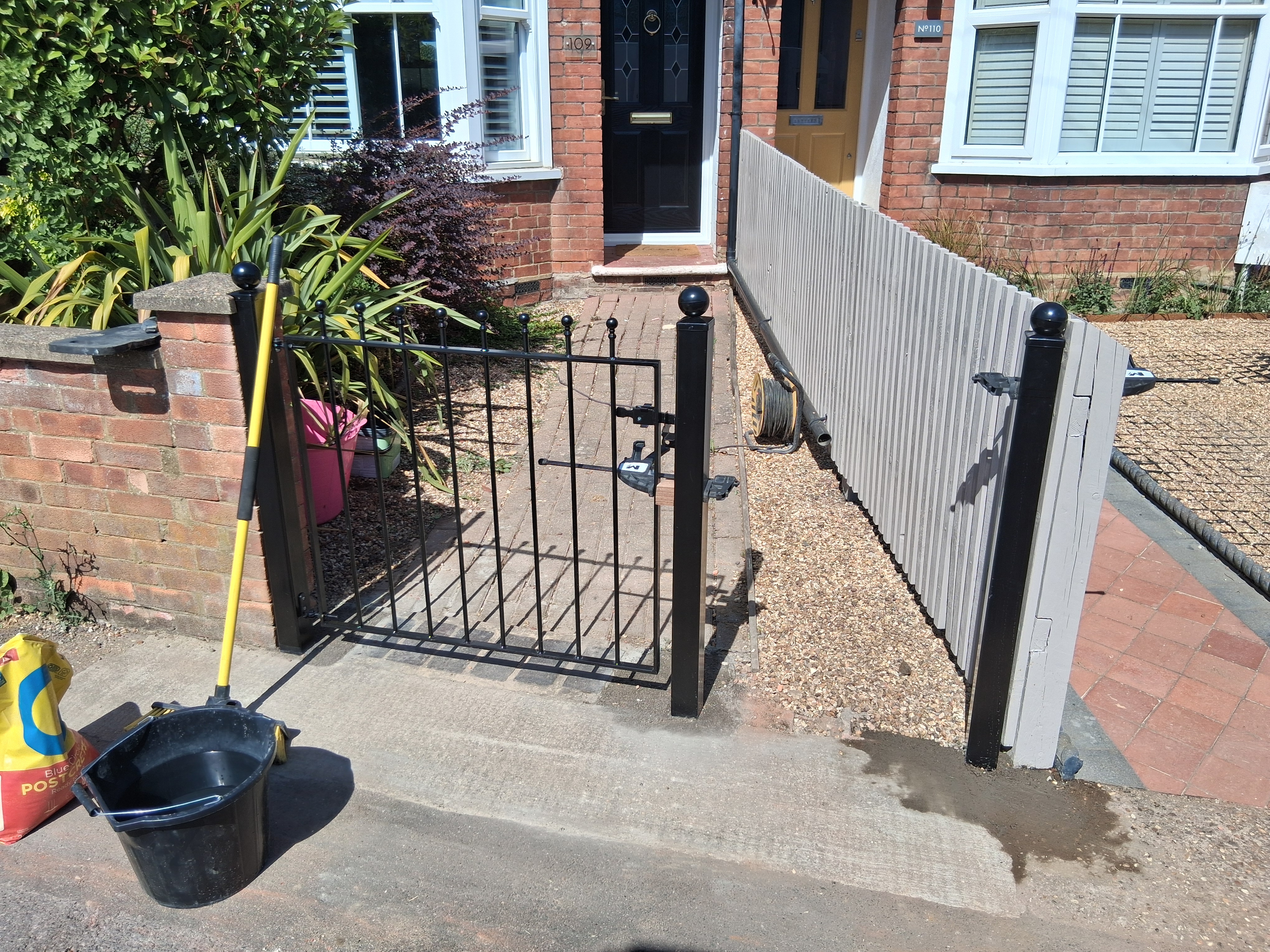
Swing or sliding automation
Swing gates are driven by motors on arms or rams beside each leaf, or by motors set into the ground under the hinges. Sliding gates run on a track or a cantilever system, with a single motor beside the opening. Which suits you depends mostly on the drive: room to swing, the slope of the ground and the space beside the opening. The choice changes the groundwork and the equipment, and with them the cost.
Power, cables and groundwork
Automation needs a power supply at the gate and cables between the motors, the control box and any keypad or intercom, usually in ducting under or beside the drive. Where the drive is already finished, lifting and relaying the surface adds to the work, which is why ducting is easiest to plan when a new gate goes in. When we build a gate for automation we size the posts and allow for the ducting from the start.
Access controls and safety equipment
Safety equipment is not an optional extra on a gate that moves by itself. The automation installer specifies it for your opening and should explain how it works when the gate is handed over.
- Remote fobs for each driver in the household
- A keypad or intercom at the entrance
- Safety devices such as photocells that stop or reverse the gate if something is in the way
- Warning lights or signs where the gate opens beside a path
Servicing after installation
An automatic gate needs periodic servicing to keep the motors, sensors and hinges working reliably, so ask the automation installer what they recommend. Many faults that look electrical actually start with the gate itself catching or dropping, which is why good hanging matters long after the day it is fitted. Our guide to an electric gate that will not close explains the usual causes.
Getting it priced
Send photos of the opening, its rough width and the gate style you have in mind. We give a written estimate for the gate, posts and hanging prepared for automation, and can work alongside your chosen automation installer so both halves of the job fit together.
Frequently asked
Do you install electric gate motors?
No. We build and hang gates prepared for automation and work alongside your automation installer, who carries out the electrical installation.
Can my existing gates be automated?
Sometimes. The gates must be sound, square and move freely by hand, and the posts must be strong enough for the extra load. Gates that already drag or drop usually need repairing or replacing first.
Are sliding or swing automatic gates cheaper?
Neither is cheaper in every case. It depends on the opening, the ground and the groundwork needed, so it is worth asking for both where the drive allows.
What makes automatic gates more expensive?
A larger or heavier gate, new posts or piers, long cable runs, a finished drive that has to be lifted for ducting, and extra access controls all add to the cost.
Is automating a gate worth it?
For a gate used every day, many people find the convenience worth it; for a gate opened rarely, manual is simpler. Our manual vs automated gates comparison sets out the trade-offs.
Want this priced properly for your garden?
Photos first, then a written estimate across London and Hertfordshire, a written specification, and a fixed price. No obligation.