
Care & longevity
Fence Arris Rail Repair: When the Rails Need Replacing
Last updated
The short answer
A failed arris rail can be replaced in one bay without rebuilding the whole closeboard fence, provided the posts and surrounding boards remain sound. Boards are removed locally, the damaged rail and fixings are renewed, then sound boarding is refixed. Renailing into soft rail timber is not a lasting repair.
At a glance
- Common failure
- Rot where the rail meets a post
- Visible clue
- Boards moving together along one level
- Local repair
- Possible when posts and other rails are sound
- Avoid
- Driving more nails into rotten timber
An arris rail carries the feather edge boards between posts. Once it softens or pulls free, loose boards are a symptom rather than the real fault.
On a closeboard fence, the horizontal rails do most of the quiet structural work. They span from post to post and give every vertical board something to fix into. When a rail fails, boards begin to spring, rattle or dip even though the posts may still look perfectly healthy.
Repairing that failure is different from renailing a few boards. This guide explains where arris rails usually deteriorate, how a damaged section is replaced, and when the condition of the surrounding fence changes the sensible answer.
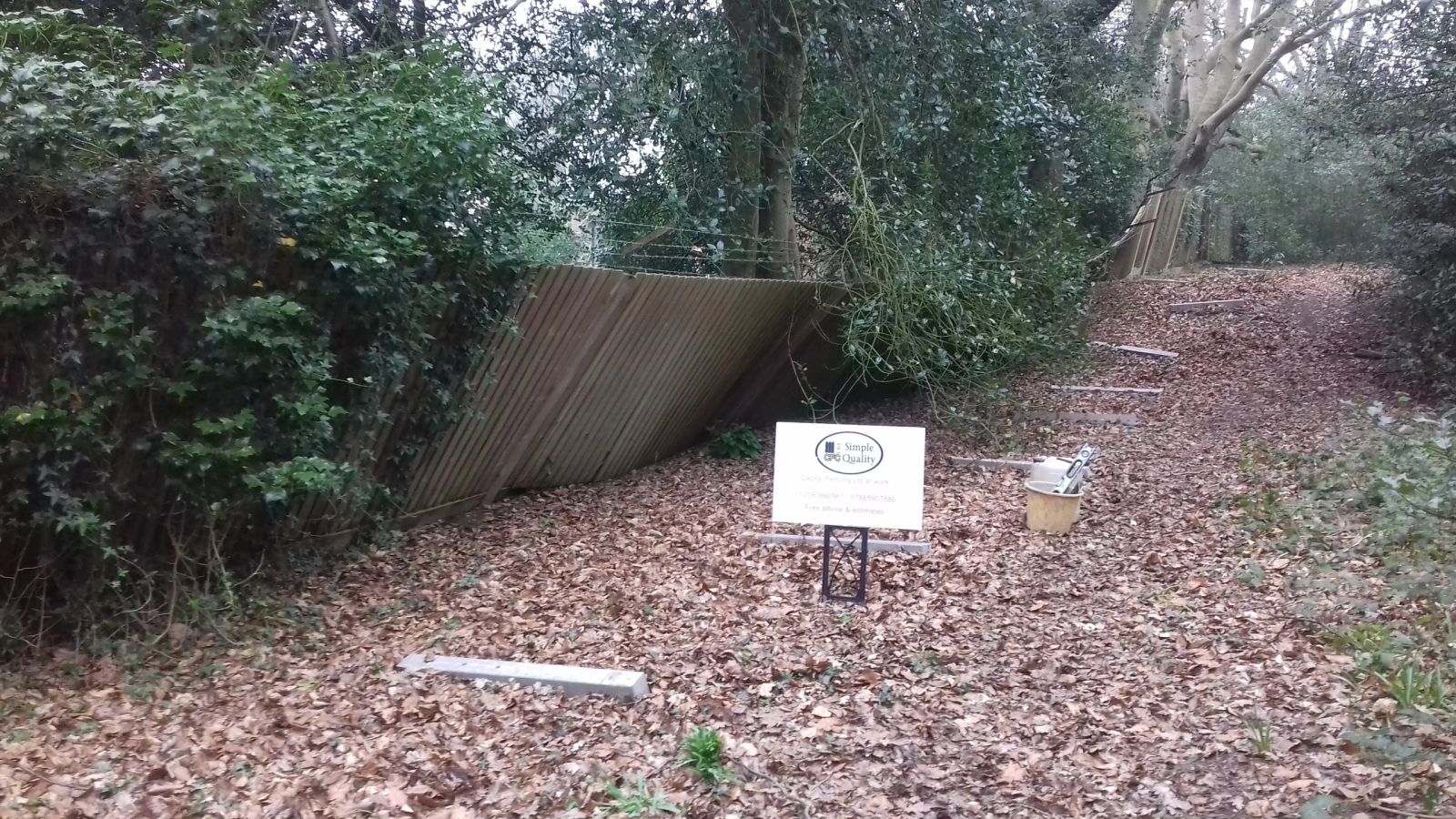
What an arris rail actually does
An arris rail is the horizontal timber behind a run of feather edge boards. Its angled upper face helps water run away from the board fixings, while its length ties the boarded bay back to the posts. Most full height fences rely on several rails to support the boards at different levels.
Because each board overlaps the next, a rail problem can appear across a wide area. One soft section may allow many boards to move, even where their own timber remains sound.
Why rails fail near the posts
The rail end is exposed to trapped moisture where it enters a mortice or meets a bracket. Water follows the end grain into the joint, and that part of the timber dries slowly because it is sheltered by the post and boarding. Rot can therefore be advanced at the end while the middle of the rail feels firm.
Movement makes matters worse. Once a fixing loosens, the rail works against the joint in wind and gradually opens a larger gap for water to enter.
Signs that point to the rail
Boards that move together along one horizontal line often indicate a failed rail rather than individual nail problems. A bay may also bow outwards, or the top of the boards may sit unevenly where a rail has dropped.
- Repeatedly loose nails in the same area
- A horizontal dip behind otherwise sound boards
- Dark, soft timber at a rail end
- A bracket pulled away from the post
- A bay that moves more than its neighbours in wind
Checking before any boards come off
We look along both faces of the fence and probe accessible rail ends carefully. Where boards conceal the joint, a small section may need removing to establish what is happening behind them. The posts are tested at the same time, because replacing a rail between failing posts is not a lasting repair.
The number of affected bays matters. A single damaged rail in an otherwise sound fence is a very different proposition from rails failing throughout a run of similar age.
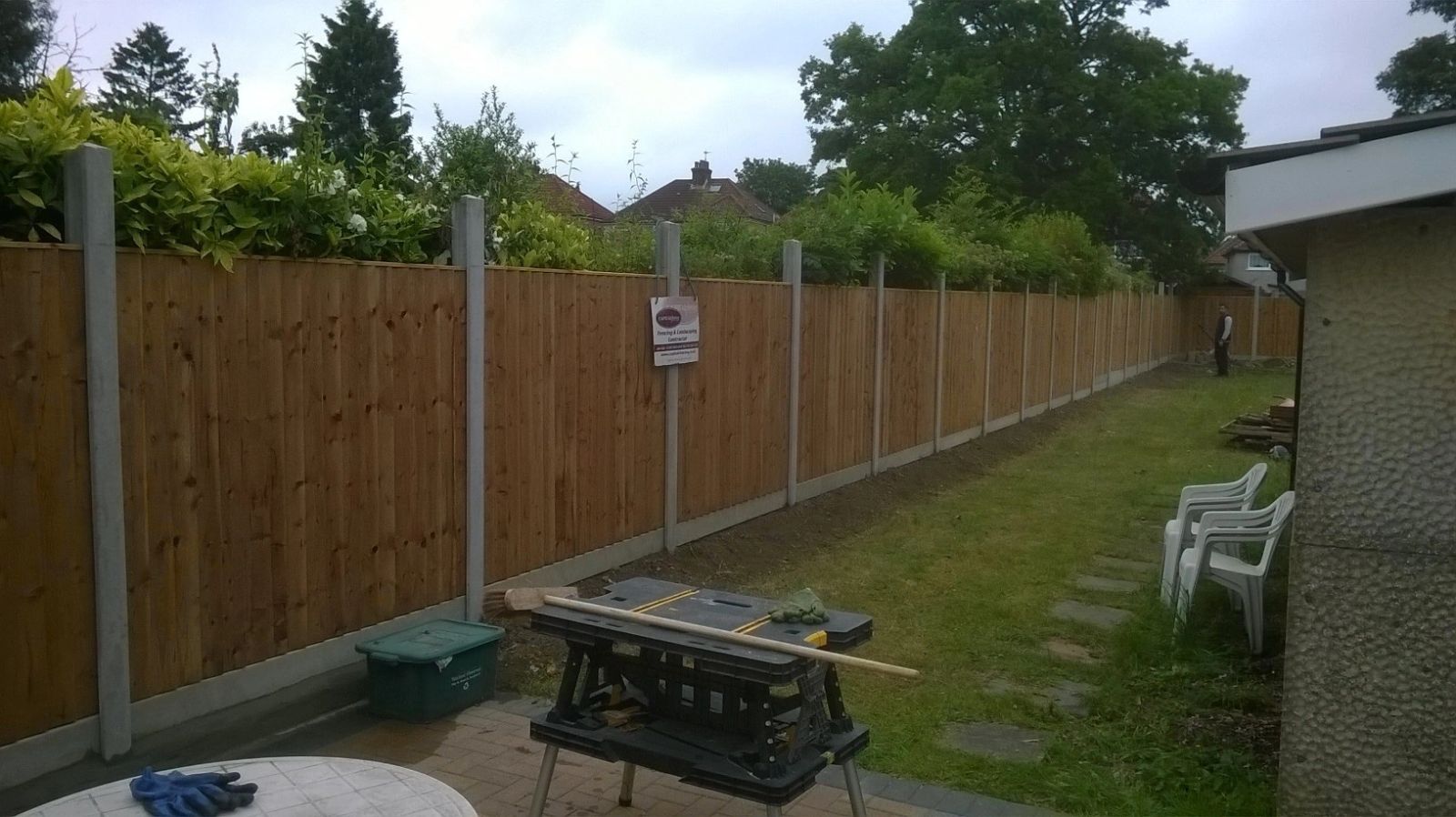
How a damaged rail is replaced
Enough boards are removed to expose the full rail and its connections. The failed length comes out, the post joints or brackets are cleaned up, and a suitably treated replacement is fitted to the correct line. Cut ends and new fixing points need protection before the boards go back.
Sound boards can usually be refixed, replacing any that split during removal. New corrosion resistant nails are placed into firm timber rather than driven back into the old holes by default.
Repairing one bay or several
A local repair is worthwhile when the posts, remaining rails and boards around it are in good condition. It keeps the disruption and waste low and preserves the appearance of the existing fence. If adjoining bays show the same end rot, it is sensible to inspect and price them together rather than make repeated visits.
Widespread failure changes the calculation. Taking boards off every bay to reach failing rails can approach the labour involved in rebuilding, while leaving an ageing mixture of materials behind.
Why renailing alone comes back
A nail needs solid timber to grip. Driving a larger nail into a soft rail may feel tight for a short time, but the fibres soon crumble again. Extra nails can also split weathered boards without correcting the movement behind them.
The same caution applies to visible brackets. A new bracket screwed into a rotten post merely moves the weak point. We identify which component has failed before choosing any hardware.
What a repair quote should make clear
The quote should identify the affected bays, whether boards are being removed and reused, and whether posts or brackets are included. It should also say what happens to broken boards and old timber. These details make a local rail repair easy to compare with a larger section replacement.
Photographs of the loose area, the back of the fence if accessible and the nearest post bases are enough for an initial view. A visit then confirms how much needs opening up before a final scope is agreed.
Boards moving behind the nails?
Show us the loose bay and the nearest post joints. We will check whether the rail can be renewed without replacing the whole fence.
Frequently asked
Can an arris rail be replaced without rebuilding the fence?
Yes, where the posts and most boards are sound. Boards are taken off locally, the failed rail is replaced and the original boarding is refixed where possible.
Are loose feather edge boards always a rail problem?
No. Nails and boards can fail independently, but repeated movement along one level or soft rail ends point towards the rail behind them.
Can a cracked rail be sistered with another piece of timber?
Sometimes a sound reinforcement can help, but it must not simply conceal rot or trap more moisture. The condition of the existing rail and joints decides whether that is sensible.
Do all closeboard fences use arris rails?
Traditional closeboard commonly uses shaped arris rails, though other rail profiles and fixing systems exist. The important point is that the horizontal support remains sound and securely connected to the posts.