
Rules & permissions
Neighbour Fence Dispute: How to Resolve It
Last updated
The short answer
Most neighbour fence disputes are settled by checking the facts and talking before anyone involves solicitors. Start with your title plan and deeds, then raise the issue calmly with your neighbour and put any agreement in writing. GOV.UK suggests mediation if talking does not work, and court action only as a last resort. For disputes about the boundary line, GOV.UK also explains boundary agreements.
Official guidance: GOV.UK: how to resolve neighbour disputes; GOV.UK: your property boundaries
At a glance
- First step
- Check the title plan, register and deeds
- Then
- Talk to your neighbour and agree in writing
- If stuck
- Mediation, as GOV.UK suggests
- Last resort
- Legal action through the courts
Fence disputes usually come down to ownership, repair, height, cost or what is fixed to the fence. Each has a calmer route than an argument over the boundary.
A fence is one of the few things two households share without either choosing to. When it leans, blows down, is replaced in a style one side dislikes or has something screwed to it, disagreements follow quickly. Most can be settled without solicitors, and the steps are much the same whatever started it.
We are fencing contractors, not lawyers, so this guide sets out the practical route and points to official guidance rather than giving legal advice. Where it helps, it links to our more detailed guides on ownership, sharing costs and fixings.
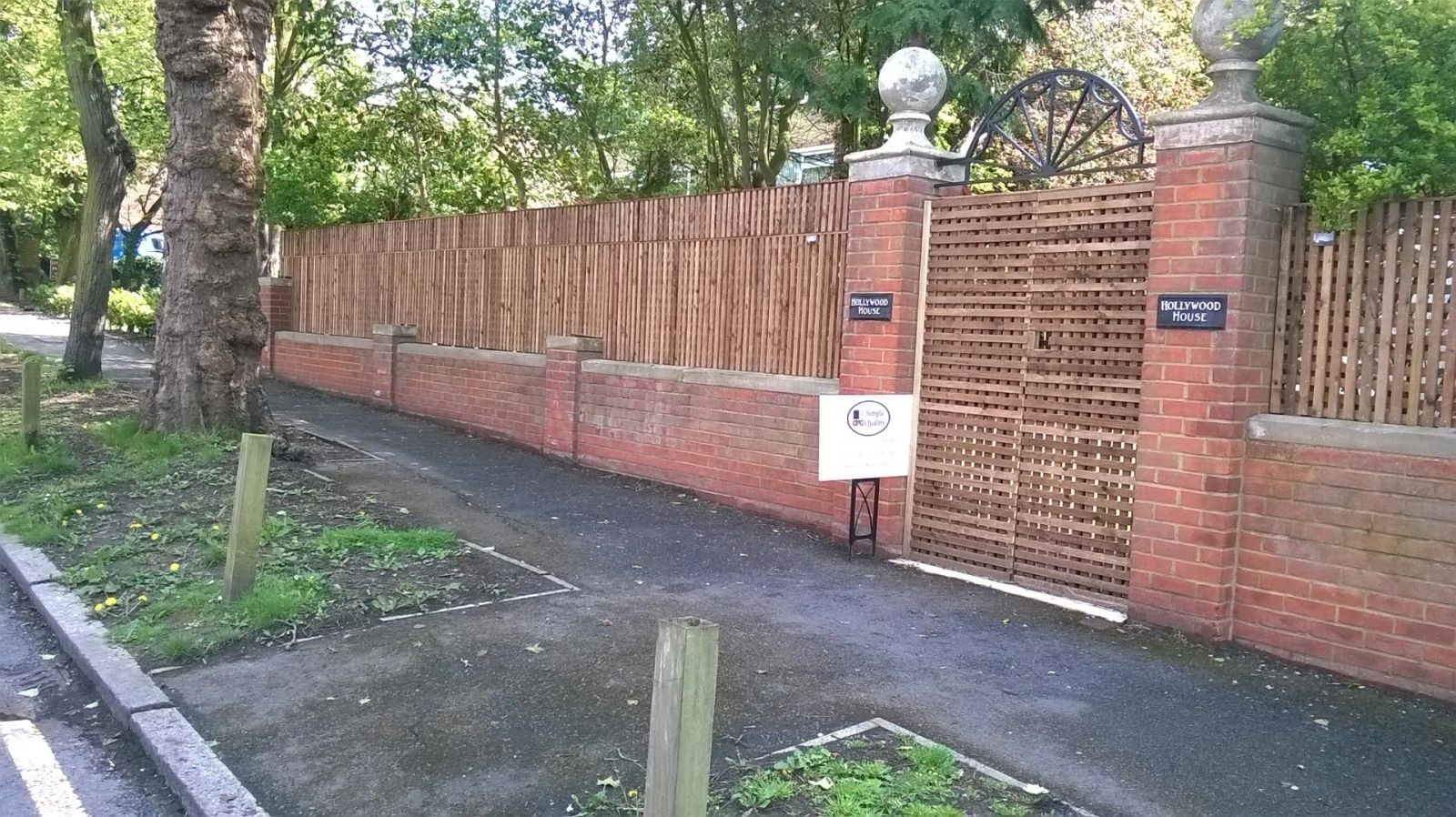
What fence disputes are usually about
Knowing which of these you are dealing with matters, because each has a different starting point.
- Whose fence it is and who should repair it
- A fence that is leaning, damaged or falling into the next garden
- The height or style of a new fence
- How the cost of a shared fence is split
- Trellis, plants or fixings attached to someone else's fence
- Which way the finished face of the fence points
Step one: check the facts
Before raising anything, look at your title plan and title register, which you can get through HM Land Registry on GOV.UK, and any older deeds. As GOV.UK explains, there is usually no record of who owns the fence between two properties, and most title plans do not show exact boundaries. A T-mark, where one is shown, indicates who is responsible. Take dated photos of the fence and the problem.
Step two: talk, then write it down
GOV.UK's first suggestion is to try to solve the problem informally by talking to your neighbour. Choose a calm moment, explain what you have found and what you would like to happen, and listen to their side. If you agree something, such as who will replace the fence, how the cost is split or what height it will be, write it down and both keep a copy. If your neighbour is a tenant, GOV.UK suggests you could contact their landlord.
Step three: mediation
If talking does not work, GOV.UK suggests using a mediation service. A mediator helps both sides reach an agreement without going to court, which is usually quicker and keeps relations workable for the years you will still live next door to each other.
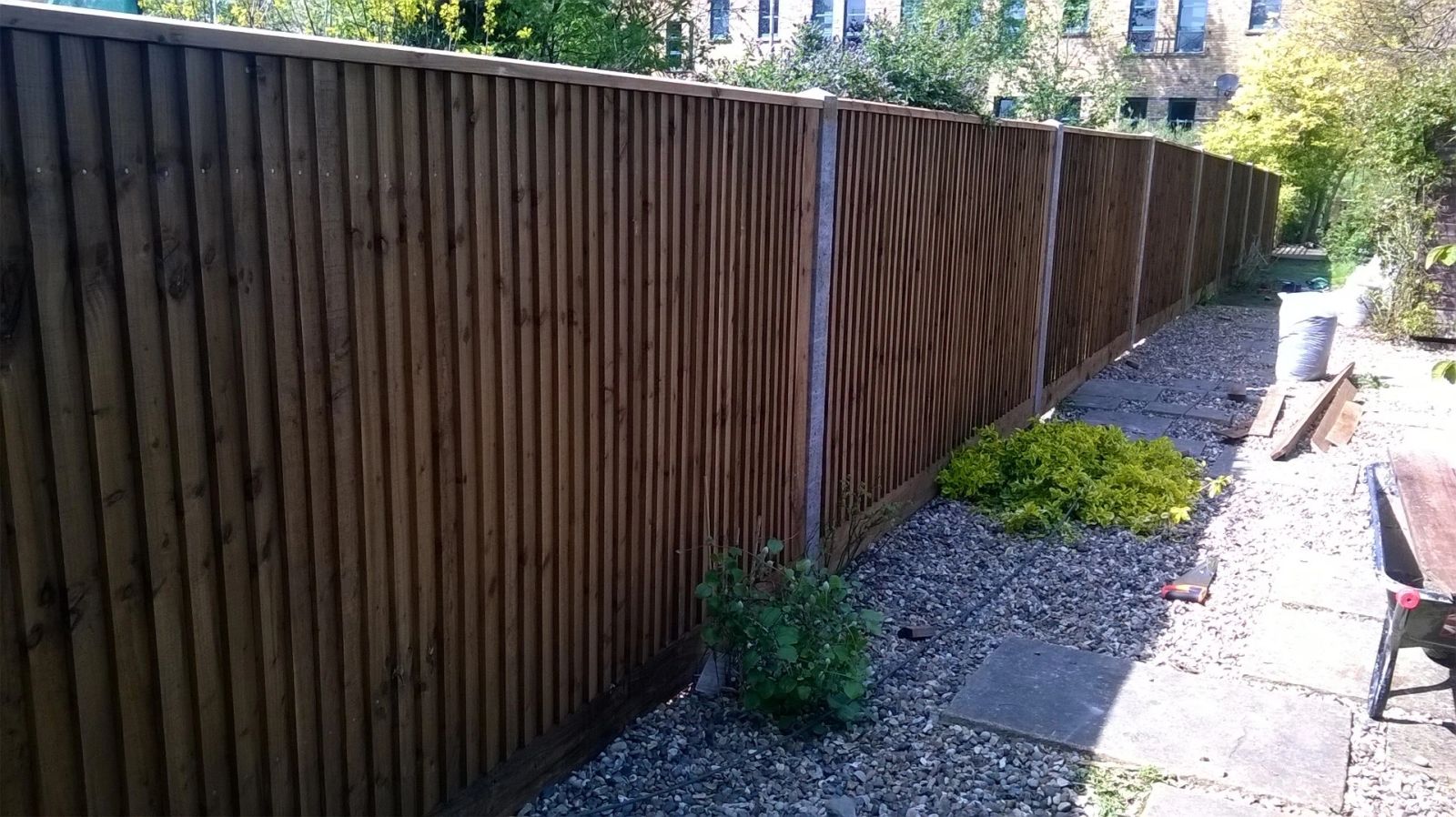
Boundary agreements and the exact line
Where the disagreement is about where the boundary runs or who looks after the fence, GOV.UK explains how neighbours can make a boundary agreement, and how to apply to record the exact boundary. These are formal steps, and taking legal advice first is sensible if the line itself is disputed.
Keeping a record
Whatever stage you reach, keep a simple record: dates, what was said, copies of letters or messages and photos of the fence over time. It helps a mediator understand the history, and it keeps both sides focused on the facts rather than on who said what.
Last resort: the courts
GOV.UK lists legal action through the courts as a last resort. It is slower and more costly than every step above, and the fence will still be there afterwards, which is why most disputes are better settled earlier.
Practical options while it is being sorted
Some disputes have a practical way round them. If a neighbour will not repair a fence that is their responsibility, you can usually put up your own fence just inside your boundary. If they will not allow access, a fence can often be built entirely from your side, which simply takes longer. Where both households agree to share a new fence, we can issue two separate invoices so each pays its share directly.
Want this priced properly for your garden?
Photos first, then a written estimate across London and Hertfordshire, a written specification, and a fixed price. No obligation.
Frequently asked
What should I do first in a fence dispute?
Check your title plan and deeds, take photos, then talk to your neighbour calmly. Many disputes are settled at this stage, and anything agreed should be written down.
Is there an official record of who owns my fence?
Usually not. GOV.UK explains that in England and Wales there is usually no record of who owns the fence between two properties. Your title plan, register and deeds are the places to look.
What if my neighbour refuses to discuss the fence?
GOV.UK suggests using a mediation service if raising the issue informally does not work, with court action only as a last resort.
Can you build a fence from my side without my neighbour's access?
Yes. Building entirely from one side is slower but workable, and we plan for it where access is not given.
Should I replace a shared fence before the dispute is settled?
It is usually better to agree first. A replacement put up during a disagreement can become part of the dispute, while a written agreement on height, style and cost avoids that.
Do you give legal advice on boundary disputes?
No. We can measure, photograph and quote for the fence, but questions about ownership or the legal boundary are for a solicitor or the official guidance on GOV.UK.