
How it's done
Putting Up a Fence Near a Tree: Roots and Posts
Last updated
The short answer
When a fence runs past a tree, the posts are spaced so they land between large roots rather than through them, and the fence stops short of the trunk with a gap for growth. Never fix panels or rails to the tree itself. If the tree is protected by a preservation order or stands in a conservation area, check with the council before digging near it.
At a glance
- Posts
- Placed between main roots
- Trunk
- Gap left, nothing fixed to it
- Protected trees
- Check with the council first
- Roots lifting a fence
- Often a repair rather than a full rebuild
A tree on the boundary line makes fencing awkward. The posts have to dodge roots and the fence has to leave the trunk room to grow and sway.
Boundary trees are common in mature gardens across our area, and an old fence often wraps awkwardly around one or has been nailed to it years ago. When the fence needs replacing, the tree shapes the whole layout.
This guide explains how we plan a fence near a tree, what to avoid, and how to approach a fence that roots have already pushed out of line.
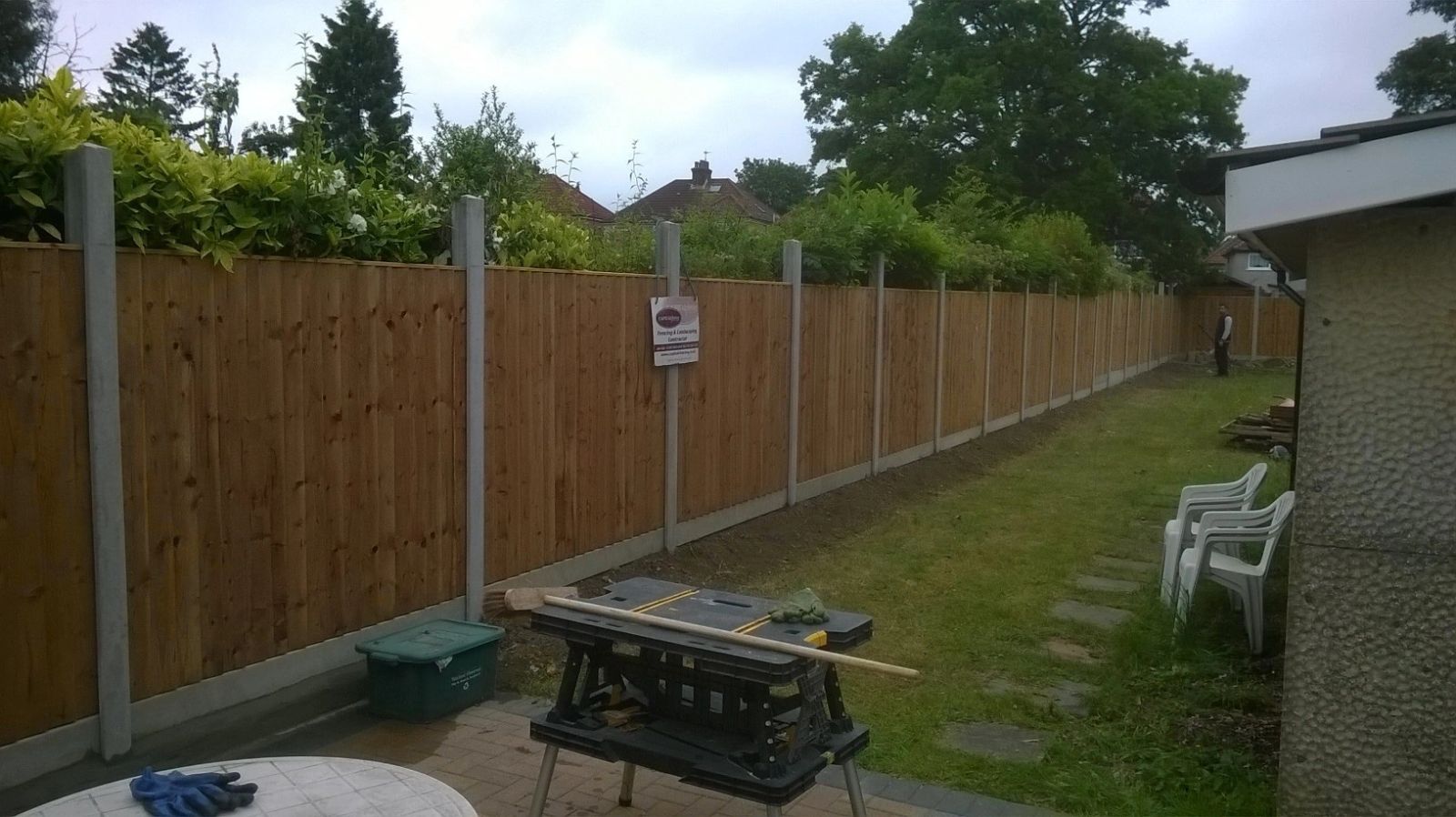
Finding the roots before digging
Large roots run out from the trunk close to the surface, often further than people expect. Before setting out posts we look at the ground for raised lines and probe gently where a post is planned. If a hole hits a major root, it is moved along rather than forced through.
Adjusting post spacing
Panels come in set widths, so moving a post can mean cutting a panel down or switching to a closeboard section built on site, which can be any length. That flexibility is one reason closeboard is popular where trees make a regular grid impossible.
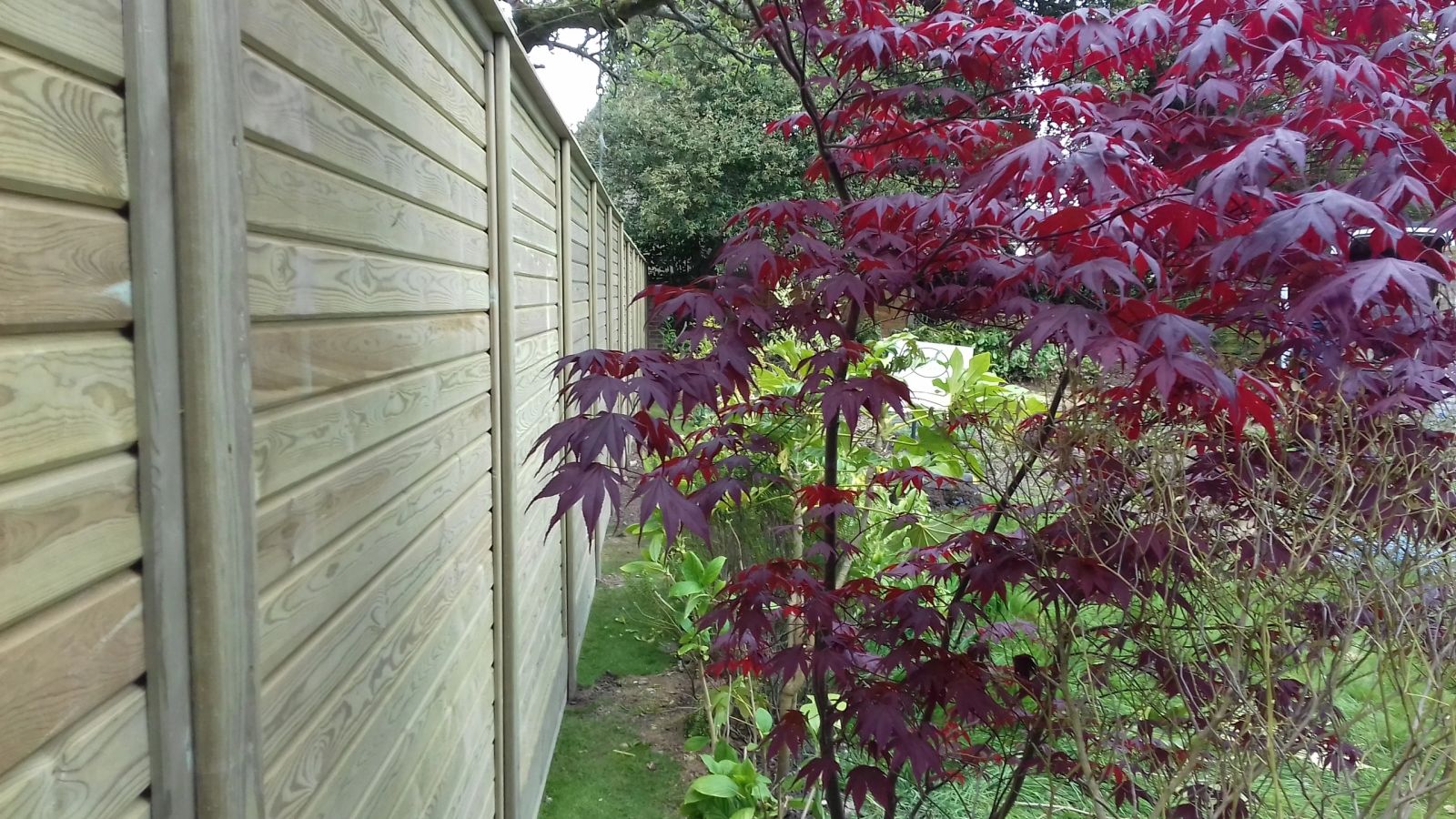
Why nothing should be fixed to the tree
Nailing a rail or panel to a trunk damages the bark, gives rot a way in and ties the fence to something that grows and moves. As the trunk widens it pushes the fence out, and in a storm the tree can rip it apart. The fence should stop with a clear gap on either side of the trunk.
- Bark damaged by nails and screws
- Fence pushed out as the trunk widens
- Storm movement passed straight to the fence
- Old fixings left buried in the wood
Protected trees
Trees under a preservation order, and many in conservation areas, are protected, and work that could damage them can need council consent. Digging close to roots can count. GOV.UK has general guidance on tree preservation orders and trees in conservation areas, and your council can confirm whether a particular tree is covered.
When roots have already lifted the fence
Roots can tilt posts, crack concrete bases and lift gravel boards. Often only the posts nearest the tree are affected, so repairing that stretch and re spacing it to avoid the root is enough. Our fence repair page covers the types of repair we do.
Trees belonging to next door
If the tree is on the neighbour's side, its roots may still cross under the fence line. You can plan posts around them on your side, but avoid cutting large roots without talking to the neighbour, because it may harm their tree.
Post types that help near roots
Where roots make a full concrete base awkward, a post set in a smaller hole with gravel and compacted soil, or a spur fixed to the side of a short post, can work. Concrete posts are heavy and need a solid hole, so timber posts are sometimes easier to fit between roots. We choose what suits the ground on the day.
Gaps beneath the fence
Roots near the surface can leave uneven ground under a run, so gravel boards may need to step or be cut to follow it. A small gap below a board near the trunk is better than forcing a board down onto a root, which can crush it or lift the fence later.
Leaves, sap and the fence finish
Fences under trees stay shaded and damp and collect sap and leaves on the top rails. A treatment or stain helps timber cope, and clearing debris from the top of gravel boards stops wet leaves lying against the bottom of the panels. Our maintenance guide covers routine care.
Where a large tree overhangs the fence, it is also worth checking for dead branches before the new fence goes in, so a falling limb does not damage it in its first winter.
What to send us
Photos of the tree, the base of the trunk and the fence line on both sides of it help us plan. Tell us whose tree it is and whether you know of any protection. We give a written quote showing where posts will go around it.
Frequently asked
Can I attach my fence to a tree?
It is best not to. Fixings damage the tree, and as it grows and moves it pushes the fence out of line.
How close to a tree can a fence post go?
It depends on the tree and its roots. Posts are placed where the hole misses large roots, which may mean shifting them along the line.
What if a root is in the way of a post?
We move the post rather than cut through a large root, adjusting the panel or building a closeboard section to fit.
Do I need permission to fence near a protected tree?
Work that could harm a protected tree may need council consent. Check with your council before digging near it.
Tree in the way of your fence?
Send photos of the trunk and the fence line and we will plan posts around it.