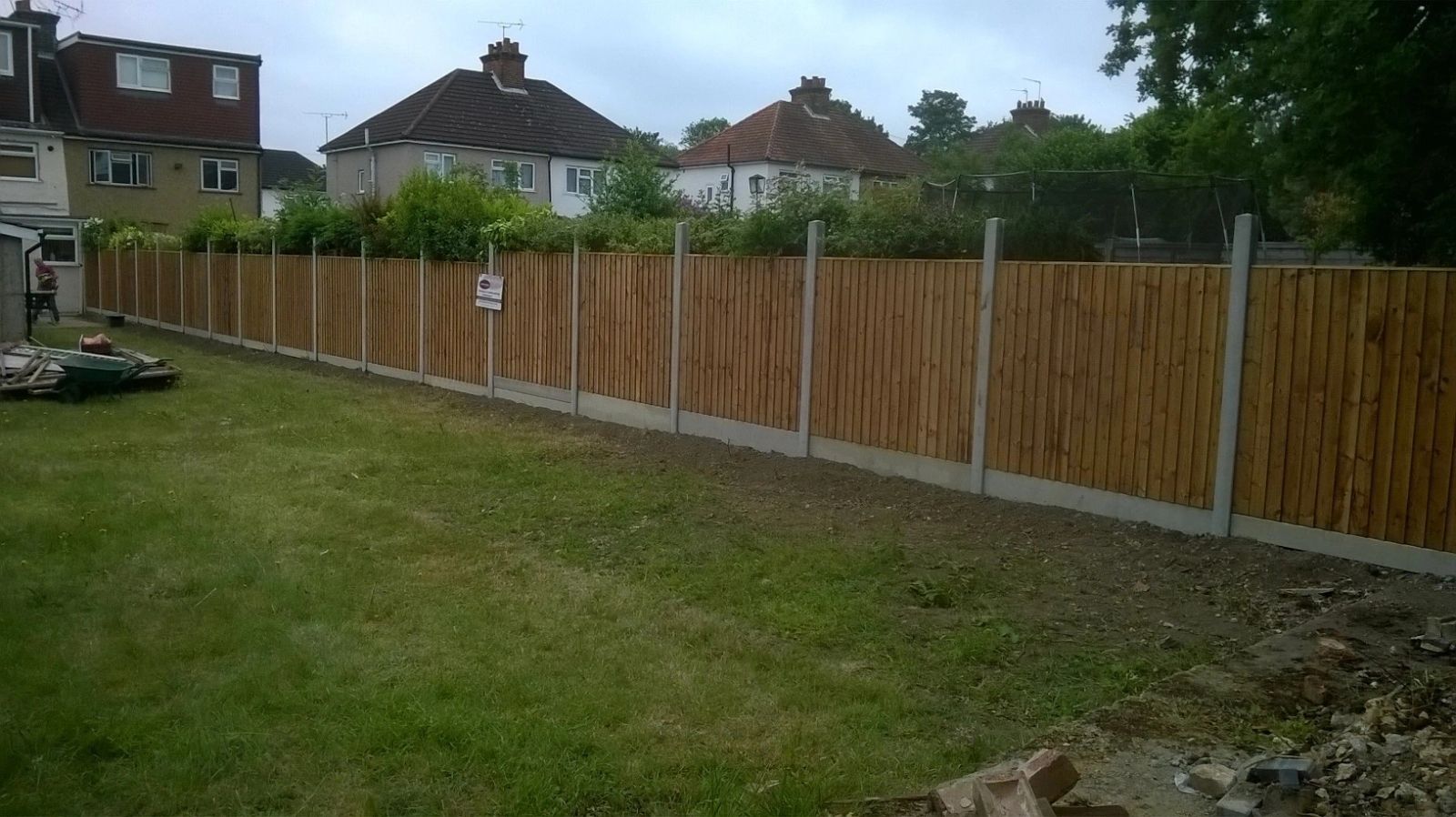
Bow Top Fencing in Waltham Forest
The rounded head pattern used around play areas, schools and communal grounds because there is nothing sharp at head height.
Bow top is the pattern you have walked past a thousand times without naming it: vertical bars looped over at the top into a rounded head, no points, no finials, nothing that catches a coat or a hand.
That head detail is the whole reason it exists. Around a play area, a nursery boundary, a school field or a housing association green, the specification question is not how it looks but what happens when a child goes over it. Bow top answers that better than any pointed railing.
It is also quietly good looking, which is why it turns up on communal frontages and around estate greens where a palisade line would feel like a compound and a timber fence would be kicked through inside a year.
Where this is the right answer
- Play areas, nurseries and school boundaries where a pointed top is not acceptable
- Communal greens and estate frontages that need a boundary but not a barrier
- Parks, verges and footpath edges where visibility through the line matters
- Anywhere a boundary has to survive being climbed rather than pretend it will not be
Bow top is not a security product and we will not sell it as one. It is climbable by design and it screens nothing. Where the brief is deterrence or a site perimeter, vertical bar at height or weld mesh is the honest specification and costs less anxiety later.
What is different about Waltham Forest
We cover the schools, greens and amenity spaces across Waltham Forest Council, working around Walthamstow Central (Victoria line / Overground), Leyton, Chingford and site access off A112 Hoe Street / A104 Lea Bridge Road. Where a boundary encloses a space in use, we phase the line so the site is never open overnight.
Because wind funnelled off the Lea Valley regularly takes out weak panel fences on the eastern boundaries, the post work is specified before the pattern. Gate posts get upsized where a gate is used constantly, and bay centres are shortened where the ground is soft.
Colour tends to be decided by what is already on site in Waltham Forest. Where a scheme has an existing palette we match the powder coat to it, so a new run beside Hoe Street does not announce itself as the newest thing there.
How it is specified
- Typical height
- 900mm to 1500mm for play and amenity boundaries
- Head detail
- Continuous looped bow top, no points, no finials
- Infill
- Vertical bars at close centres, with reduced centres where small children use the space
- Posts
- Set into concrete, with gate posts sized up where a gate hangs from them
- Finish
- Galvanised then powder coated, most often black, green or blue
Colour is usually the specification decision that gets argued over. Powder coat over galvanising holds the colour without annual repainting, which matters when the maintenance budget is a person with a van and forty sites.
How we build it
1. Set out the line
Play boundaries are set out to the surfacing edge first, because the fence line and the safer surfacing edge have to agree.
2. Post work
Posts concreted at measured centres, with gate posts upsized so a gate that gets used all day does not drag the line out of plumb.
3. Gates and self closers
Pedestrian gates hung to swing clear of the surfacing, with self closing hinges where the client asks for them.
Common questions
- Why is bow top used around play areas?
- Because the top is a continuous rounded loop rather than a point or a finial. When a child climbs the fence, and they will, there is nothing at the top to catch clothing or skin.
- Is bow top strong enough for a school boundary?
- For an amenity and play boundary, yes. For a perimeter that has to resist forced entry out of hours, it is the wrong product and we would specify vertical bar or mesh instead.
- Does bow top come with matching gates?
- Yes, single pedestrian gates and double gates are made in the same pattern so the line reads continuously, with the gate frame heavier than the fence bays because it takes all the movement.
- What colours are available?
- Any standard powder coat colour. Black, dark green and blue cover most amenity and school work, but the coating is chosen at order stage so a housing client can match an existing estate palette.
- Can bow top have closer bar spacing for toddlers?
- Yes. Where the space is used by under fives we reduce the bar centres so a small head cannot pass between bars, and we set that out before fabrication rather than adapting on site.
- What do most Waltham Forest customers ask you for on this?
- Victorian terraces across Walthamstow and Leyton, 1930s semis in Chingford, and post-war estates around Leyton shape most of it, so the common brief here is a run measured to an existing boundary rather than an off the shelf size. Wind funnelled off the Lea Valley regularly takes out weak panel fences on the eastern boundaries, and that shows up in the post work more than in the steel above it.
Bow top for schools and grounds in Waltham Forest
Send the boundary length, the height you need and what the space is used for, and we will price the bays, the gates and the post work as separate lines. Fully insured, our own team on site.
Related metal work: Vertical bar fencing, Weld mesh fencing, Palisade fencing. Main hub: metal fencing and gates.
Nearby: Bow top fencing in Hackney, Bow top fencing in Haringey, Bow top fencing in Enfield.
Get My Free Quote — 24h Response
No callout fee · Free site visit · Friendly local team covering London & Hertfordshire.
Pay by debit or credit card, bank transfer or cash once the work and price are agreed. No deposit taken online.