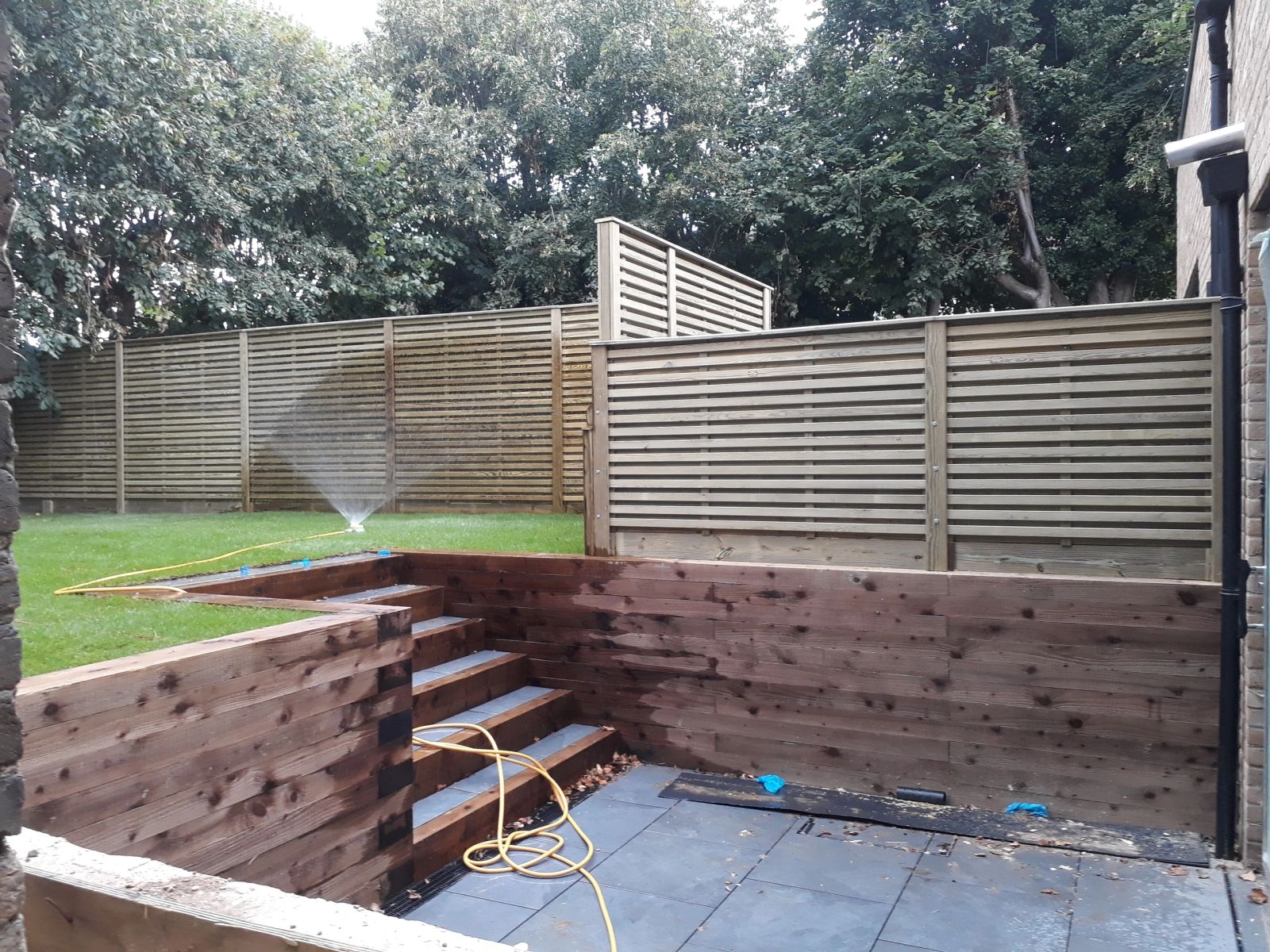
Stevenage Palisade Fencing, Specified Around the Risk
Steel palisade for yards, depots and compounds, where the boundary is there to be difficult to get through.
Palisade is bought by people with a risk register, not people with a garden. Profiled steel pales bolted to horizontal rails, triple pointed heads, no footholds, and nothing about it apologising for what it is.
It is specified where the boundary is the security measure: builders compounds, plant yards, depots, storage sites, substations and the rear of commercial units where the vulnerable point is a fence line nobody can see from the road.
The parts of a palisade line that fail are almost never the pales. They are the fixings, the rail ends and the gate. That is where we spend the specification effort and where a cheap line is cheap.
Who buys this and why
- Yards, depots, compounds and storage sites
- The unseen rear boundaries of commercial units
- Plant and machinery storage where theft risk is real and insurers ask questions
- Sites where an existing timber or mesh line has already been breached
Palisade is close to always the wrong product for a home. It looks industrial because it is industrial, most residential planning contexts will not welcome it, and the neighbours will remember it longer than you will. For a domestic boundary that needs to be secure, we specify vertical bar or a closeboard line with a proper post system instead.
Local notes for Stevenage
We are insured for commercial work across Stevenage Borough Council and will put the locking arrangement, the pale profile and the fixing type in writing on the quote, so an insurer or a managing agent can see exactly what has been fitted at Stevenage.
Shared-with-neighbour fence runs are the norm — quotes need to cover boundary checks first, which changes foundation depth on a tall line before it changes anything else. On a 2400mm palisade run the post hole is the specification.
Palisade demand around Stevenage sits with Gunnels Wood industrial area and Pin Green industrial estate rather than the residential streets. Those are the boundaries where a fence line is the only thing between a yard full of plant and a quiet Sunday morning.
Specification at a glance
- Typical height
- 1800mm to 3000mm depending on the risk
- Pale profile
- W or D section pales, triple pointed or round head
- Fixings
- Security fixings so pales cannot simply be unbolted from the outside
- Rails
- Two or three rails by height, with rail ends fixed into the post rather than surface bolted
- Finish
- Hot dip galvanised, powder coated where the client wants a colour
Galvanised is standard on palisade and colour is the exception. Where a site sits next to housing, a dark powder coat over the galvanising takes a good deal of the hostility out of the line without weakening it.
From visit to handover
1. Risk walk
We walk the boundary looking for the weak point rather than measuring the easy bit: the low wall, the bin store, the gate that has been forced before.
2. Foundations and posts
Posts concreted deep enough for the height, because a three metre line is a lever and a shallow foundation is where it gives.
3. Gates and closures
Gate frames made heavier than the fence, hung on commercial hinges, with the locking arrangement agreed in writing before fabrication.
Before you buy, the usual questions
- Does palisade need painting?
- Not if it is hot dip galvanised. Colour is optional powder coat on top. What does need attention is the ironmongery on the gates, which we check as part of any maintenance visit.
- How high should palisade fencing be?
- 1800mm is the practical minimum for anything security related, 2400mm is the common depot height, and 3000mm gets specified where the insurer or the risk assessment asks for it. Height alone is not security, so the fixings and the gate matter just as much.
- What is the difference between W and D section pales?
- W section is the deeper, stiffer profile and the usual choice for security work. D section is lighter and used where the line is more about demarcation than resistance.
- Can you fit a palisade gate wide enough for lorries?
- Yes. Wide vehicle openings are made as double leaves or, where there is room to run, as a sliding gate. The constraint is usually the ground and the swing space, so we measure the swept path before we quote a leaf size.
- Can palisade pales be unbolted from outside?
- On a cheap line, yes, and that is exactly how sites get entered without a single cut. We use security fixings so the pales cannot be removed from the public face with a spanner.
- Is access a problem for palisade fencing around SG1?
- It is planned rather than discovered. Deliveries come in off A602 / A1(M), and where a street near Stevenage (East Coast Main Line) is tight we arrange the offload and the carry before the start date so nobody spends the morning blocking a road.
Been breached already?
We will walk the line with you and quote the weak point first, which is often a gate or a low section rather than the whole boundary. Call 07885907880 for a free site visit.
Related metal work: Bow top fencing, Driveway gates, Vertical bar fencing. Main hub: metal fencing and gates.
Nearby: Palisade fencing in Hitchin, Palisade fencing in Welwyn Garden City, Palisade fencing in Letchworth Garden City.
Get My Free Quote — 24h Response
No callout fee · Free site visit · Friendly local team covering London & Hertfordshire.
Pay by debit or credit card, bank transfer or cash once the work and price are agreed. No deposit taken online.