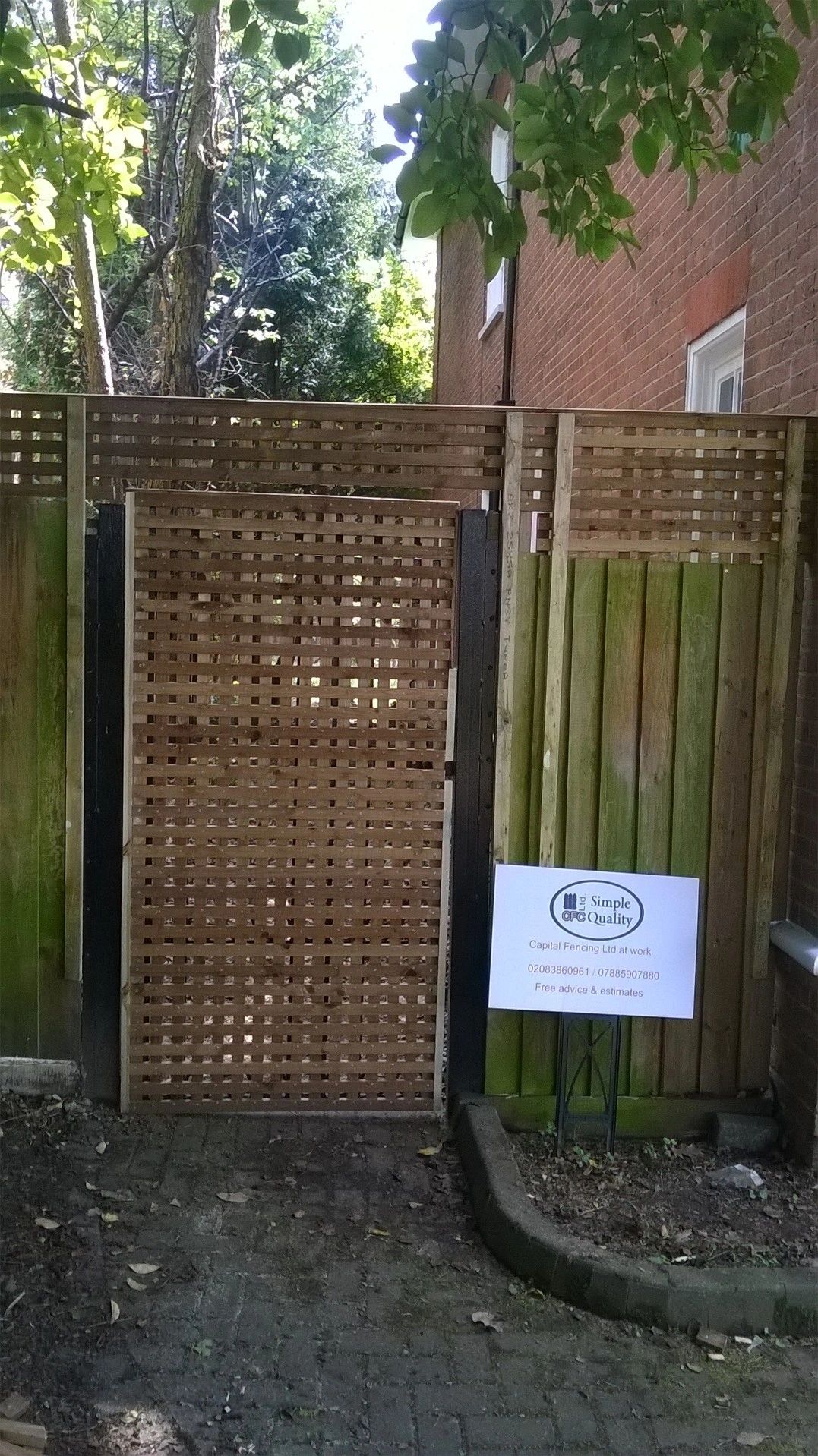
Metal Side Gates Made to Your Opening in Finchley
The gate that gets used forty times a day: side returns, alleys, bin access and communal entrances.
A side gate is the hardest working thing on a boundary. It gets opened with an elbow, kicked shut, leaned on with a bin in one hand, and left swinging in the wind, and it does that several times a day for years.
Which is why the specification is about use rather than looks. Frame stiffness, hinge quality, where the lock sits, whether it self closes, and how the gate behaves when the ground under it moves are the questions that decide whether you are happy with it in five years.
Steel side gates suit alleys and side returns particularly well because the opening is often narrow, damp and awkward, and a timber gate in that position swells, drops and eventually catches on the paving.
How we build it
1. Check the opening
Alley openings are rarely parallel, so both sides are measured top and bottom, and the paving fall under the gate is checked so the leaf clears through its whole swing.
2. Fix to what is there
Where there is sound masonry we resin fix, where there is not we concrete a steel post, and where the wall is failing we say so before it becomes our problem and yours.
3. Ironmongery and closure
Locks, keeps and self closers fitted and adjusted with the gate hung, then handed over working rather than working once it settles.
How it is specified
- Typical width
- 800mm to 1200mm for a side return, wider where bins have to pass
- Typical height
- 1800mm to 2100mm where the gate is also a security point
- Infill
- Vertical bar, mesh, or solid sheet where the gate needs to screen as well as close
- Ironmongery
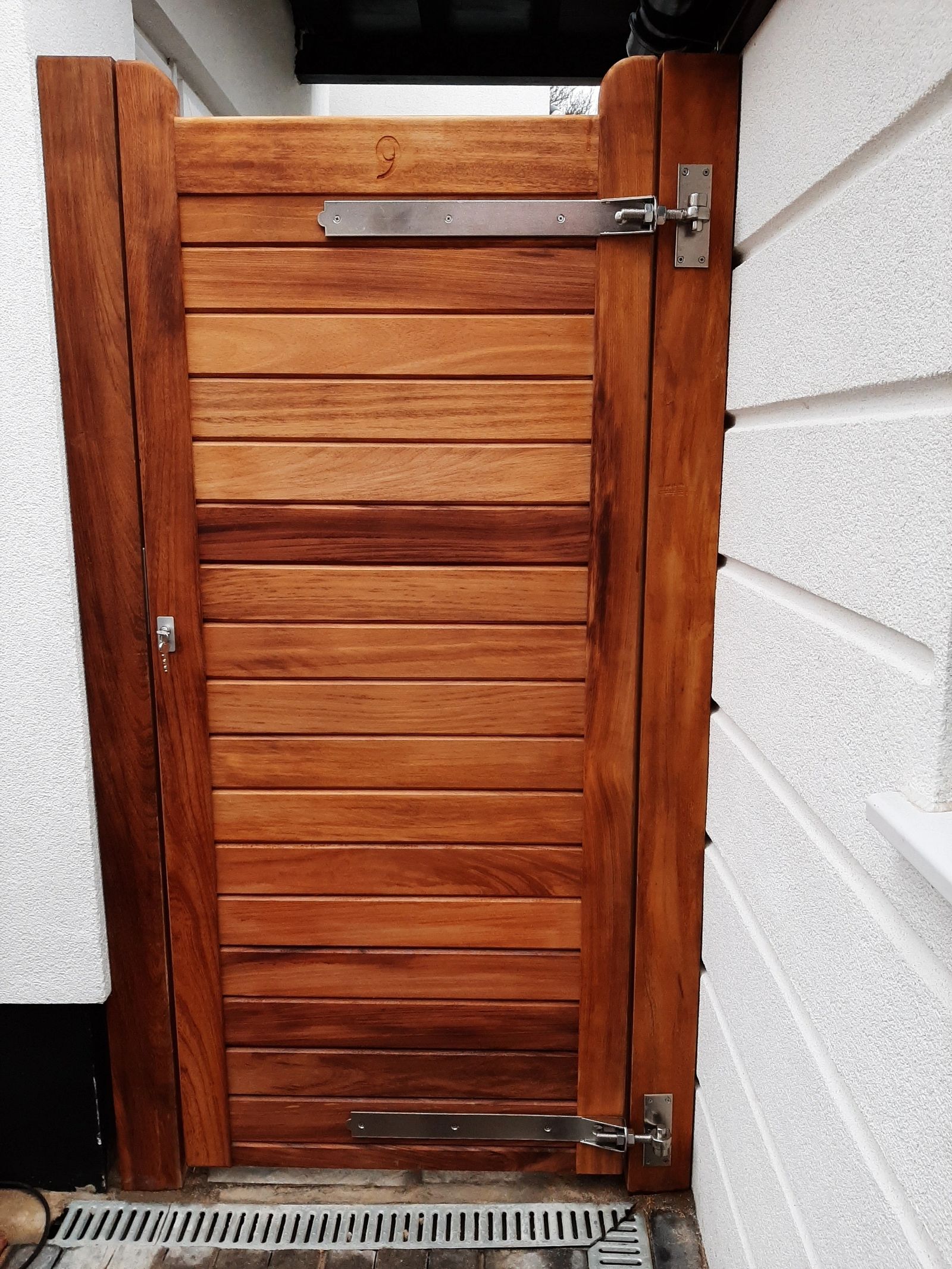
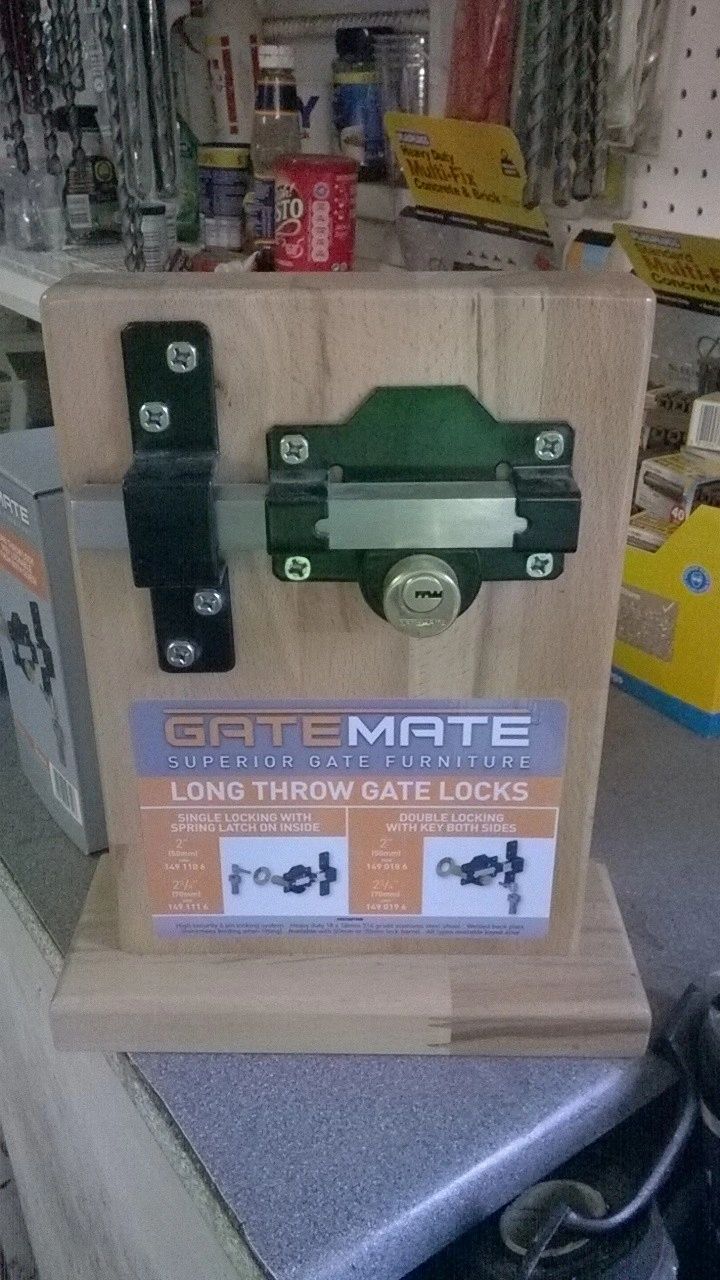
- Galvanised hinges, keyed or thumb turn locks, self closers where a communal gate must not be left open
- Posts
- Steel posts set in concrete, or fixed to sound masonry with resin anchors
Side gates live in the wettest, least ventilated part of a property, so the galvanising matters more here than anywhere else on the boundary. Any cut edge from a site adjustment is treated before we leave.
What is different about Finchley
Tree-root activity in clay soil regularly lifts old fence runs — full re-set is the typical brief, which is why the post fixing on a side gate here gets decided on the visit. Resin into sound brickwork where the passage has it, concreted steel where it does not.
On blocks and converted houses around N3, N12 we fit self closing communal gates, and we invoice managing agents directly where that is easier than collecting from each flat.
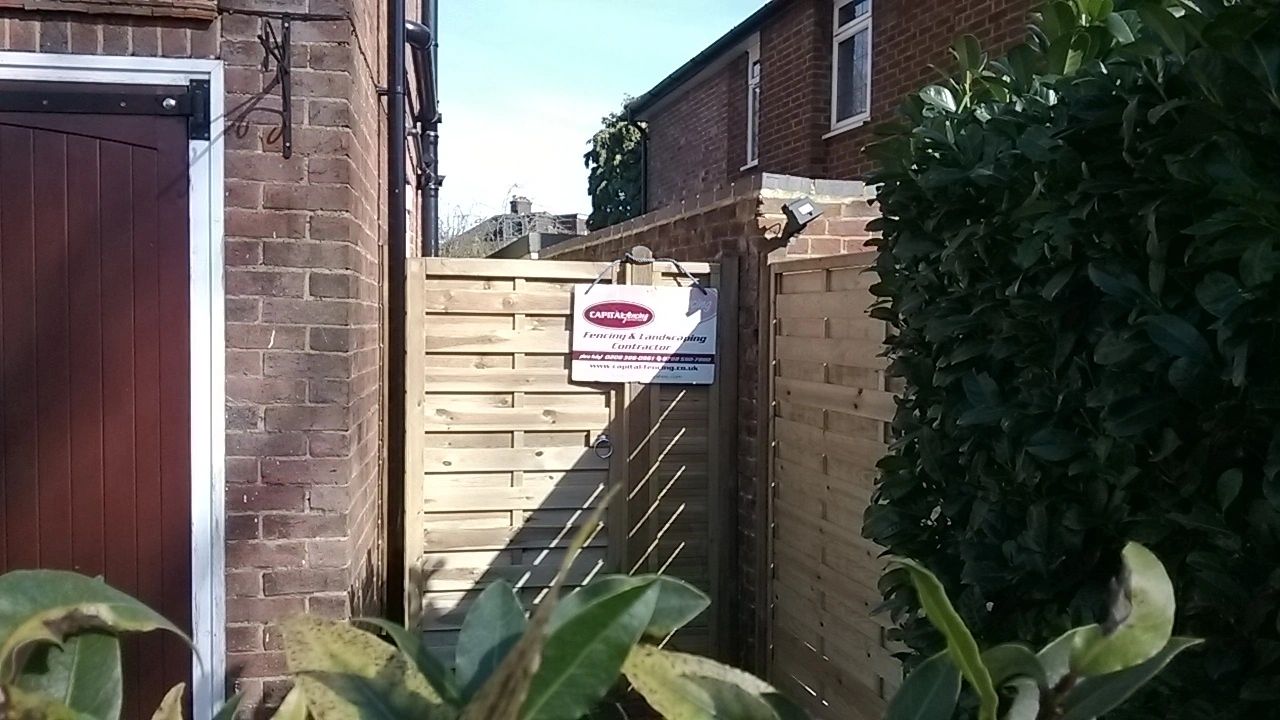
Side returns are the most common gate job we do in Finchley, because Edwardian terraces in Church End, large semis around Hampstead Garden Suburb borders, and 1930s housing in Woodside Park nearly always have a narrow passage down one side and that passage is how a garden gets entered.
Where this is the right answer
- Side returns and alleys between houses, where an unsecured passage is the way in
- Bin stores and refuse access on flats and small blocks
- Communal entrances that must close behind whoever used them last
- Rented property where the landlord wants something that survives tenants and years
A side gate on its own does not secure a boundary. If the fence either side of it is a rotten timber run that can be pushed over, the gate is decoration. We will quote the gate and tell you plainly that the fence beside it is the weak point rather than take the easy order.
Common questions
- Is a landlord responsible for a communal side gate?
- In most blocks the gate falls to the freeholder or the managing agent rather than an individual leaseholder, but it depends on the lease. We quote per gate and can invoice a managing agent directly.
- What height should a side gate be?
- 1800mm is the usual minimum where the gate is part of the security line, and 2100mm where the passage is out of sight. Below about 1500mm it is a demarcation gate rather than a deterrent.
- Can the gate be solid so people cannot see through?
- Yes, a steel frame with sheet infill gives you a solid leaf that will not warp the way a boarded timber gate can in a wet passage.
- Can a side gate be made to fit an out of square alley?
- Yes, and it usually has to be. Openings between houses are rarely parallel, so we measure top and bottom on both sides and make the frame to those figures rather than trimming a stock gate.
- Can you fit a self closing gate for a communal entrance?
- Yes. Self closing hinges are the standard answer where a gate must not be left propped, and on communal work they are usually the difference between a boundary that stays secure and one that does not.
- What do most Finchley customers ask you for on this?
- Edwardian terraces in Church End, large semis around Hampstead Garden Suburb borders, and 1930s housing in Woodside Park shape most of it, so the common brief here is a run measured to an existing boundary rather than an off the shelf size. Tree-root activity in clay soil regularly lifts old fence runs — full re-set is the typical brief, and that shows up in the post work more than in the steel above it.
Side and communal gates in Finchley
Send the opening width and a photo down the passage. We quote the gate, the posts, the ironmongery and any making good separately, and we will tell you if the fence beside it is the real weak point.
Related metal work: Driveway gates, Railings and estate fencing, Bow top fencing. Main hub: metal fencing and gates.
Nearby: Side and pedestrian gates in Barnet, Side and pedestrian gates in Mill Hill, Side and pedestrian gates in Edgware.
Get My Free Quote — 24h Response
No callout fee · Free site visit · Friendly local team covering London & Hertfordshire.
Pay by debit or credit card, bank transfer or cash once the work and price are agreed. No deposit taken online.