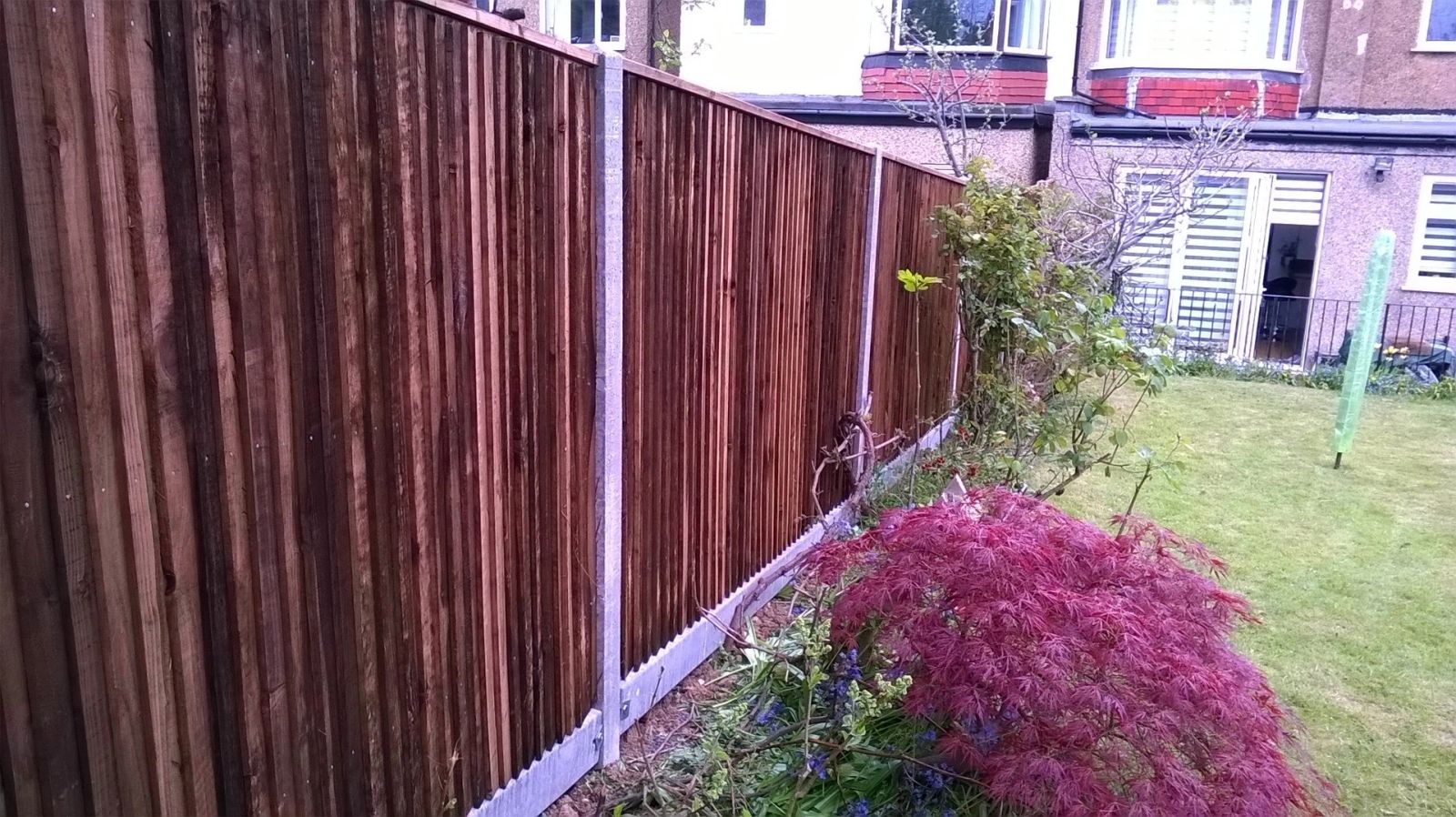
Mill Hill Vertical Bar Fencing, Specified Not Guessed
The workhorse steel boundary: vertical bars through horizontal rails, sized from a light frontage run up to a genuine perimeter.
Vertical bar is the specification that scales. The same basic idea, bars passing through top and bottom rails, covers a 900mm run across a communal frontage and a 2400mm perimeter around a substation, and the difference between them is section size, bar centres and head detail rather than a different product.
That is why it is the most specified metal fence in the country and the one most often bought wrongly. A light domestic section put on a perimeter looks the part and bends the first time a wheelie bin is dragged into it.
We price the section rather than the picture. Tell us what the boundary has to resist and how often it gets hit, and the bar diameter, the rail size and the post centres follow from that.
Where this is the right answer
- Site perimeters, yards, substations, pumping stations and utility compounds
- Communal frontages where a mesh line would look institutional
- Boundaries beside parking where vehicles will occasionally make contact
- Anywhere the boundary has to be seen through for surveillance
If the brief is privacy, vertical bar fails it completely. It is a see through boundary and it always will be. It is also more expensive per metre than weld mesh at the same height, so where appearance genuinely does not matter, mesh is the better value answer.
What is different about Mill Hill
The Mill Hill Conservation Area on the Ridgeway has strict rules on materials and finishes, which is why post holes on taller runs here get sized to the exposure rather than to a standard depth. On a 2400mm line the foundation is the fence.
Vehicle movement decides gate sizing on most Mill Hill sites. We check the swept path against the access off A1 / A41 and the turning available inside the gate line before quoting a leaf width, because a gate that cannot be opened fully in practice is a gate that gets left open.
We work across Barnet Council and can phase a perimeter so a live site is never left open. Where deliveries have to route via M1 J2 / A41 we book them around your access hours rather than ours.
How it is specified
- Typical height
- 900mm frontage runs up to 2400mm perimeter lines
- Head detail
- Blunt top, pointed top or extended bar above the top rail
- Bar centres
- Set to the brief, closed up where climbing or through reach is the concern
- Rails
- Two rails as standard, three where height or impact loading calls for it
- Finish
- Hot dip galvanised then powder coated for the full section, welds included
On tall runs the galvanising is not optional. A powder coat alone over bare steel will fail at every drilled hole and weld within a couple of winters, and once it starts you are repainting the whole line.
How we build it
1. Survey the line
Levels, existing kerbs, drainage runs and vehicle swept paths are checked before section sizing, because a gate that fouls a kerb is a redesign not a snag.
2. Foundations
Post holes sized to the height and the exposure, concreted, with deeper settings where the run is tall or the ground is soft.
3. Install and hand over
Bays fitted, welds and cut ends made good, and a written record of the specification handed over with the invoice.
Common questions
- Does it need maintenance?
- A wash and an occasional check on the hinges and fixings. There is no annual repainting on a galvanised and powder coated line, which is where the cost comes back compared with timber.
- How is vertical bar different from palisade?
- Palisade uses wide profiled pales bolted to rails and reads as an industrial barrier. Vertical bar uses round or square bars through rails and reads as architectural. Palisade is usually cheaper at height; vertical bar is usually specified where the boundary is visible to the public.
- Can vertical bar take a matching gate?
- Yes, and it should. A gate leaf in the same pattern with a heavier frame and commercial hinges keeps the line continuous, which is what stops the gate becoming the weak point.
- Should the tops be pointed or blunt?
- Pointed heads deter climbing and are common on perimeters. Blunt heads are used where the public, and particularly children, are close to the line. The right answer depends on who is on each side of the fence.
- What height should a perimeter vertical bar fence be?
- It depends on what you are protecting, but 2000mm to 2400mm is the usual range for a site perimeter, and below about 1800mm it stops being a deterrent. We will tell you honestly if the height you have asked for will not do the job you have described.
- What do most Mill Hill customers ask you for on this?
- Large detached homes on the Ridgeway, 1930s semis around the Broadway, and modern infill near Mill Hill East shape most of it, so the common brief here is a run measured to an existing boundary rather than an off the shelf size. The Mill Hill Conservation Area on the Ridgeway has strict rules on materials and finishes, and that shows up in the post work more than in the steel above it.
Perimeter and frontage vertical bar in Mill Hill
Send a plan or a boundary length and tell us what the line has to resist. You get section sizes, bar centres, post depths and gate details written down, not just a rate per metre. Fully insured for commercial work.
Related metal work: Palisade fencing, Galvanising and powder coating, Weld mesh fencing. Main hub: metal fencing and gates.
Nearby: Vertical bar fencing in Edgware, Vertical bar fencing in Finchley, Vertical bar fencing in Barnet.
Get My Free Quote — 24h Response
No callout fee · Free site visit · Friendly local team covering London & Hertfordshire.
Pay by debit or credit card, bank transfer or cash once the work and price are agreed. No deposit taken online.