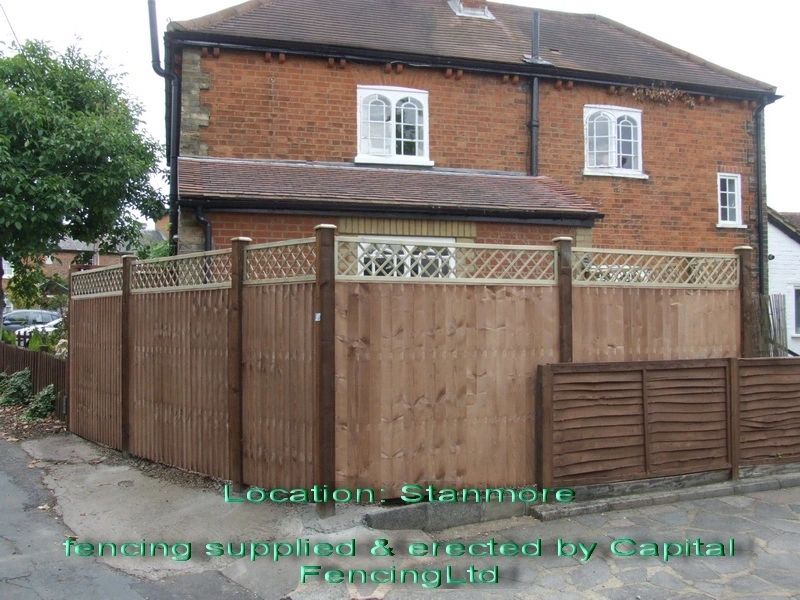
Site hoarding and perimeter fencing for construction work is judged on different criteria to a garden or commercial boundary: how quickly it can go up and come down, how it segregates pedestrians from site traffic, and whether it satisfies the principal contractor's own site safety plan.
We work with main contractors and smaller builders alike on this — from a full timber hoarding round a groundworks site to simpler heras-style temporary fencing for a shorter domestic extension project.
Hoarding vs temporary panel fencing
Solid timber hoarding is specified where full sightline blocking and a degree of noise containment matter — usually larger or longer-duration sites, particularly in residential areas where neighbours need visual and acoustic separation from the works.
Temporary panel (heras-style) fencing is faster to erect and remove and suits shorter-duration projects or sites where full sightline blocking isn't a requirement, but it offers less noise containment and a lower deterrent against casual trespass.
- Solid hoarding for longer-duration or residential-adjacent sites needing sightline/noise control
- Temporary panel fencing for shorter projects or lower-risk sites
- Pedestrian segregation barriers wherever site traffic and public footfall cross
- Signage and lighting fixed to the perimeter as required by the site safety plan
Phasing as the build progresses
Site perimeters rarely stay fixed for the whole build — as work moves from groundworks to superstructure to finishing, the fenced boundary often needs to shrink, move or reopen access at different points. We plan for this at the quoting stage rather than treating it as a one-off installation, so moving or reconfiguring sections later doesn't mean starting again.
Sign-off, documentation and removal
We can provide photographic records of the erected perimeter for your site file, and confirm the fencing meets whatever spec your principal contractor or site manager has specified (height, panel type, base weighting). At project end we remove all temporary fencing and hoarding and make good the ground where our own fixings have disturbed it.
Specification checklist
- 1Confirm hoarding vs temporary panel fencing against your site's noise/sightline needs
- 2Check pedestrian segregation is specified anywhere site traffic crosses public routes
- 3Plan for phased reconfiguration as the build progresses, not a fixed one-off perimeter
- 4Ask for photographic sign-off documentation for your site file
- 5Agree ground make-good terms for end-of-project removal
Frequently asked
What's the difference between hoarding and temporary site fencing?
Hoarding is solid timber panelling that blocks sightlines and helps with noise; temporary panel (heras-style) fencing is faster to erect and remove but more open, suiting shorter or lower-risk sites.
Can site fencing be reconfigured as the build progresses?
Yes, and we plan for it — most builds need the perimeter moved or reduced in stages as work moves from groundworks through to finishing.
Do you provide documentation for site safety files?
We can provide photographic records of the installed perimeter and confirm it matches your specified height, panel type and base weighting.
Do you remove and make good at the end of the project?
Yes — full removal of hoarding or temporary fencing and making good any ground disturbed by our own fixings is included as standard.