
Serving Mill Hill
Mill Hill Acoustic Fencing
An acoustic fence works on mass and sealed joints, not the panel style — a heavy, gap-free screen close to the noise source does more than any 'acoustic' label on its own.
We're called out for acoustic fencing around Mill Hill regularly, and comparing acoustic build methods is usually the first thing we check. Composite acoustic panels exist but are less common on domestic boundaries than a timber-and-mineral-wool build, largely on cost grounds for the run lengths involved. The Ridgeway, Nan Clark's Lane Mill Hill East station The newer estates around Mill Hill East were built over shallower topsoil above clay, typical of the area's underlying geology. Mill Hill sits on a plateau above the Totteridge Valley, and the higher ground around The Ridgeway is more exposed to wind than the sheltered streets below.
Why this comes up in Mill Hill
Within reach of Mill Hill Broadway (Thameslink) / Mill Hill East (Northern line), Mill Hill's large detached homes on the ridgeway, 1930s semis around the broadway, and modern infill near mill hill east throw up a fairly consistent brief: a sacrificial timber facing fixed to the outer face of a mineral-wool-cored panel protects the weatherproofing layer beneath from UV and physical damage, and can be replaced on its own if it weathers or is damaged without disturbing the acoustic core. Mill Hill sits on a plateau above the Totteridge Valley, and the higher ground around The Ridgeway is more exposed to wind than the sheltered streets below.
Comparing acoustic build methods
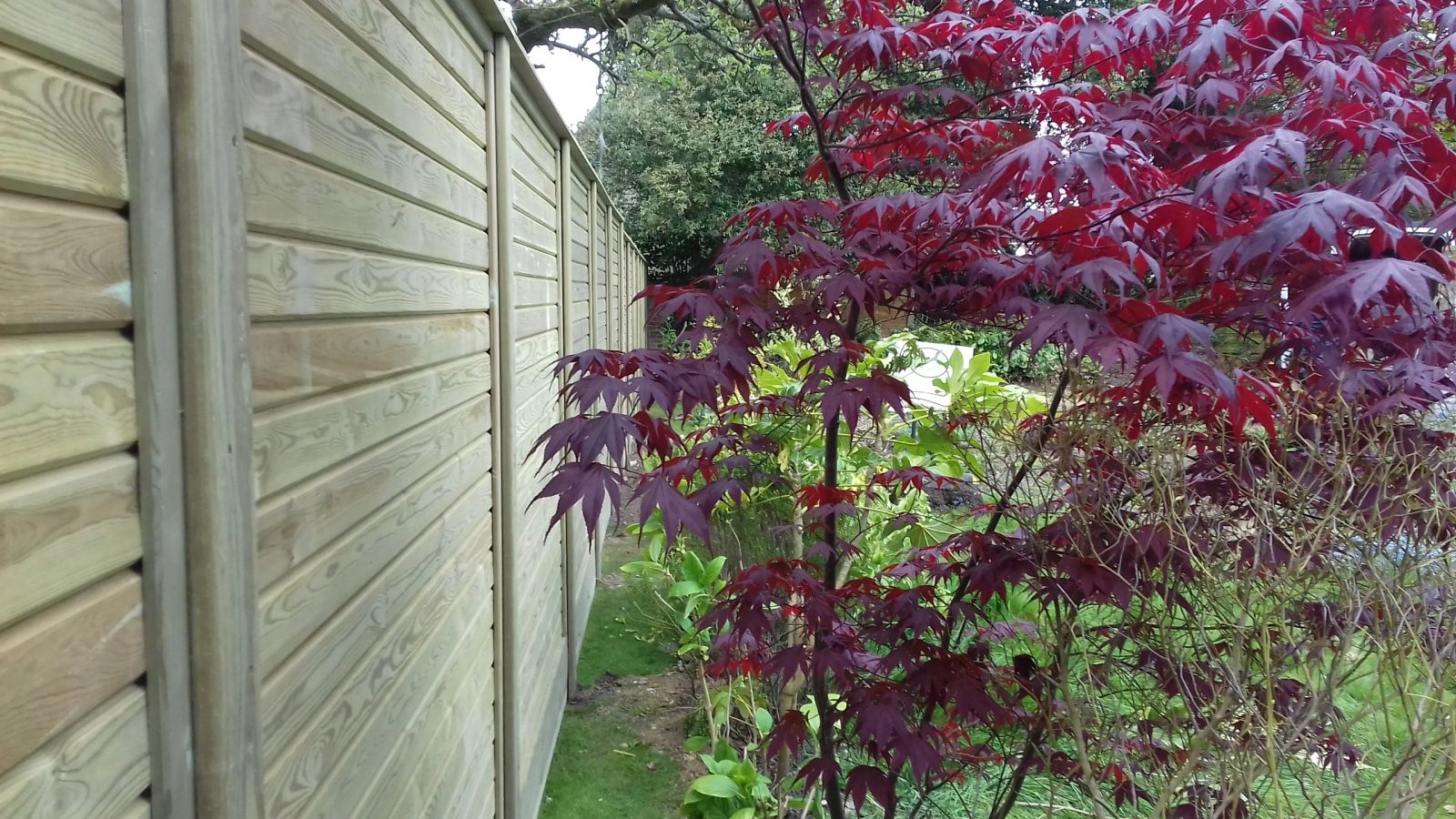
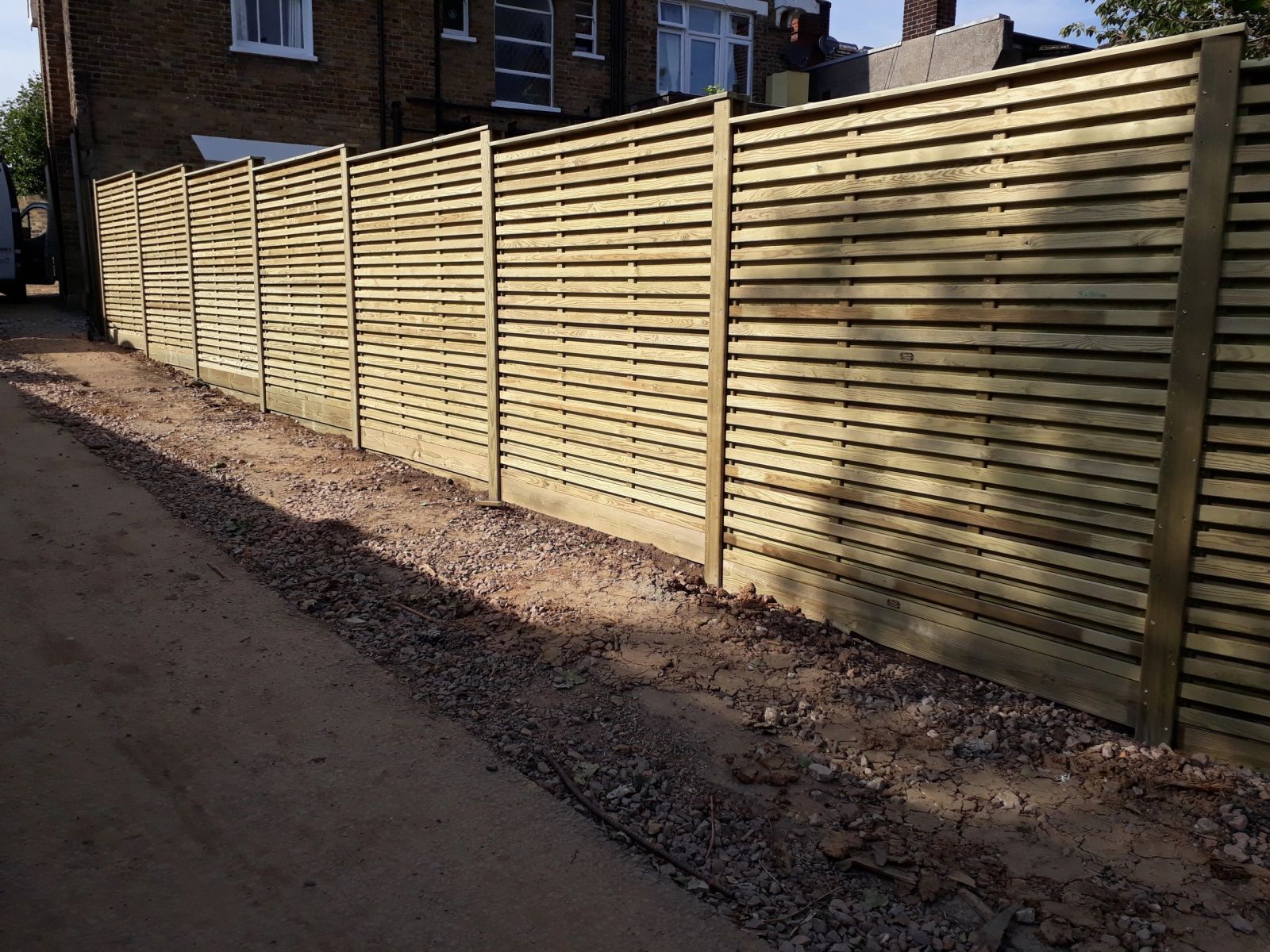
A standard lap-panel fence, built from thin overlapping boards with a gap at every joint, does very little acoustically even at height, while a tongue-and-groove or shiplap double-skin build with sealed joints performs noticeably better even at a shorter run.
Composite acoustic panels exist but are less common on domestic boundaries than a timber-and-mineral-wool build, largely on cost grounds for the run lengths involved.
Mineral-wool cassette panels
A cassette-style acoustic panel encloses a mineral-wool core within a rigid outer frame, giving a factory-sealed unit that avoids the on-site infill and drying-out risks of a built-up double-skin timber panel.
Cassette panels are typically fixed between posts with a captive rebate, and a damaged unit can usually be lifted out and replaced individually rather than requiring the whole run to be rebuilt.
Sacrificial facing over a core acoustic build
A sacrificial timber facing fixed to the outer face of a mineral-wool-cored panel protects the weatherproofing layer beneath from UV and physical damage, and can be replaced on its own if it weathers or is damaged without disturbing the acoustic core.
This two-layer approach separates the decorative, weather-facing element from the performance-critical core, which is a different design logic from a standard fence where the visible boards are usually also the only structural element.
Comparing a garden barrier with indoor glazing upgrades
A boundary barrier and secondary or acoustic glazing address different noise paths — one the garden and open windows, the other noise transmitted through the building fabric — and comparing them purely as alternatives misses that they solve different problems.
Where budget is limited, prioritising whichever path is currently the weakest link, rather than defaulting to a fence because it's the more visible option, generally gives a more noticeable improvement.
Planning permission over 2m and height applications
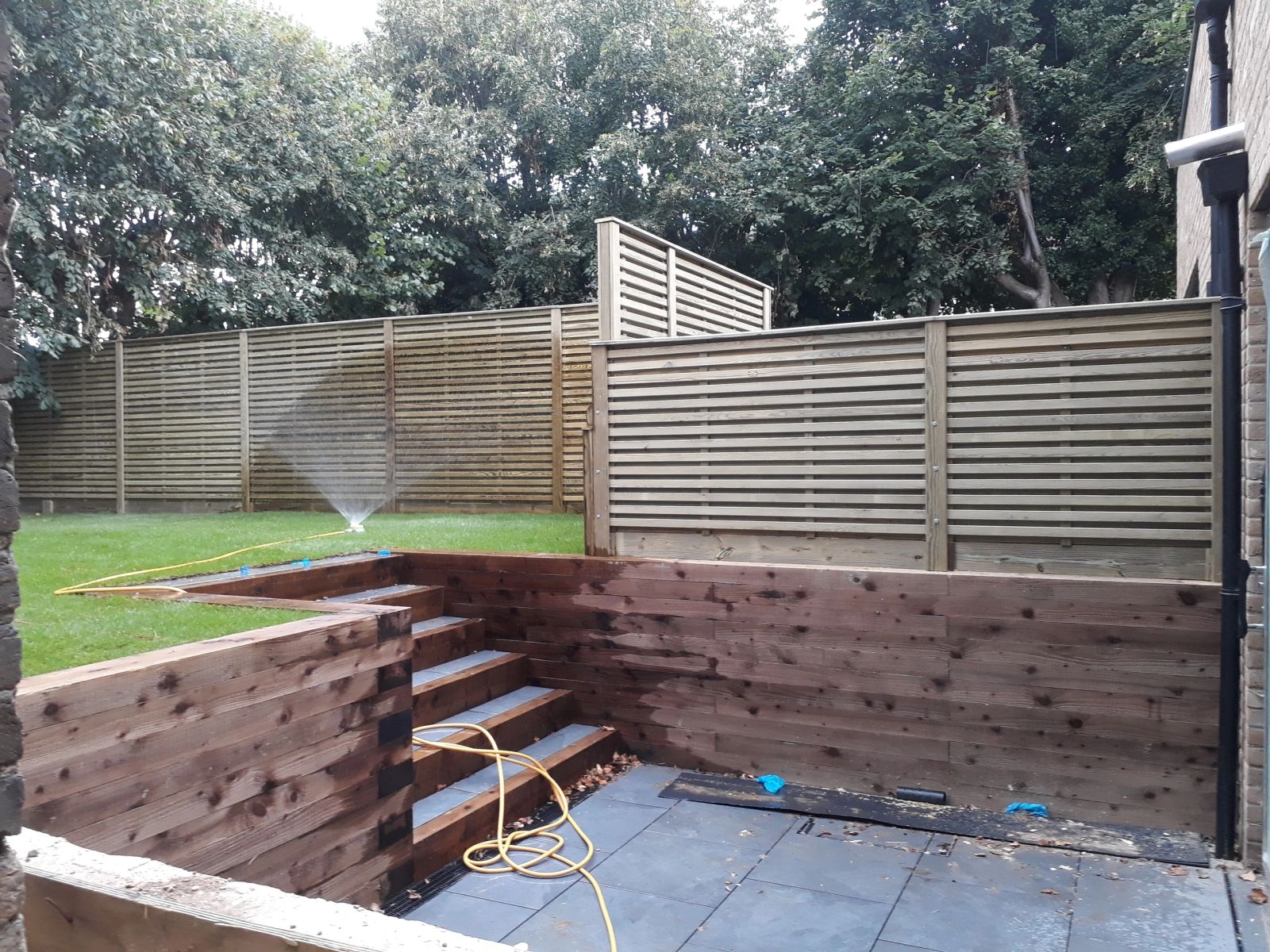
A fence over two metres generally needs planning permission unless a specific permitted development allowance applies, and that limit is especially relevant on an acoustic job where extra height is often what makes the barrier effective.
Where the required height for noise screening exceeds the permitted limit, a planning application addressing the acoustic justification is the usual route rather than building over height without consent.
Noise sources above garden level from flats or extensions
A rear extension or block of flats overlooking a garden can direct noise — voices, music, mechanical plant on a flat roof — downward and across in a way a ground-level fence doesn't intercept at all.
Where the dominant complaint comes from an elevated source like this, the practical response usually shifts toward screening at the receiving property's own upper floors or terrace rather than the ground-level boundary.
Comparing a garden barrier with indoor glazing upgrades is the detail that decides most acoustic fencing jobs here — a boundary barrier and secondary or acoustic glazing address different noise paths — one the garden and open windows, the other noise transmitted through the building fabric — and comparing them purely as alternatives misses that they solve different problems. Milespit Hill, Hammers Lane Totteridge Valley footpath Nan Clark's Lane borders the Totteridge Valley green belt, where development and boundary changes are restricted by planning policy. The former Mill Hill Barracks site off Milespit Hill was redeveloped for housing, and the area's military history is well documented.
Frequently asked
Can an acoustic fence include a gate?
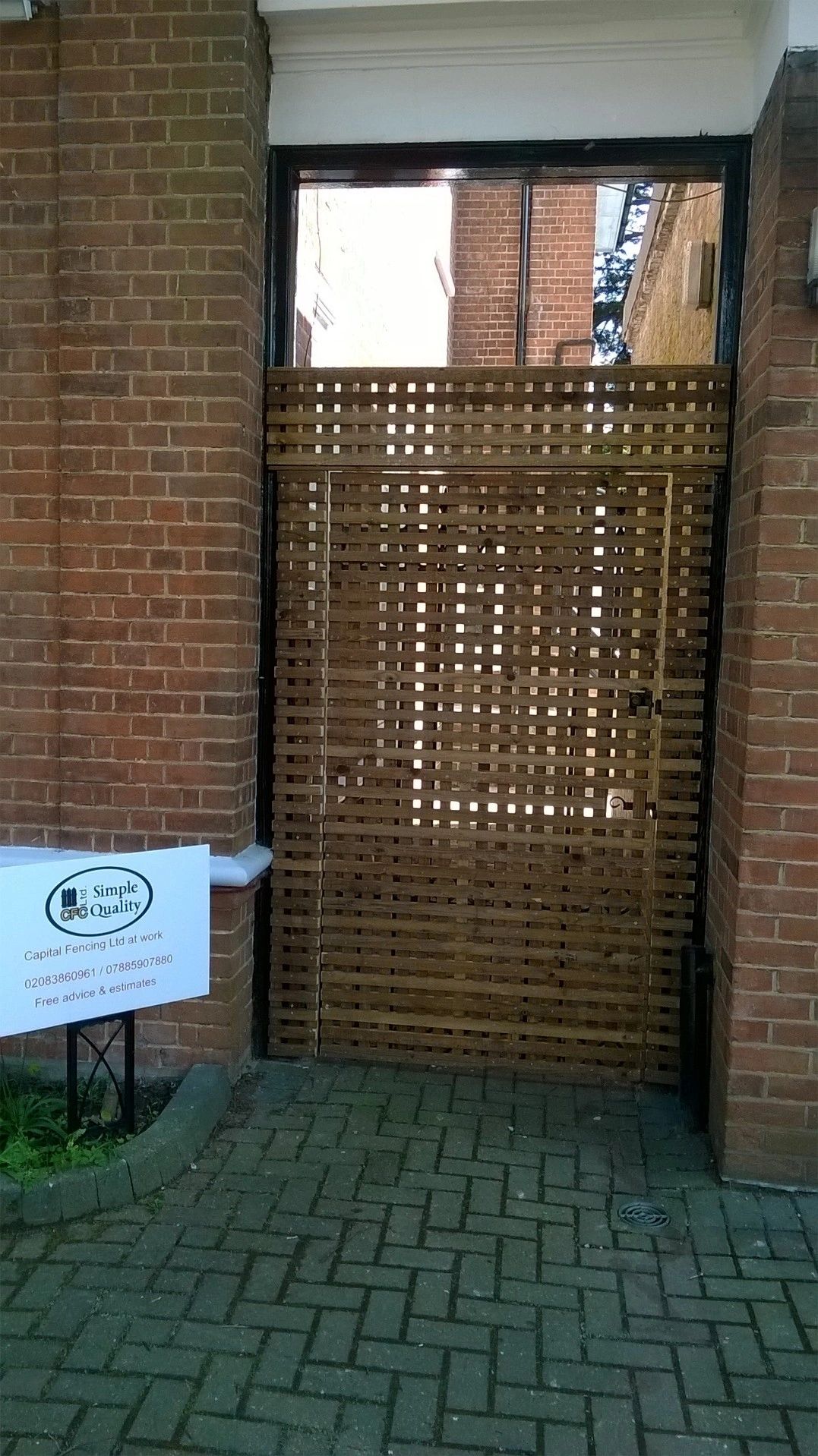
Yes, though a gate is the weak point in an otherwise sealed run since it has a working gap around its edges — we minimise that with overlapping stops rather than a simple butt joint. The Ridgeway, Hammers Lane Mill Hill East station The former Mill Hill Barracks site off Milespit Hill was redeveloped for housing, and the area's military history is well documented.
Do I need planning permission for a taller acoustic fence?
A fence over two metres generally needs planning permission unless a specific permitted development allowance applies, so height should be checked against the site before committing to a design.
Is this the same product used on motorway noise barriers?
The principle — mass and sealed joints — is the same, but motorway barriers are engineered and tested to a specified rating, which a domestic fence isn't. The newer estates around Mill Hill East were built over shallower topsoil above clay, typical of the area's underlying geology.
Can I fix acoustic panels to an existing wall instead of rebuilding it?
Sometimes — extending or fixing panels to an existing wall can add height and mass, but the wall's structural condition needs checking first to confirm it can carry the extra load.
Can a single damaged acoustic panel be replaced without rebuilding the run?
With a cassette-style system, yes — an individual damaged unit can usually be lifted out and replaced without disturbing the rest of the boundary.
Does distance from the road affect how well a fence works?
Yes — a barrier placed closer to the noise source tends to perform better for a given height than one set further back, because it intercepts the sound sooner.
Why does my fence rattle or whistle in the wind?
This usually comes from a loose fixing or a small gap in the joints, which is worth fixing since the same gap can also be letting sound through.
Is it worth getting a noise survey before ordering an acoustic fence?
Yes — even an informal comparison of noise levels at different times of day helps set a realistic height and specification before materials are ordered.
Facing a busy road or railway?
We measure from the actual noise source, not a standard fence height, before designing the build. We're on site around Mill Hill via A1 / A41 regularly.
Get a site-specific quoteGet My Free Quote — 24h Response
No callout fee · Free site visit · Friendly local team covering London & Hertfordshire.
Pay by debit or credit card, bank transfer or cash once the work and price are agreed. No deposit taken online.