
This decision sits right at the start of any decking project, because it affects cost, maintenance and how the deck ages for the next 15-20 years, not just how it looks on day one.
Pressure-treated softwood
Best for: Budget-conscious decks, gardens where the owner is happy to maintain the finish
- Significantly lower material cost
- Wide availability of boards and matching sub-frame timber
- Straightforward to cut, fix and repair on site
- Needs re-staining or oiling regularly to look its best and shed water
- Softer surface marks and wears faster under heavy footfall or furniture
- Shorter realistic lifespan than hardwood if maintenance lapses
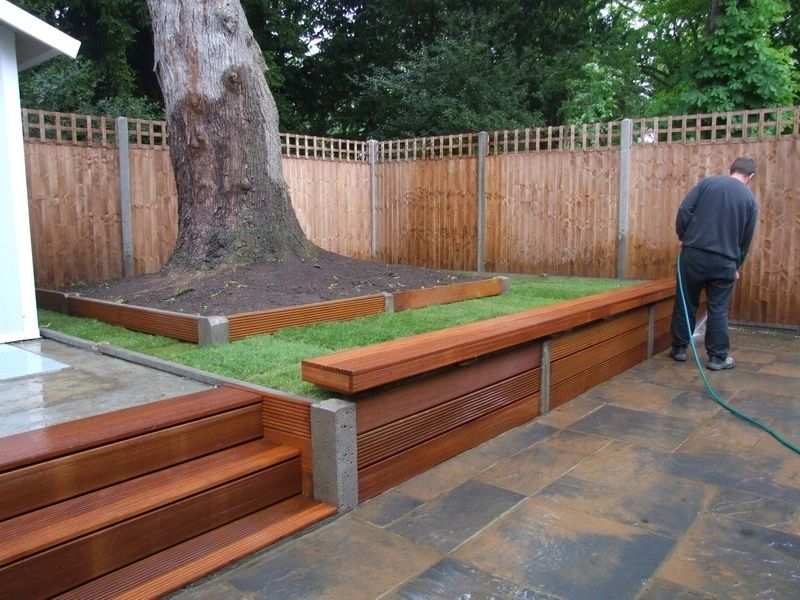
Hardwood decking
Best for: Long-term investment decks, heavily used entertaining areas
- Naturally dense and durable, resisting wear and rot far longer
- Ages to an attractive silver-grey if left untreated, or holds oil well if maintained
- Better underfoot durability for heavy-use areas
- Considerably higher material cost
- Harder timber takes more care and the right fixings during installation
Side by side
| Softwood | Hardwood | |
|---|---|---|
| Cost | Lower | Higher |
| Maintenance | Regular staining/oiling | Occasional oiling or leave to grey |
| Durability underfoot | Softer, marks more easily | Dense, wears well |
| Typical realistic lifespan | Shorter without upkeep | Longer |
Which should you choose?
If budget is the main driver and you're prepared to keep on top of an annual treatment, softwood delivers a good-looking deck at a fair price.
If you want a deck that ages well with minimal intervention and see heavy use, hardwood's higher price buys real durability and less upkeep over the years.
Softwood for value with a maintenance commitment; hardwood for longevity and lower ongoing effort, at a higher initial cost.
Planning a new deck?
We'll talk through softwood, hardwood and composite options against your budget and how the space will actually be used.
Frequently asked
Does softwood decking rot faster than hardwood?
Left untreated, yes — pressure treatment slows this significantly, but the surface still needs periodic attention that hardwood needs less of.
Is composite better than both?
It's a different trade-off again — see our composite vs timber decking comparison for that specific decision.
Can hardwood decking be left unfinished?
Yes, many hardwoods weather to an attractive grey if left untreated, though oiling maintains the original colour if preferred.
Which is safer when wet?
Surface treatment and grooved boards matter more than species here — see our guide on preventing slippery decking.