
Comparisons
Choosing Deck Boards: Softwood, Hardwood or Composite
Pick deck boards by how much upkeep you want. Pressure treated softwood is the most affordable and needs treating every couple of years; hardwoods such as Balau and Ipe are dense and naturally durable; composite needs no sanding or oiling.
Deck boards are the part of a deck you see and walk on, so they get most of the attention when people plan a new deck. They are also the easiest part to get wrong: a board that looks lovely in a showroom can be slippery under trees, fade badly in full sun or twist on a frame that was not built to suit it.
This guide explains the three board types we lay across London and Hertfordshire, what each is like to live with, and the questions worth answering before you choose.
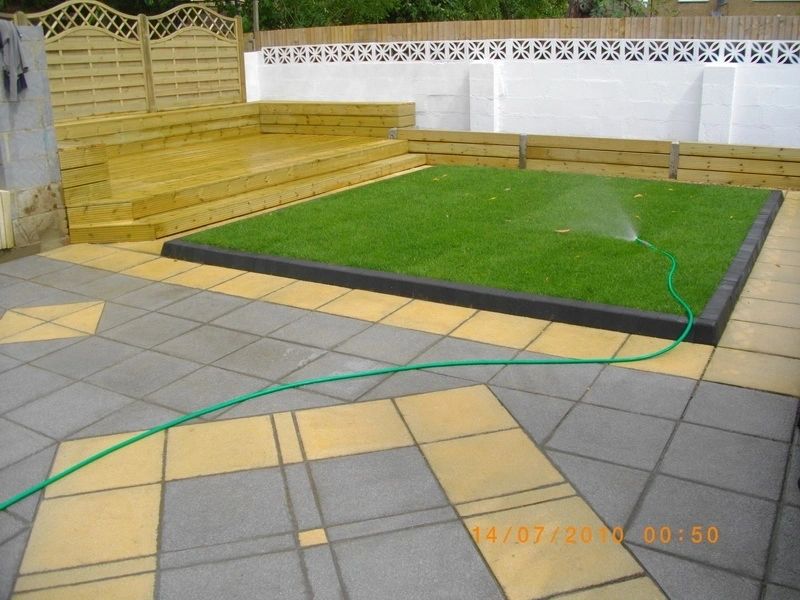
Pressure treated softwood boards
Softwood is the most affordable deck board and gives a warm, natural look. The boards are pressure treated against rot, but they still benefit from a treatment every couple of years to keep the colour and stop the surface drying out and splitting.
Softwood suits family gardens, first decks and anyone happy to spend an afternoon on upkeep now and then. Grooved boards give some grip, although any timber deck in shade can turn green and slippery if it is not cleaned.
Hardwood boards
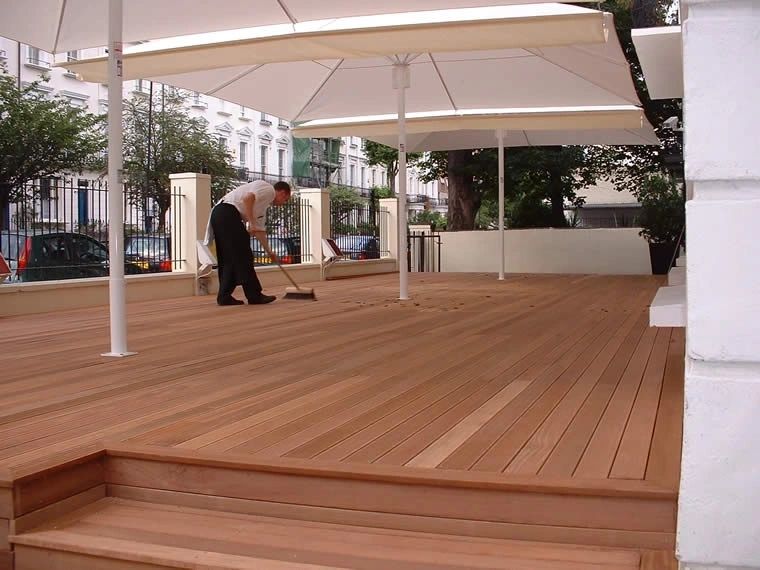
Dense hardwoods such as Balau and Ipe have a rich, lasting colour and are naturally durable. They cost more than softwood and are heavier to handle, but they feel solid underfoot and age slowly. Left untreated, most hardwoods weather to a silver grey; an oil keeps the original colour for longer.
Hardwood is a good fit where the deck is a feature, for example outside kitchen doors or around a raised seating area, and where you want timber rather than a manufactured board.
Composite boards
Composite boards are made from wood fibre and recycled plastic and come in modern colours. They need no sanding and no oiling, only an occasional wash, which is why they are often described as close to maintenance free.
Composite does behave differently from timber. It expands and contracts with temperature, so the gaps and fixings set out by the manufacturer matter, and it usually needs closer joist spacing than a softwood deck. Darker colours get warmer in direct sun than lighter ones.
Questions to answer before you choose
Start with how the space is used and how much looking after you want to do, then think about the setting.
- Shade and trees: damp, shaded decks need grip and regular cleaning whatever the board
- Full sun: consider lighter composite colours or hardwood
- Children and pets: splinter free composite or well kept hardwood
- Upkeep: softwood needs treating every couple of years, composite does not
- Budget: softwood first, then composite and hardwood depending on the product
The frame matters as much as the board
Whatever board you choose, it can only be as good as the frame underneath. We build decks on concrete set or post anchored joists that are properly spaced and ventilated, so air can move under the boards and water can drain away. A board laid on a frame that sits in water or has joists too far apart will bounce, twist or rot early.
Our decking substructure guide covers joist spacing in detail, and the softwood and hardwood decking comparison looks at the timber choice on its own.
Fascias, steps and edges
The finish around the edge of a deck makes a large difference to how it looks. Matching fascia boards hide the frame, hand built steps link the deck to the lawn or patio, and balustrades can be added where a raised deck needs an edge. A gravel margin along a fence line helps drainage and keeps the boards clear of the soil.
Frequently asked
Which deck boards last longest?
Composite and dense hardwoods such as Balau and Ipe last longer than softwood, as long as the frame underneath is built properly.
Are composite deck boards slippery?
Grooved and textured composite boards give good grip. Any deck in shade needs cleaning to stop algae building up.
Do softwood deck boards need treating?
Yes. Pressure treated softwood benefits from a treatment every couple of years to protect the surface and colour.
Can you replace boards on an existing deck?
Often, if the frame is sound. We check the joists first, because new boards on a failing frame will not last.
Can I see board samples before choosing?
Yes. Materials and colours are talked through on the free site visit before the written quote.
Want this priced properly for your garden?
Free site visit across London and Hertfordshire, a written specification, and a fixed price. No obligation.