
Comparisons
Composite vs Wooden Gates: Which Should You Choose?
Last updated
The short answer
Composite gates avoid routine staining and coordinate with composite fencing, while wooden gates offer natural character and more familiar local repair and refinishing options. Both need a sound frame, suitable clearances and strong posts. Timber responds to moisture; composite requires the manufacturer's thermal movement details.
At a glance
- Timber
- Natural grain with coating and repair options
- Composite
- Consistent colour with gentle cleaning
- Movement
- Moisture in timber, temperature in composite
- Shared need
- Correct frame, hinges and gate posts
Choose composite for low surface maintenance and a matching composite fence; choose timber for natural character, easier local repair and traditional joinery.
A composite gate and a wooden gate can look surprisingly similar from the pavement, particularly when both use vertical boards and a dark frame. The experience of owning and repairing them is different, however.
The best choice depends on how much maintenance you want to do, how tight the opening is and whether natural variation matters to you. This guide compares the practical details rather than calling either material maintenance free or everlasting.
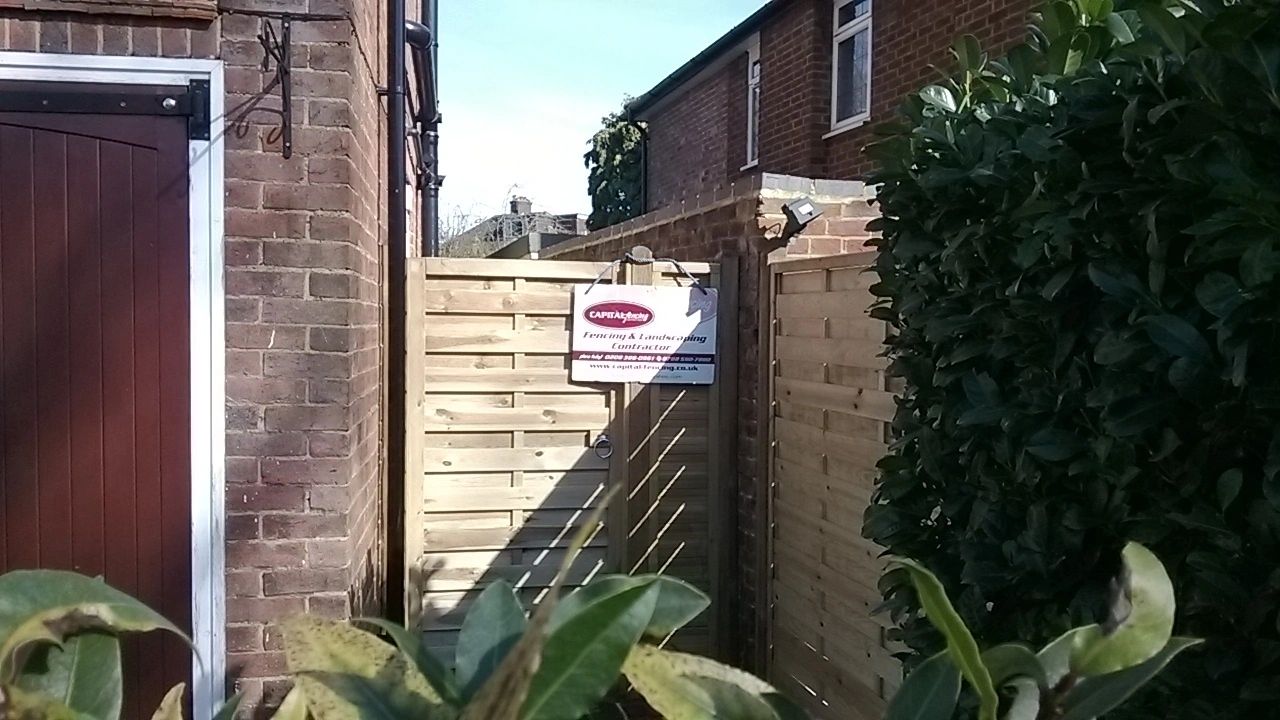
Natural timber character
Wooden gates have individual grain, colour and texture. Softwood offers a familiar painted or stained finish, while hardwood can provide a richer natural appearance and different movement characteristics. No two timber faces weather in precisely the same way.
That variation is part of the appeal for many properties. It also means the gate will change over time, whether it is allowed to silver or is coated to retain a chosen colour.
The consistency of composite boards
Composite provides a manufactured colour and board profile that can coordinate with composite fencing. It avoids the routine staining associated with timber and does not rot in the same way.
The gate still has joints, a supporting frame and hardware. Those parts require sound design and inspection, so the words composite gate should never be taken to mean the entire assembly needs no attention.
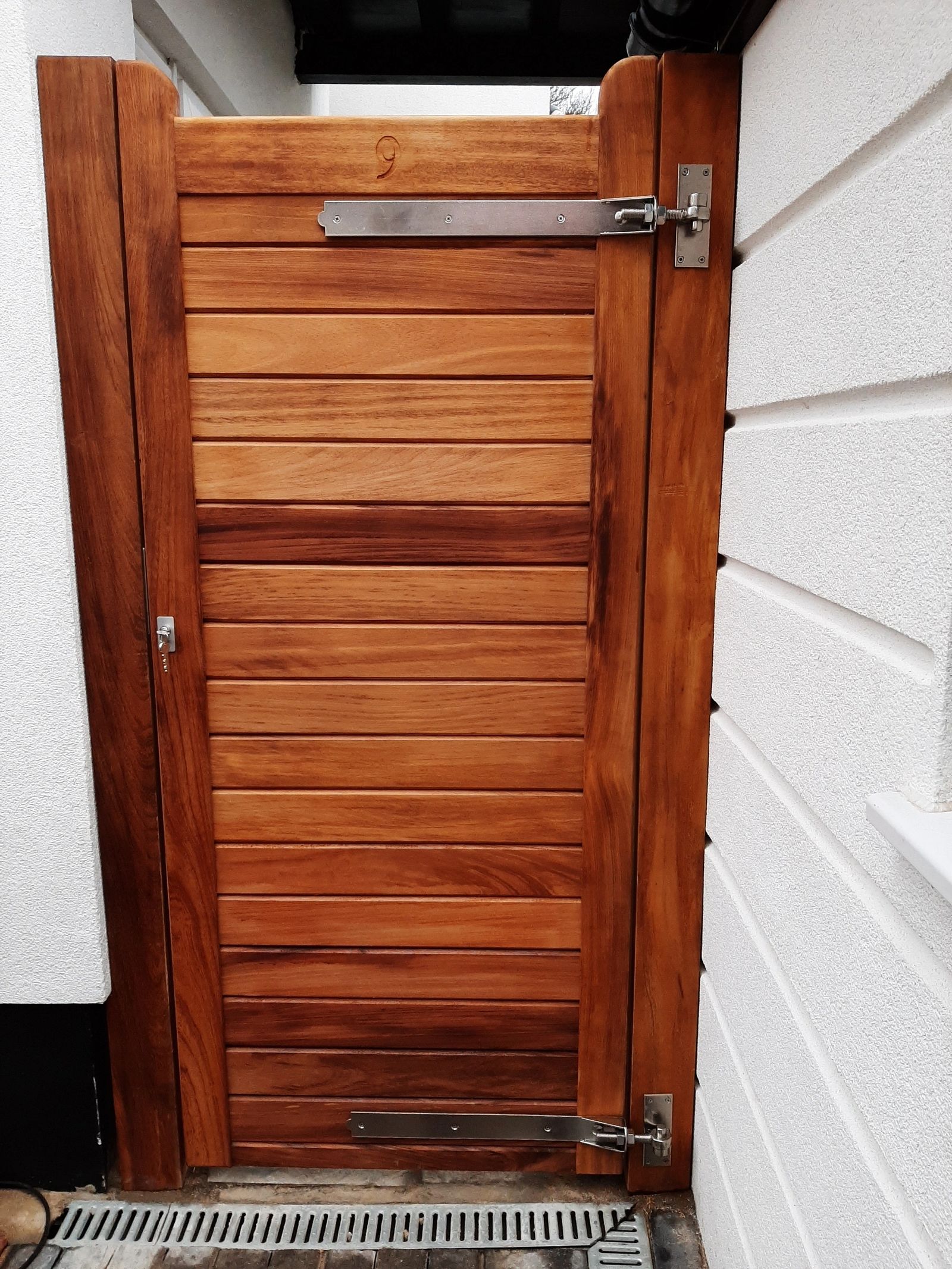
Swelling, shrinkage and thermal movement
Timber responds to moisture, taking it on and releasing it as conditions change. Adequate clearances, suitable timber and a maintained finish help the gate continue working through those changes.
Composite responds more directly to temperature. The manufacturer's board gaps and fixing method must be followed so the facing can move without bowing or pulling at its frame. Each material moves, just for different reasons.
The supporting frame and hinge side
Both gate types rely on their frame, bracing or fabricated structure to remain square. Adding heavy facing boards to an inadequate frame invites sagging regardless of what the boards are made from.
Hinges and posts must suit the completed leaf. A replacement gate made in a different material may therefore need more than a simple swap, even when it fits the same opening.
Repairing scratches and damaged boards
Timber can often be planed, filled, sanded or recoated within the limits of the damage. An individual board may also be replaced and finished to blend as it weathers, although an immediate invisible match is unlikely.
Composite cannot usually be sanded and refinished like wood. A damaged board may need replacing with a compatible profile, and colour variation between old and new batches can remain visible.
Coating and cleaning routines
Wood benefits from a suitable coating maintained according to its product and exposure. End grain, lower rails and places touched frequently deserve attention. Cleaning before recoating is part of the job, not a substitute for it.
Composite needs a gentle wash using a cleaner permitted by its manufacturer. It does not need decking oil, fence paint or stain, and abrasive cleaning can damage its outer cap.
Matching the fence and the house
A timber gate can be built with boards that relate closely to closeboard, tongue and groove or picket fencing. Paint and stain provide further control over the finished appearance.
Composite makes most sense where its colour and board rhythm coordinate with an existing composite system. Beside timber, compare actual samples in outdoor light rather than expecting a photograph to provide an exact match.
Questions to answer before ordering
Consider whether you would rather clean or recoat, whether individual repairs matter, and how formal you want the gate to look. Mention any future automation and whether the opening is particularly exposed or tightly tolerated.
Think about the view from inside the property as well as from the street. Frame positions, board joints and hardware can be more noticeable from the garden side. Discussing both faces before manufacture avoids approving a front elevation only to find that the rear details are not what you expected.
We can then describe a suitable frame, facing and support for each option. A written quote based on those details lets you compare real gate constructions instead of choosing only between two material names.
Frequently asked
Do composite gates last longer than wooden gates?
It depends on the complete frame, boards, posts, hardware, exposure and care. Composite avoids timber rot and recoating, while timber offers established repair and refinishing options.
Can a composite gate match a wooden fence?
It can complement it, but manufactured composite and natural timber will not age or weather identically. Compare samples in the actual setting before choosing.
Can wooden gates be repaired more easily?
Often, because suitable timber can be planed, recoated or replaced locally. Composite repairs usually depend on obtaining a compatible board or system component.
Do both types need strong posts?
Yes. The entire leaf weight and swinging load must be supported, and changing the facing material does not remove that requirement.
Timber character or composite convenience?
Tell us how much upkeep you want and what the gate needs to match. We will price a complete gate rather than just a board material.