
Comparisons
Composite vs Metal Gates: How to Choose
Last updated
The short answer
Composite gates suit solid, private openings that coordinate with composite fencing. Metal gates suit open designs, slim frames and a wide range of domestic or perimeter specifications. Compare complete constructions, including frame, hinges and posts, because weight, movement, maintenance and security do not follow from the facing material alone.
At a glance
- Composite
- Solid privacy and board matched styling
- Metal
- Open or framed designs with varied infill
- Compare
- Complete leaf weight and support requirements
- Upkeep
- Cleaning or finish care, plus hardware checks
Composite suits a private, board matched gate with little surface upkeep; metal suits open designs, slim frames and traditional or security led boundaries.
Composite and metal gates solve different visual and practical problems. Composite is normally chosen to continue a solid fence or provide privacy, while metal can be open, decorative or built as a strong framed boundary with many different infills.
Neither material removes the need for a correctly designed leaf and support. This guide compares the day to day differences, including the less obvious questions of movement, weight and repairs.
Privacy and the appearance of the boundary
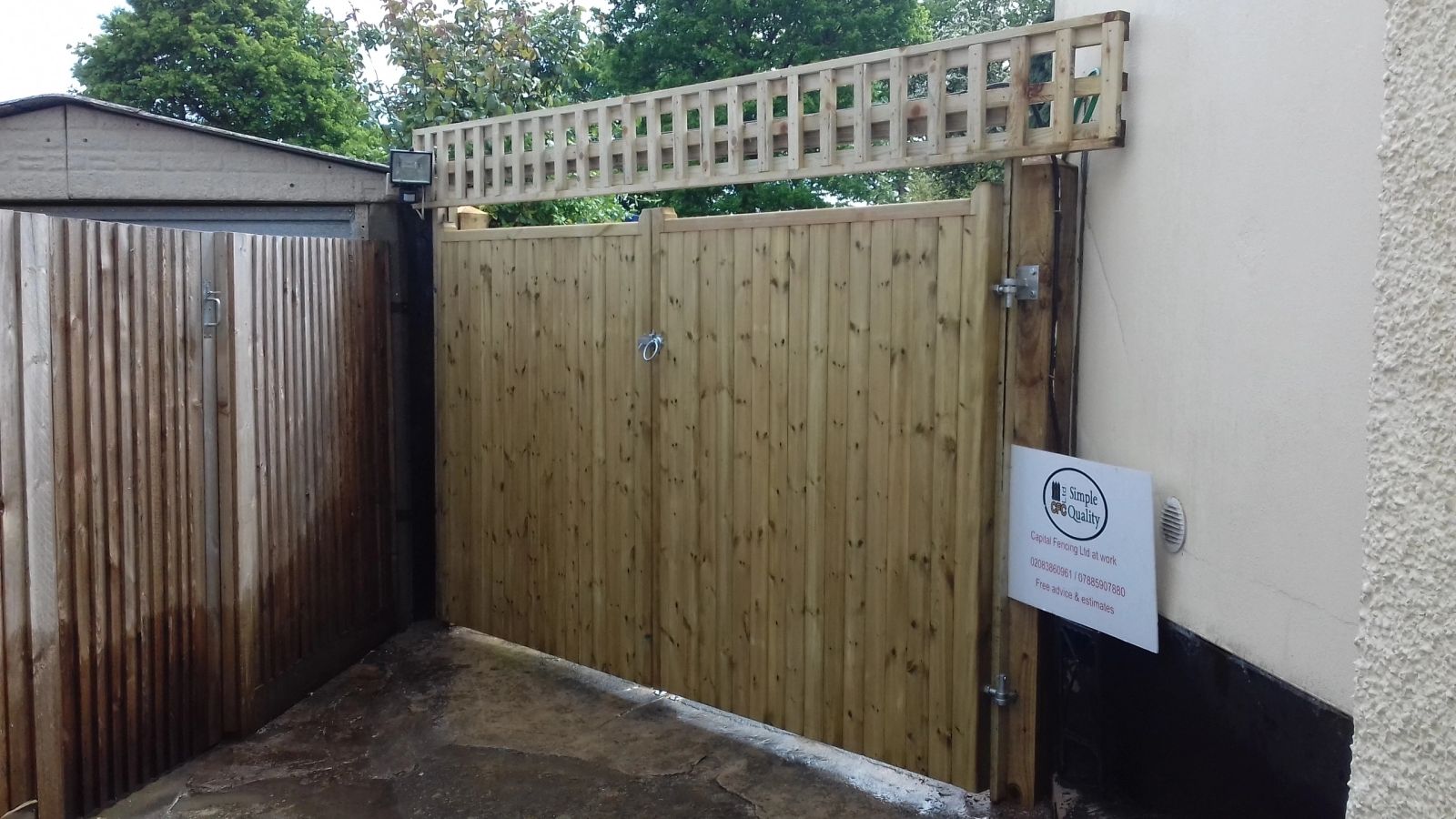
Composite boards create a solid face that can match composite fencing and reduce views into the garden or drive. The result is visually close to a timber gate but with a manufactured, consistent finish.
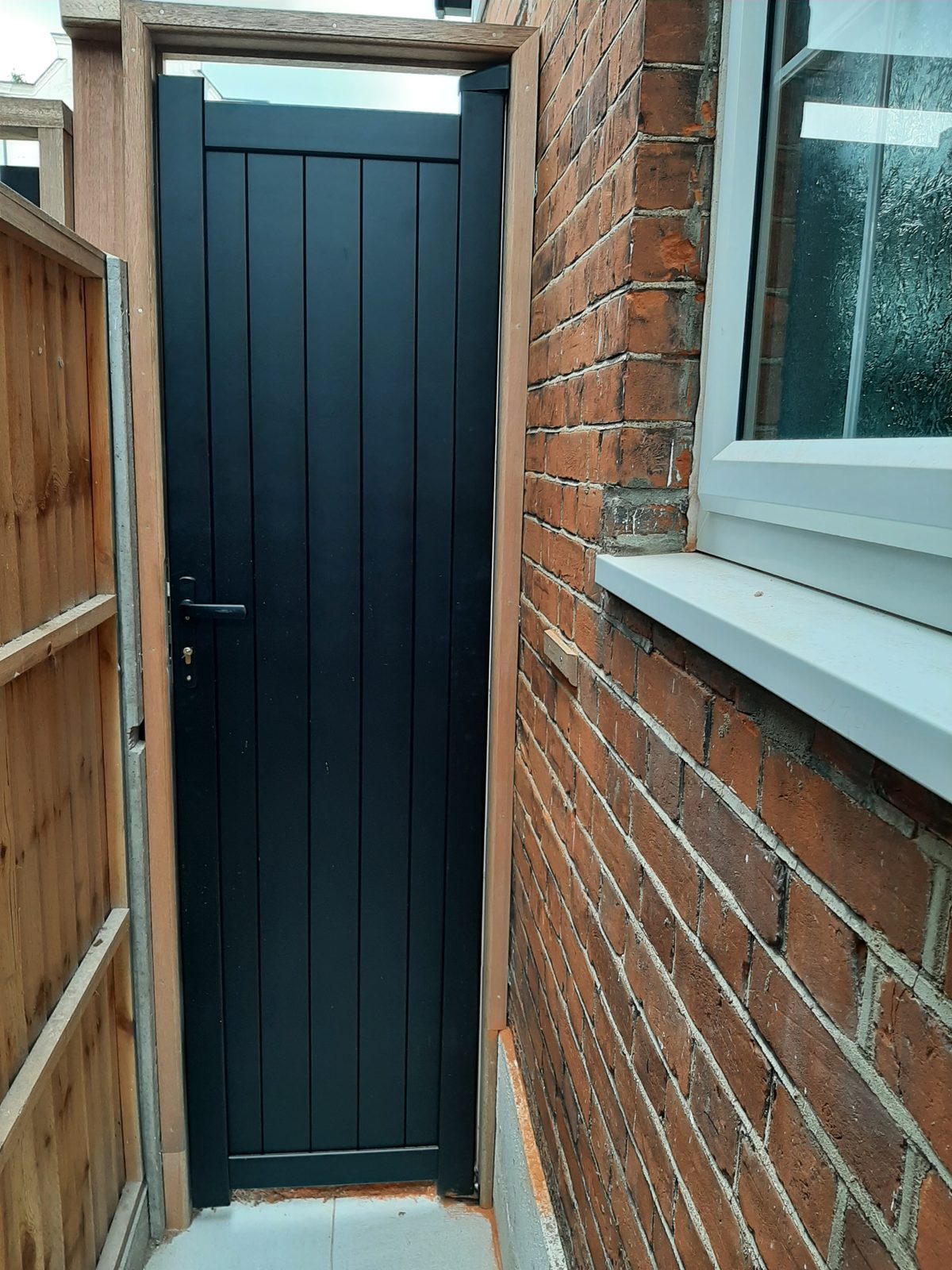
Metal gates may be open bar designs or include solid infill. Open gates preserve views and light, while framed metal designs can be made to look traditional, contemporary or deliberately robust.
Weight and the frame behind the face
A gate is more than its visible cladding. Composite boards normally need a supporting frame designed for the complete leaf, and the hinges and posts must carry that assembly. Board material alone does not tell you the finished weight.
Metal gates also vary widely. A light aluminium leaf and a substantial steel gate are both metal, but they place different demands on fabrication, hinges and supports. Compare complete constructions rather than material labels.
Movement in changing weather
Composite expands and contracts with temperature, so board clearances and the fixing system must allow that movement. A gate also swings, which makes correct support and alignment especially important.
Metal does not absorb moisture like timber, but its frame, hinges and posts can still move or wear. Different metals and coatings have their own fabrication requirements, and dissimilar materials need appropriate detailing where they meet.
Maintenance and surface damage
Composite boards need cleaning but not routine painting or staining. Scratches and gouges are physical damage and may require a board replacement rather than sanding or touching up in the way natural timber sometimes allows.
Galvanised and powder coated steel avoids routine repainting of bare metal, while aluminium has its own corrosion characteristics. Any coating damage, cuts or worn hardware should still be dealt with appropriately.
Security and privacy are not the same
A solid composite face hides what is behind it, but privacy alone does not establish security. Frame strength, locks, hinges, posts and the rest of the boundary determine how the gate resists attack or climbing.
Open metal gates allow visibility, which some owners prefer, and can be built in robust perimeter specifications. The right choice depends on whether your priority is screening, deterrence, appearance or a combination of all three.
Matching what is already there
Composite is an obvious candidate beside a composite fence because board colour and spacing can be coordinated. It can also provide a solid contrast within another boundary, although a close colour match across different materials is not guaranteed.
Metal is natural beside railings and can carry timber or other infill where a mixed appearance is wanted. A steel framed timber gate may be worth considering if you like wood but need a different structural approach.
Repairs and future alterations
A damaged composite component can sometimes be replaced within the frame if the system allows it. Matching an older colour or profile may be a limitation, so the availability of compatible parts matters.
Metal frames can be repaired or adapted by suitable fabrication methods, while hinges and hardware on either type can wear and need adjustment. Automation later should be mentioned at the start because it affects both leaf and support design.
Making the choice for your opening
Decide first whether you want a solid or open gate, then consider how it will be used and what it must match. Photos of the opening, the fence and both posts give us the context needed to discuss suitable constructions.
We will set out the proposed frame, facing, hinges and support in the written estimate. That gives you a meaningful comparison between composite and metal rather than two prices for gates that happen to share a width.
Frequently asked
Are composite gates heavier than metal gates?
It depends on the complete frame, board or infill choice and size. Weight should be assessed for the actual gate so the hinges and posts can be specified correctly.
Do composite gates need painting?
No. They need appropriate cleaning, while the frame and hardware still need inspection. Surface damage is different from dirt and may need a component repair.
Do metal gates always rust?
No. Material choice, fabrication and protective finishes matter. Galvanising and powder coating are used on steel to protect it, while aluminium behaves differently.
Which is better for privacy?
A solid composite gate is designed to screen the opening. Metal can also have solid infill, but open bar gates intentionally preserve visibility rather than privacy.
Solid privacy or an open metal design?
Show us the opening and the fence either side. We will describe the frame, facing and supports so you can compare like for like.