
How it's done
Driveway Gate Posts: Timber, Steel or Brick Piers?
Last updated
The short answer
Driveway gates need supports designed for the complete leaf weight, width and repeated swinging load. Substantial timber, correctly based steel or a sound brick pier can all work in the right installation. An ordinary fence panel post is not a substitute, and automation should be allowed for from the start.
At a glance
- Timber
- Substantial section with a suitable base
- Steel
- Strong support for many heavier leaves
- Brick piers
- Reusable only when stable and sound
- Plan early
- Hinges, closing side and automation forces
Choose the support for the gate's weight, width and use. A sound pier or correctly based steel or timber post can work; an ordinary fence post usually cannot.
A driveway gate puts a moving, off centre load onto its hinge support. Every opening and closing tries to rotate that support, quite apart from the weight of the leaf itself. This is why a gate can be well made and still drop when the post beside it was chosen like a fence post.
There is no single support material for every opening. This guide compares substantial timber posts, steel posts and existing brick piers, with the checks that determine whether what you already have can stay.
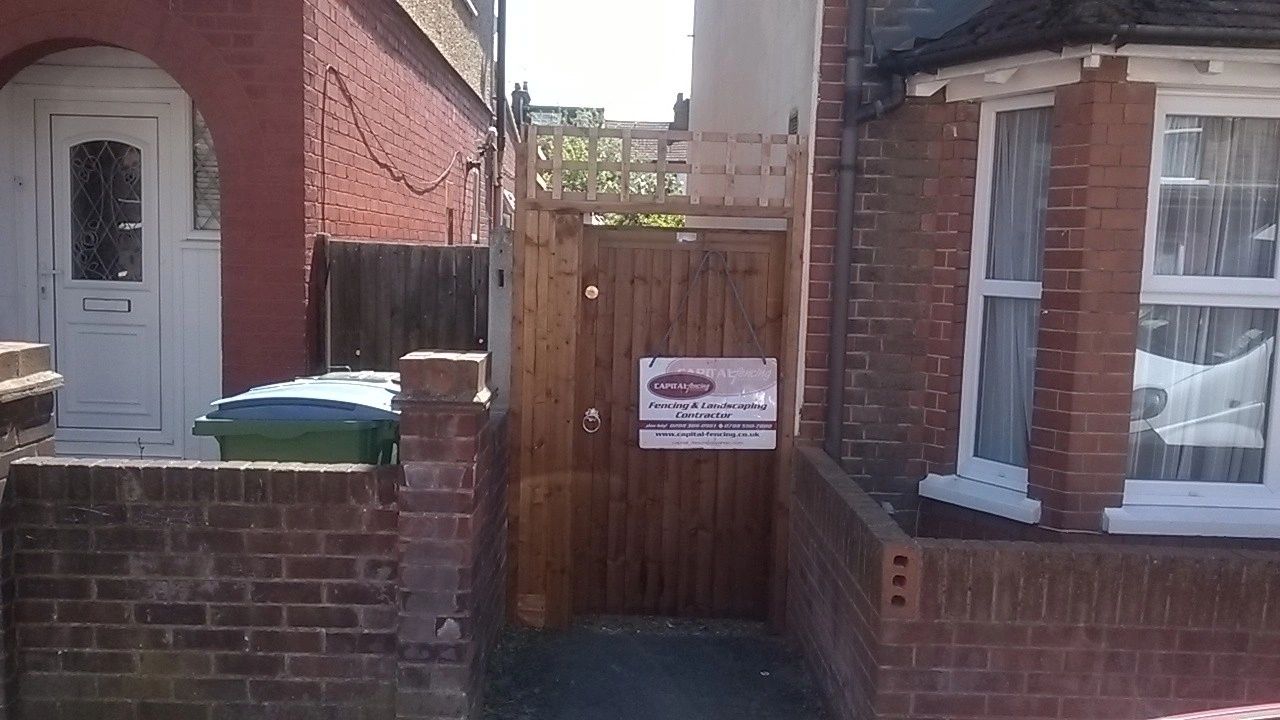
Start with the leaf, not the hole
The gate's overall width, construction, material and intended use establish what the hinges must carry. A pair of leaves distributes the opening differently from one wide leaf, while solid infill and automation change the demands placed on the support.
The clear opening is measured at several heights, but that is only the beginning. Swing space, ground levels and the position of the hinge pins also influence the final post arrangement.
When substantial timber posts are suitable
Timber can suit many traditional wooden gates where its section and base are designed for the leaf. It offers straightforward fixing for hinge hardware and can match the surrounding fence visually.
It must not be confused with a standard panel post. The timber needs suitable ground contact treatment, sound footing and enough stiffness to resist the repeated turning force. A large gate may call for a different support altogether.
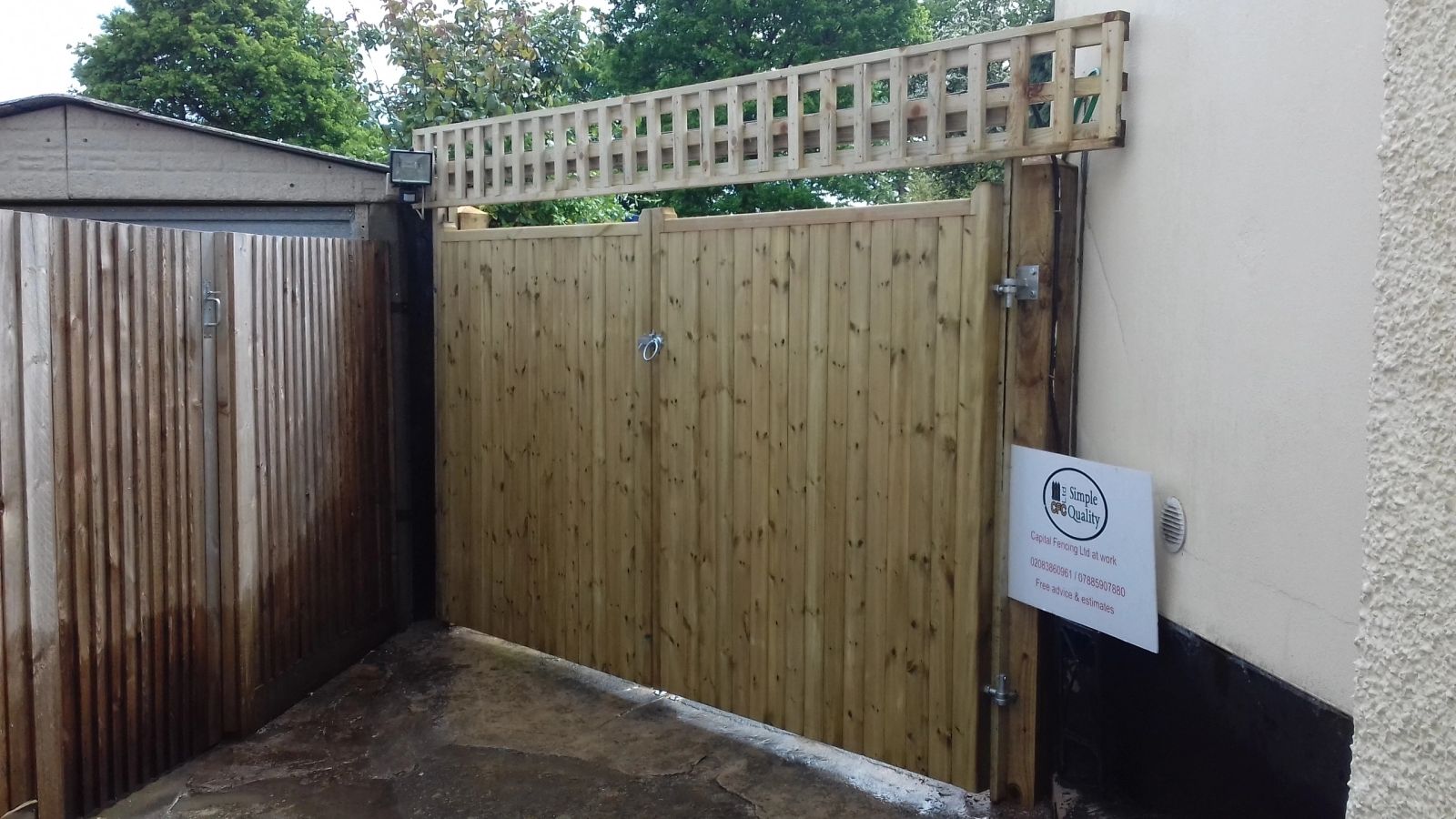
Why steel is often used
Steel posts provide a compact, strong support for metal gates and heavier installations. They can be set into concrete and prepared with suitable hinge points for the gate. Their finish needs to protect the steel outdoors, including any fabricated connections.
The size and base are chosen for the load rather than copied from a neighbouring fence. Where automation is planned, the forces introduced by the operator also need to be allowed for in the support design.
Using an existing brick pier
A brick pier can be an excellent support if it is stable, plumb and built on an adequate foundation. Cracks, loose mortar, movement or an old repair can make it unsuitable even when the face looks tidy.
Hinge fixings should go into sound masonry using an appropriate method. The solution is not simply to use larger screws in a crumbling pier. If the pier moves under load, its structural condition needs addressing before the gate is relied upon.
The base below ground
Most of the support's resistance comes from what cannot be seen after completion. Soil, base dimensions, depth and any nearby excavation all affect stability. A post set beside a new drive or drain run may be in disturbed ground that behaves differently from the surrounding garden.
Old post holes are not automatically ready made foundations. Loose backfill and broken concrete can leave voids or weak spots, so the existing base needs assessment rather than blind reuse.
The closing post matters too
Double gates rely on the meeting point, drop bolts and the opposite support as much as the hinge side. A single leaf needs a sound closing post or stop so the latch lines up consistently. If one side moves, the whole gate can begin to catch even though its hinges remain firm.
The finished drive must provide the required sockets and clearances without creating a trip point or holding water around fittings.
Allowing for automation at the start
If a gate may later be automated, say so before posts are chosen. Operator positions, cable routes and the stiffness required can all influence the initial design. It is easier to plan these while the opening is being built than after the drive and gate are finished.
- Confirm leaf construction and approximate weight
- Allow for hinge and operator positions
- Plan cable routes without blocking future access
- Keep posts and bases independent of ordinary fence panels
How we assess an existing opening
Send photographs of both posts or piers from several angles, including their bases and the gate hinges. Show the gate open and closed, and mention any catching, cracking or movement you have noticed.
A visit then confirms whether the existing supports are suitable or need replacing. The written quote will separate the gate, posts and ground work so you can see why a support is included rather than discovering it after the old leaf comes off.
Frequently asked
Can driveway gates hang on wooden fence posts?
Not on an ordinary panel post. Substantial timber gate posts can be suitable for some gates, but their section and foundation must be designed for the actual leaf and use.
Can I use my existing brick piers?
Possibly, if the masonry and foundations are sound and stable. Cracking, loose mortar or movement must be assessed before new hinges are fitted.
Are steel gate posts always necessary?
No. They are a strong option for many metal or heavier gates, while suitable timber or sound masonry can work in other installations. The gate determines the support.
Does automation change the posts I need?
It can. Operators add repeated forces and require mounting and cable routes, so automation should be allowed for when the supports and bases are designed.
Unsure whether your posts can carry the gate?
Send both supports, their bases and the hinges. We will assess what can stay and list any new posts or ground work in the quote.