
How it's done
Fence Capping and Post Caps: Are They Worth Having?
Last updated
The short answer
Fence capping is a board along the top of a fence that covers the end grain of the boards, and post caps do the same for each post. Both stop rain soaking in where timber is most vulnerable. They matter most on closeboard and site built fences, and can often be added later to a sound fence that was built without them.
At a glance
- Protects
- Board and post end grain from rain
- Most useful on
- Closeboard and site built fences
- Partner part
- Counter rail below the capping
- Add later?
- Yes, if the boards are still sound
Capping is the narrow strip along the top of a fence and caps are the small hats on top of posts. Both exist for one reason: to stop rain soaking into end grain.
Look along the top of a well built closeboard fence and you will usually see a narrow board running the full length, sometimes with a thinner strip just beneath it. On the posts there may be little square or pointed caps. To many people these look decorative, and some quotes leave them out to save time.
This guide explains what each part does, which fences benefit most, and how to tell whether the top of your own fence is protected.
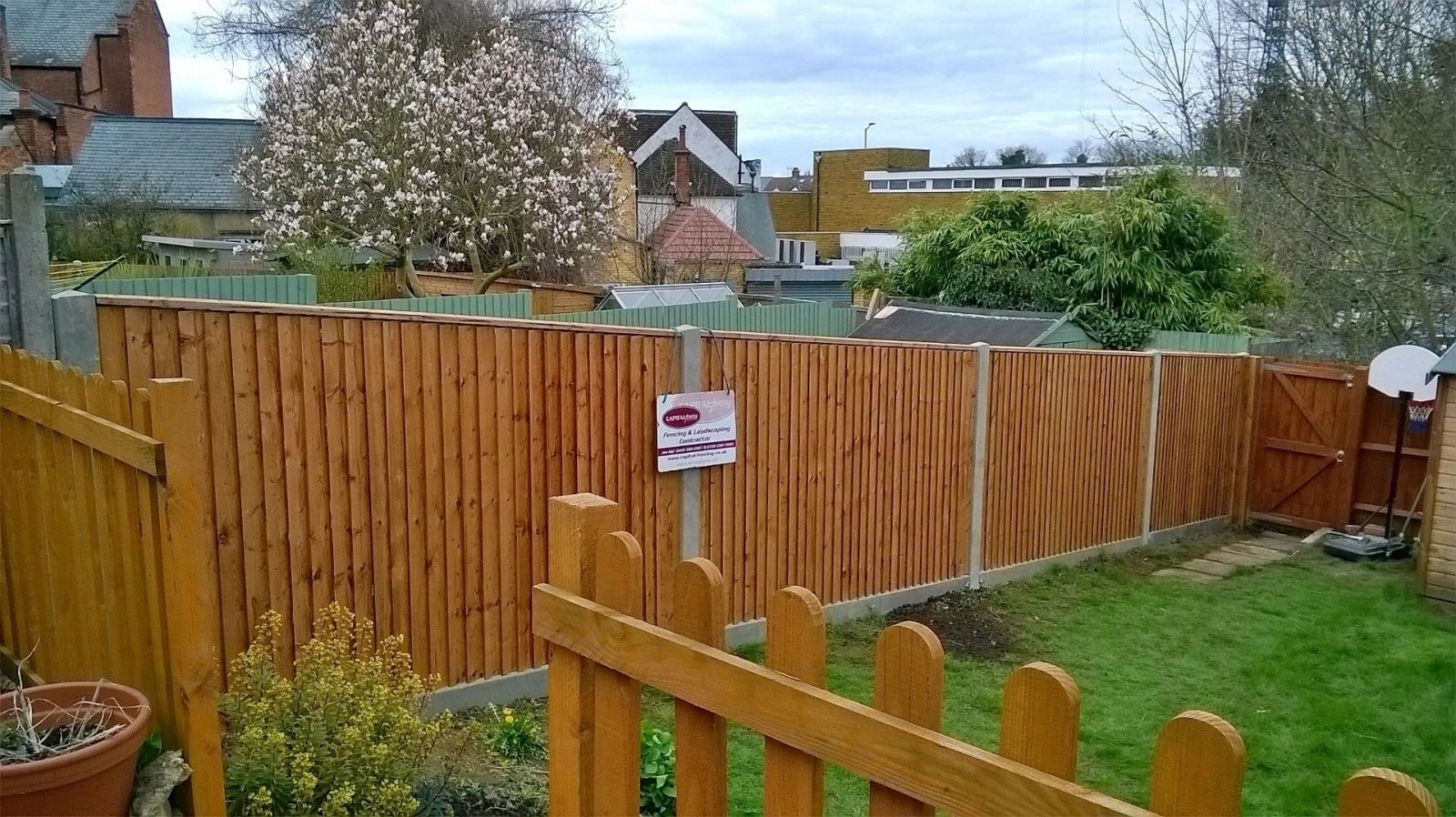
Why the top of a fence fails first
Timber soaks up water most readily through its end grain, the cut face where the fibres finish. On an uncapped fence, every board top and every post top is end grain pointing at the sky. Rain sits there, soaks down, and dries slowly. Over the years that is where splitting, softening and rot tend to start.
What capping does
Capping is a board fixed flat along the top of the fence so that it covers the board ends. Water lands on the capping instead and runs off the edges. It also stiffens the top of the fence slightly and gives the run a straight, finished line, which is why closeboard fences look sharper with it fitted.
Counter rails and how they work with capping
A counter rail is a thin strip fixed along the face of the boards just below the top. It closes the gap beneath the capping on one side and makes a neat shadow line. Together, capping and counter rail act a little like a roof and gutter for the fence boards below.
- Capping: covers the board tops
- Counter rail: finishes the face below the capping
- Post cap: covers the top of each post
- Weathered post top: an angled cut that sheds water
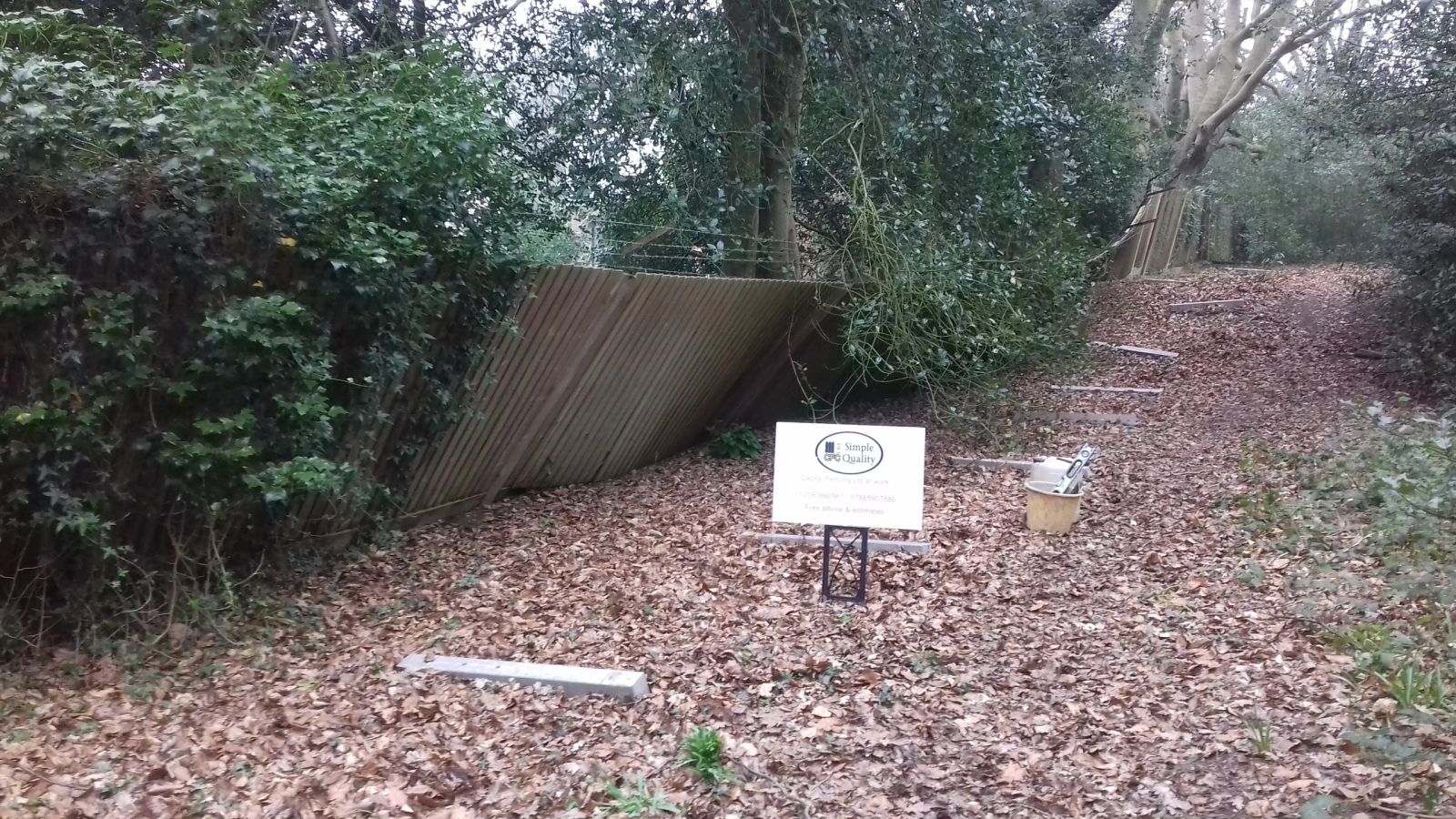
Post caps and weathered tops
A timber post can be protected in two ways. A separate cap, usually timber and sometimes shaped, sits over the end grain. Alternatively the post top is cut at an angle or to a point so water cannot pool. Concrete posts do not need caps for protection, though some people like the look.
Fences that benefit most
Closeboard and other site built timber fences gain the most, because their boards stand vertically with their ends exposed. Ready made panels often have a framed top already. Slatted and horizontal designs can take a top rail that does the same job. Our closeboard fencing explained guide shows how these parts fit into the whole fence.
Fitting capping well
Capping should be fixed so it overhangs slightly, with joints made over a post rather than mid span, and with treated cut ends. If it is nailed down tight into a hollow it can trap water instead of shedding it, so the top of the boards needs to be cut level before the capping goes on.
Adding capping to an existing fence
Where a fence is sound but uncapped, capping can often be added later. The board tops are trimmed to a straight line and the capping is fixed along them. It is less useful on a fence that is already soft at the top, because the protection comes too late. Photos of the top edge help us say which situation you are in.
How to check your own fence
Stand at one end of the run and look along the top. If you can see the ends of individual boards, the fence has no capping. Run a hand over a post top: a flat, open end of timber with dark staining or soft fibres is taking in water. On a fence that does have capping, look for gaps at joints, lifted ends and splits, because damaged capping can hold water against the boards it is meant to protect.
Small repairs to capping are quick if caught early. Replacing a single length is far simpler than replacing the boards beneath once they have softened at the top.
Capping on gates
The same logic applies to a timber gate. A ledged and braced gate, or a framed gate with vertical boards, has open board ends along its top edge. A shaped capping rail or a weathered top on the frame keeps those ends dry, which matters even more on a gate because it is opened and closed every day and any swelling makes it bind.
Frequently asked
Is capping needed on a panel fence?
Many manufactured panels have a framed top that already covers the board ends, so separate capping is less important. Post caps on timber posts are still worthwhile.
Does capping make a fence taller?
Only by the thickness of the capping board. If you are close to a planning height limit, include it when you measure.
Can capping be painted or stained with the fence?
Yes. Treat it at the same time as the rest of the fence so the colour matches and the cut ends stay sealed.
Will you include capping on a new closeboard fence?
When we quote for closeboard we will say clearly whether capping and counter rails are included, so you can compare like with like.
Fence tops looking tired?
A photo along the top of the run is enough for us to say whether capping can be added or the boards need replacing.