
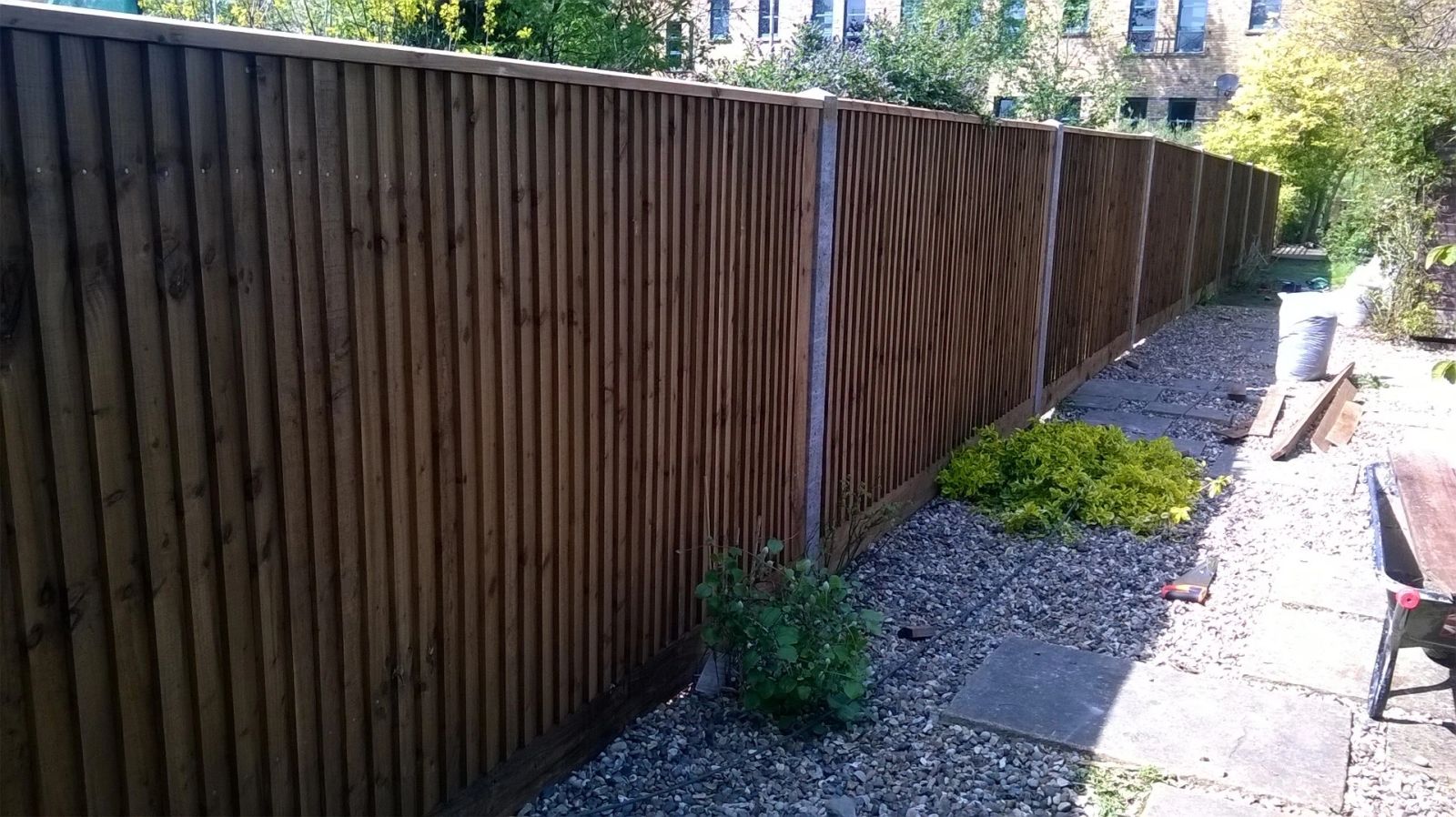
A fence painting service takes the job off your hands: preparing the fence, choosing the right coating and getting an even finish without paint on the patio, the plants or next door's car. We paint, stain and treat fences and gates as part of our maintenance work and after new fences are installed.
If you would rather do it yourself, our fence maintenance and treatment guide covers the DIY side. This page explains how we approach it and what to decide first.
Preparing an old fence
A coating is only as good as the surface under it. Old fences are brushed down to remove dirt, loose fibres and flaking finish, and green algae is cleaned off first; our green algae page explains why it builds up. Loose boards are re-fixed and anything rotten is pointed out, because there is little sense coating a board that needs replacing. The fence also needs to be dry before any coating goes on, so the weather decides the timing of the job as much as anything else.
Stain, paint or preserver
Each does a different job.
- Preserver: protects the timber, keeps a natural look
- Stain: adds colour while the grain still shows
- Opaque paint: a solid colour that hides the grain
New pressure-treated timber
New pressure-treated timber is often still wet from treatment when it is fitted. Coating it straight away can trap that moisture, so the finish does not take well. It is usually better to let a new fence weather for a while before painting or staining. Our guide to looking after a new fence covers the first months. If you know you want a colour, tell us at the start and we will advise on timing.
Gates and fence furniture
Gates get the same preparation, with hinges, latches and bolts masked or removed so they still work afterwards. Timber gates especially benefit from regular coating because they move more than a fence and the end grain is exposed. Metal gates are a different job: galvanised and powder coated steel does not need painting in the same way.
Overspray and the neighbour's side
Coatings are applied with care around paving, plants, walls and cars. Brushing or careful application near the boundary keeps the finish on the fence. We coat your side as standard. The other side faces your neighbour's garden, so it is only coated if they agree and we can get access, and it is worth asking them before choosing a strong colour.
How often to recoat
How often a fence needs recoating depends on the product, the timber and how exposed the fence is. South-facing runs fade faster; shaded, damp runs grow algae sooner. A fence that is starting to look dry, patchy or grey is ready. See our maintenance and repairs page for the wider service.
Send us photos and rough measurements, we send a written estimate, then we visit to confirm before work starts. We cover London and Hertfordshire.