
Care & longevity
Fence Post Repair: Which Fix Suits Which Failure?
Last updated
The short answer
Fence post repair depends on what has failed. A post rotted only at ground level can be braced with a repair spur, a sound post in a loose footing can be reset in fresh concrete, and a post that is rotten higher up or broken needs replacing, often with a slotted concrete post.
At a glance
- Rot at ground level
- Repair spur
- Loose footing
- Dig out and reset
- Broken or soft post
- Replace the post
- Gate posts
- Stronger fix; electric gates need a qualified installer
A fence post can be braced with a repair spur, reset in fresh concrete or replaced entirely. The right fix depends on whether the timber, the concrete or the ground has failed.
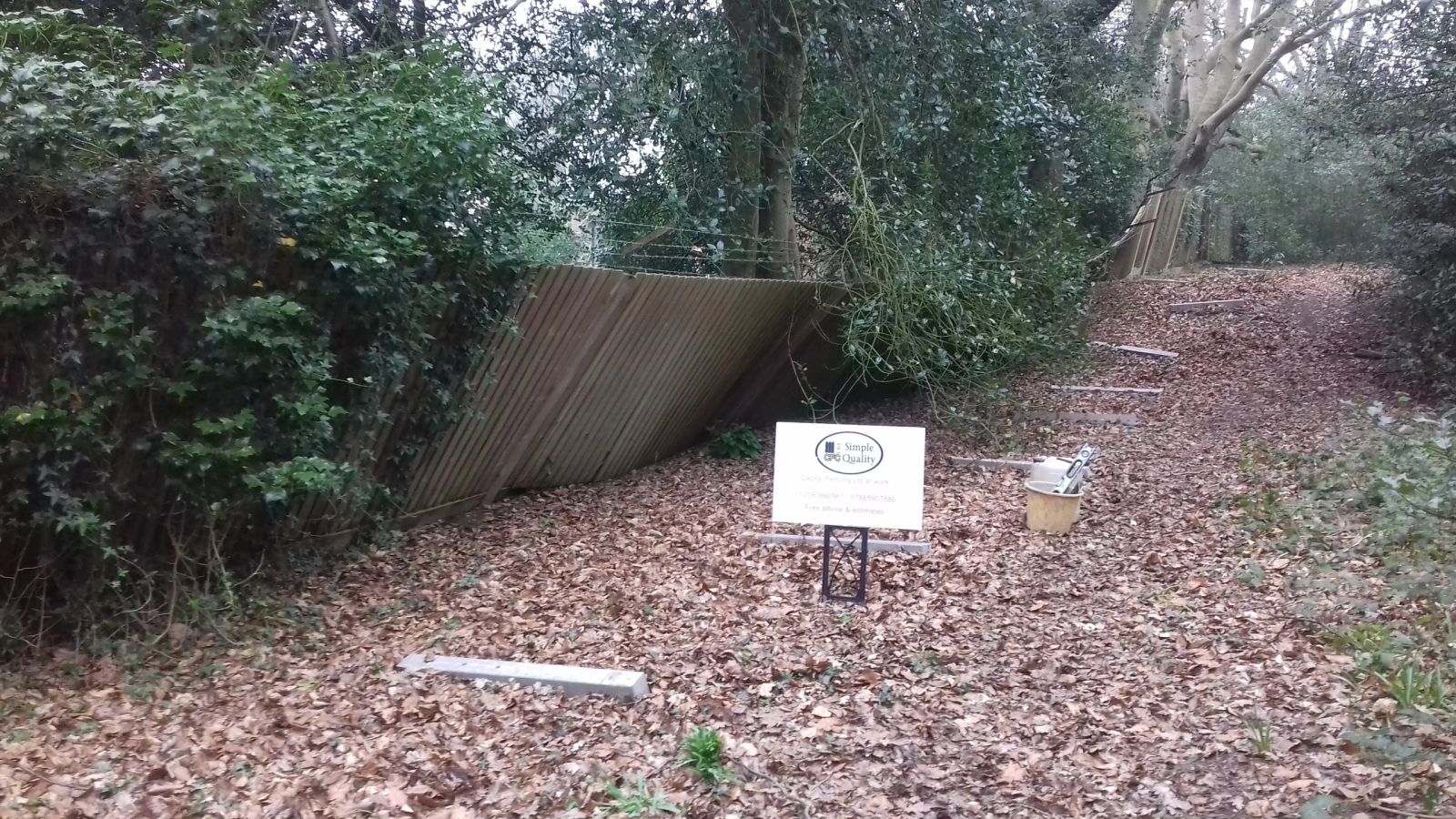
A leaning or snapped post is the most common reason a fence needs attention, and it is usually one post rather than the whole run. Because each post carries a bay on either side, a failure spreads quickly in windy weather once it starts.
We repair fence posts across the fences we work on. This guide explains how to tell which part has failed and which repair suits it, so you can make sense of what you are told when you ask for a quote.
Find out what has failed
Push the post firmly near the top. If the post bends at ground level while the concrete stays still, the timber has rotted at the base. If the post and its concrete lump move together, the footing has lost its grip on the ground. If a concrete post is cracked, the post itself has failed.
Look at the neighbouring posts too. Two or three posts going at once points to a wider problem with age or exposure.
Repair spurs for rotted timber
A concrete or steel repair spur is set into the ground beside the rotted post and bolted to the sound timber above. It is quick, avoids breaking out the old concrete and suits fences that are otherwise in good order.
A spur will not rescue a post that is soft well above ground, and it leaves a visible upright beside the post.
Resetting a loose post
Where the timber is sound but the footing has shifted, the post can sometimes be dug out, straightened and set in fresh concrete or post mix. The surrounding panels are supported while this happens so they are not strained.
Any hole near a post can hit a cable or pipe laid along the boundary, so trace services first and dig by hand when unsure.
Replacing the post
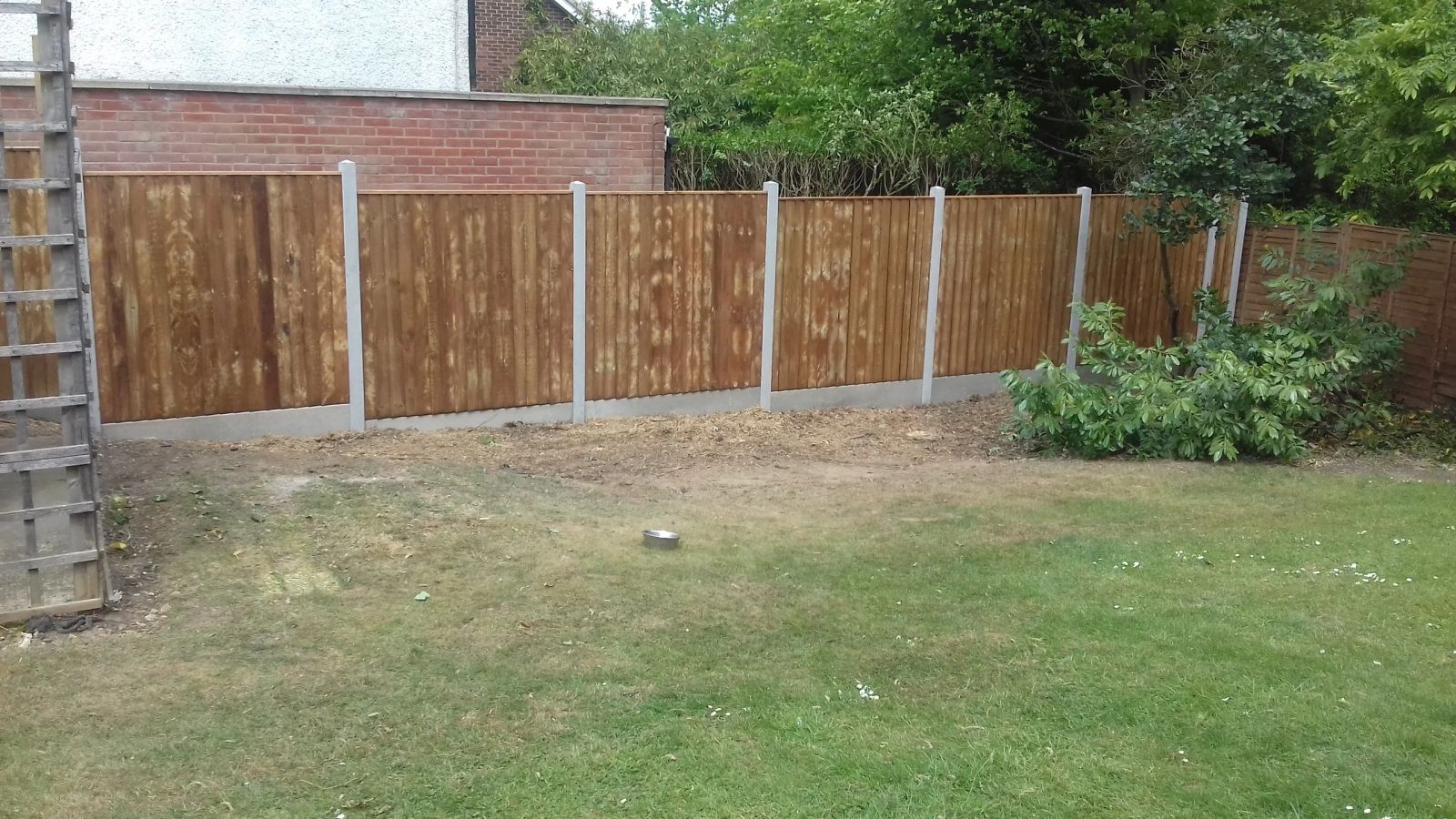
Replacement is the answer when the timber is rotten higher up, a concrete post is broken, or an old footing is too large to dig around. The old concrete is broken out where possible, or the new post is set a little to one side with the bays adjusted.
Matching the existing post size and slot style keeps the run consistent and lets the old panels go back in if they are still sound.
Swapping timber for concrete posts
Many owners use a failed timber post as the moment to switch to slotted concrete posts along the run. Concrete does not rot at ground level, and panels can later be replaced without disturbing the posts.
Mixing materials partway along a fence can look odd, so this is usually discussed bay by bay.
Posts that hold a gate
Gate posts take a twisting load every time the gate swings, so they are repaired to a stronger standard than a fence post, often with a deeper footing or a steel post. Electric or automated gates involve power and control gear, and any work on those posts needs a qualified gate installer and electrician.
What to send for an estimate
Send a photograph of the whole bay, a close view of the post at ground level and a note of whether the post or its concrete moves. Say whether the fence is shared and if a neighbour is happy for work to be done from their side.
We can then say which repair looks likely and confirm it on a visit before giving a written quote.
Temporary measures after storm damage
If a post goes over in high wind, the priority is making the fence safe. Panels can be lifted out and laid flat, or the leaning bay propped with timber so it cannot fall on someone. Leaving a flapping panel attached strains the next posts along, which is how one broken post turns into three. A permanent repair can then be planned once the weather settles.
Shared fences and neighbours
Many boundary fences are shared or belong to one side, and the deeds or a conversation with next door usually settles who is responsible. A repair spur or replacement post often needs access from both gardens, especially where the old concrete has to be broken out. Agreeing access, and who pays, before work starts avoids a half finished repair sitting on the line while a discussion carries on. Where ownership is genuinely unclear, the Land Registry title plan or a solicitor is the place to check.
How long a repair lasts
A spur, a reset post and a new post do not all last equally. A spur supports the old timber above ground, so its life is tied to the condition of that timber. A reset post is as good as its remaining wood. A new concrete post removes the weak point at ground level altogether, which is why it is often recommended when the fence itself still has years left.
Frequently asked
Can a rotten fence post be repaired without replacing it?
Often, yes. A repair spur bolted to the sound timber can support a post that has rotted only at ground level.
Why does my fence post lean but not wobble?
The footing may have tilted slowly in soft ground or under wind load. Resetting or replacing the post usually corrects it.
Should I replace timber posts with concrete?
Concrete posts do not rot at ground level and make future panel changes easier. Whether to switch depends on the rest of the run.
Do you repair single fence posts?
Yes. We repair and replace individual fence posts as well as whole runs, priced after photos and a visit to confirm.
Post leaning or snapped?
Send a photo of the bay and a close view at ground level. We will say whether a spur, a reset or a new post looks right.