
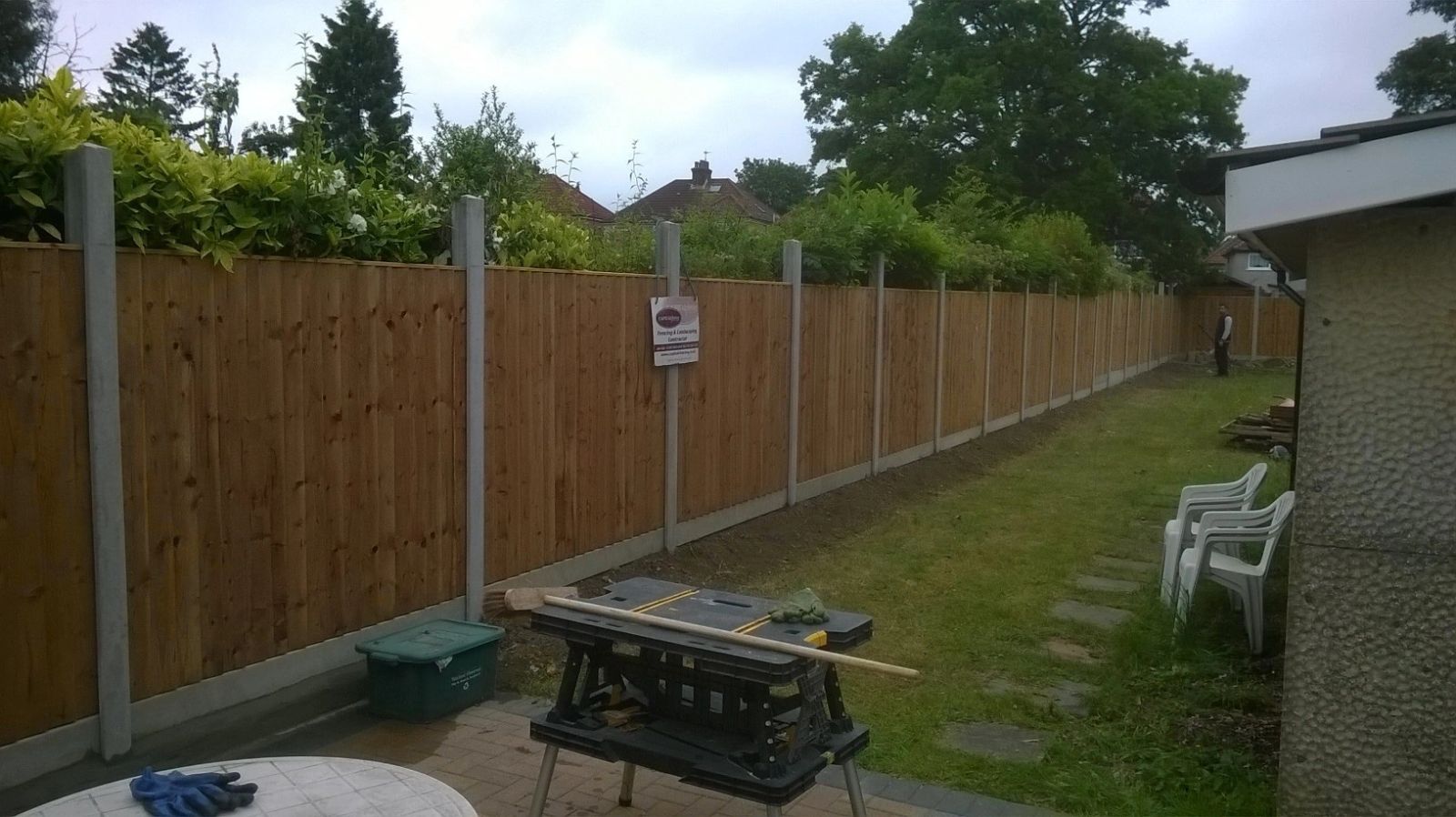
Most fences fail at the posts, not the panels. A timber post rots at ground level, a concrete post cracks, or the concrete around a post works loose and the whole section starts to lean. When that happens the panels either side are often still fine, so the sensible repair is to replace or re-set the post and put the panels back.
This page explains how a fence post repair works, the options for timber and concrete posts, and when a run has gone far enough that replacing it makes more sense.
What we can fix
Each post is looked at on its own merits. Some can be straightened and re-set; others need replacing.
- Timber posts rotted or snapped at ground level
- Cracked or broken concrete posts
- Leaning posts where the concrete base has worked loose
- Posts knocked out of line by storms or impact
Replacing a single post
We take the panels off either side carefully, break out the old post and its concrete, and set a new post in fresh concrete at the right depth and line. The panels then go back on. If a panel was damaged when the post went, it can be replaced at the same time, but where they are sound they are reused.
Concrete spurs or a full new post
A concrete repair spur bolted beside a rotten timber post is a quick fix, and it can hold a post that is sound above ground. It is not right for every fence: if the post is rotten higher up, or the fence carries a lot of wind, a full replacement post is the stronger repair. We will tell you which applies.
Timber or concrete posts
Replacing a broken timber post with a concrete one stops the same rot coming back at ground level, and slotted concrete posts take panels and gravel boards straight in. Timber posts suit fences built on timber rails, such as closeboard, and look more natural. Our concrete vs timber posts comparison sets out the trade-offs in full.
Leaning posts that can be re-set
Not every leaning post needs replacing. If the post itself is sound but its concrete base has loosened, it can sometimes be dug out, straightened and re-set in fresh concrete. We check the timber at and below ground level before deciding, because a post that looks fine above ground can be soft underneath.
When the whole fence needs replacing
If several posts have gone, the panels are soft and the run leans along its length, repairing post by post costs more than it saves. At that point a full replacement is usually better value, and our fence replacement page explains what that involves.
Send us photos and rough measurements, we send a written estimate, then we visit to confirm before work starts. We cover London and Hertfordshire. Photos of the base of each post help us give an accurate estimate.