
How it's done
How to Put Fence Posts on a Patio or Concrete
Last updated
The short answer
There are three main ways to put fence posts on a patio: lift the slab and set the post in concrete below, core drill through a concrete base, or use bolt down post bases anchored to the slab. Bolt down bases suit lower or gappy fences; tall solid fences are better with posts set below the paving.
At a glance
- Strongest
- Lift the slab or core drill, post set in concrete
- Quickest
- Bolt down base on sound, thick concrete
- Bolt down suits
- Low fences and slatted screens
- Protect
- Patio drainage and the house damp course
You do not always have to dig up the patio, but the fixing has to match how tall and solid the fence is.
Plenty of gardens have paving running right up to the boundary, so the obvious place for a new fence post is in the middle of a slab. Customers often want to know whether we will have to break up the patio, and whether a bolted fixing will hold.
This guide sets out the three main ways we deal with posts on hard standing and when each one is sensible.
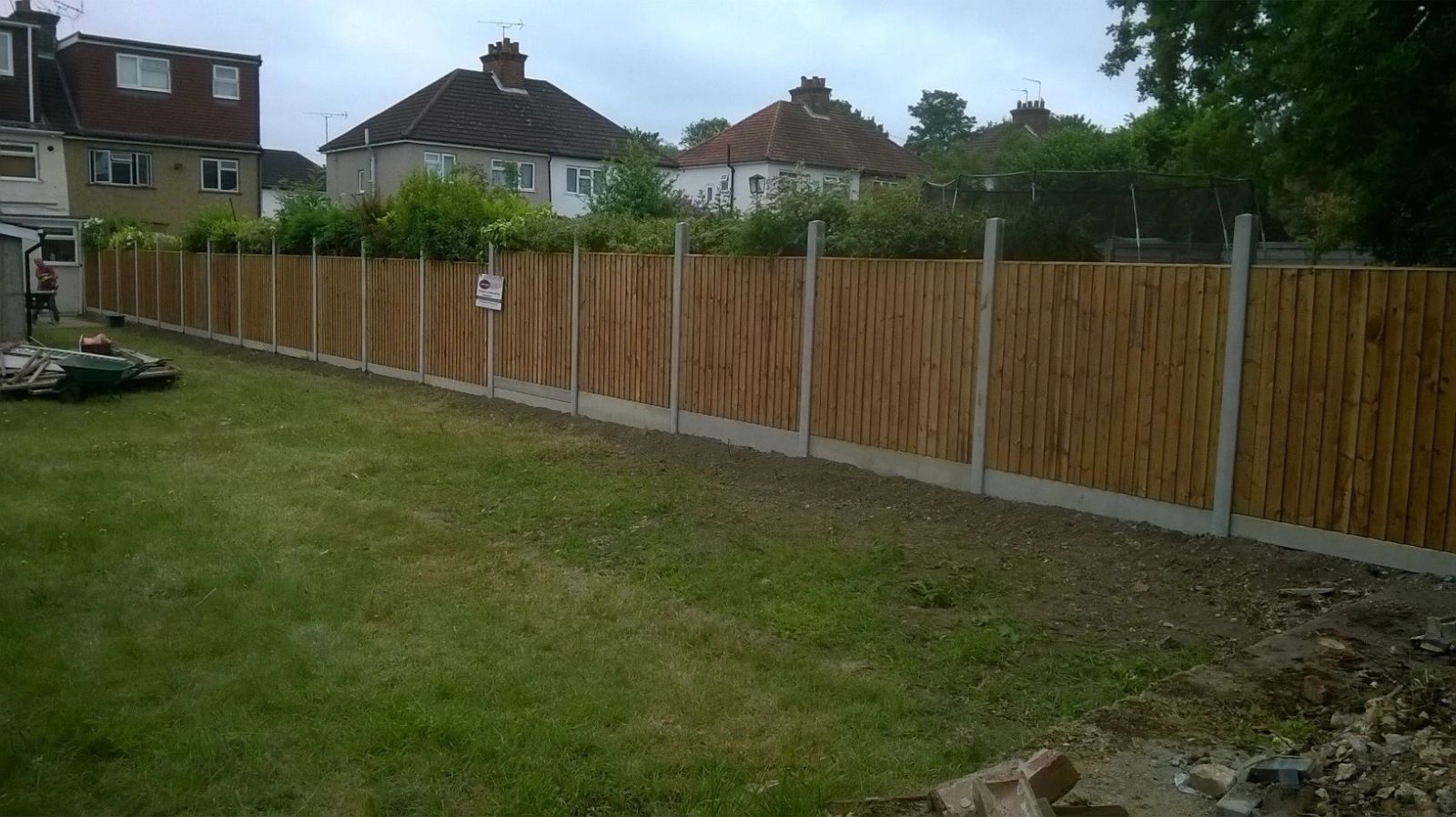
First, what is under the paving?
A patio can be slabs on sand, slabs on a full mortar bed, or a poured concrete base. Each behaves differently. Slabs on sand lift easily and relay well. A thick concrete base is strong enough to bolt to but hard to dig through. A thin, cracked slab may not be strong enough to hold anything.
Option one: lift the slab and dig
Where slabs can be lifted, we take up the one at each post position, dig a proper hole and set the post in concrete, then cut and relay paving around it. This gives the same hold as a post in a lawn and suits full height solid fencing. It takes more time and depends on the slabs coming up without breaking.
Option two: core drill through
On a concrete base, a hole can be drilled through to the ground beneath so a post can be set in concrete without lifting a wider area. It leaves the surface neat and keeps the strength of a buried post.
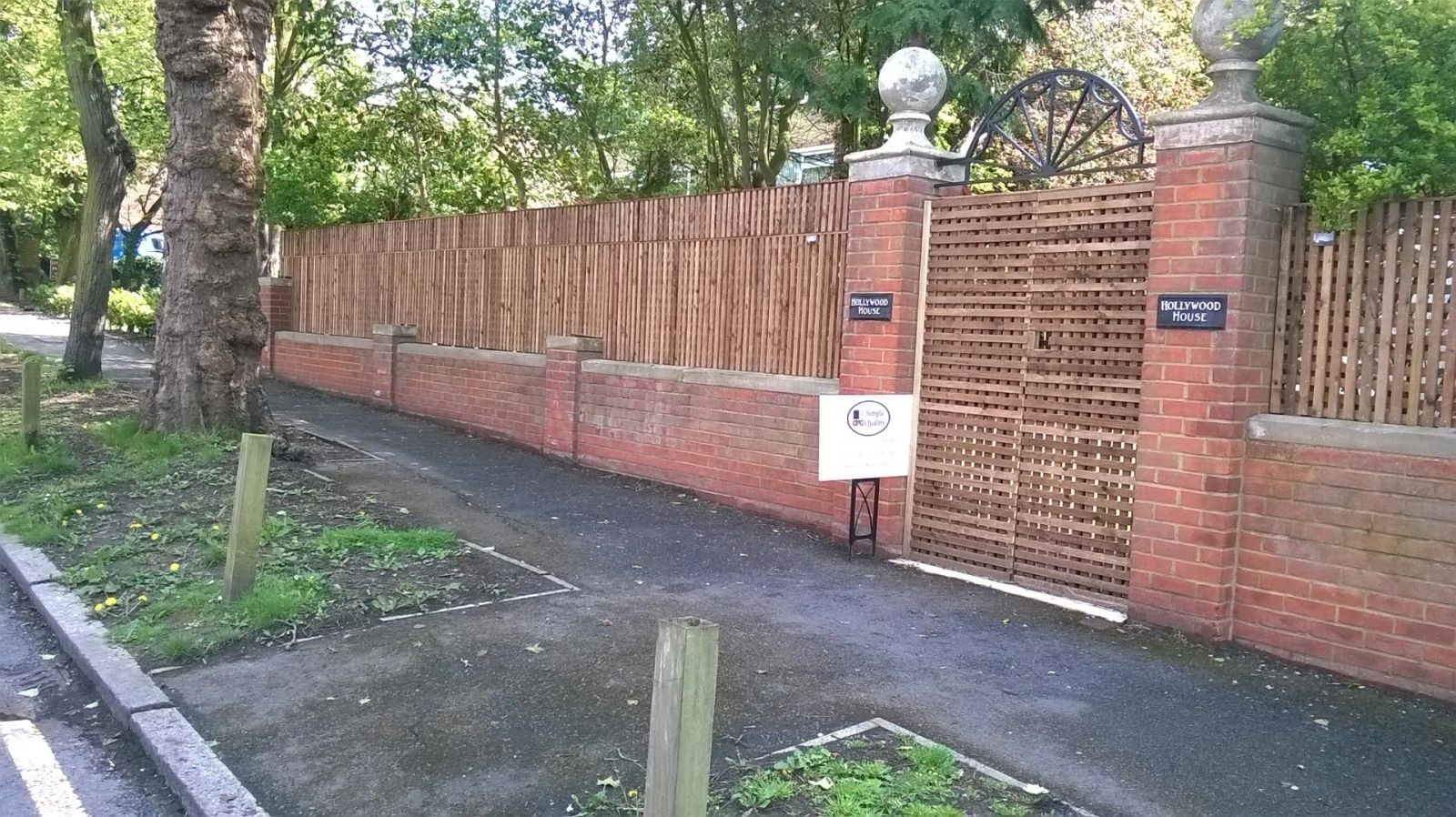
Option three: bolt down post bases
A bolt down base is a steel shoe fixed to the concrete with heavy anchors, with the post held in a socket above. It is quick and leaves the patio intact. The catch is leverage: on a tall solid fence the wind pushes hard on a short fixing. We keep bolt down bases for lower fences, screens with gaps and sheltered spots, on a base thick enough to take the anchors.
- Suits: low fences, slatted screens, sheltered corners
- Needs: sound, thick concrete for the anchors
- Avoid: tall solid fences on exposed boundaries
Drainage and the house wall
Paving is laid to fall so rain runs away from the house. Digging, drilling or adding a fence line must not create a dam that sends water back towards the walls. Where a fence meets the house, it should not bridge or sit above the damp course, and posts are usually kept clear of the wall itself.
Fences between a patio and a lawn
Some boundaries run partly over paving and partly over soil. In that case we often set posts in the ground wherever the lawn allows and use one of the patio methods only for the posts that land on hard standing. The fence then looks continuous even though the bases differ underneath.
Composite and slatted screens on paving
Slatted screens and composite systems are often chosen for patios because they look smart next to paving and let some air through. Many of these systems come with their own post bases designed for hard surfaces. Even so, the height, the gap between slats and how exposed the spot is all affect whether a bolted base is enough, so we judge each run on its own conditions rather than assuming one fixing suits every patio.
Patios laid against an old fence
A patio laid tight against an old fence often hides rotten post bases below the slabs. When that fence comes out, the old concrete lumps may be under the paving and need breaking out before new posts can go in. It is worth expecting a little disturbance at those points, and we will mention it in the written estimate if we can see it from the photos.
Which option suits your garden
The answer depends on the paving, the fence height and how exposed the boundary is. Send photos of the patio along the boundary, a close up of the slabs and the height of fence you want. We will suggest which method fits and give a written estimate, then confirm when we visit.
Frequently asked
Can you put a fence on a patio without digging?
Yes, with bolt down post bases, but they are best kept for lower or gappy fences. Tall solid fences usually need posts set in concrete below the patio.
Will lifting slabs damage my patio?
Slabs on sand normally lift and relay cleanly. Old slabs bedded in mortar can crack, so we would talk you through that risk first.
Are post spikes the same as bolt down bases?
No. Spikes are driven into soil; bolt down bases are anchored into concrete. Our post spikes guide covers the difference.
Can a fence be fixed to the house wall?
A post or bracket at the house end is common, but it must not bridge the damp course or trap water against the wall.
Paving right up to the boundary?
A close photo of the slabs and the fence height you want tells us whether to lift, drill or bolt down at each post.