
Comparisons
Fence Post Spikes: Do They Work and When to Avoid Them
Last updated
The short answer
Fence post spikes work for low, light structures in firm, even soil, such as picket fencing or trellis. For a full height solid fence they tend to loosen and lean, because the wind levers the post against a narrow blade. Posts set in concrete hold far better on most garden boundaries.
Official guidance: Planning Portal: fences, gates and garden walls
At a glance
- Good for
- Low, light fences and trellis in firm soil
- Poor for
- Tall solid fences and exposed boundaries
- Common failure
- Leaning after a few windy winters
- Usual alternative
- Posts set in concrete
A post spike is quick to fit and needs no digging, which is exactly why it gets used in places it was never meant for.
Post spikes are the long pointed metal sockets that are hammered into the ground so a timber post can sit in the cup at the top. They appeal because they skip the hole, the concrete and the wait while it sets. People ask us about them most when an existing spiked fence has started to lean and they want to know whether to spike it again.
This guide explains how a spike holds a post, where it is a reasonable choice, where it usually fails, and what we tend to use instead on the boundaries we build across London and Hertfordshire.
How a driven spike holds a post
A spike relies entirely on the grip of the soil around its blade. There is no wide base spreading the load, so the post is only as steady as the ground the blade was driven into. In firm, even soil that grip can be good. In loose, wet or stony ground it is weak from the first day.
The post itself sits above ground in the socket, which keeps the timber out of the soil. That is the one real advantage: the part of a timber post that normally rots first is never buried.
Where spikes are a fair choice
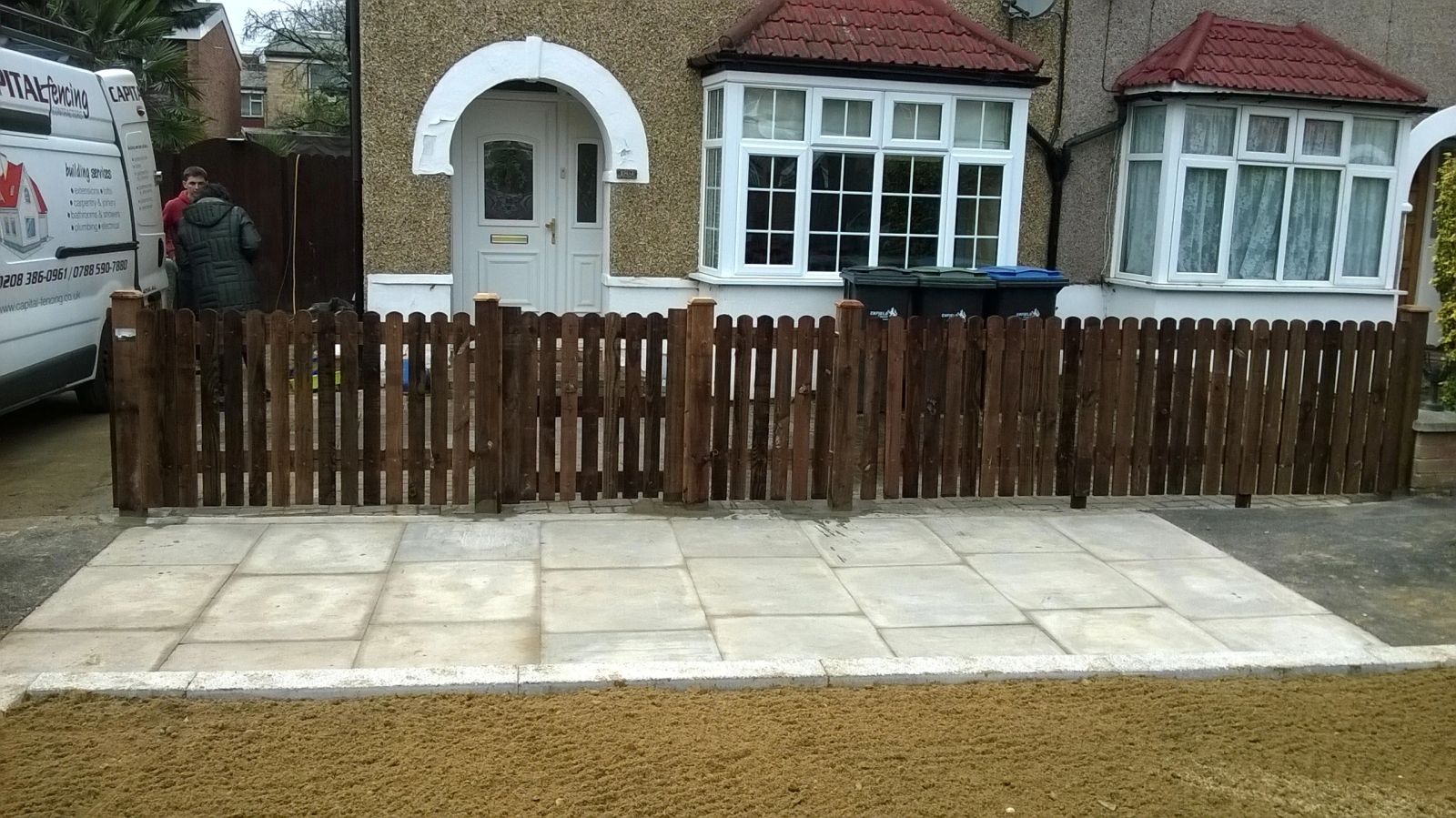
Spikes can make sense for low, light structures that catch little wind. Typical examples are a short run of picket fencing, a low trellis for climbing plants, a post for a letterbox or a small sign, or a temporary boundary that will be replaced later.
- Low fences with gaps between the boards
- Light trellis and plant supports
- Firm, even soil with no buried rubble
- Short runs where a leaning post is easy to reset
Why spiked fences lean
A full height solid fence acts like a sail. Every gust pushes the top of the post and the spike acts as a lever in the ground, slowly widening the hole it sits in. After a few winters the post rocks, then leans, and the panels either side start to twist.
Driving the spike is also harder than it looks. Hitting a stone, an old footing or a root knocks it off line, and once a spike goes in crooked it is very difficult to correct without pulling it out and starting again in a different spot.
Ground that defeats a spike
Heavy clay that shrinks in dry summers and swells in wet winters loosens a spike's grip season by season. Made ground in newer gardens often hides brick, concrete and rubble just below the turf. Waterlogged lower gardens give the blade almost nothing to hold. In all three a dug hole lets you see what is down there and build the base to suit.
What we usually fit instead
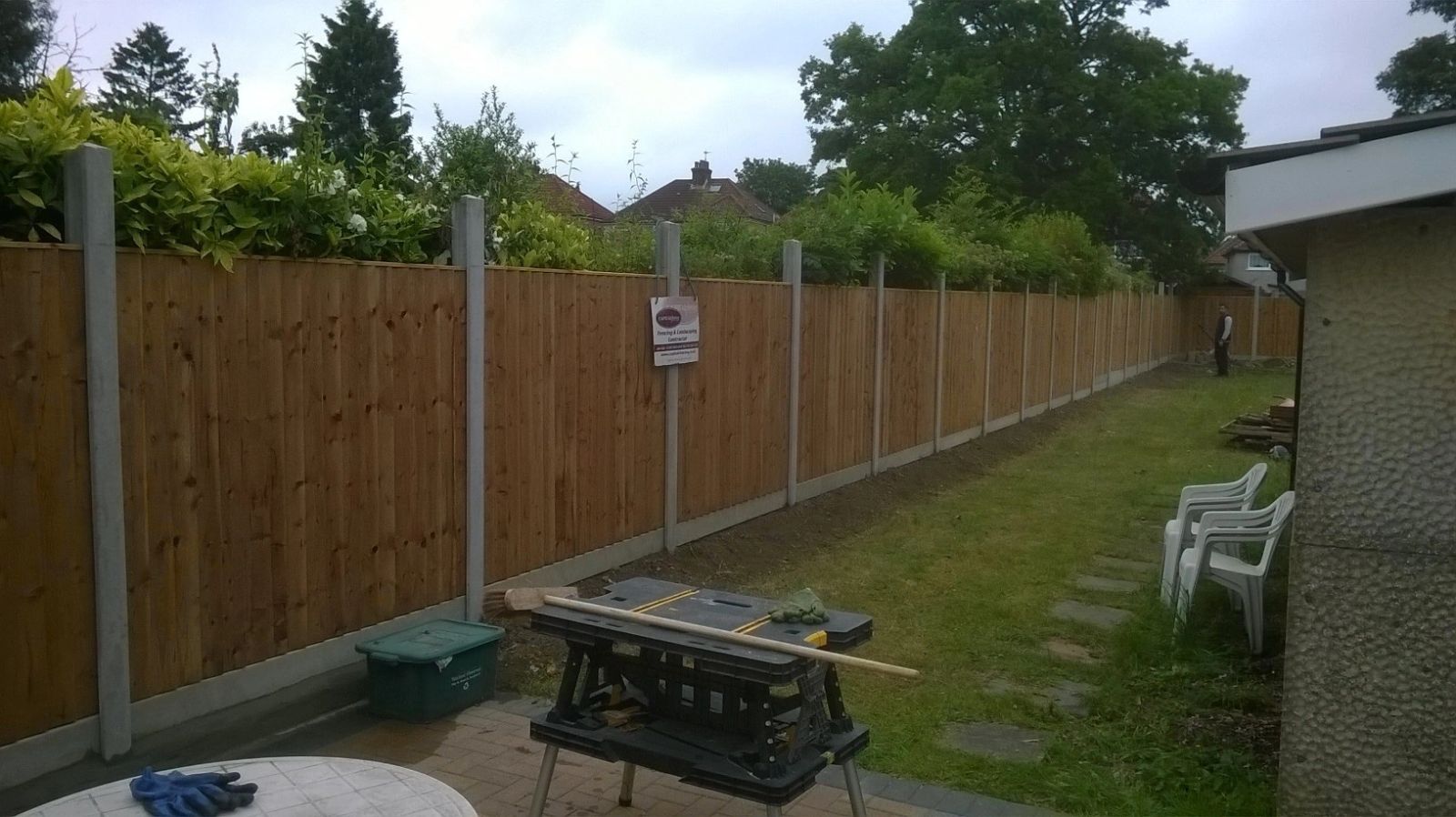
For most garden boundaries we set posts in concrete, either slotted concrete posts or treated timber posts, depending on the fence. The hole is dug to a proper depth, the post is set plumb and the concrete is shaped to shed water away from the timber. Where a post has to stand on existing paving, a bolted base fixed into the slab is a different product from a driven spike; our guide to fixing fence posts on a patio covers that situation.
Spikes and gates
A gate post carries far more strain than a fence post. Every time the gate swings, its weight pulls the top of the hinge post towards the opening, and on a spike that pull slowly rocks the socket loose. Gate posts are one place we would not use a driven spike at all, whatever the size of the gate.
Can a leaning spiked post be saved?
Sometimes a single loose spike can be reset, but on a fence that has started leaning along its length it usually means the method is wrong for the site rather than one bad post. Replacing the posts in concrete while reusing sound panels is often possible. Send us photos of the leaning section and the fence as a whole and we will say which route makes sense before you spend anything.
Frequently asked
Are fence post spikes as strong as concrete?
Not for a full height solid fence. Concrete gives the post a wide, fixed base, while a spike depends on the soil gripping a narrow blade, so it is better kept for low, light structures.
Can I put a spike in where an old post was concreted?
Usually not. The old concrete lump blocks the spike and loosens the ground around it. The old base normally needs breaking out first.
Do spikes stop posts rotting?
They keep the timber out of the soil, which helps, but the post can still rot at the socket if water collects there, and the fence can still lean if the spike moves.
Will you fit a fence on spikes?
For a low decorative run in good ground we may suggest it, but for most boundary fences we set posts in concrete because it holds far better in wind.
Spiked fence starting to lean?
Send photos of the leaning run and we will say whether the posts can be reset or should go into concrete, before you spend anything.