
Rules & permissions
Can You Put a New Fence in Front of Your Neighbour's Fence?
Last updated
The short answer
Yes, in most cases you can build your own fence just inside your boundary in front of a neighbour's fence, as long as it stands wholly on your land, on its own posts, and within planning height rules. Check who owns the existing fence first, keep new post concrete clear of their footings, and decide how you will deal with the strip between.
Official guidance: GOV.UK: your property boundaries
At a glance
- Permission
- Not needed from the neighbour if on your land
- Posts
- Your own, clear of their footings
- Planning
- Same height rules as any fence
- Watch for
- Leaves and weeds in the gap
When the fence next door is tired and the neighbour will not replace it, building your own just inside your boundary is often possible, but it needs thought.
Sometimes the fence you look at belongs to the house next door, and they are happy with it even though it leans, rattles or has gaps. You cannot replace their property without agreement, so the question becomes whether you can put up a separate fence of your own on your side of the line.
This guide explains what to check first, how the second fence is usually built, and the practical issues a double boundary creates.
Start with who owns what
Before planning anything, confirm that the existing fence really is theirs and roughly where the legal boundary runs. Title plans give a general boundary rather than an exact line, which GOV.UK explains on its property boundaries pages. Our guide to which side of the fence is yours covers the usual clues.
Building entirely on your land
Your new fence should sit fully inside your boundary, including its post concrete. That usually means setting the new posts a short distance in from the old fence rather than tight against it. Any digging that undermines their posts can cause problems, so the holes are kept clear of their footings.
The gap between two fences
A narrow strip between two fences collects leaves and can grow weeds that nobody can reach. Some people leave enough room to get in with a rake; others close the strip at each end. Either way, think about it before the posts go in rather than after.
- Keep post concrete clear of their posts
- Decide whether the strip needs to be reachable
- Allow for ivy or roots coming through from their side
- Check drains and covers along the line
Height and planning
A second fence follows the same planning rules as any other. The Planning Portal sets out the general height limits for permitted development, which are lower next to a road. Listed buildings, conservation areas and planning conditions on newer estates can add restrictions, so check with your council where those apply.
Telling your neighbour
Even when you do not need their agreement, a word in advance helps. Explain that the new fence is yours, that it will sit on your side, and that their fence stays as it is. Many neighbours are relieved, and some decide to remove their old fence once yours is up, which is something to agree between you.
Choosing a style for a double boundary
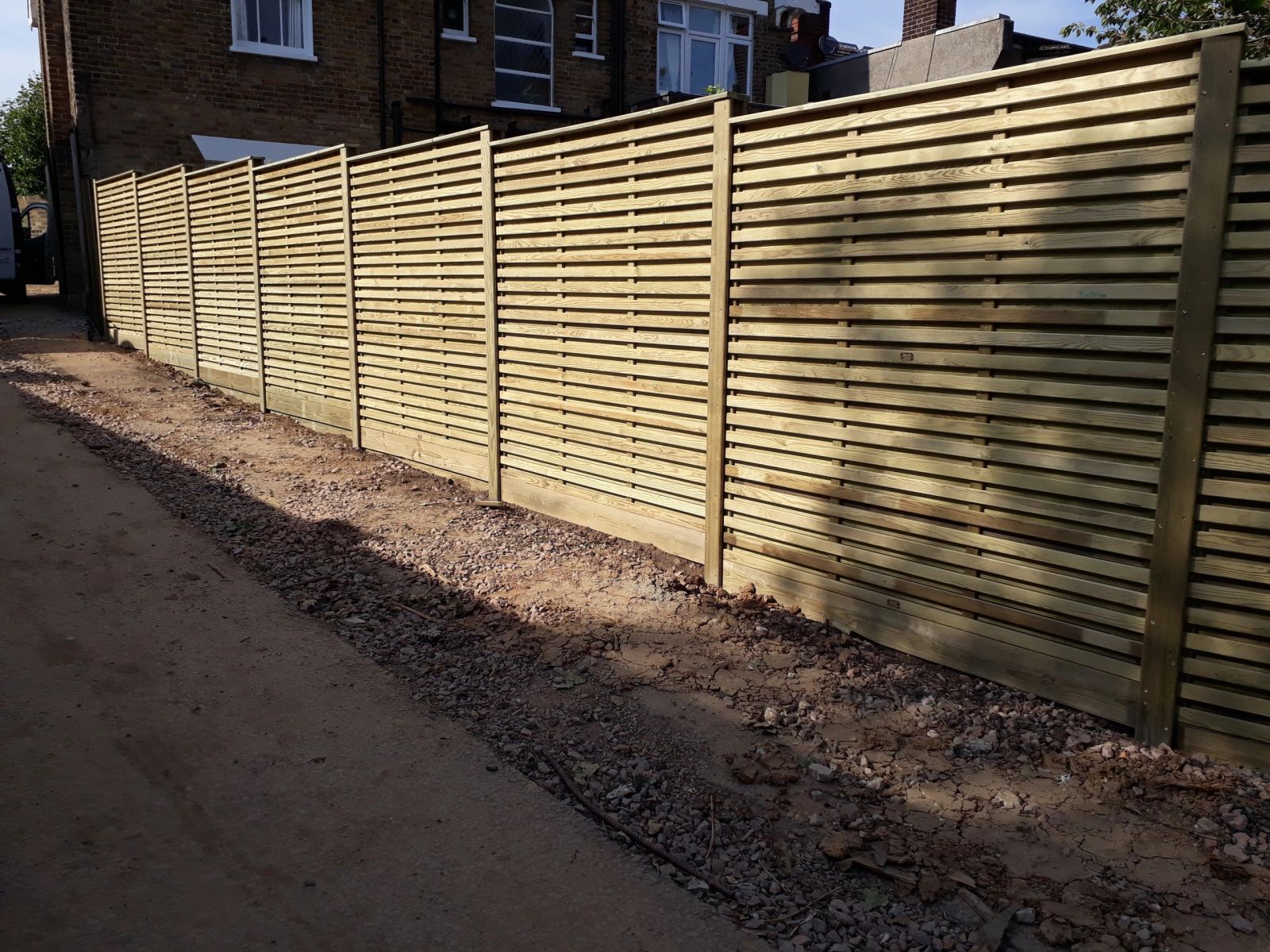
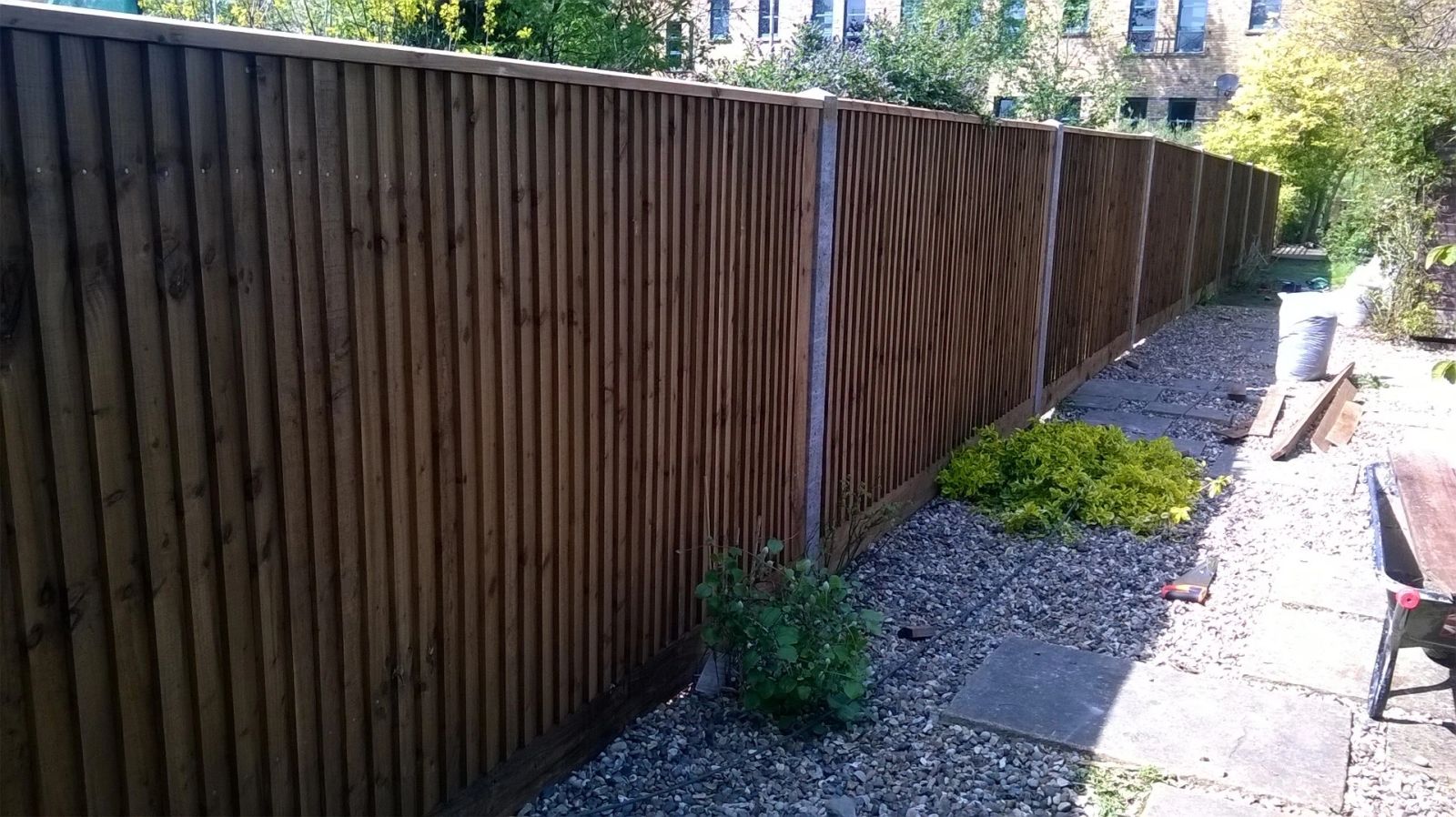
Because you will mainly see your side, choose a fence that looks good from your face and fixes from your side. Closeboard, solid panels and slatted designs all work. Keeping the new fence a little taller than the old one hides its top, though planning limits still apply.
What happens to the old fence later
If the old fence eventually falls, the owner is responsible for clearing it from their side. Your fence should stand on its own posts so it is unaffected. Where the old fence is already leaning toward you, mention it when you send photos, because it can affect where the new posts can go.
Footings, roots and what lies below
The ground along an old boundary often hides surprises: broken concrete from earlier posts, roots from a hedge that was taken out, or a drain that runs parallel to the fence. When we set out a second fence we dig the first holes carefully to see what is there and adjust the post line if needed. It is better to move a post along than to fight an old footing that belongs to next door.
If you know the history of the boundary, such as an older hedge or wall that once stood there, tell us when you ask for a quote, because it helps us plan where posts can safely go.
Living with two fences long term
A double boundary works well when both fences are sound. Problems start when the older one fails and leans onto yours, or when climbers from one side grow into the gap. Walking the line once a year and clearing anything that has fallen in keeps the strip from becoming a damp, overgrown trap that shortens the life of both fences.
Frequently asked
Do I need permission to build a fence just inside my boundary?
Not from your neighbour, if it is wholly on your land and within planning rules. Telling them first is still sensible.
Can I attach my new fence to their posts?
Not without their agreement, because the posts are their property. A separate fence on its own posts avoids the question.
Does a second fence move the boundary?
No. Where you choose to put a fence on your land does not change the legal boundary, though it is wise to keep a record of where it was built.
Can you fit a fence close to an old one?
Yes, we regularly build fences beside existing ones. Photos showing both fences and the space between help us plan the post line.
Building your own fence alongside?
Photos of both fences and the space between let us plan a post line that stays on your side.