
Quick checklist
- Confirm joist spacing matches the specific board's manufacturer rating
- Check the substructure has a drainage fall away from the house
- Confirm ventilation gaps are built into the design, not an afterthought
- Ask whether joists are treated timber or aluminium
- Get manufacturer warranty documentation, not a verbal promise
Composite decking is sold heavily on the boards, but almost every deck failure we're called to inspect is a substructure problem: joists set too far apart, no ventilation beneath the deck, or water pooling against a house wall. This page covers the full system, not just the visible boards.
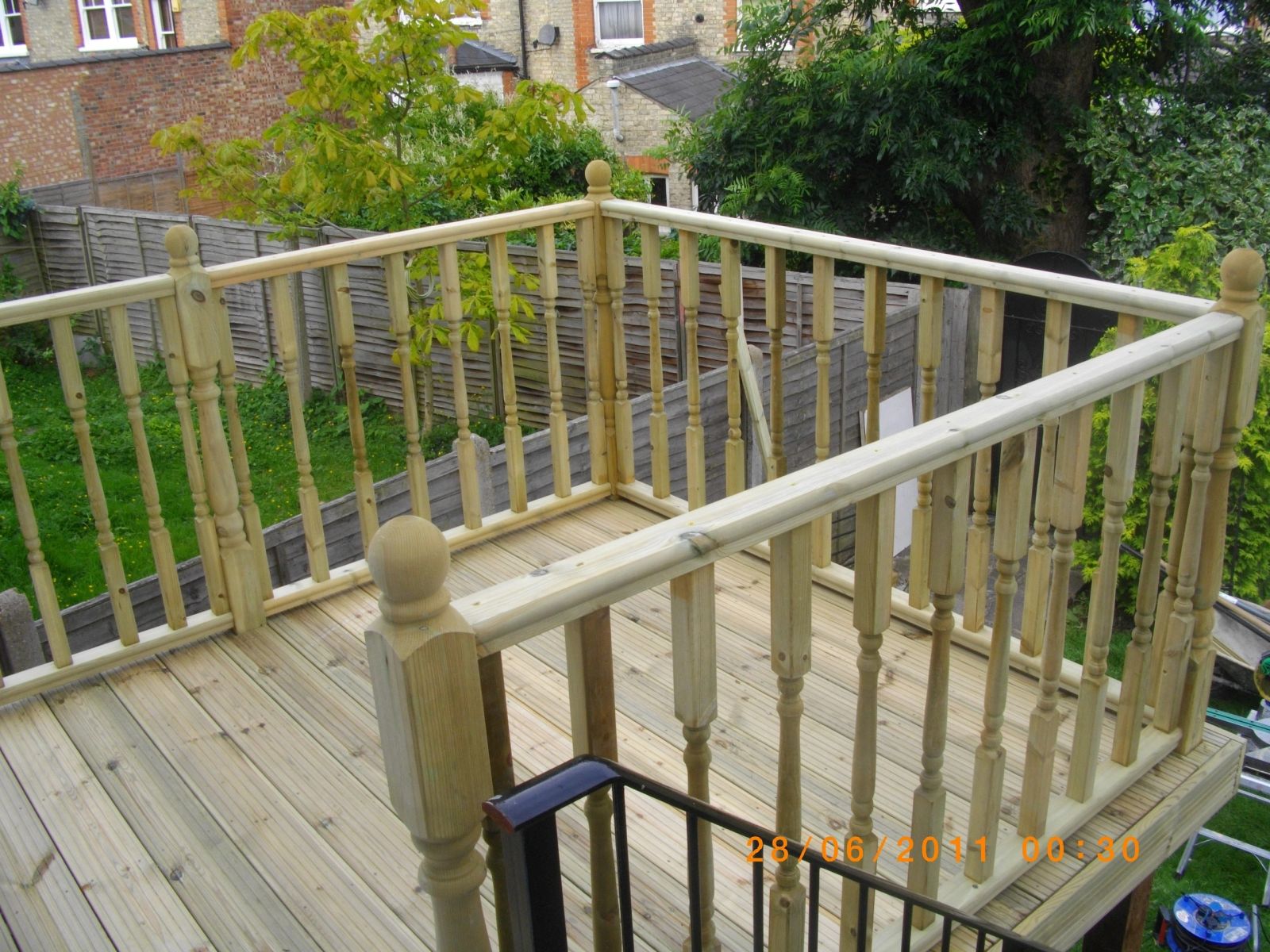
Board types and surface finish
Capped composite boards resist staining and fading far better than uncapped; grooved or embossed surfaces hold grip better in wet weather, which matters for raised decks, steps and anywhere near a hot tub or pool.
Board thickness and span rating vary by manufacturer — always check the manufacturer's maximum joist spacing for the specific board, not a generic figure.
Joist spacing and substructure
Composite boards typically need closer joist spacing than timber decking — commonly 300mm centres versus 400mm+ for timber — because composite has less inherent stiffness. Running joists at timber spacing under composite boards is the single most common cause of the 'bouncy decking' complaint we get called out to fix.
Joists themselves are usually treated softwood (or aluminium on premium systems) set on adjustable pedestals or posts, which also solves drainage and ventilation beneath the deck in one move.
| Element | Typical spec | Note |
|---|---|---|
| Joist spacing | 300mm centres | Confirm against your specific board's rating |
| Joist material | Treated softwood or aluminium | Aluminium removes joist rot risk entirely |
| Substructure | Adjustable pedestals or posts | Keeps deck ventilated and allows drainage fall |
| Fixing | Concealed clip system | No face-screwed boards on a quality install |
Drainage, ventilation and honest limitations
A deck built tight to a house wall without a fall away from the building, or without gaps for airflow beneath it, will trap moisture regardless of how good the boards are — this is a substructure and design issue, not something composite boards fix on their own.
Composite decking is the wrong choice for a very tight budget (it typically costs 40–60% more than a comparable timber deck) and it does get noticeably hotter underfoot than timber in full sun, which matters for bare feet around a pool.
Want a composite deck that won't bounce or pool water?
We'll spec joist spacing and drainage fall properly before boards ever go down, and give you the manufacturer warranty paperwork with the quote.
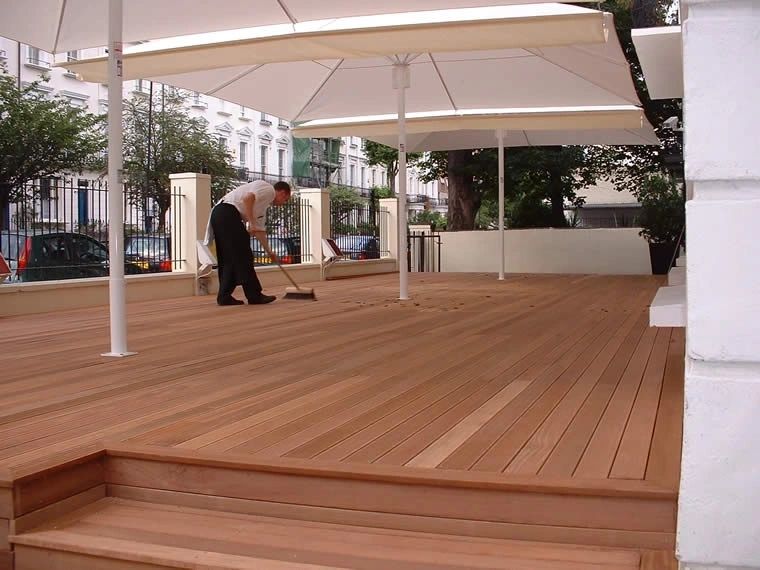
Frequently asked
Why does composite decking sometimes feel bouncy?
Almost always joists set too far apart for the specific board — composite typically needs 300mm centres, tighter than timber decking, and this is the first thing we check on a bouncy deck.
Does composite decking get hot in summer?
Yes, noticeably more than timber in direct sun, which is worth considering for decks used barefoot around pools or hot tubs.
Can composite decking be laid directly on a concrete slab?
It needs a joist substructure above the slab for drainage, ventilation and fixing — boards shouldn't sit flush on solid concrete.
How long does composite decking actually last?
Boards are typically warranted 15–25 years by manufacturers; the substructure (if properly ventilated treated timber or aluminium) can match or exceed that.
Is composite decking slippery when wet?
Grooved or embossed boards perform well; smooth, worn or algae-covered boards of any material become slippery — see our decking problem pages for cleaning and grip advice.