
Comparisons
Composite vs Hardwood Decking
Hardwood gives you natural grain and repairability; composite gives you grip, stability and no annual oiling. Shade and maintenance appetite decide it.
Both outperform softwood, and both cost real money, so the decision is worth getting right. The honest split is about how the deck will be used and how much time you will give it.
Grip, shade and algae
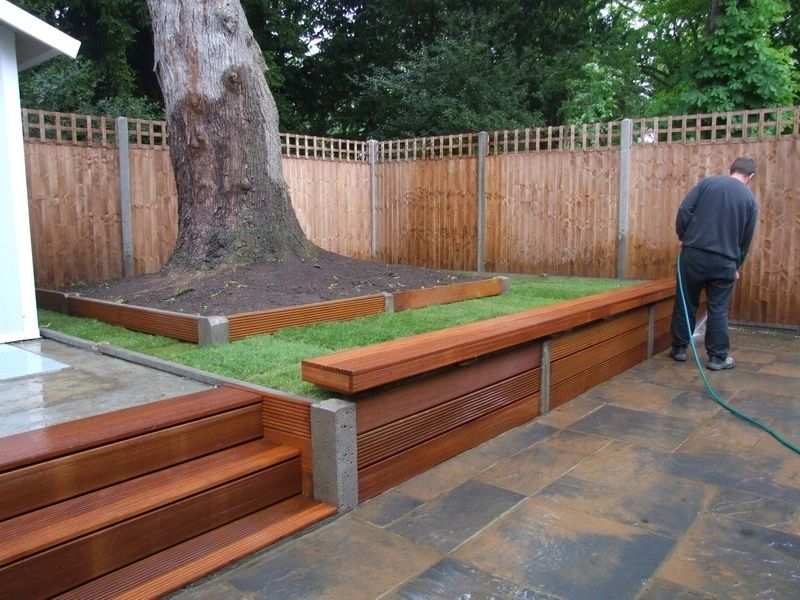
Shaded, north-facing and tree-covered gardens turn slippery. Grooved composite with a textured surface holds grip better through a wet winter and does not host algae in the same way. Hardwood can be brushed and treated, but in permanent shade it will need doing more often than the brochure suggests.
Heat and comfort underfoot
Dark composite in full afternoon sun gets noticeably hot — worth knowing if children will be barefoot. Hardwood runs cooler. Lighter composite colours mitigate this and are what we usually suggest for a south-facing terrace.
Movement, fixings and detailing
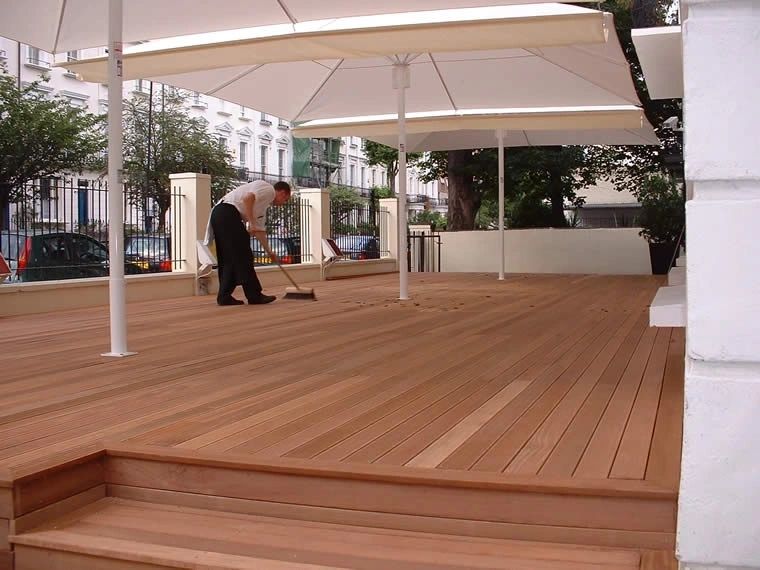
Composite expands and contracts along its length, so end gaps and joist centres must follow the manufacturer's spec — this is where DIY composite decks fail. Hardwood is dense, moves less, but needs pre-drilling and stainless fixings, which adds labour.
Repairs after damage
A scorched or gouged hardwood board can be sanded and re-oiled. A damaged composite board is swapped, and matching an older batch colour is not always perfect. If your deck sits under a barbecue or fire pit, that matters.
Frequently asked
Which lasts longer?
Both can pass twenty years when built on a correct substructure. Composite is more predictable; hardwood depends on oiling and drainage.
Is composite decking slippery?
Textured, grooved composite is generally better than smooth boards of any material. Any deck gets slippery if leaves and algae are left to sit.
Can I mix materials?
Yes — composite for the main platform and hardwood for the trim or steps is a combination we've built and it looks smart.
Does composite need a stronger frame?
It needs a tighter one. Joist centres are usually closer than for softwood, particularly for diagonal laying.
Want this priced properly for your garden?
Free site visit across London and Hertfordshire, a written specification, and a fixed price. No obligation.