London & Hertfordshire Free Site Visit
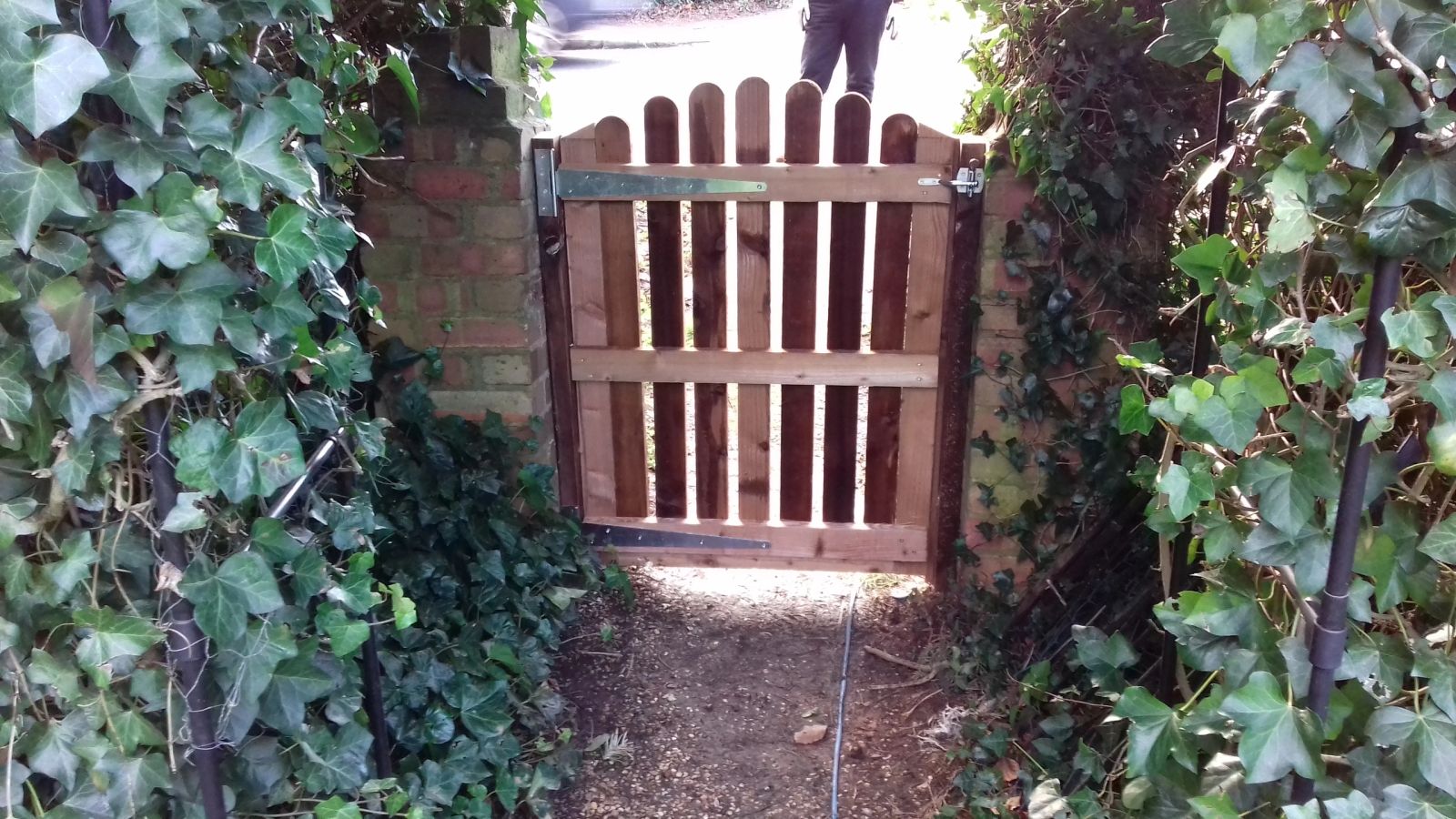
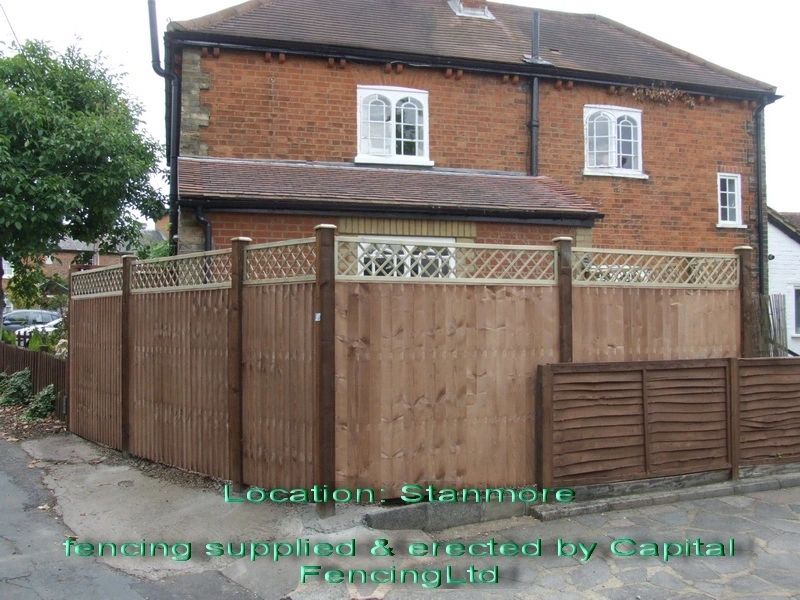
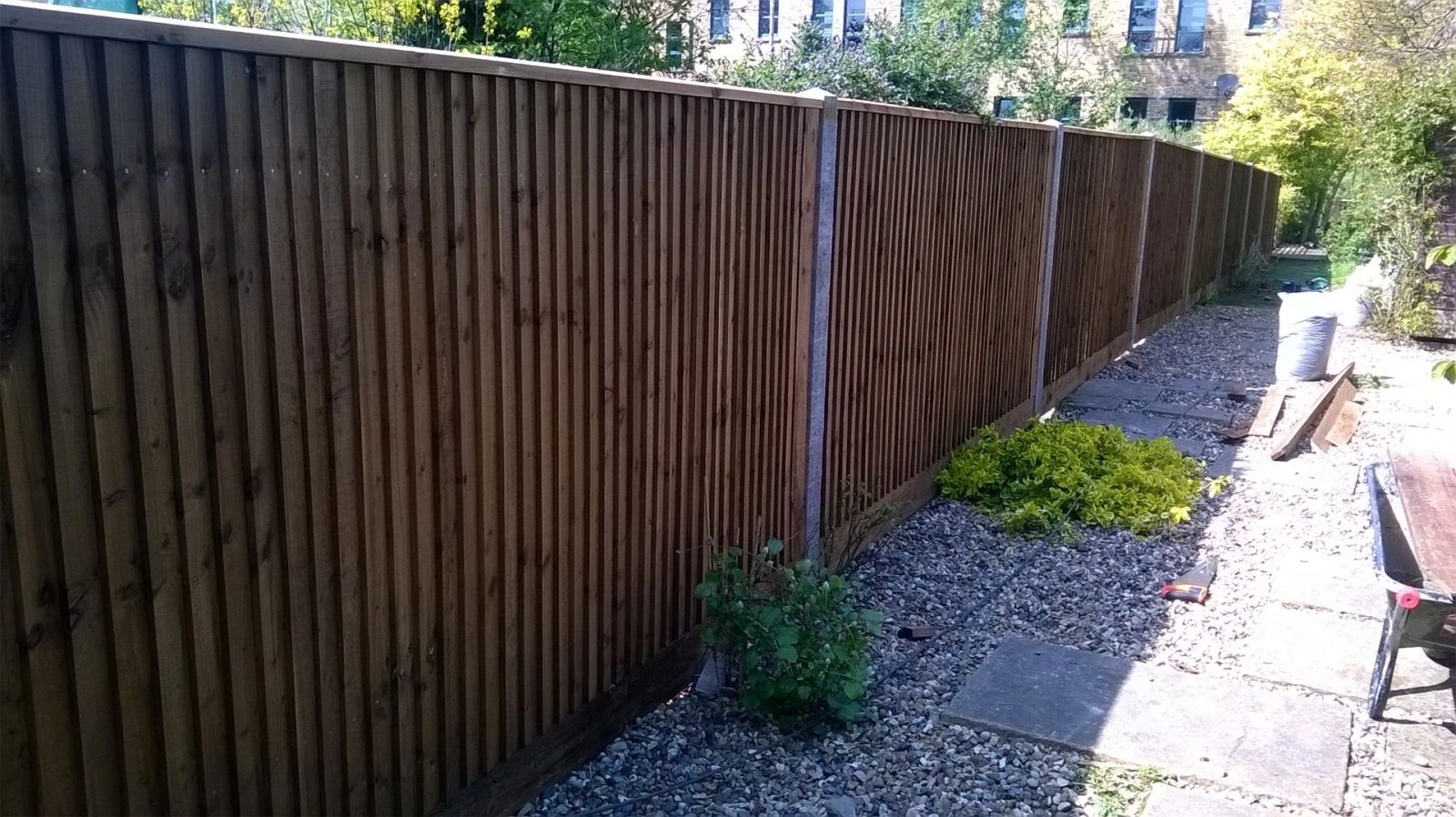
closeboard fence run installed by Capital Fencing in Hoddesdon (EN11)
Hoddesdon · EN11

Panel Fencing in Hoddesdon (EN11)

Panels want concrete posts and a level run. We set posts at true 1.83m centres, add gravel boards so no panel touches soil, and cut only where a Hoddesdon boundary refuses to divide evenly. We're a small, time-served panel fencing crew working out of London and Herts, and Hoddesdon is a regular week for us. Most briefs here come down to residential rear boundaries where fastest install and lowest cost matter most — and honestly, whether panel fencing is the right answer at all before we quote. Recent work on Essex Road and Conduit Lane. We orient jobs off Rye House.

Panels want concrete posts and a level run. We set posts at true 1.83m centres, add gravel boards so no panel touches soil, and cut only where a Hoddesdon boundary refuses to divide evenly. We're a small, time-served panel fencing crew working out of London and Herts, and Hoddesdon is a regular week for us. Most briefs here come down to residential rear boundaries where fastest install and lowest cost matter most — and honestly, whether panel fencing is the right answer at all before we quote. Recent work on Essex Road and Conduit Lane. We orient jobs off Rye House.

Why panel fencing works here

  • quickest fence type to install — typical rear garden in a day
  • cheapest way to secure a boundary in pressure-treated softwood
  • easy to combine with concrete posts and gravel boards for a longer service life
Honest trade-offs

Where panel fencing isn't the right answer

  • cheap overlap panels can rack in high wind if posts aren't properly set
  • shorter service life than closeboard — expect 10–12 years on well-drained ground

We'll say so on the site visit — a wasted quote helps nobody.

Typical spec

How we build panel fencing in Hoddesdon

6ft lap or overlap panels between pressure-treated or concrete posts. Standard build: 6ft × 6ft overlap or waney-edge panels, concrete posts and 150mm gravel boards. On Hoddesdon jobs we adjust for older fence runs in the old town often hide rotted posts under cement skirts — full removal is usually required.

Property mix locally: 1930s and 1950s semis, with Victorian cottages toward the Old Town. Typical gardens: mid-sized flat gardens; properties near Rye Park often have direct alley access. Postcodes we regularly service: EN11.

Common Hoddesdon briefs

  • landlord turnarounds needing a fresh boundary in a single day
  • shared boundaries where neighbours want a simple like-for-like replacement

Panel Fencing FAQs — Hoddesdon

Can panels be re-stained a different colour?

Concrete posts are the reason a Hoddesdon panel fence survives a wet winter — timber posts fail at the ground line first. Survey slots across EN11 are usually inside a week. In short: quickest fence type to install — typical rear garden in a day, though one damaged panel means replacing the whole panel, not a single board.

What's the difference between overlap and lap panels?

A single damaged bay is a same-visit swap, which keeps maintenance on a Hoddesdon rental property simple and cheap. We work this patch weekly, from Hoddesdon Industrial Centre out toward ware. In short: quickest fence type to install — typical rear garden in a day, though one damaged panel means replacing the whole panel, not a single board.

How long do lap panels last with concrete posts?

Concrete posts are the reason a Hoddesdon panel fence survives a wet winter — timber posts fail at the ground line first. For 1930s and 1950s semis in EN11, that is where the cost sits. Practically, that means cheapest way to secure a boundary in pressure-treated softwood — and we're upfront that cheap overlap panels can rack in high wind if posts aren't properly set.

Are gravel boards worth adding?

Bay lengths drive the price here, so we measure the run properly rather than estimating panel counts from a Hoddesdon garden photo. We allow for mid-sized flat gardens; properties near Rye Park often have direct alley access when setting out in Hoddesdon. Practically, that means cheapest way to secure a boundary in pressure-treated softwood — and we're upfront that cheap overlap panels can rack in high wind if posts aren't properly set.

Should I use timber or concrete posts?

A single damaged bay is a same-visit swap, which keeps maintenance on a Hoddesdon rental property simple and cheap. Survey slots across EN11 are usually inside a week. In short: quickest fence type to install — typical rear garden in a day, though one damaged panel means replacing the whole panel, not a single board.

Recent panel fencing work
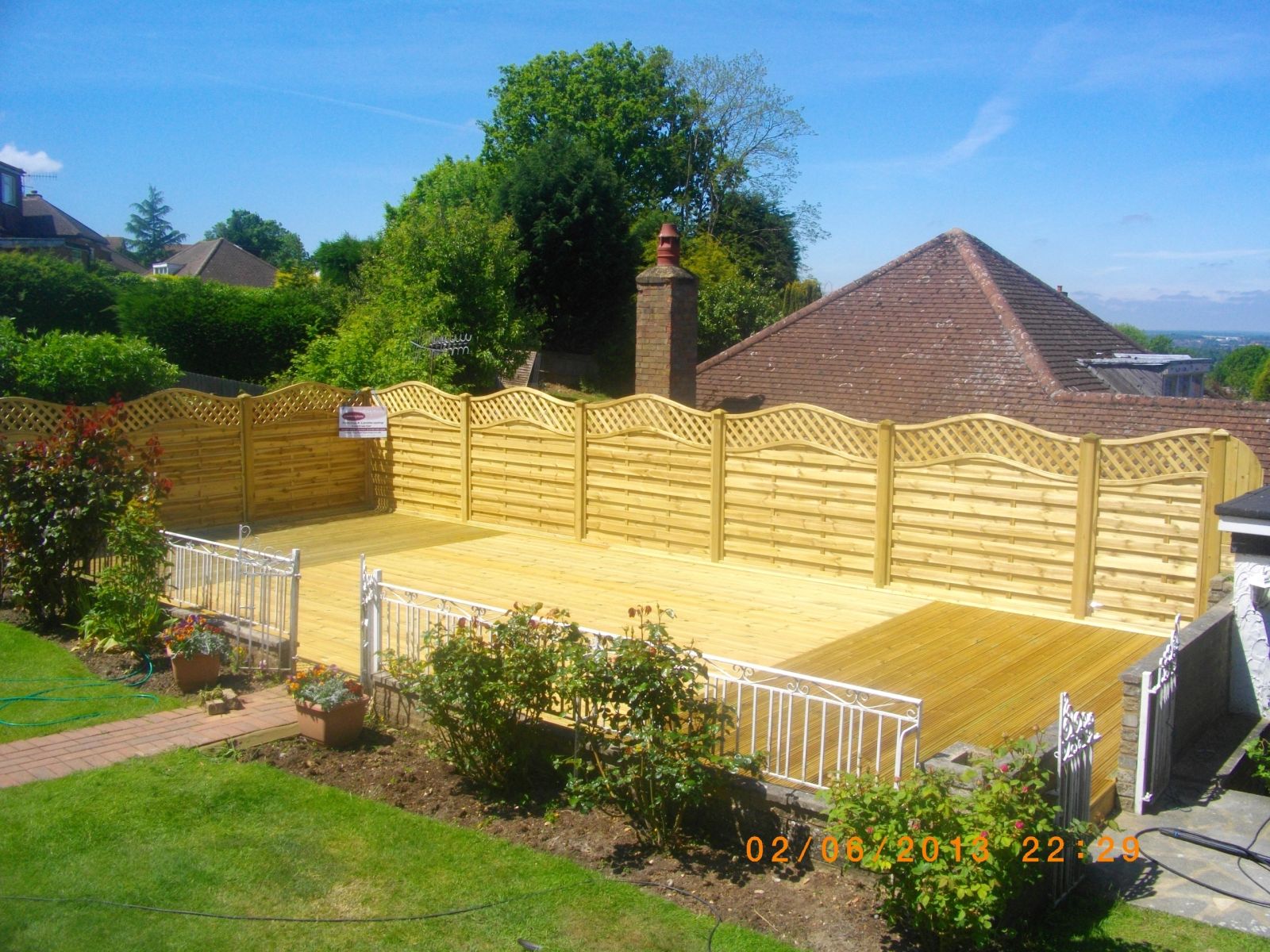
closeboard fence run installed by Capital Fencing in Hoddesdon (EN11)panel fence install installed by Capital Fencing in Hoddesdon (EN11)trellis-topped fence installed by Capital Fencing in Hoddesdon (EN11)bespoke decorative fence installed by Capital Fencing in Hoddesdon (EN11)

Panel Fencing in Hoddesdon: the practical detail

Emergency vehicle sirens

A siren is engineered to be audible over background noise at considerable distance and across a wide frequency range, which makes it one of the noise sources least affected by a domestic acoustic barrier of any practical height.

This is set out clearly to anyone near a main road or hospital route so that occasional siren noise isn't mistaken for a sign the barrier isn't working — it's simply outside what boundary fencing is designed to address.

Round post versus square-sawn post sections

A round, or half-round, post retains more of the log's original strength-giving fibre continuity around its circumference than a square-sawn post cut from the same log, since sawing removes material and can cut across some outer fibres.

Square-sawn posts are easier to fix panels and brackets to flush, since flat faces align with flat rail ends, whereas round posts often need a notched or curved bracket to seat components securely.

Round fencing stock is more common in agricultural post-and-rail and stock fencing where raw strength per log matters most, while square-sawn posts dominate garden and boundary fencing where flush fixing detail matters more.

Land registered as a town or village green

Land formally registered as a town or village green carries strong legal protection against enclosure or obstruction, including from fencing, under the Commons Act 2006.

This status can sometimes apply to open spaces that don't look obviously like a traditional village green, following a successful community application to register them.

Checking the relevant register before fencing land bordering an open green space avoids inadvertently obstructing protected land.

Zinc-aluminium coatings

Zinc-aluminium alloy coatings, sold under various trade names, combine zinc's sacrificial protection with aluminium's more stable barrier properties, generally giving longer service life than pure zinc galvanising in the same environment.

They're commonly used on wire products and fixings destined for coastal or heavily salted road environments, where standard galvanising alone corrodes faster than inland applications.

The trade-off is that these coatings are usually applied by wire-drawing or continuous coil coating processes rather than batch hot-dip immersion, which limits them to certain product types rather than large fabricated steelwork.

Surface-water run-off across a boundary

Where one garden sits higher than its neighbour, or has a hard surface that sheds rain quickly, surface water often crosses the boundary line rather than staying on the plot it fell on.

A solid close-boarded fence with gravel boards set into the ground can act as an unintended dam, backing water up against the base and accelerating rot in the boards nearest the high side.

A small gap under the boards, or a French drain running parallel to the fence line, lets water pass through without saturating the timber, and is worth raising with a client before installation rather than after a wet winter.

Offsetting the string line to protect it during digging

A string line pulled exactly along the intended post centre line gets in the way of digging and is easily knocked or buried in spoil, so many installers set it slightly to one side and measure across to it rather than digging directly beneath it.

A fixed offset distance, checked and noted once at the start, lets every post position be measured consistently from the same reference without needing the string itself to survive undisturbed through a full day of digging.

Re-checking the offset periodically through the day catches the line if it's been nudged, since a small unnoticed shift partway through a run throws every subsequent post slightly off true.

Checking wall coping condition before fixing into it

Coping stones or brick-on-edge capping along the top of a garden wall are often loosely bedded rather than solidly fixed, so drilling or clamping a fence post bracket into coping without checking it first can dislodge the coping itself.

A quick check by hand-pressure on each coping unit along the intended fixing line identifies any that are already loose, which is worth doing before committing to that wall as a fixing point at all.

Where coping is sound, spreading the fixing load across a bracket plate rather than a single point fixing reduces the chance of cracking the coping under wind load on the panels above.

Checking post bases for corrosion under heavy load

A steel post base carrying the weight of a dense acoustic panel is under more sustained load than the same post supporting an open fence, so any corrosion at the base has a greater effect on the post's ability to stay upright.

An annual check at ground level, where moisture and debris tend to collect against the post, catches early corrosion before it compromises a post that's carrying more weight than a standard fence post would.

Recoating a heavy acoustic facing

A timber-faced acoustic panel needs the same kind of periodic stain or paint maintenance as any exterior timber, but access can be more limited where a dense panel sits close to a boundary wall or a neighbour's property.

Planning recoating around that access constraint, and choosing a product suited to a less frequently reachable surface, avoids a situation where one face of the run is maintained less often than the other simply because it's harder to reach.

Made ground from Victorian development

Much of the Victorian terraced housing across north London sits on plots that were levelled, infilled or built over earlier brickfields, clay pits and market gardens, leaving inconsistent fill rather than natural strata close to the surface.

A trial dig on these plots can turn up broken brick, ash, clinker or timber offcuts within the first spade's depth, none of which gives a post anything solid to bear on.

Where fill depth is unpredictable across a single run, post depths sometimes need to vary hole to hole rather than following one fixed spec for the whole boundary.

Routing deck lighting cable away from standing water

Low-voltage deck lighting cable run beneath boards needs to be kept clear of any point where water is likely to pool, since even low-voltage cable connectors degrade faster in permanently wet conditions than in the intermittent dampness the rest of the substructure sees.

Routing cable along the higher side of a deck's fall, rather than through the lowest point where water naturally collects, is a simple planning step that extends the life of an otherwise reliable lighting installation.

Any cable joints beneath a deck should use fully waterproof-rated connectors rather than standard household connectors, given the substructure environment is functionally outdoors and damp regardless of overall deck condition.

Alley-gating orders on rear access lanes

Some councils and police teams run formal alley-gating schemes, fitting lockable gates across shared rear alleys behind terraced housing under a specific legal order to reduce burglary and fly-tipping, with keys issued to residents whose properties back onto the lane.

Where such an order already exists, individual residents generally can't add their own separate gate or fence across the same alley without going through the same scheme, since the order regulates access for everyone on the row, not just one household.

Where no scheme exists but residents want one, the request usually starts with the council's community safety or highways team, since a privately-installed gate across a public right of way without authorisation can be ordered removed.

Community Infrastructure Levy and larger boundary projects

The Community Infrastructure Levy is a charge some councils apply to larger new development, and while it rarely touches ordinary domestic fencing, larger boundary projects tied to bigger planning permissions can occasionally interact with it.

This is a specialist area mainly relevant to substantial developments rather than a single garden fence, but worth being aware of if boundary work forms part of a larger planning permission.

Anyone unsure whether a larger project's boundary elements might be affected should check with the council's planning or CIL team directly.

Dealing with a manhole cover sitting on the boundary line

A manhole or inspection chamber cover on or near the fence line has to stay accessible, since utility companies and drainage authorities retain a right to lift covers for maintenance regardless of what's built nearby.

The practical fix is usually to offset the nearest post to one side and let a shortened panel or gravel board span across above the cover, rather than boxing it in or fencing directly over it.

Where the chamber serves a shared drain, it's worth confirming with a neighbour or the water company which covers must stay clear before finalising post positions, since covering one by mistake can mean taking the fence apart again later.

Panel fencing across EN11 is our quickest install and our lowest price per metre. We will still tell you when a Hoddesdon slope or curve makes closeboard the better buy. Whether you're on a period street near Hoddesdon Industrial Centre or a newer estate toward ware, panel fencing in Hoddesdon is a service we run every week — booked in, on time, and left tidy. Recent work on Middlefield Road and Essex Road. We orient jobs off Rye House.

Get In Touch

Get My Free Quote — 24h Response

No callout fee · Free site visit · Friendly local team covering London & Hertfordshire.

Call us
07885907880
or 02036484746
Email
capital_fencing@yahoo.com
WhatsApp
Message us anytime
Area
London & Hertfordshire
Payment
Card payments accepted

Pay by debit or credit card, bank transfer or cash once the work and price are agreed. No deposit taken online.

Request a Free Quote

We'll get back to you within 24 hours.

Free Site Visit No Callout Fee
Call WhatsAppQuote