Pet-proofing gaps at gate edges and thresholds
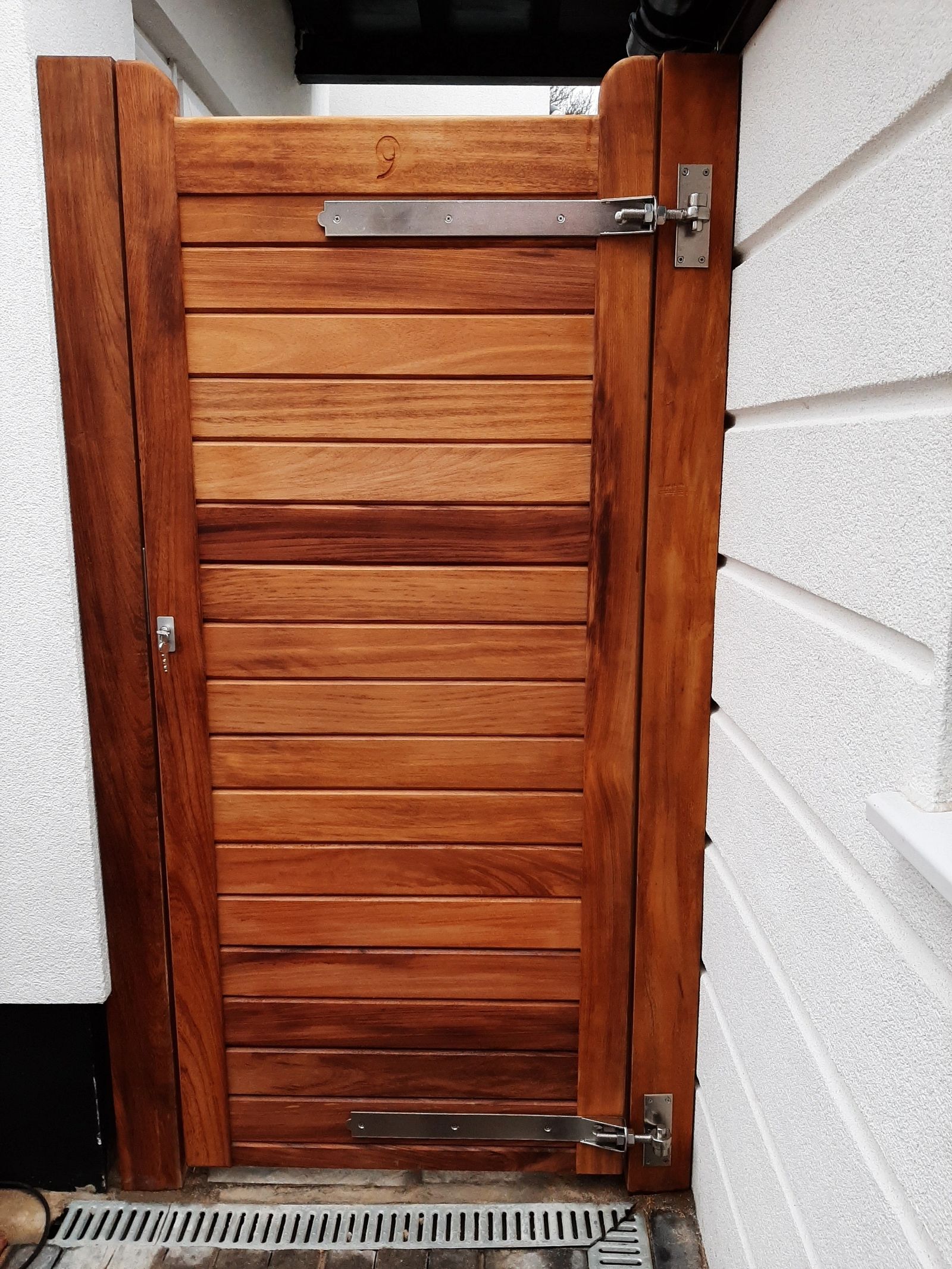
A small dog or cat can exploit a surprisingly narrow gap at a gate's hinge edge, latch edge or bottom clearance, and a gate that's perfectly secure against people can still let a determined pet through if these gaps aren't considered separately.
Closing plates, a lowered threshold detail or a secondary mesh infill are common ways to pet-proof a gate without rebuilding it entirely.
Boundary fencing near a service riser or meter cupboard
A boundary fence positioned close to a gas, electric or water meter cupboard needs to leave clear access for the utility to read or maintain the meter without needing a key to the fence itself, which sometimes means a lockable inspection gate or a section that opens independently of the main line.
Utility providers generally have a minimum clearance requirement in front of a meter cupboard door, and a fence encroaching on that clearance can be flagged at inspection even if the rest of the boundary is compliant.
Why replacement panels sometimes need different post spacing to the originals
Panel sizing has changed slightly over past decades, and a fence originally built to an older standard width may not have a modern replacement panel that fits the existing post spacing exactly.
This becomes relevant on a partial repair where only some panels are being replaced and the remaining posts are staying in place, since a small mismatch can mean trimming a new panel down or accepting a slightly wider or narrower final bay.
It's worth measuring the actual existing post-to-post distance rather than assuming a 'standard' width will match, particularly on an older fence being partially rather than fully replaced.
What we check before signing off an acoustic job
Before finishing, we check every joint and the full base line for gaps, since a single missed seal point undermines the principle the whole build is based on.
We don't offer a measured decibel figure as part of that sign-off, because the real-world result depends on factors outside the fence itself — we're upfront about that at the point of handover, not after.
Mews and courtyard properties
Mews and courtyard developments typically share a single vehicle access route and sometimes a communal boundary treatment around the whole courtyard rather than individual garden fences.
Because the courtyard is often cobbled or block-paved right up to the building line, there's frequently no soil to dig a conventional post hole into, and fixings need to go into a paved base plate or bolted shoe instead of a concreted post.
Any alteration to a shared courtyard boundary usually needs the agreement of the other mews owners, since the fence is commonly held in joint ownership rather than allocated to one property.
Working within narrow plot access
Some plots simply don't have a route wide enough for a wheelbarrow, let alone a van, which means every post, board and bag of aggregate goes in by hand across a longer distance than usual.
That changes both the time a job takes and, sometimes, the choice of materials — favouring shorter, lighter sections that two people can carry over long single panels that need mechanical handling.
It's worth flagging access constraints at the quote stage rather than on the day, since they're one of the most common reasons a job takes longer than a straightforward driveway-access equivalent.
Supplementing a hedge line boundary with security fencing
A mature hedge gives limited security on its own because gaps at the base and thin patches higher up both offer a way through, so a low stock fence or mesh run installed within or just behind the hedge line closes those gaps without removing the hedge's screening value.
The supporting fence is set back enough from the hedge to allow future trimming access, since a fence built hard against the hedge line makes routine maintenance of the hedge itself far harder.
Drop bolts and ground sockets
A drop bolt fixed to the bottom rail of a leaf drops into a ground socket to hold that leaf still while the other leaf is used for daily access, and a socket that's silted up or out of alignment is a common reason a drop bolt stops locating properly.
We check the socket depth and drainage as well as the bolt itself, since a blocked socket is often mistaken for a bent or worn bolt.
Fencing shared or communal garden spaces
Communal gardens shared by several properties usually need any new fencing agreed by the group or managing body rather than one resident acting unilaterally, since a partition can change how the whole space is used.
Where a communal garden includes mature planting or trees under a collective management plan, new fence lines need checking against that plan rather than just against the ground itself.
Access routes for maintenance vehicles or refuse collection through a communal garden also need to stay clear when planning new subdivisions with fencing.
Waste carrier duty of care for site waste
Anyone removing fencing, decking or building waste from a client's property in the course of business needs to be a registered waste carrier with the Environment Agency, and should be able to provide a waste transfer note showing where the material was taken.
Treated timber, in particular, is classed differently to plain untreated offcuts and generally can't simply go on a bonfire or into general household waste, since some older preservatives fall under hazardous waste rules.
Asking a contractor for their waste carrier registration number and a transfer note isn't excessive caution — the householder can be liable if waste is later found fly-tipped and traced back to the job.
Waste carrier duty of care for old fencing
Under the Environmental Protection Act 1990, anyone arranging removal of construction waste such as old fence panels and posts has a 'duty of care' to ensure it's handled by a registered waste carrier.
Asking to see a waste carrier's registration number, and requesting a waste transfer note for larger quantities, is a reasonable and legitimate request rather than an unusual one.
Householders can be held responsible if waste from their property is later found fly-tipped, even where they paid someone else to take it away, which is why checking credentials matters.