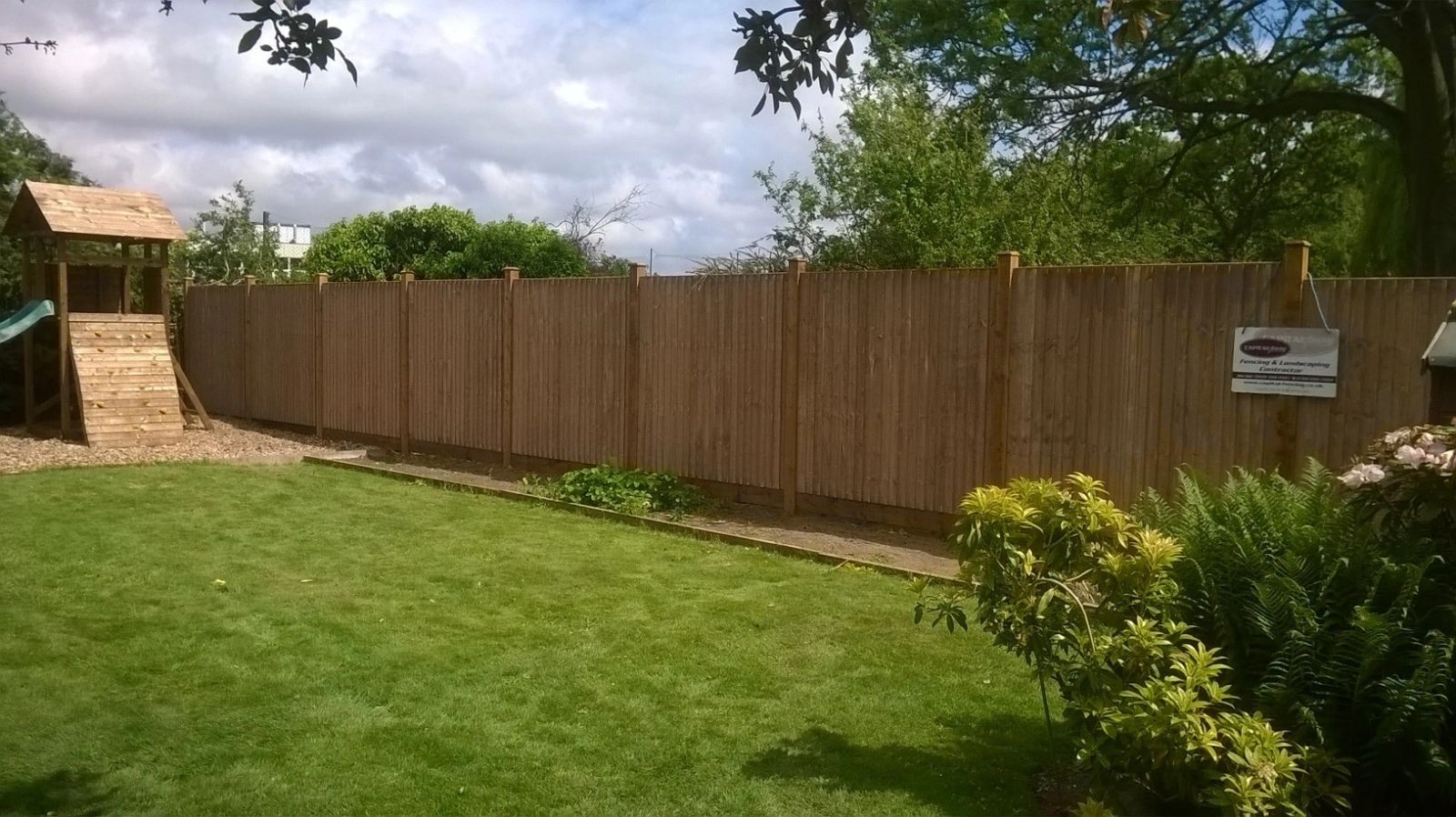
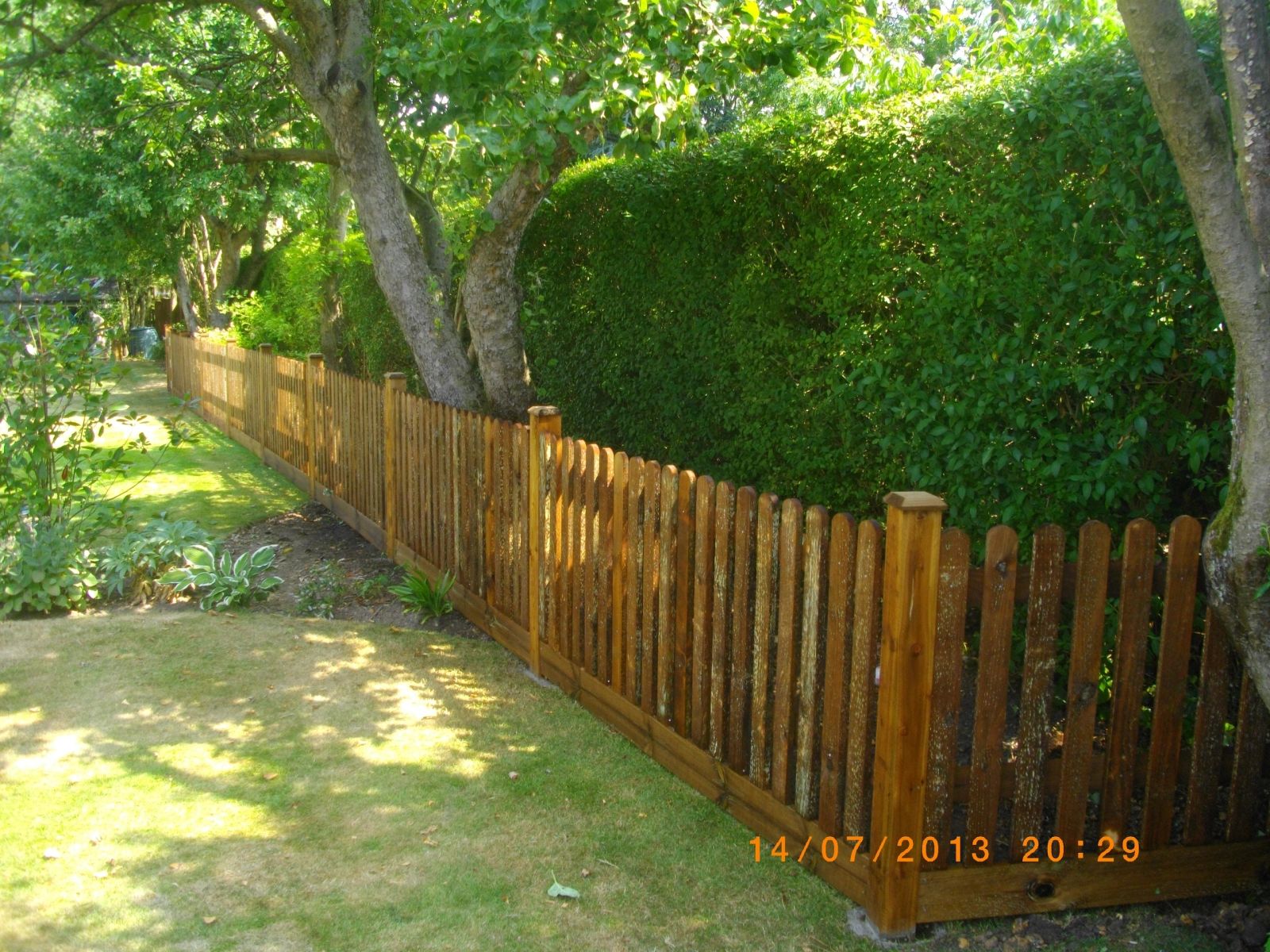
Rail configurations on a palisade or railing run
A two-rail configuration (top and bottom) suits lower runs, while anything above around 2.4m generally takes a third, mid-height rail to stop the pales flexing independently under a push or climb attempt.
Rail spacing is set so a gap doesn't become a foothold; on a taller run the middle rail is positioned deliberately off-centre rather than dead-centre, to avoid creating an even climbing ladder.
Parking and material handling on site
Fencing, gates and decking all involve moving bulky, heavy material — concrete posts, gravel boards, decking joists — from a van to the working area, and how far that has to be carried has a real effect on labour time.
On streets with permit parking, no off-street loading bay, or restricted delivery hours, we plan the drop-off around those restrictions rather than assuming a van can sit outside all day.
Where a plot has a driveway or side gate wide enough for a barrow run, that alone can shave a meaningful amount of time off a job compared with hand-carrying everything round the front.
Freeholder consent for leasehold flats
Where a garden or yard is demised under a long lease rather than owned outright, the lease itself often requires the freeholder's written consent before any structural alteration, and a new fence, wall or gate can count as an alteration even in a small private yard.
Some leases route this through a managing agent who needs formal notice and a fee before works start, and skipping that step can technically breach the lease even where the work itself is uncontroversial.
It's worth reading the relevant clause of the lease, or asking the managing agent directly, rather than assuming that owning the flat gives unrestricted rights over its garden boundary.
Digging near land drains
Older gardens, especially those on heavier clay, sometimes have unrecorded clay pipe or perforated plastic land drains laid to relieve waterlogging, and these rarely appear on any plan.
Hitting one with an auger usually shows up as a sudden drop in resistance followed by water pooling in the hole from a direction that doesn't match the water table generally on site.
A damaged land drain should be reconnected or rerouted rather than just backfilled over, since a broken run can redirect water against a post base for years afterwards.
Detached plots with a paddock or field edge
Detached properties backing onto a paddock, field or grazing land need a boundary that does two jobs at once — keeping the garden private and, if livestock use the adjoining land, keeping animals off the garden side.
A standard close-boarded fence isn't stock-proof on its own; where horses or cattle are present on the other side, a stock fence or post-and-rail set slightly inside the garden fence is the usual belt-and-braces approach.
Field boundaries also see more vegetation growth and root pressure from hedgerows than a typical suburban fence line, so posts often need resetting or straightening more often than an equivalent garden boundary.
Landlord and void-period turnarounds
Boundary repairs between tenancies are usually driven by a tight void period, where the priority is a straightforward, durable, easy-to-maintain spec rather than a bespoke design, since the landlord isn't the one living behind it.
Standard panel heights and widely-available materials also matter here, because a future repair after another tenant needs to match without a special order or long lead time.
Where several rental properties share the same landlord or managing agent, batching repairs across more than one property in the same visit is often the most efficient way to keep void periods short.
Good practice notifying a neighbour before work starts
There's no general legal requirement to notify a neighbour before replacing a fence that sits entirely on your own land, but doing so avoids most of the friction that boundary work can otherwise cause.
A short conversation or note covering timing, likely noise, and any need for brief access to their side goes a long way toward a smooth job.
Where the new fence will differ noticeably in height, style or colour from what's there now, flagging that in advance tends to head off objections that only surface once the work is finished.
Front garden boundary height compared to side and rear
The permitted development height limits genuinely differ by which boundary is involved — the 1m limit for frontages next to a road contrasts with the 2m general limit that applies to side and rear boundaries.
On corner or through-plots, more than one boundary can count as 'fronting a highway', which sometimes surprises homeowners who assume only the main road-facing side is restricted.
Checking which of a property's boundaries actually meet the legal definition of fronting a highway, rather than guessing from appearance, avoids building something that later needs adjusting.
Siberian larch as a fencing timber
Siberian larch grows slowly in a cold climate, which produces a dense, tight-grained timber with better natural durability than most fast-grown European softwoods, without needing pressure treatment in many applications.
It's noticeably harder to nail and screw without pre-drilling than typical treated pine, and a nail driven in at the wrong angle is more likely to split the board than sink cleanly.
Left unfinished it weathers to a silvery grey similar to cedar, though its higher density means it holds up somewhat better to knocks and general handling on site.
Sports clubs
Sports club boundaries need to withstand impact from balls and players far more than an ornamental garden fence, which usually means heavier-gauge mesh or rebound-rated panel rather than standard closeboard along pitch-facing runs.
Ball-stop netting on posts set back from the fence line is a common addition where a pitch runs close to a public path or road, and post spacing for that netting is tighter than for a standard fence line.
Clubhouse car parks and pitch perimeters are also often used for match-day parking, so access for fencing work needs scheduling around the fixture calendar rather than assumed to be free every weekend.
Pergola and screen timbers
Pergola posts generally need a larger section than a fence post of the same height, since they carry a horizontal beam and roof structure rather than just resisting wind on a flat panel, and undersized posts show up as noticeable sway at the top rather than immediate failure.
Softwood pergolas are almost always pressure-treated given the exposure, while a hardwood pergola can be left to weather untreated in the same way an oak gate can, at a higher initial material cost.
Screening timbers fixed to or beside a pergola structure follow the same gap and profile logic as free-standing slatted fencing, so the same trade-offs between privacy, light and wind loading apply.