
Gates take more weather than fencing because they sit in a wind funnel — a side return channels driving rain straight at the bottom rail, which is also the part standing closest to a wet path.
What's causing it
End grain drinking water
Unsealed end grain at the foot of each stile wicks moisture upwards.
Standing water at the threshold
Paths that pond right where the gate closes keep the bottom rail permanently damp.
Softwood in an exposed side return
Untreated or under-treated softwood in a wind-funnelled alley has a short life.
Failed fixings
Plated screws corrode and the joint opens, letting water into the mortise.
Fix options
Splice a new bottom rail
The rest of the gate is sound and square
Rail replaced and jointed into the existing stiles, then the whole gate re-treated.
Rebuild in hardwood
The gate matters and the setting is exposed
Iroko or oak resists this failure far better than softwood in a wet side return.
New gate to the actual opening
Frame is rotten and racked
Built to measure with sealed end grain, galvanised fixings and a capped or drip-detailed top.
Fix the threshold too
Water ponds at the gate
Improving the fall or adding drainage is the difference between a five-year gate and a fifteen-year gate.
Self-diagnosis: check these first
- 1
Press the bottom rail with a thumb — if it gives, the rail has gone.
- 2
Check the stile feet and the joints for open gaps and rust staining.
- 3
Look at the path: does water pool where the gate closes?
- 4
Test whether the frame is still square before deciding on repair.
Preventing it happening again
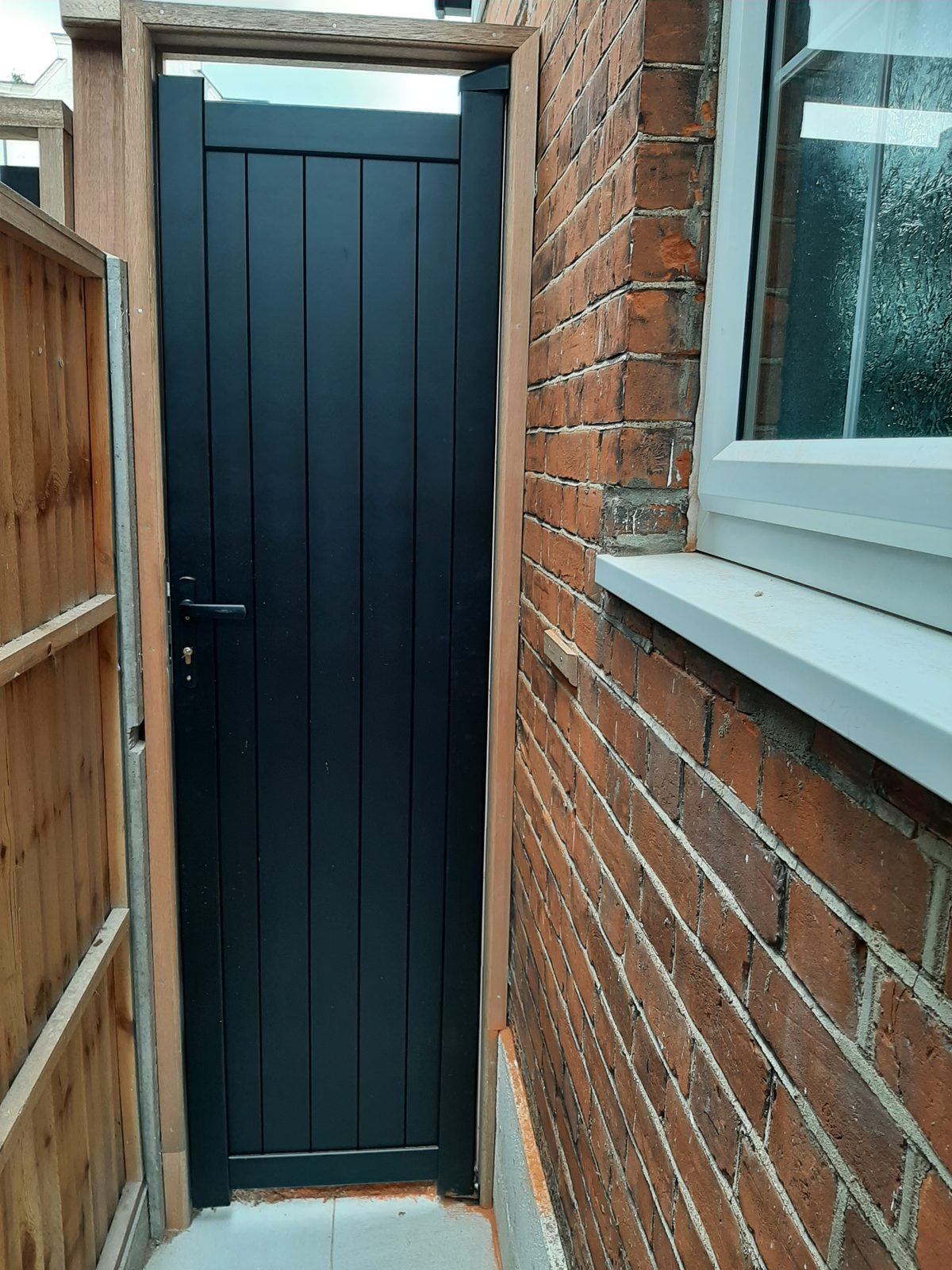
- Seal end grain on the stile feet before hanging
- Keep a clearance so the gate never sits in standing water
- Use galvanised or stainless fixings throughout
- Re-treat annually in exposed side returns
Get this fixed properly
Free site visit across London and Hertfordshire, a written specification and a fixed price before anything starts.
Frequently asked
Is it worth repairing an old softwood gate?
If the frame is square and only the rail has gone, yes. If the joints are open too, a new gate is better value.
Which timber lasts longest?
Iroko and oak, comfortably — we recommend them for tight, wet side returns.
Can you match the existing fence style?
Yes, including closeboard, tongue-and-groove, hit-and-miss and picket.
How long does a bespoke gate take?
Typically a couple of weeks from measure to fit, depending on timber and finish.