
Borehamwood, WD6
Borehamwood's Fence Repairs Team
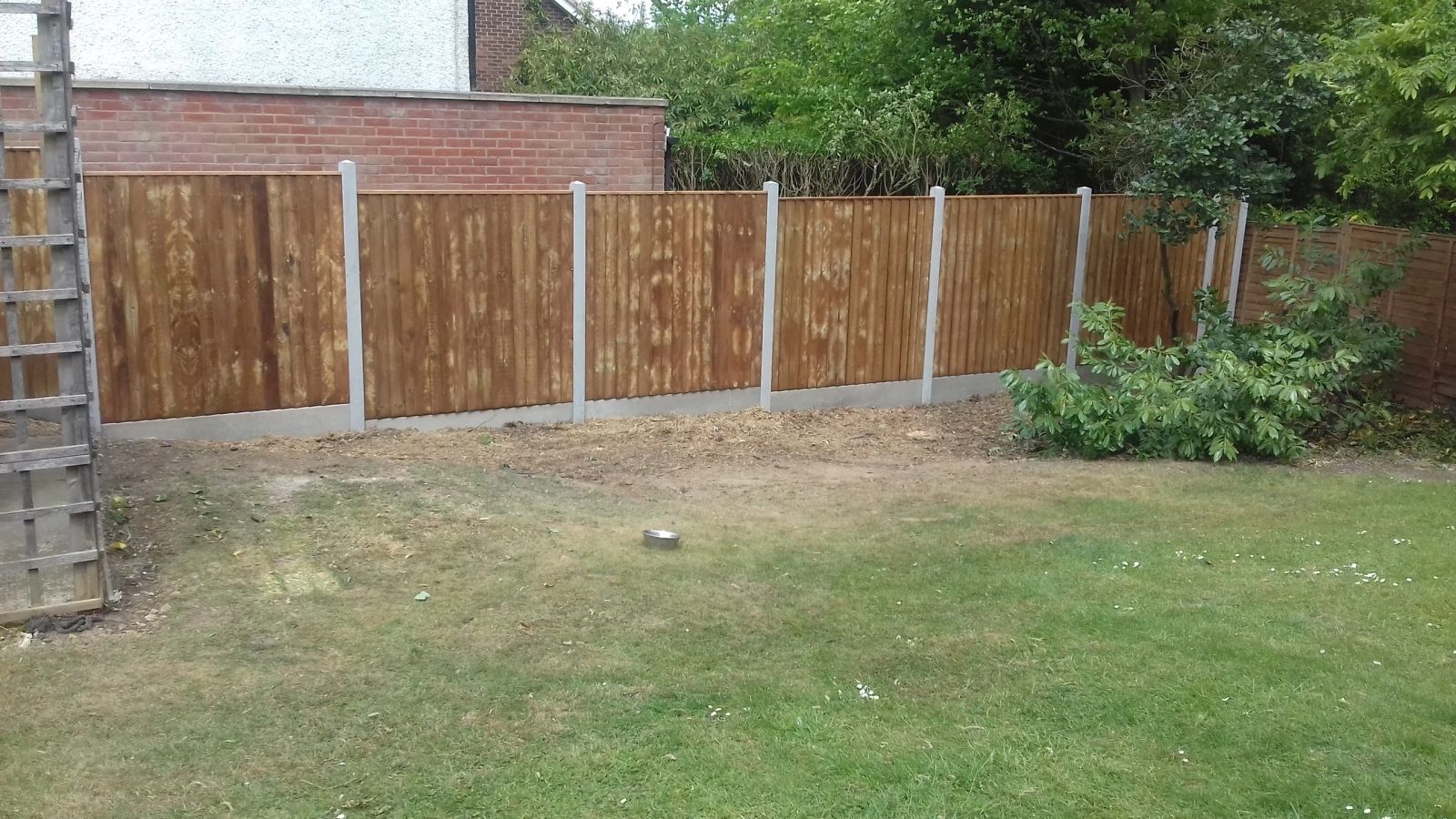
Most fence repairs are one of four jobs — a post, a panel, a gravel board or a full spurred run — and knowing which one you actually need is what keeps the bill down.
Call 07885907880Around Borehamwood, fence repairs briefs are shaped by limited rear access on the older estates means materials usually have to come through the house. A spur bolted to a repaired post can work loose if its own footing wasn't set deep enough or wide enough to resist the same wind loading that failed the original post, showing up as a visible gap opening between spur and timber. Whitehouse Avenue, Brook Road BBC Elstree Centre The Manor Way estate has a continuous rear boundary line running across a large number of plots, a legacy of its uniform post-war construction. Whitehouse Avenue has council-maintained hedging along the pavement that narrows the usable frontage.
Gravel boards gone but panels still sound?
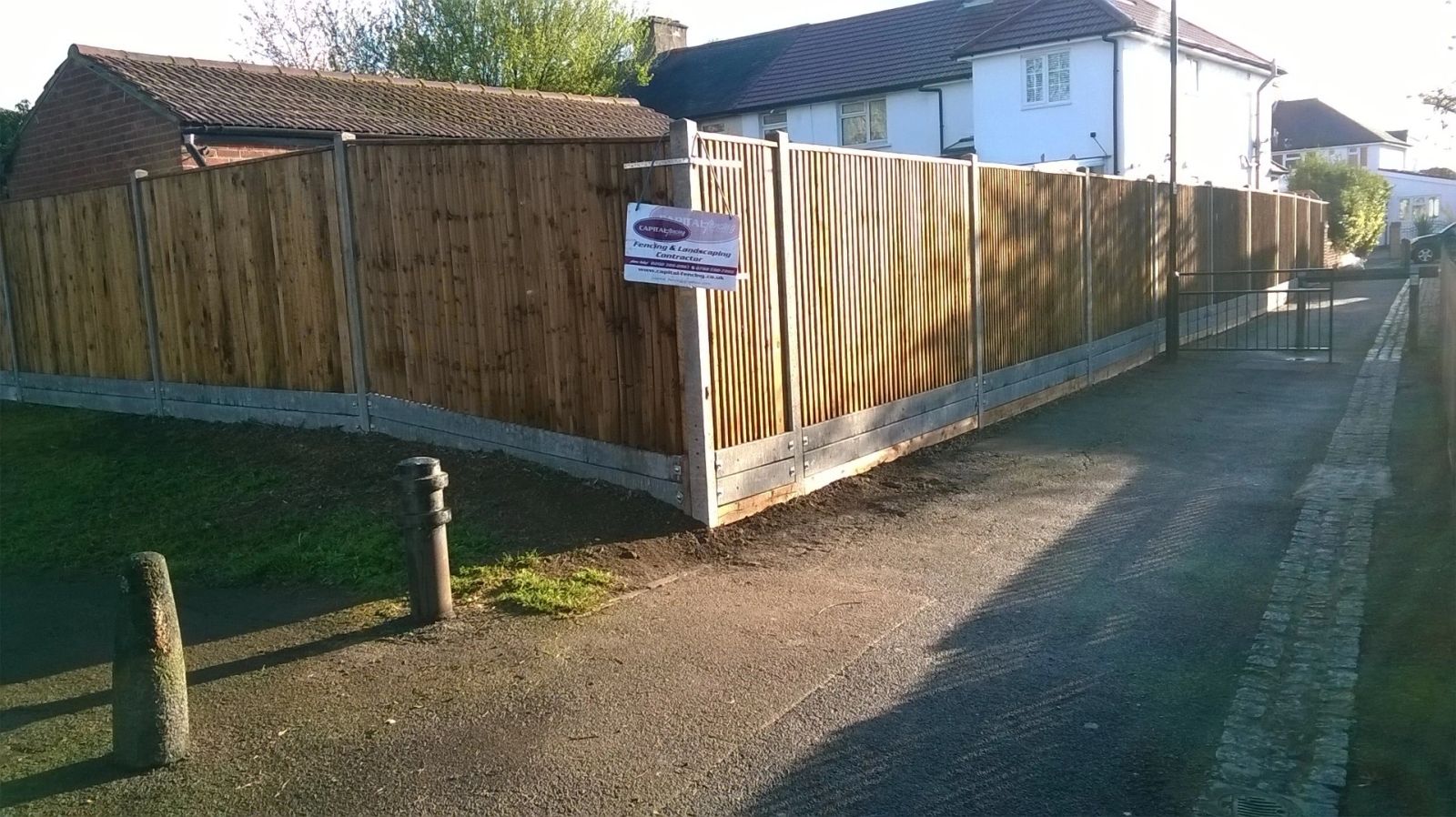
Swapping to concrete gravel boards at repair time is one of the simplest ways to add years to a fence. Free site visit for Borehamwood — written quote, no pressure.
Ask about gravel board repairsFree, no-obligation site visit for Borehamwood and the surrounding area — written quote, no pressure.
Refixing a concrete spur that has started to pull away
A spur bolted to a repaired post can work loose if its own footing wasn't set deep enough or wide enough to resist the same wind loading that failed the original post, showing up as a visible gap opening between spur and timber.
Refixing means re-tensioning or replacing the bolts and, where the footing itself has moved, breaking it out and repouring rather than simply pulling the spur back tight against a footing that's already failed.
Sistering a failed post
Sistering bolts a new length of timber alongside a post that's failed only in one section, leaving the sound parts of the original post carrying load alongside the new piece rather than removing it entirely.
It works best where the failure is localised and the panel fixings on the old post are still usable, and it's generally quicker than a full post swap on a run that can't easily be dismantled.
Reinforcing a hinge post weakened by gate movement
A gate hinge post takes repeated leverage every time the gate swings, which loosens its footing faster than a plain fence post nearby carrying no such load, and it's a common early failure point on a boundary that includes a gate.
Reinforcing usually means a larger post section, a deeper footing, or bracing back into the adjoining fence run, rather than simply resetting the same post size that already proved inadequate for the load.
Repairing posts in waterlogged ground after heavy rain
A footing dug in waterlogged ground doesn't compact or bond as reliably as one dug in drier conditions, and standing water in the hole can dilute a concrete mix before it's had a chance to set properly.
Where a repair can't wait for drier ground, options include a free-draining aggregate base in the hole and a quick-set mix suited to damp conditions, but the underlying decision is often whether the repair should be delayed a few days rather than pushed through in poor conditions.
Matching materials for a repair within a conservation area
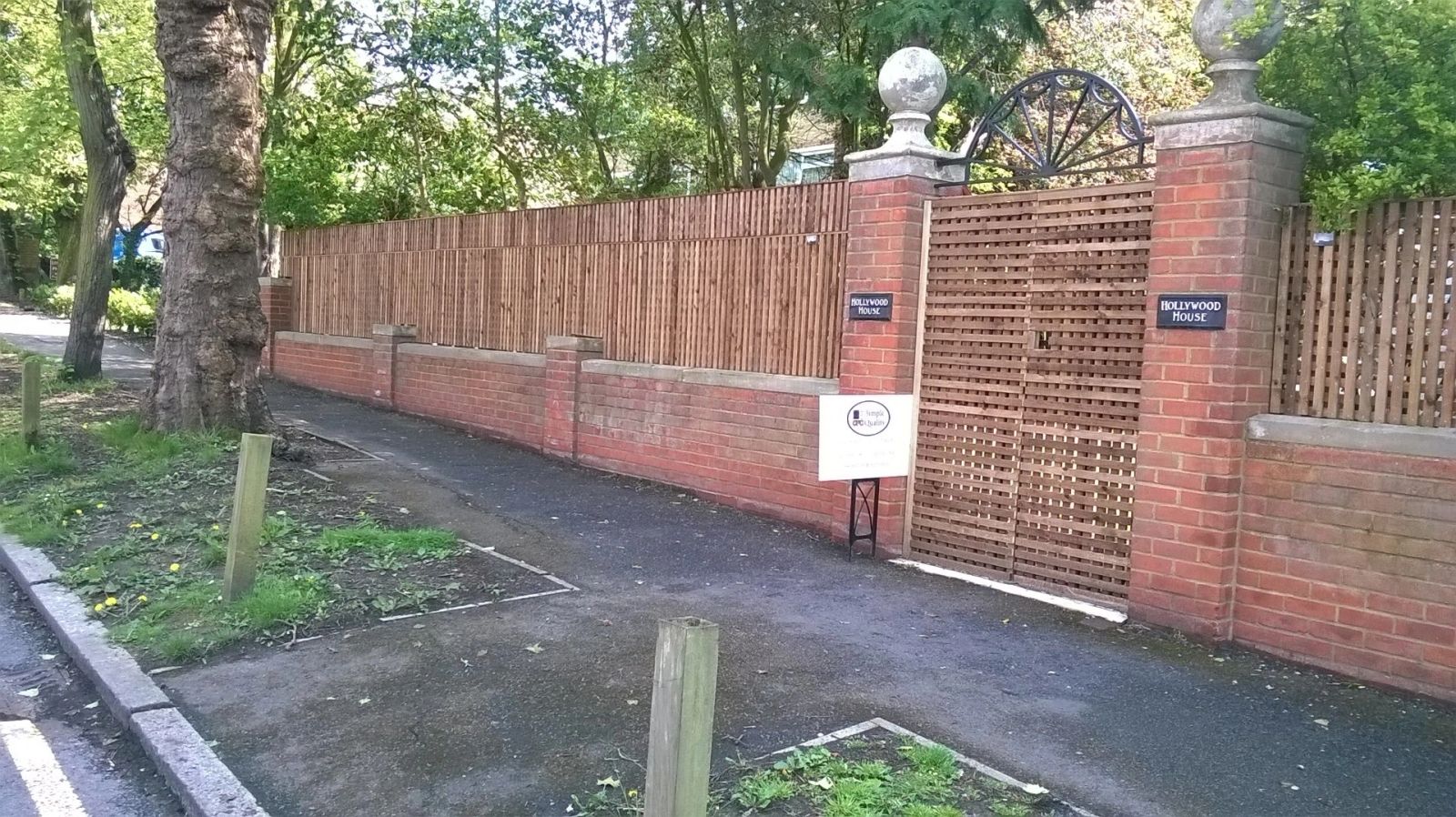
A conservation area doesn't automatically restrict fence repairs, but where a specific material or style was originally required as a planning condition, a repair should match that condition rather than defaulting to a cheaper or more convenient modern alternative.
Checking any existing planning history for the property before sourcing repair materials avoids fitting something compliant with general fencing rules but not with a condition specific to that site.
Repair-versus-replace based on the remaining service life of the rest of the run
A repair on a fence that's otherwise only a few years old is a straightforward like-for-like fix, but the same repair on a run that's already close to the end of its typical service life is worth weighing against bringing the replacement forward instead.
This isn't about age alone — a well-maintained older fence can still be worth repairing — but age combined with visible general wear elsewhere on the run is a reasonable prompt to discuss the wider picture rather than only the failed section.
Why this comes up in Borehamwood
We keep a standing note on Borehamwood: limited rear access on the older estates means materials usually have to come through the house. A gate hinge post takes repeated leverage every time the gate swings, which loosens its footing faster than a plain fence post nearby carrying no such load, and it's a common early failure point on a boundary that includes a gate. Whitehouse Avenue has council-maintained hedging along the pavement that narrows the usable frontage.
Common questions
Does concrete cure properly in cold or frosty weather?
Not reliably — freezing conditions can disrupt the setting process and weaken the footing, so frost-resistant mixes or protective covering are used where a repair can't be delayed. Whitehouse Avenue, Manor Way Sky Studios entrance Borehamwood's post-war estates are laid out on a tight grid, with front access generally straightforward but rear access varying by street.
What access do you need for a repair job?
Ideally vehicle access to the boundary, but where that isn't available materials are carried through by hand, which is factored into scheduling.
How can I stop my dog from repeatedly damaging the same section of fence?
Reinforcing the lower section with a mesh liner or kickboard behind the boards addresses the point of damage rather than just replacing the timber. Borehamwood's post-war estates are laid out on a tight grid, with front access generally straightforward but rear access varying by street.
Can tree roots cause fence failure?
Yes — root growth under or against a post base can lift or crack the footing over time, sometimes requiring the post to be reset slightly offset from its original position.
Can a snapped concrete post be repaired instead of replaced?
Generally no — a snapped or badly cracked concrete post is usually replaced outright, since a repaired crack doesn't reliably hold the same load as the original casting.
Should cut ends of new fence timber be treated separately?
Yes — end grain exposed by cutting on site draws in moisture faster than the factory-treated face, so sealing cut ends at the time of cutting is worthwhile.
Can a torn section of chain-link or wire mesh be patched rather than replaced?
Yes, provided the posts and straining wire are sound — re-tensioning and re-clipping the mesh usually addresses a localised tear or sag.
What is sistering a post?
It's bolting a new length of timber alongside a post that's only failed in one section, so the sound parts of the original post keep carrying load alongside the new piece.
Borehamwood in one line: A footing dug in waterlogged ground doesn't compact or bond as reliably as one dug in drier conditions, and standing water in the hole can dilute a concrete mix before it's had a chance to set properly. Cardinal Avenue, Allum Lane BBC Elstree Centre Allum Lane and Furzehill Road plots back onto one another in the estate's original layout. The Manor Way estate has a continuous rear boundary line running across a large number of plots, a legacy of its uniform post-war construction.
Get My Free Quote — 24h Response
No callout fee · Free site visit · Friendly local team covering London & Hertfordshire.
Pay by debit or credit card, bank transfer or cash once the work and price are agreed. No deposit taken online.