
Barnet
Barnet Fence Repairs
Most fence repairs are one of four jobs — a post, a panel, a gravel board or a full spurred run — and knowing which one you actually need is what keeps the bill down.
Get a quote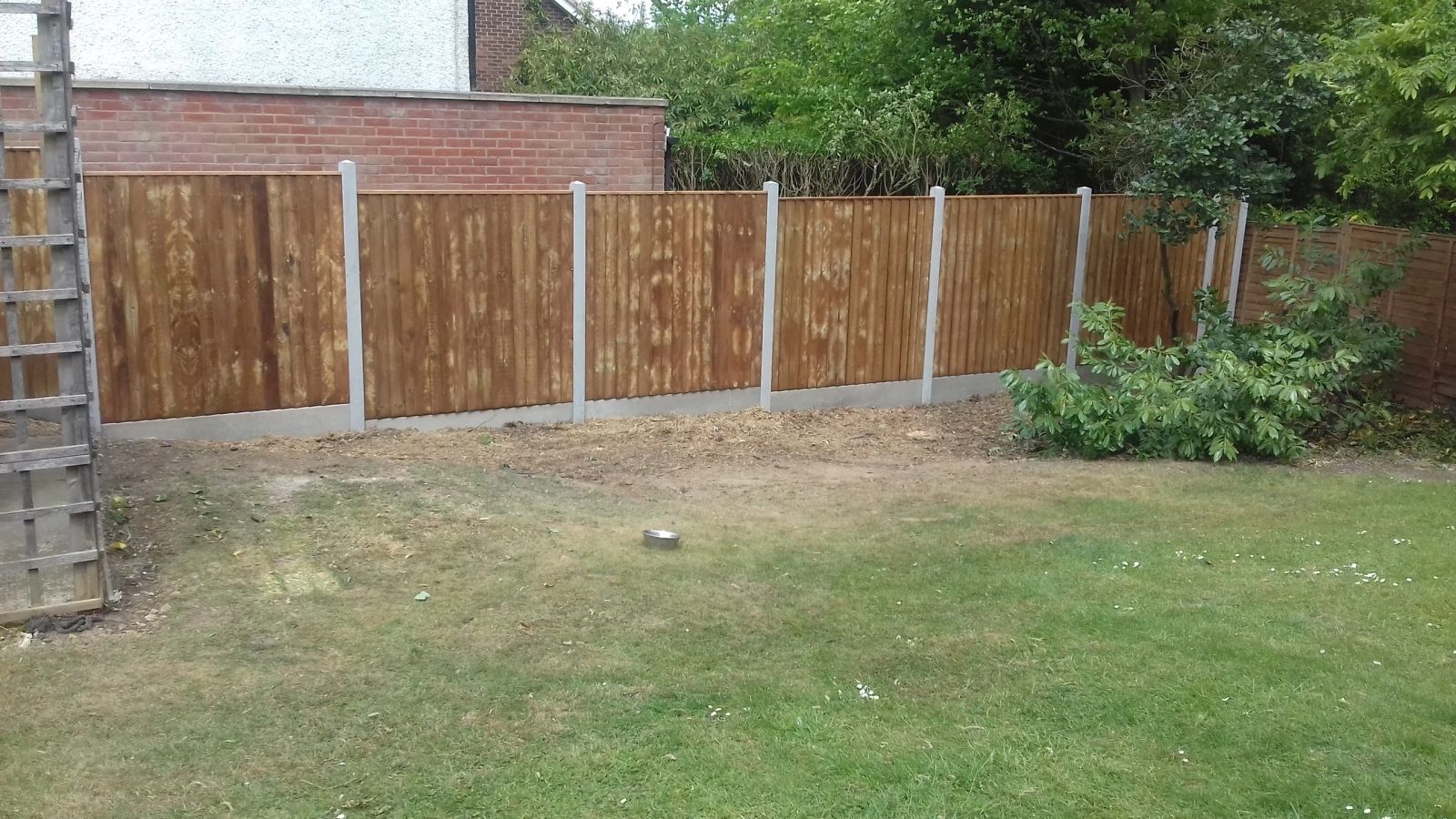
We're called out for fence repairs around Barnet regularly, and repairing a fence on a sloped or stepped boundary is usually the first thing we check. We check the fall of the whole run before repairing one section, since a step that's settled unevenly can be the real cause of a failure further along. Stapylton Road, Hadley Green Road Old Court House Recreation Ground The Victorian terraces off Wood Street back onto mature street trees protected by the council. Chipping Barnet's medieval plot lines mean the town's boundaries are rarely square, a legacy of the original burgage plots.
Repairing a fence on a sloped or stepped boundary
A boundary on a slope often fails first at the lowest point of each step, where water naturally collects, so a repair there sometimes needs a revised drainage detail rather than simply replacing the failed section like-for-like.
We check the fall of the whole run before repairing one section, since a step that's settled unevenly can be the real cause of a failure further along.
Re-plumbing posts after ground movement
Seasonal clay movement can tilt a post a few degrees without breaking the footing outright, and re-plumbing involves breaking out enough of the old concrete to reset the post vertical rather than packing the gap and leaving the tilt.
Where movement is ongoing rather than a one-off event, re-plumbing without addressing drainage or ground preparation risks the same tilt recurring within a season or two.
Matching materials on a part-run repair
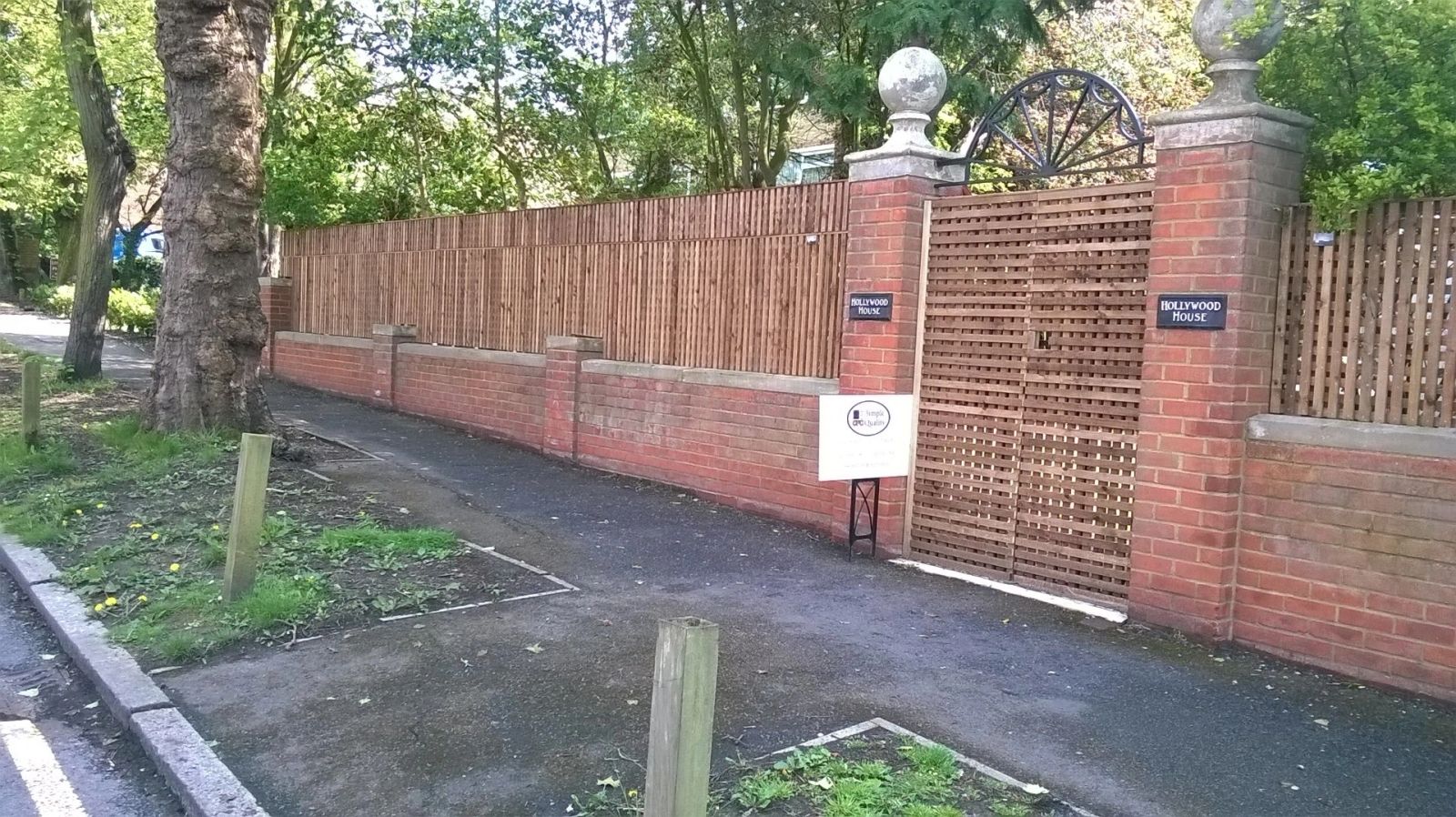
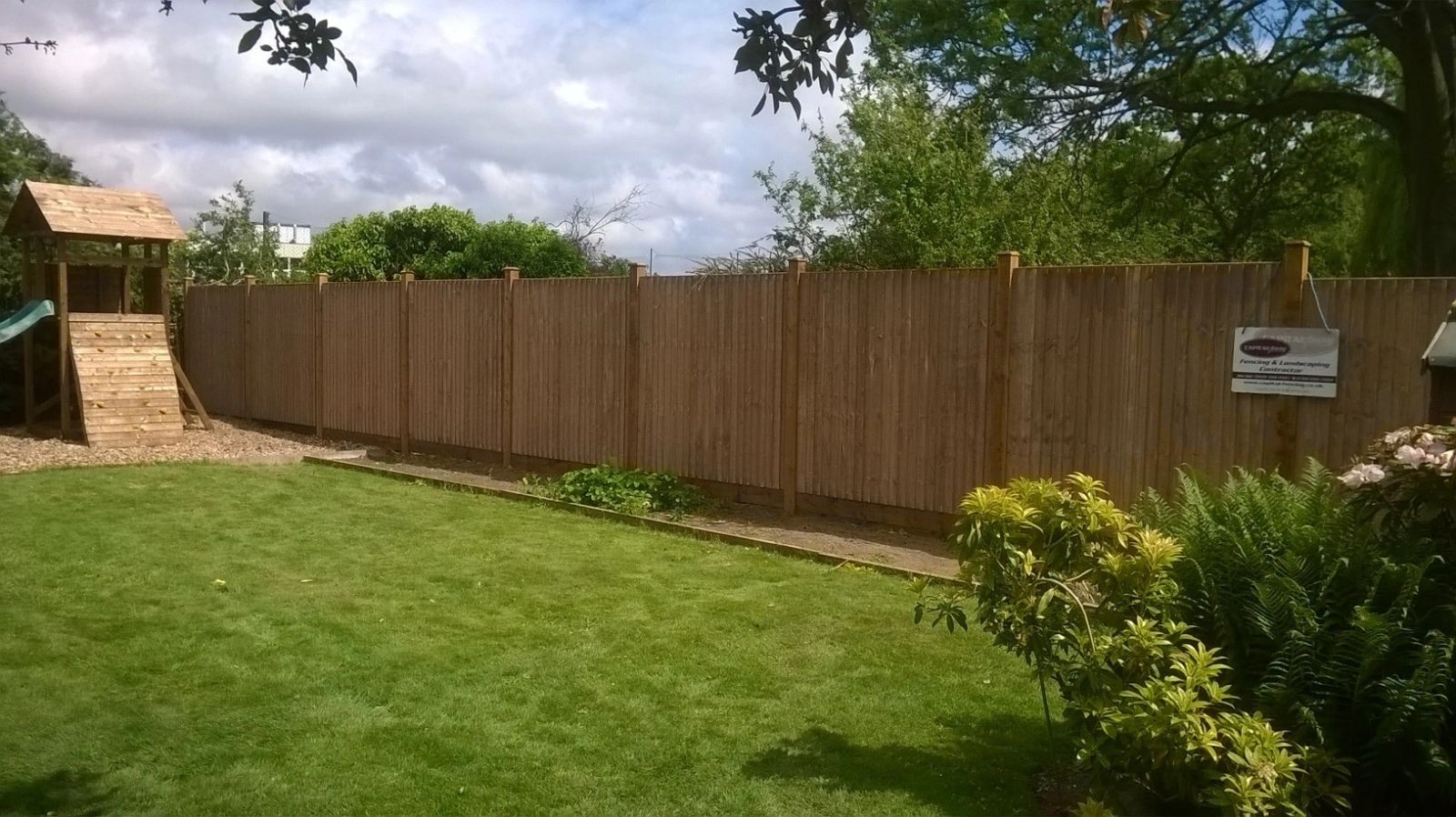
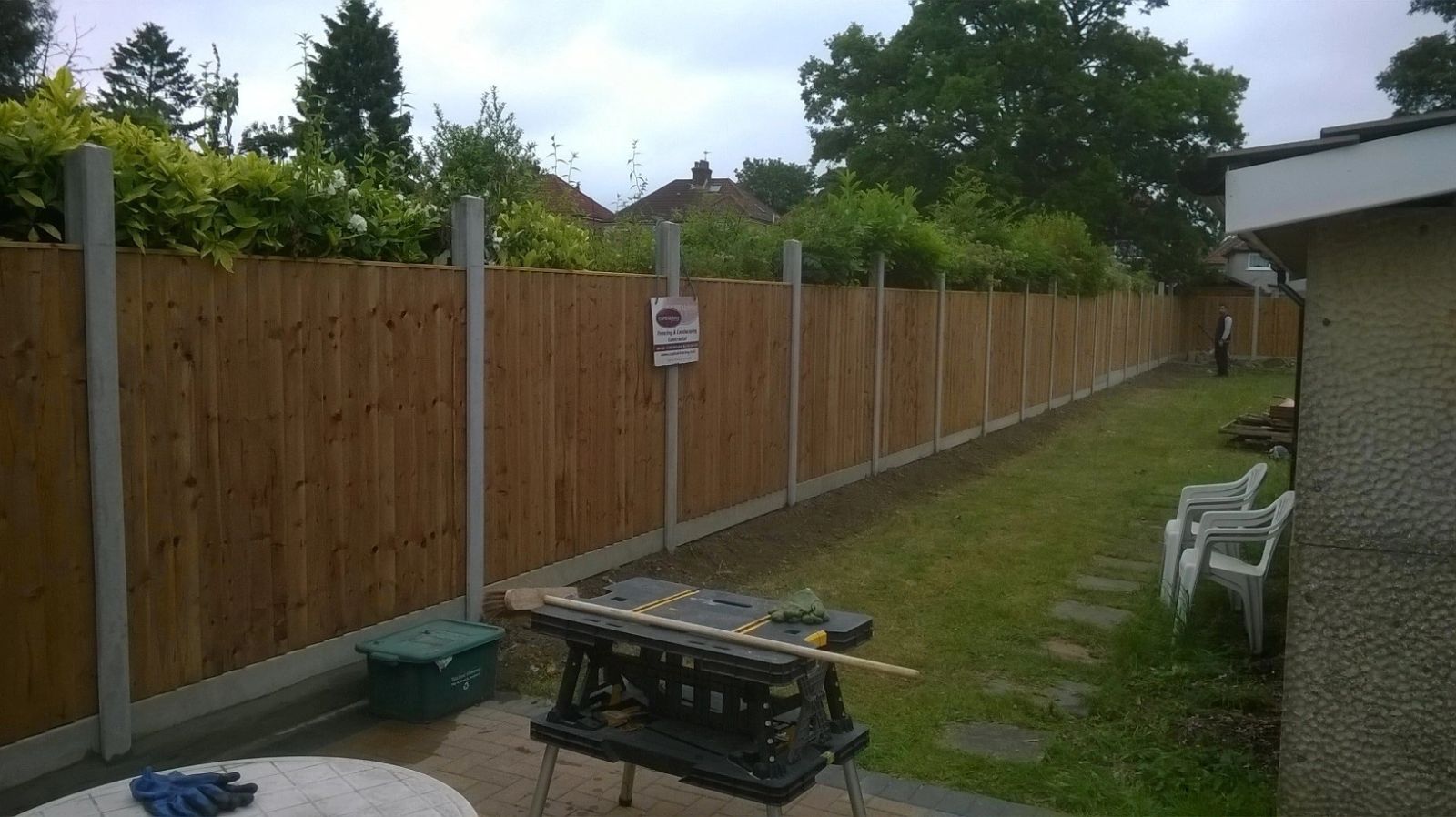
Where one or two panels need replacing, we match the existing profile and height as closely as current stock allows, and we're upfront if an older or discontinued profile can't be matched exactly rather than pretending it can.
Concrete gravel boards are often worth fitting in place of the original timber ones at repair time, since they take the brunt of ground moisture that caused the original failure.
Resin anchoring a post base into an existing footing
Resin anchoring sets a threaded stud or spike into a drilled hole in sound existing concrete using a chemical resin, which can let a new post base be fixed onto an old footing that's otherwise still structurally usable.
It only works where the existing concrete itself is sound; resin anchored into cracked or spalled concrete has nothing solid to bond to and the fixing will fail alongside the concrete rather than because of the resin.
Nail versus screw fixing on repairs
Nailed fixings are faster to install and are the standard on new panel builds, but a screwed fixing holds better in timber that's already slightly softened by weathering, which makes screws the more reliable choice on a repair into older stock.
Screws also allow a board or rail to be removed cleanly if it needs replacing again later, whereas a nailed fixing usually damages the surrounding timber on removal.
Wire-mesh and chain-link repairs
A localised tear or sag in chain-link or wire mesh can usually be patched by re-tensioning the line wire and re-clipping the mesh, rather than replacing the whole run, provided the posts and straining wire are sound.
Where corrosion has spread along the mesh rather than staying localised, patching becomes false economy and a full re-mesh of that bay is the more durable option.
Frequently asked
How do you decide between a post reset and a spur repair?
By probing the timber at ground level — if rot hasn't reached above where a spur would bolt on, a spur is usually enough; if it has, the post needs replacing. Calvert Road, Sunset View The Spires Kings Road drops steeply toward the East Coast Main Line, and the gradient there is a well-known feature of the local topography.
What access do you need for a repair job?
Ideally vehicle access to the boundary, but where that isn't available materials are carried through by hand, which is factored into scheduling.
When are stainless fixings worth using instead of galvanised?
Near the coast or with high-copper-content treated timber, where standard galvanised fixings corrode noticeably faster than they would inland. Hadley Green Conservation Area constrains front-boundary heights and materials, with painted picket or low brick-and-rail typical of the streetscape.
What's the best way to stop foxes digging under a fence?
A buried mesh skirt fitted along the base, angled outward below ground, is more durable than repeatedly backfilling the same dug-out gap.
How do you tell if a post needs resetting or full replacement?
A probe test at and just below ground level shows how much sound timber remains; if enough good timber is left above the rot, a reset or concrete spur repair is usually enough, otherwise the post needs replacing.
Does re-plumbing a tilted post fix the problem permanently?
Only if the underlying cause, such as ongoing ground movement or poor drainage, is also addressed — otherwise the same tilt can recur within a season or two.
What's the difference between quick-set post concrete and standard mixed concrete for a repair?
Quick-set cures within hours and suits a single urgent post repair, while standard mixed concrete generally gives a denser, longer-lasting footing for larger repair jobs.
Should cut ends of new fence timber be treated separately?
Yes — end grain exposed by cutting on site draws in moisture faster than the factory-treated face, so sealing cut ends at the time of cutting is worthwhile.
That's the standard we hold to on every Barnet job — it only works where the existing concrete itself is sound; resin anchored into cracked or spalled concrete has nothing solid to bond to and the fixing will fail alongside the concrete rather than because of the resin. Hadley Green Road, Salisbury Road The Spires Chipping Barnet's medieval plot lines mean the town's boundaries are rarely square, a legacy of the original burgage plots. Kings Road drops steeply toward the East Coast Main Line, and the gradient there is a well-known feature of the local topography.
Get My Free Quote — 24h Response
No callout fee · Free site visit · Friendly local team covering London & Hertfordshire.
Pay by debit or credit card, bank transfer or cash once the work and price are agreed. No deposit taken online.