
Serving Cheshunt
Fence Repairs for Cheshunt Homes
Most fence repairs are one of four jobs — a post, a panel, a gravel board or a full spurred run — and knowing which one you actually need is what keeps the bill down.
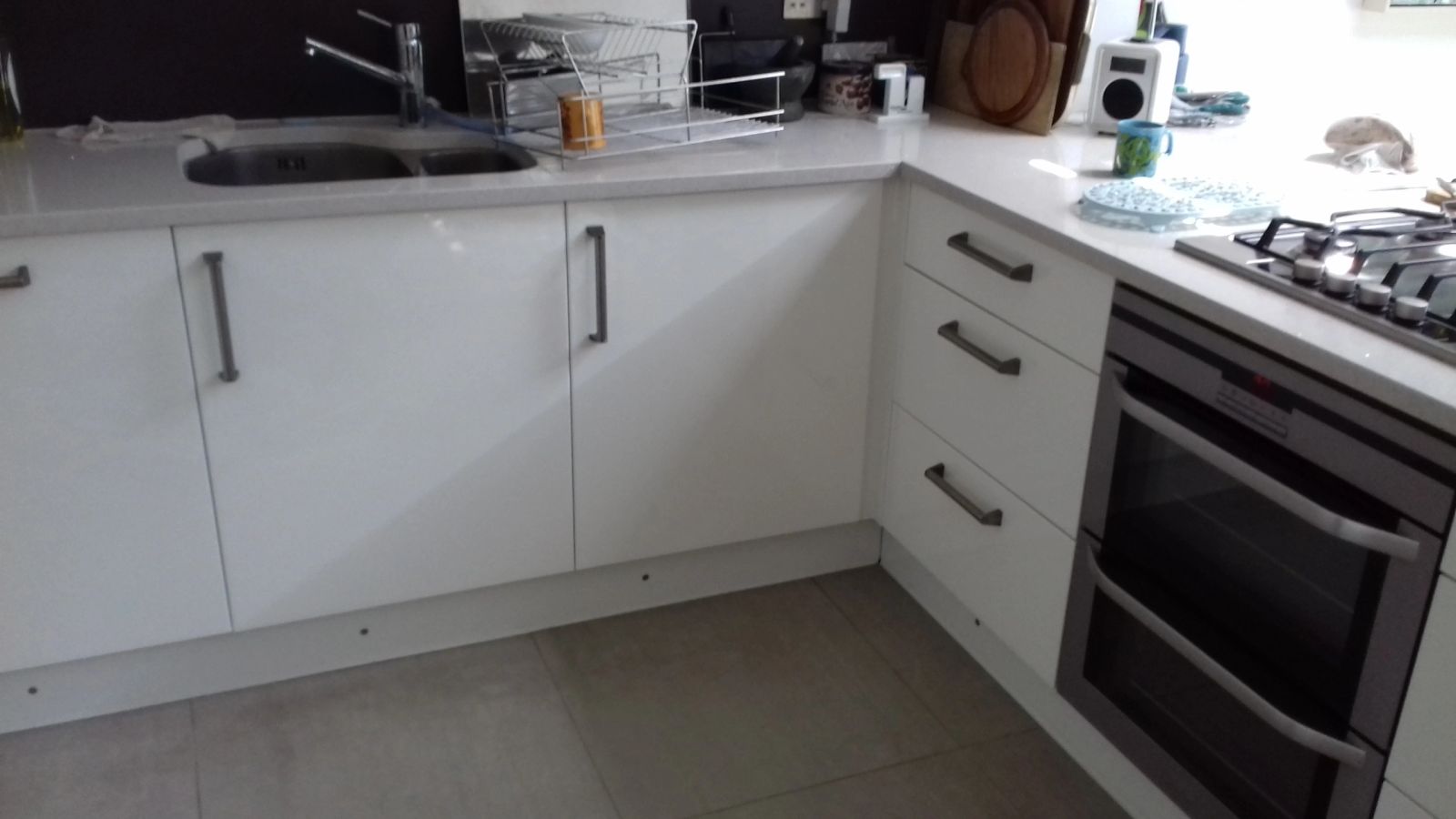
We're called out for fence repairs around Cheshunt regularly, and testing timber moisture content before deciding on a repair is usually the first thing we check. This is particularly useful where a client is unsure whether a section needs full replacement or can be left, since a moisture reading gives a specific figure to base that decision on rather than a subjective visual judgement. Crossbrook Street, Windmill Lane Cedars Park Broxbourne Borough Council is the planning authority, and the green belt between Cheshunt, Goffs Oak and Cuffley restricts development on the surrounding farmland. Gardens backing onto the Lee Navigation and the New River have restricted access from the front, which affects how a delivery is planned.
Why this comes up in Cheshunt
Within reach of Cheshunt (Overground / Greater Anglia), Cheshunt's mid-century semis and bungalows, plus newer riverside developments toward goffs oak throw up a fairly consistent brief: a post-hole repair dug in the same spot as the original footing carries less risk of hitting a buried service than a hole dug in new ground, but any repair that shifts a post position even slightly should be checked against known service runs first. Cedars Park and the wider Lee Valley Regional Park both border the town.
Testing timber moisture content before deciding on a repair
A moisture meter reading on a post or board gives a more reliable picture of remaining life than appearance alone, since timber can look weathered but still be structurally sound, or look reasonably clean-faced while being saturated and soft just beneath the surface.
This is particularly useful where a client is unsure whether a section needs full replacement or can be left, since a moisture reading gives a specific figure to base that decision on rather than a subjective visual judgement.
Diagnosing a fence problem before quoting
A repair quote starts with identifying which of the usual failure points is actually responsible — post, panel, gravel board or a full run — because pricing a full replacement for what's actually a single post repair costs the client far more than necessary.
We probe timber at ground level and check the whole run for related stress, not just the section that's obviously failed.
Hitting services when digging for a repair
A post-hole repair dug in the same spot as the original footing carries less risk of hitting a buried service than a hole dug in new ground, but any repair that shifts a post position even slightly should be checked against known service runs first.
Cable and pipe locations aren't always where drawings suggest, particularly on an older property, so digging with care near the first sign of resistance is standard practice.
Ivy and climber damage to fencing
Ivy and other vigorous climbers work their tendrils into joints and between boards, prising fixings apart gradually and trapping moisture against the timber underneath the growth.
Removing the growth as part of a repair often reveals damage that was hidden by the foliage, so the full extent of the repair sometimes isn't clear until the climber has been cut back.
Access through a house for a rear repair
Where a rear garden has no side access, materials and tools sometimes have to be carried through the house itself, which needs agreeing with the client in advance and protecting flooring and doorways along the route.
This is more common on terraced properties than detached ones, and it's worth factoring into how a repair is scheduled and priced.
Disposing of rotten timber and green waste from a repair
Rotten fence timber is general waste rather than green waste, and larger quantities from a full-run repair usually need a licensed waste carrier or a permitted tip run rather than a domestic green bin, which only takes garden material.
Treated timber in particular shouldn't be burned on site, since older treatments can contain preservatives that produce harmful smoke, so timber waste from a repair should be taken away rather than disposed of on the plot.
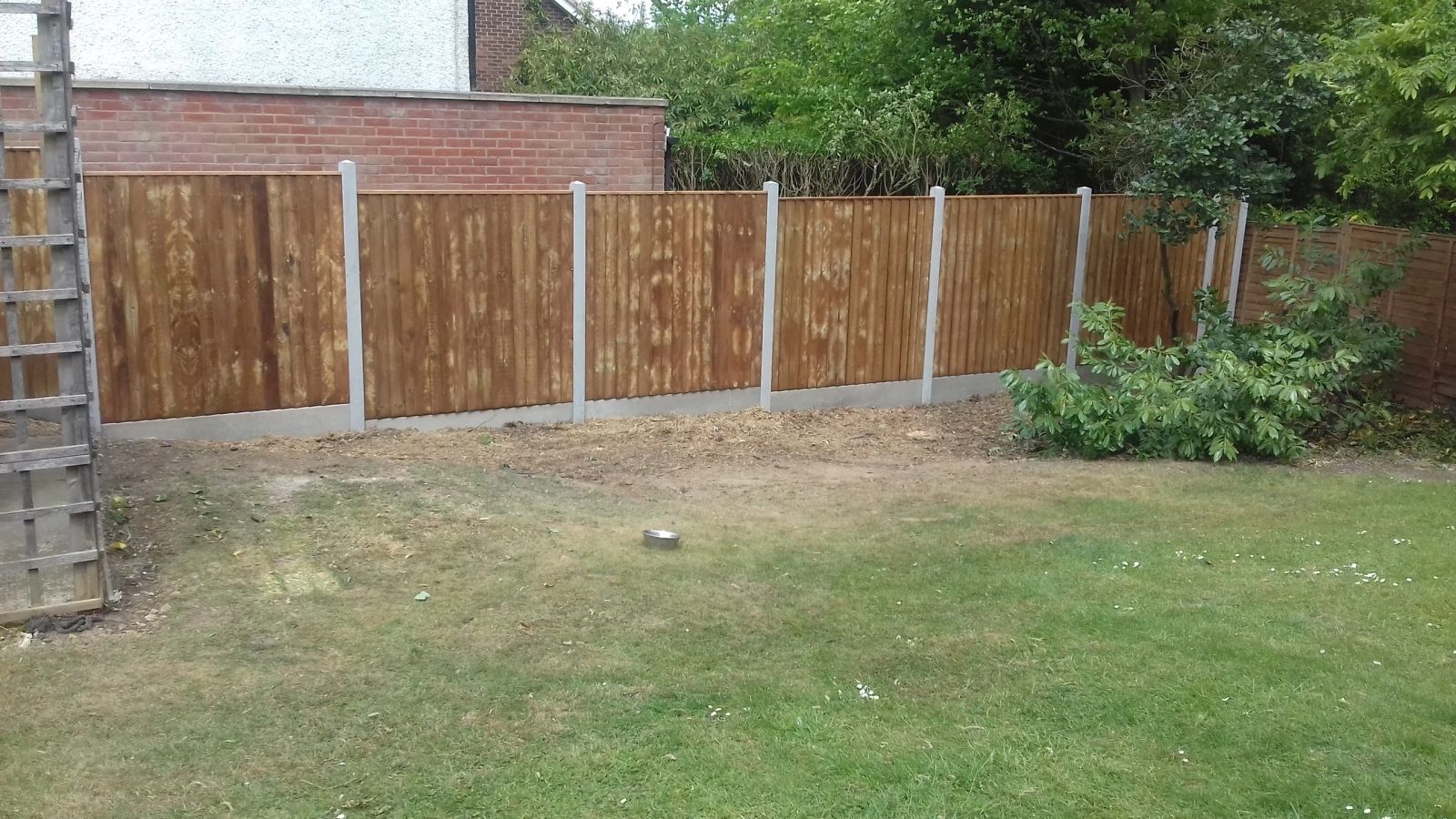
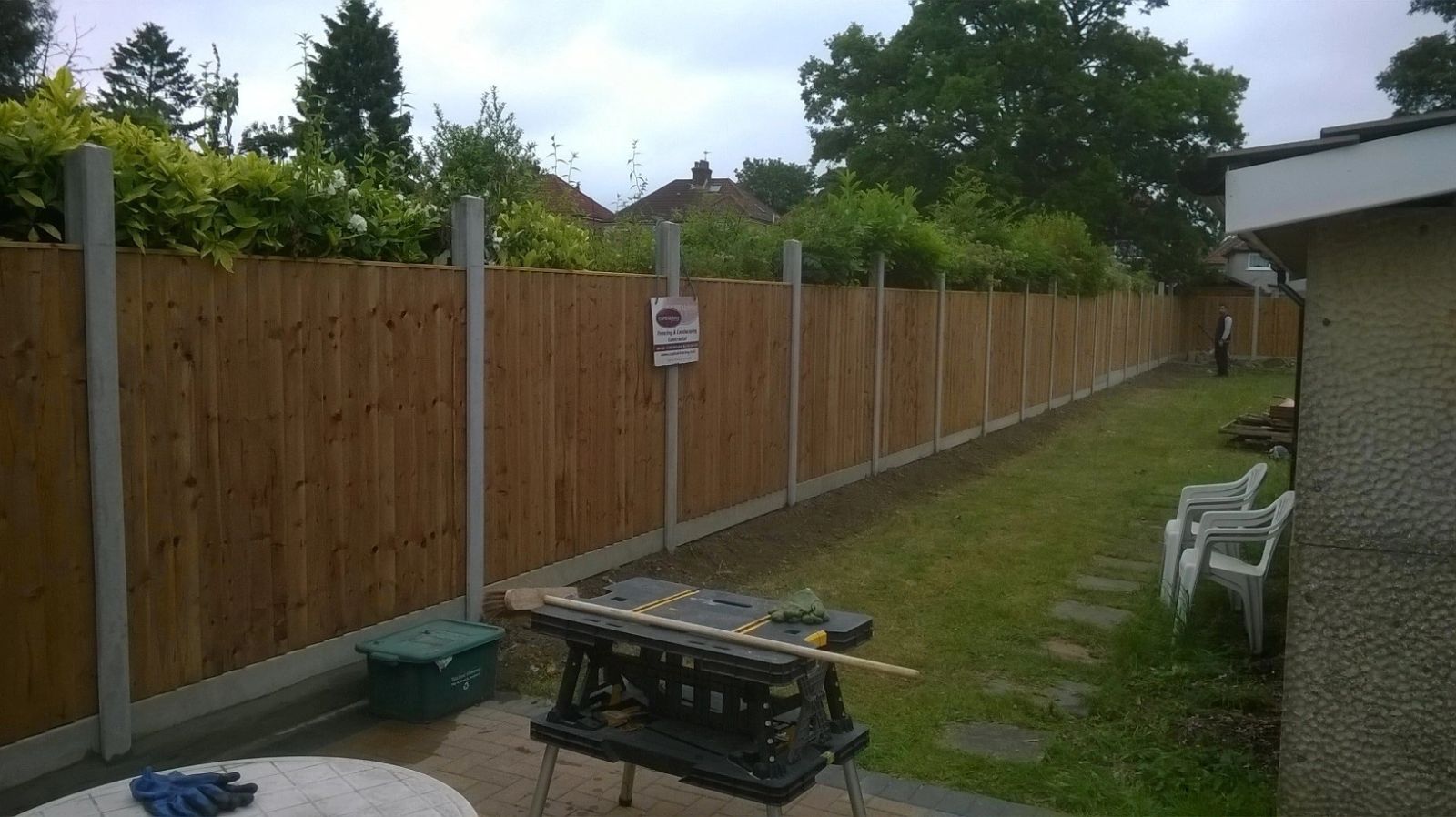
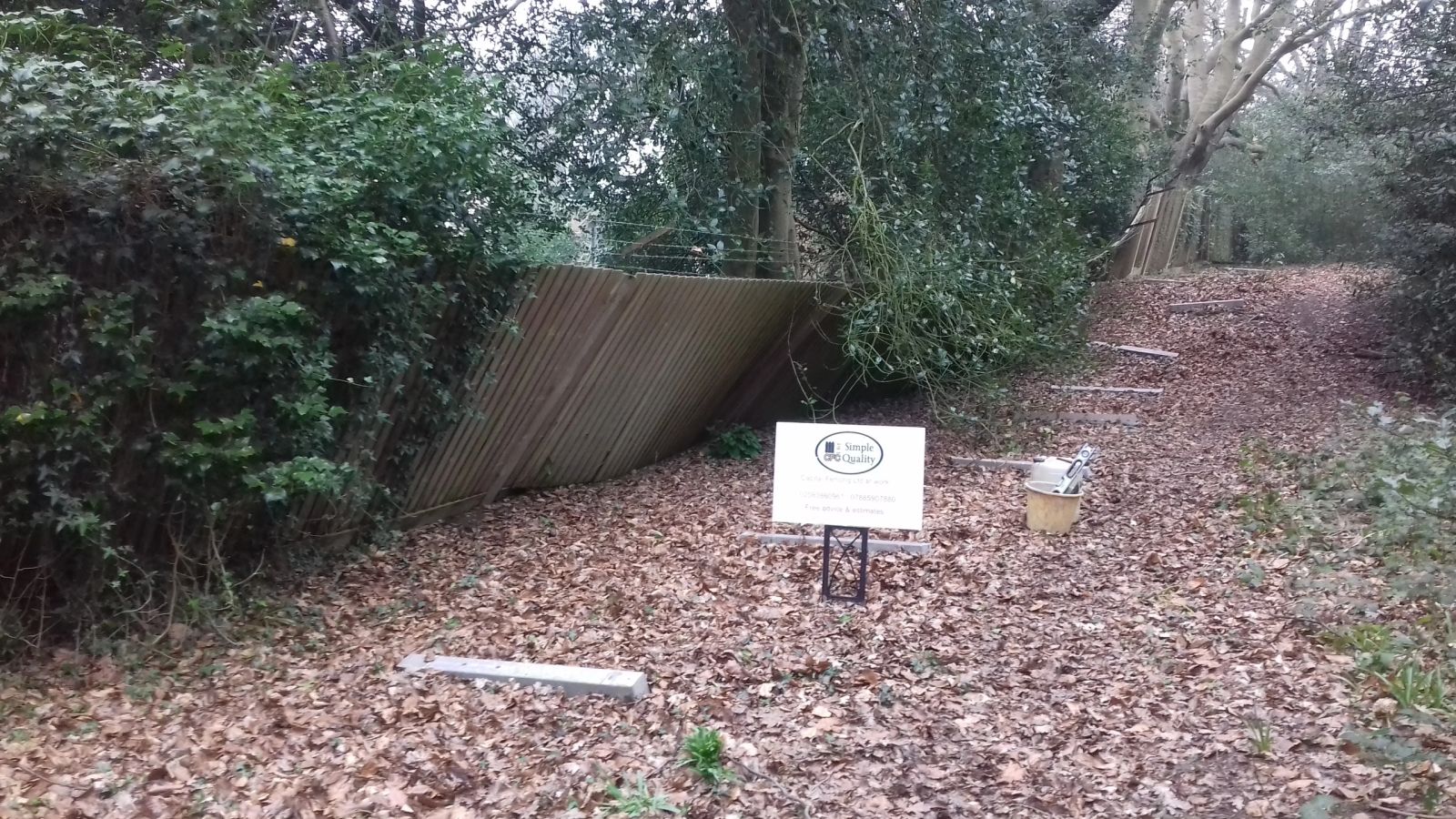
We've quoted this exact scenario repeatedly around Brookfield Riverside — ivy and other vigorous climbers work their tendrils into joints and between boards, prising fixings apart gradually and trapping moisture against the timber underneath the growth. College Road, Turners Hill Cheshunt station Cheshunt sits on the Lea floodplain east of the A10, and ground conditions in the lower-lying areas mean surface water is a recognised local issue. Cedars Park and the wider Lee Valley Regional Park both border the town.
Frequently asked
Can old timber from a fence be reused elsewhere on the same repair?
Sometimes, provided it's checked for rot and fixing damage first, since timber that looks sound on one face can be split where an old fixing has been removed. Windmill Lane, Crossbrook Street Cedars Park Broxbourne Borough Council is the planning authority, and the green belt between Cheshunt, Goffs Oak and Cuffley restricts development on the surrounding farmland.
When are stainless fixings worth using instead of galvanised?
Near the coast or with high-copper-content treated timber, where standard galvanised fixings corrode noticeably faster than they would inland.
Is a temporary prop a permanent fix for a leaning fence?
No — it's a stopgap to reduce immediate risk, and it can itself shift or sink in soft ground if left in place too long. Goffs Oak, on higher ground to the west, has larger detached plots and a different topography from the valley floor.
What access do you need for a repair job?
Ideally vehicle access to the boundary, but where that isn't available materials are carried through by hand, which is factored into scheduling.
Can tree roots cause fence failure?
Yes — root growth under or against a post base can lift or crack the footing over time, sometimes requiring the post to be reset slightly offset from its original position.
Is there a risk of hitting pipes or cables when digging out a post repair?
The risk is lower when digging in the same spot as the original footing, but any repair that shifts the post position should still be checked against known service runs first.
How quickly is storm damage usually looked at?
We prioritise call-outs where the damage affects safety or security, such as a fallen boundary next to a road or shared path.
How do you handle a repair on a shared boundary?
We recommend confirming ownership and notifying the neighbour in writing before starting, particularly where the repair changes the fence's height or spec.
Fence failing in the same spot repeatedly?
We check drainage and ground movement, not just the post itself, before repairing again. Free site visit for Cheshunt — written quote, no pressure.
Get a proper diagnosisGet My Free Quote — 24h Response
No callout fee · Free site visit · Friendly local team covering London & Hertfordshire.
Pay by debit or credit card, bank transfer or cash once the work and price are agreed. No deposit taken online.