EN7 and EN8 cover Cheshunt, which sits under Broxbourne Borough Council — expect mid-century semis and bungalows, plus newer riverside developments toward goffs oak, gardens long flat gardens — many back onto the lee valley with high-water-table conditions. Locally, the detail that shapes most quotes is ground water near the lee valley means post bases need extra care to prevent rot. Decking joist spacing and spans: Joist spacing under a deck is set by the board being used and the load expected, not fixed universally — timber boards typically need joists at closer centres than the equivalent composite board, because composite is generally less stiff across a span. Manufacturers publish maximum joist spacing for their composite boards, and it's shorter still where boards run diagonally rather than square to the joists, since a diagonal run effectively increases the unsupported span between fixings. Land Registry title plans and their limits: Land Registry title plans are based on Ordnance Survey mapping and are deliberately described as showing 'general boundaries' rather than the precise legal line, typically accurate to a scale where a boundary can shift by up to half a metre without contradicting the plan.
Book a site visit in Cheshunt
A short walk-round lets us measure, spec and quote in writing before you commit.
Property: mid-century semis and bungalows, plus newer riverside developments toward Goffs Oak
Gardens: long flat gardens — many back onto the Lee Valley with high-water-table conditions
ground water near the Lee Valley means post bases need extra care to prevent rot
Under Broxbourne Borough Council, covering EN7, EN8. Nearest arterial: A10 / A121, M25 J25. Served from Cheshunt (Overground / Greater Anglia). Local commercial anchors: Brookfield Riverside, Delamare Road industrial estate.
Streets we regularly work on: Flamstead End Road, Turners Hill, Crossbrook Street, College Road. Local anchors: Lee Valley Regional Park, Cheshunt station, Cedars Park.
Cheshunt sits on the Lea floodplain east of the A10, and ground conditions in the lower-lying areas mean surface water is a recognised local issue. Goffs Oak, on higher ground to the west, has larger detached plots and a different topography from the valley floor. Cedars Park and the wider Lee Valley Regional Park both border the town. Broxbourne Borough Council is the planning authority, and the green belt between Cheshunt, Goffs Oak and Cuffley restricts development on the surrounding farmland. The old nursery and glasshouse land east of the A10 has been redeveloped for housing in phases, so plot sizes vary street by street. Gardens backing onto the Lee Navigation and the New River have restricted access from the front, which affects how a delivery is planned.
Practical points for boundary work in Cheshunt
Decking joist spacing and spans
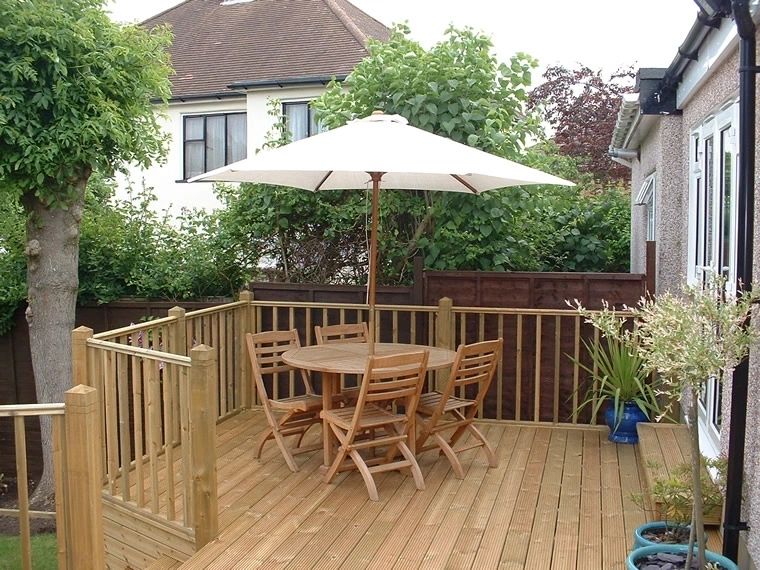
Joist spacing under a deck is set by the board being used and the load expected, not fixed universally — timber boards typically need joists at closer centres than the equivalent composite board, because composite is generally less stiff across a span.
Manufacturers publish maximum joist spacing for their composite boards, and it's shorter still where boards run diagonally rather than square to the joists, since a diagonal run effectively increases the unsupported span between fixings.
Undersized joist spacing shows up as bounce or long-term sag between joists well before it becomes a safety issue, so it's worth checking spacing against the actual board spec rather than a generic rule of thumb.
Land Registry title plans and their limits
Land Registry title plans are based on Ordnance Survey mapping and are deliberately described as showing 'general boundaries' rather than the precise legal line, typically accurate to a scale where a boundary can shift by up to half a metre without contradicting the plan.
That means a title plan is rarely enough on its own to settle exactly where a fence should sit to the centimetre, particularly on older plots where boundaries have drifted gradually over decades of replacement.
A determined boundary application can fix a precise legal line where a dispute genuinely needs it, but for most routine fence replacements, agreeing the line by eye with reference to the existing structure and the general boundary plan is the practical approach.
Tongue-and-groove board joints
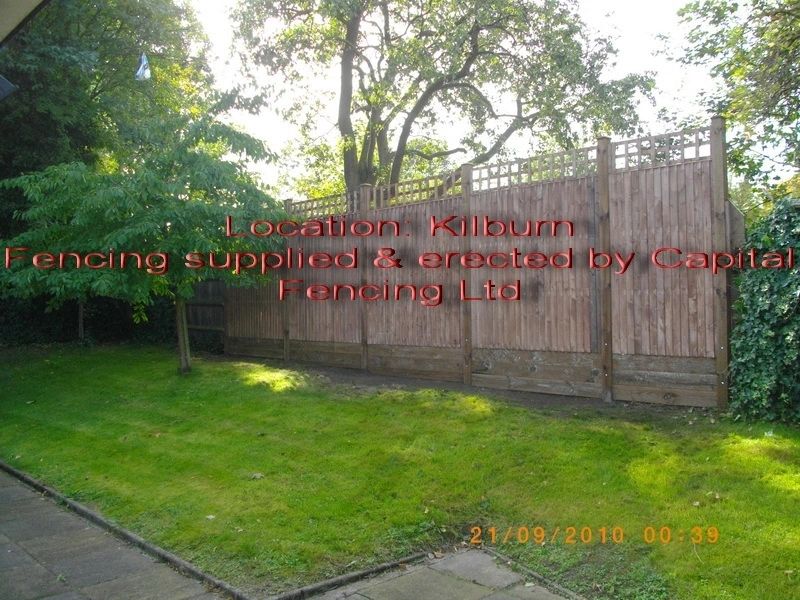
Tongue-and-groove boards have a projecting tongue on one edge and a matching groove on the other, which locks adjacent boards together and stops the panel racking or gapping as timber moves.
This gives a fully solid-looking panel face with no gaps even as the boards season, unlike an overlapping feather-edge panel where gaps can open as the wood shrinks.
The tight interlocking fit does mean less room for movement overall, so tongue-and-groove panels are more prone to visible buckling if fitted without a small expansion allowance at each end.
Splitting maintenance costs on a shared access boundary
Where a title includes a shared right of way, the deeds sometimes specify how maintenance costs for that shared strip, including any bordering fence, should be split between the properties using it.
Where the deeds are silent on cost-sharing despite recording the shared right, this becomes another matter for direct agreement between the parties involved.
Checking exactly what the title says about cost responsibility, rather than assuming an even split is automatic, avoids a common source of disagreement on shared accessways.
Boundaries adjoining registered common land
Land registered as common land under the Commons Registration Act carries specific legal protections, and fencing along a boundary with it can require consent from the Planning Inspectorate under separate legislation.
This is a different and more specialist process than an ordinary planning application, reflecting the protected status of common land itself.
Anyone with a boundary adjoining registered common land should check its status carefully before assuming a straightforward fence replacement is all that's needed.
Which side a fence's face and posts should sit on
There's a long-standing but informal convention that the 'good side' — the smooth face without visible posts and rails — should face the neighbouring property, though this is a courtesy rather than a legal requirement.
Some title deeds do specify a required orientation as part of an ownership condition, which takes precedence over the general convention where it applies.
Where no such condition exists, agreeing the facing direction with a neighbour before building avoids a common and easily-avoided source of minor friction.
Is splitting maintenance costs on a shared access boundary something you plan for in Cheshunt?
Checking exactly what the title says about cost responsibility, rather than assuming an even split is automatic, avoids a common source of disagreement on shared accessways. Where a title includes a shared right of way, the deeds sometimes specify how maintenance costs for that shared strip, including any bordering fence, should be split between the properties using it. Where the deeds are silent on cost-sharing despite recording the shared right, this becomes another matter for direct agreement between the parties involved.
What should I know about boundaries adjoining registered common land in Cheshunt?
Land registered as common land under the Commons Registration Act carries specific legal protections, and fencing along a boundary with it can require consent from the Planning Inspectorate under separate legislation. This is a different and more specialist process than an ordinary planning application, reflecting the protected status of common land itself. Anyone with a boundary adjoining registered common land should check its status carefully before assuming a straightforward fence replacement is all that's needed.
Is Cheshunt within your standard travel area?
Yes — Cheshunt is served from Cheshunt (Overground / Greater Anglia), off A10 / A121, and is inside our regular working patch.
What should I know about which side a fence's face and posts should sit on in Cheshunt?
Some title deeds do specify a required orientation as part of an ownership condition, which takes precedence over the general convention where it applies. Where no such condition exists, agreeing the facing direction with a neighbour before building avoids a common and easily-avoided source of minor friction. There's a long-standing but informal convention that the 'good side' — the smooth face without visible posts and rails — should face the neighbouring property, though this is a courtesy rather than a legal requirement.
What areas of Cheshunt do you cover?
We cover all of Cheshunt (EN7, EN8), under Broxbourne Borough Council.
Does tongue-and-groove board joints come up much on jobs around Cheshunt?
The tight interlocking fit does mean less room for movement overall, so tongue-and-groove panels are more prone to visible buckling if fitted without a small expansion allowance at each end. Tongue-and-groove boards have a projecting tongue on one edge and a matching groove on the other, which locks adjacent boards together and stops the panel racking or gapping as timber moves. This gives a fully solid-looking panel face with no gaps even as the boards season, unlike an overlapping feather-edge panel where gaps can open as the wood shrinks.
Getting a crew here is straightforward: A10 / A121 links through, M25 J25 isn't far, and Cheshunt (Overground / Greater Anglia) serves the area. Tongue-and-groove board joints: Tongue-and-groove boards have a projecting tongue on one edge and a matching groove on the other, which locks adjacent boards together and stops the panel racking or gapping as timber moves. This gives a fully solid-looking panel face with no gaps even as the boards season, unlike an overlapping feather-edge panel where gaps can open as the wood shrinks. Splitting maintenance costs on a shared access boundary: Where a title includes a shared right of way, the deeds sometimes specify how maintenance costs for that shared strip, including any bordering fence, should be split between the properties using it.
Get In Touch
Get My Free Quote — 24h Response
No callout fee · Free site visit · Friendly local team covering London & Hertfordshire.