Garden Fencing Specialists Across Barnet & new barnet
Capital Fencing covers Barnet, new barnet and potters bar with a small, time-served crew that handles garden fencing from start to finish. Most jobs in EN5 are quoted within 48 hours of a site visit and booked in within one to two weeks. Sunset View, Gladsmuir Road Hadley Green Wood Street rear shared boundary. Closeboard with arris rails set off roots; gravel boards stepped. Boundary line agreed in writing with both neighbours before work started. Hadley Green Conservation Area constrains front-boundary heights and materials — painted picket or low brick-and-rail is the norm.
Fully insured on every Barnet job.
Installing garden fencing across Greater London.
Our own team — no subcontracting.
Barnet gardens left clean at end of every day.
Typical Barnet properties we work on
Victorian terraces, post-war semis and a band of larger Edwardian villas around Hadley Green. The gardens behind them are narrow rear gardens with mature trees and London clay underfoot.
That shapes the fencing brief — every quote we write here factors in shared-boundary disputes are common on the older terraced streets, so neat post lines and clear ownership marks matter.
What we've learned working Barnet
Hadley Green Conservation Area constrains front-boundary heights and materials — painted picket or low brick-and-rail is the norm. Behind, the long Victorian terraces off Wood Street share boundaries with mature trees, so root mapping before post-setting saves a lot of grief. Chipping Barnet's medieval plot lines mean modern boundaries are rarely square — every job needs a fresh measure, no repeatable spec. Kings Road drops steeply toward the East Coast Main Line so retaining sleepers under fencing is the norm there, quoted as a combined line. Ownership of the Salisbury Road back-alley fence line is disputed on most deeds — we always send a boundary letter to the neighbour before starting.
Streets we've worked on
- Wood Street
- Hadley Green Road
- Stapylton Road
- Sunset View
- Calvert Road
- Kings Road
- Salisbury Road
- Gladsmuir Road
We orient by
- Hadley Green
- High Barnet station
- The Spires
- Chipping Barnet churchyard
- Old Court House Recreation Ground
Recently completed in Barnet
- fencing brief
Hadley Green frontage replacement
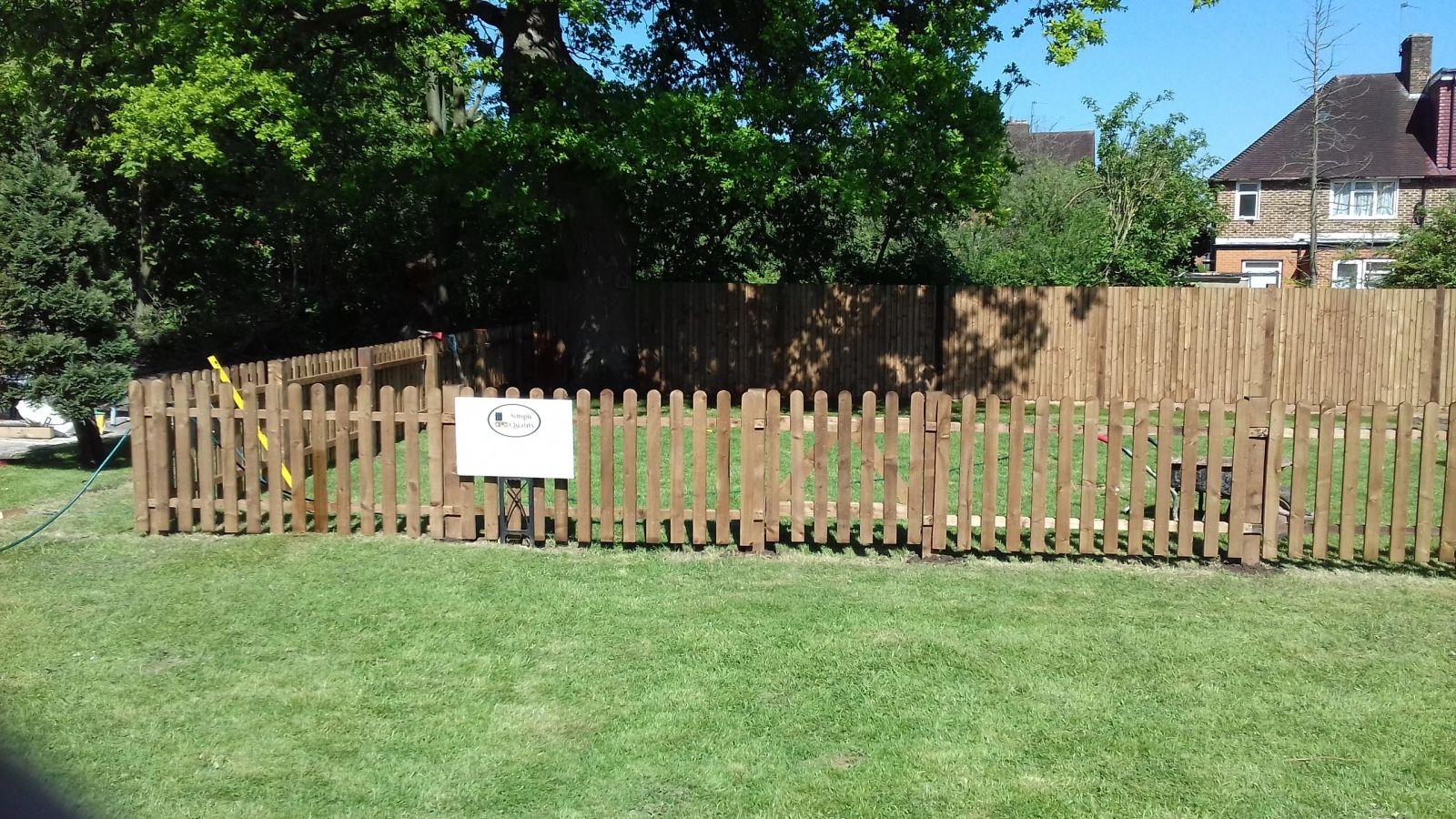
Spec: Painted softwood picket on oak posts to match conservation guidance
Outcome: Passed informal council eye-check; matched four neighbouring plots.
- fencing brief
Wood Street rear shared boundary
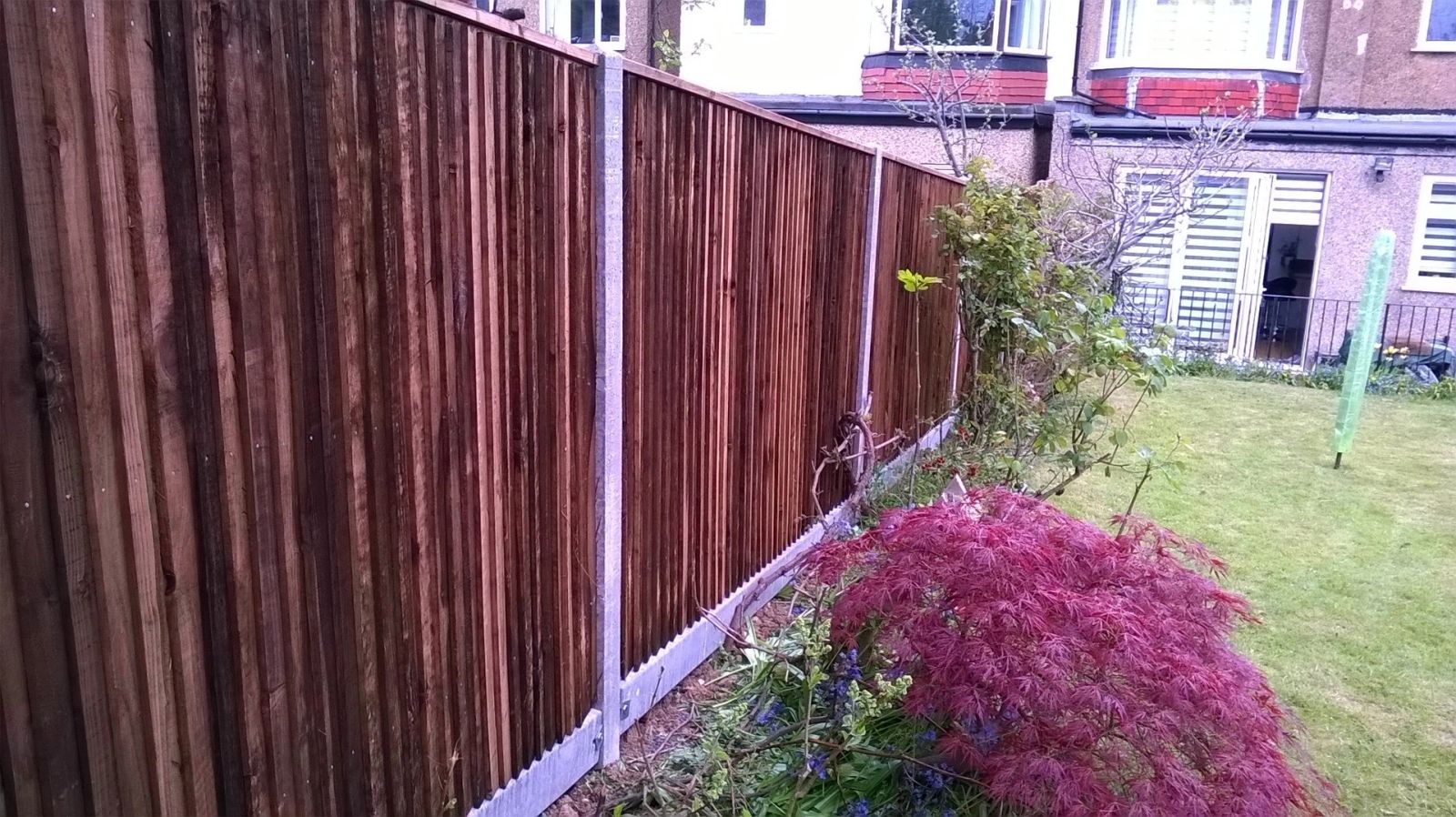
Spec: Closeboard with arris rails set off roots; gravel boards stepped
Outcome: Boundary line agreed in writing with both neighbours before work started.
- fencing brief
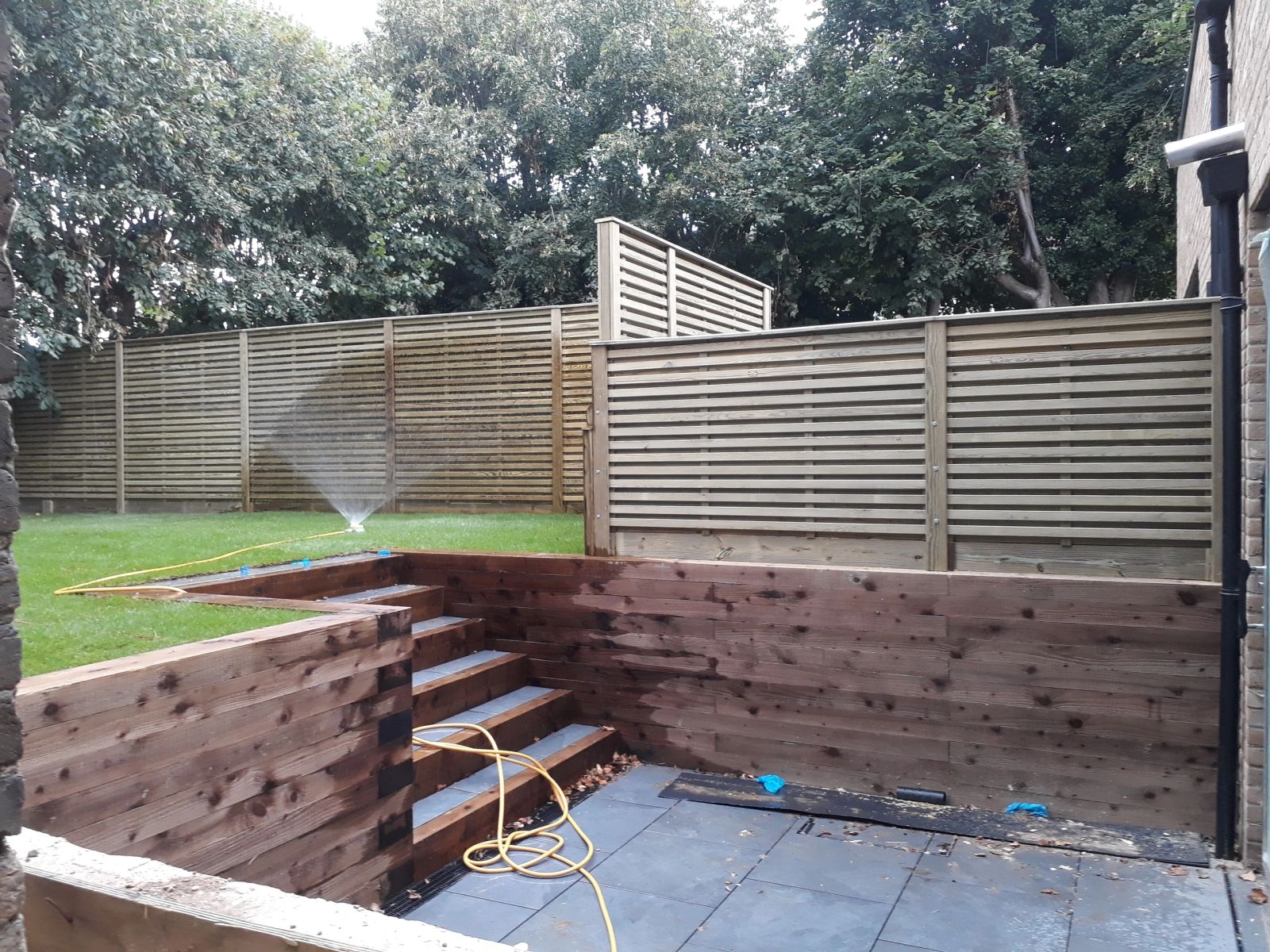
Kings Road railway-side retaining sleeper wall with fence above
Spec: Twin-stacked oak sleepers, geotextile drainage, 1.5m closeboard set into steel post shoes
Outcome: Fixed a 3-year slippage problem the previous contractor had walked away from.
Barnet fencing — common briefs
Replacing failed runs on Victorian terraces
A lot of Barnet gardens are narrow rear gardens with mature trees and London clay underfoot — panel runs need stepping and concrete-set posts to track the levels.
Working around shared-boundary disputes are common on the older terraced streets
Every quote we write in EN5 factors this in from the first measure.
Boundary work near Barnet High Street
Quick turnarounds, properly insured, with materials that match the surrounding residential streetscape.
Closeboard vs panel for Barnet runs
Closeboard for longevity and privacy; panel for cost-controlled estate runs around new barnet.
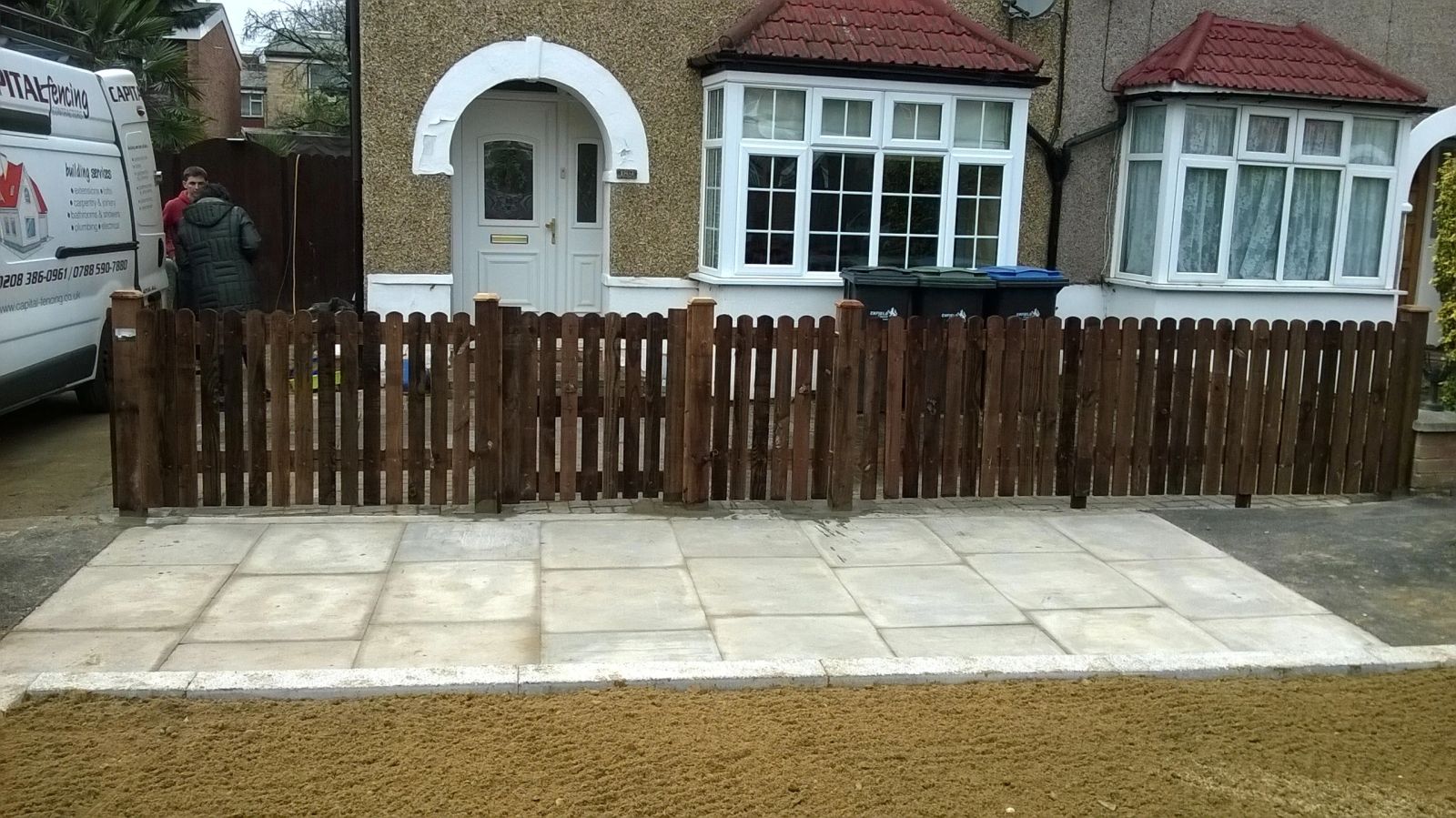
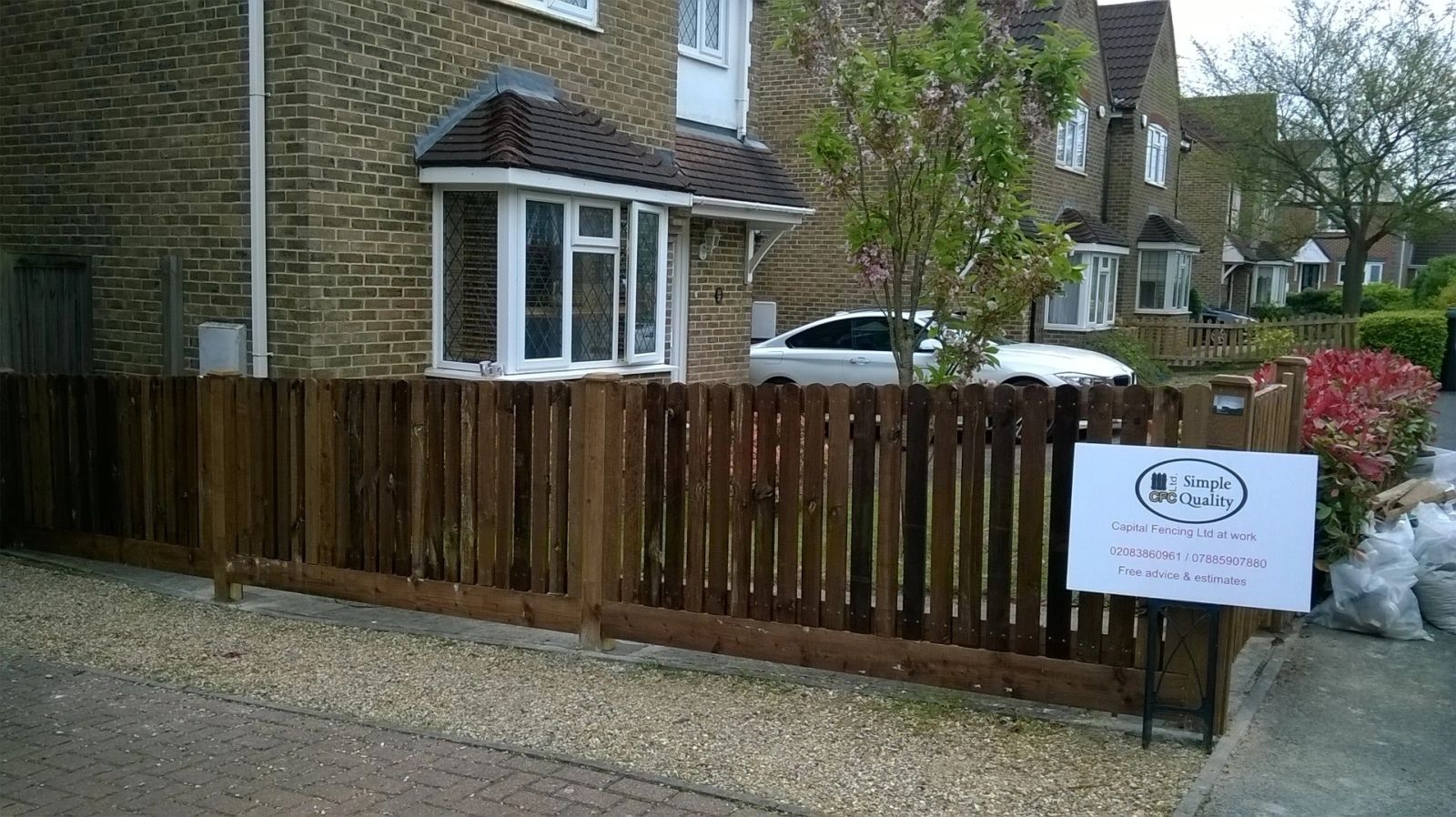
Recent fencing work near Barnet
Nearby areas we cover from Barnet
Within practical driving distance of Barnet via A1000 Great North Road and M25 J23 (South Mimms).
FAQ — fencing in Barnet
Do you need planning permission for fencing in Barnet?+
Standard rear-garden fencing under 2m doesn't normally need permission, but front-garden work near a highway is the most common exception. We'll flag it on the quote. Hadley Green Road, Salisbury Road Hadley Green Kings Road railway-side retaining sleeper wall with fence above. Twin-stacked oak sleepers, geotextile drainage, 1.5m closeboard set into steel post shoes. Fixed a 3-year slippage problem the previous contractor had walked away from. Behind, the long Victorian terraces off Wood Street share boundaries with mature trees, so root mapping before post-setting saves a lot of grief.
Do you offer trellis-topped or hit-and-miss options?+
Yes — trellis-topped and hit-and-miss are both popular in Barnet for privacy without losing light.
How far from Barnet do you cover?+
Comfortably across new barnet, potters bar, finchley and the wider Greater London area. M25 J23 (South Mimms) keeps the radius practical.
What materials do you recommend for fencing in Barnet?+
For most Barnet jobs we lean toward closeboard or feather-edge, but the brief decides — your garden style, narrow rear gardens with mature trees and London clay underfoot, and how long you want it to last.
Can you handle the soil and ground conditions in Barnet?+
Yes — narrow rear gardens with mature trees and London clay underfoot. We concrete-set every post as standard, and where trees or services are in the way we work around them properly.
Booking fencing work in EN5 now
Most Barnet jobs go in within one to two weeks via M25 J23 (South Mimms). Phone, WhatsApp a photo of the boundary, or use the form — whichever is fastest. Sunset View, Calvert Road The Spires Wood Street rear shared boundary. Closeboard with arris rails set off roots; gravel boards stepped. Boundary line agreed in writing with both neighbours before work started. Chipping Barnet's medieval plot lines mean modern boundaries are rarely square — every job needs a fresh measure, no repeatable spec.
Related pages
In short — Garden Fencing in Barnet
Shared-boundary disputes are common on the older terraced streets, so neat post lines and clear ownership marks matter — that's the Barnet brief in one line. We spec garden fencing around it, not in spite of it. Free quote, fixed crew, real aftercare. Hadley Green Road, Salisbury Road Old Court House Recreation Ground Hadley Green frontage replacement. Painted softwood picket on oak posts to match conservation guidance. Passed informal council eye-check; matched four neighbouring plots. Kings Road drops steeply toward the East Coast Main Line so retaining sleepers under fencing is the norm there, quoted as a combined line.