Diagnosing gate sag: hinge, post, or frame
A sagging gate can stem from three distinct causes that need different fixes — worn or undersized hinges, a hinge post that has itself leaned out of true, or a gate frame that has racked out of square through inadequate diagonal bracing.
Testing the diagonal measurement corner-to-corner on the gate frame quickly shows whether the frame itself has racked, while checking the hinge post with a spirit level separately identifies a foundation problem rather than a hardware one.
Treating a leaning-post problem with heavier hinges alone doesn't fix the underlying cause and the gate will sag again once the new hinges have taken up their own wear.
Fixing detail for cassette panels between posts
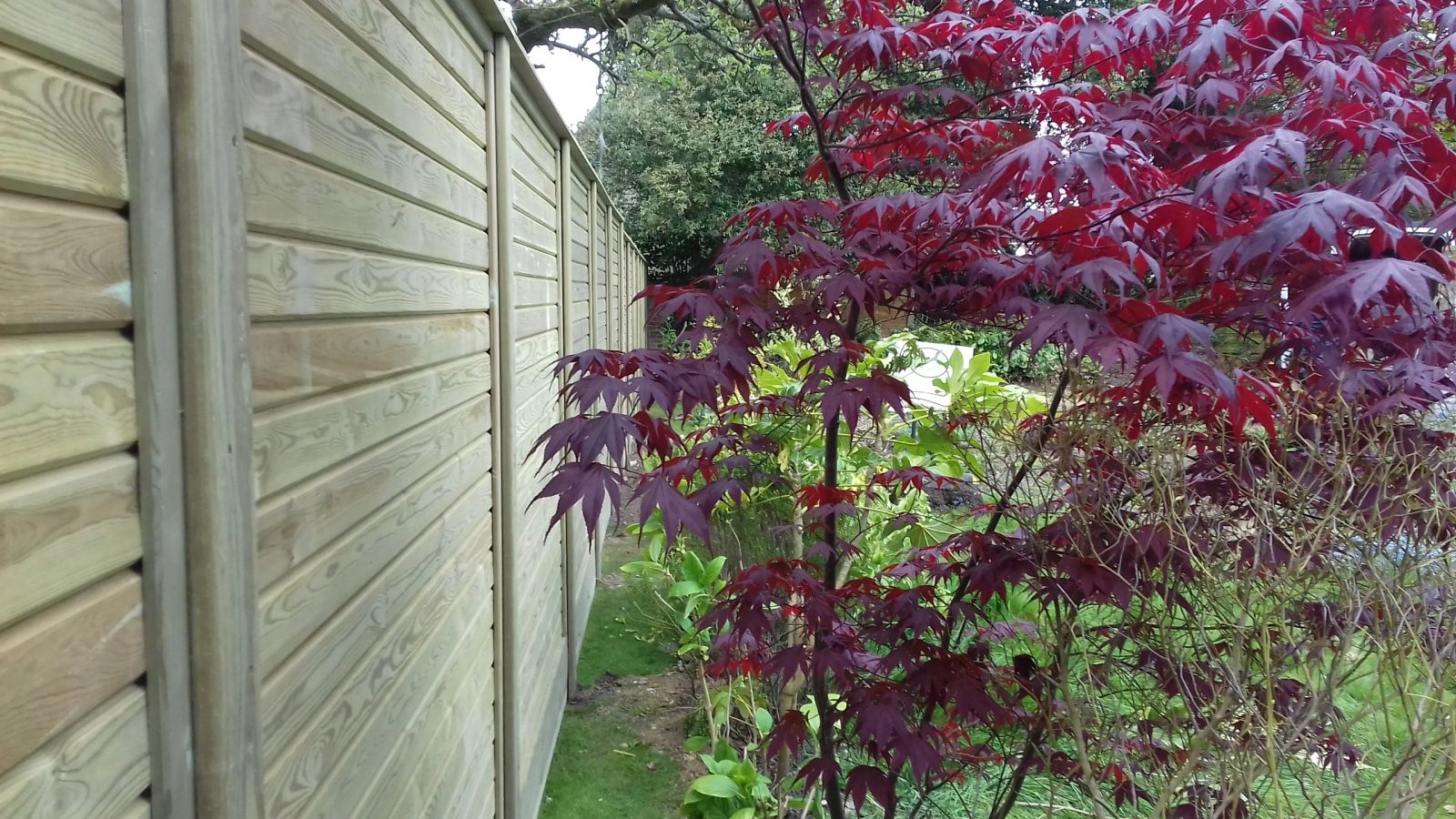
Cassette acoustic panels are dropped into a captive rebate machined into the post face, which keeps the panel edge sealed against the post without relying on face-fixed battens that could work loose.
The rebate depth and tolerance need to suit the specific cassette thickness supplied, so posts are matched to the panel system rather than treated as a generic fencing post.
RAL colours and UV fade
RAL is a standardised colour matching system widely used for powder coating and factory paint finishes on metal fencing and gates, allowing a specific shade to be reordered consistently years apart.
Darker RAL shades, particularly reds and some greens, tend to fade faster under UV exposure than blacks and greys, since the pigments used to achieve those colours are often less UV-stable.
South-facing runs in direct sun for most of the day will fade noticeably faster than a shaded run of the same colour and coating, which is worth factoring in in when matching an extension to existing fencing.
Arris rail mortice joint wear
A traditional arris-rail panel fence uses a triangular-section rail slotted into a mortice cut through the post, and repeated wind loading can gradually enlarge that mortice, letting the rail rock and eventually loosen the whole panel.
A mortice cut slightly oversized from the start, or one that's been enlarged by rot before a replacement rail is fitted, is a common weak point that arris-rail brackets were largely developed to bypass.
Galvanised metal arris-rail brackets, fixed to the face of the post rather than through it, avoid weakening the post with a mortice at all and are now the more common detail on new panel fencing.
The gate as a persistent acoustic weak point
Even a well-fitted gate within an acoustic run has a working clearance around its edges that a fixed panel doesn't need, and that clearance is the single most likely place for sound to leak through an otherwise sealed boundary.
Overlapping stops, a drop seal at the base, and compressible strips along the closing edges reduce this gap, though a gate will still never seal as completely as the solid panels either side of it.
Conservation area consent process and fees
Applications affecting conservation areas or listed curtilage structures are usually submitted through the same planning portal as a standard householder application, with an additional heritage statement often required to justify the proposed materials and design against the area's character.
Determination periods and validation requirements are broadly the same as ordinary planning applications, typically eight weeks for a straightforward decision, though heritage input from a conservation officer can extend that where the proposal is contentious.
Fees for these applications follow the standard national planning fee schedule rather than a separate heritage tariff, so cost isn't usually the barrier — the main risk is a longer timeline if amendments are requested.
Setting gate posts before the rest of a fence run
Gate posts carry more load and need tighter tolerances on spacing and plumb than intermediate fence posts, so they're normally set and checked first, with the rest of the run measured out relative to the confirmed gate opening rather than the other way round.
Where a gate is ordered to a bespoke size, its exact opening width has to be locked in before that section of the run is built, since a fence panel either side can absorb small adjustments far more easily than a made-to-measure gate can.
A gate post is also usually set with extra depth or a wider concrete base than a standard fence post, given the additional leverage a swinging gate applies, so it needs its own dig rather than being treated the same as its neighbours.
New-build boundary snagging
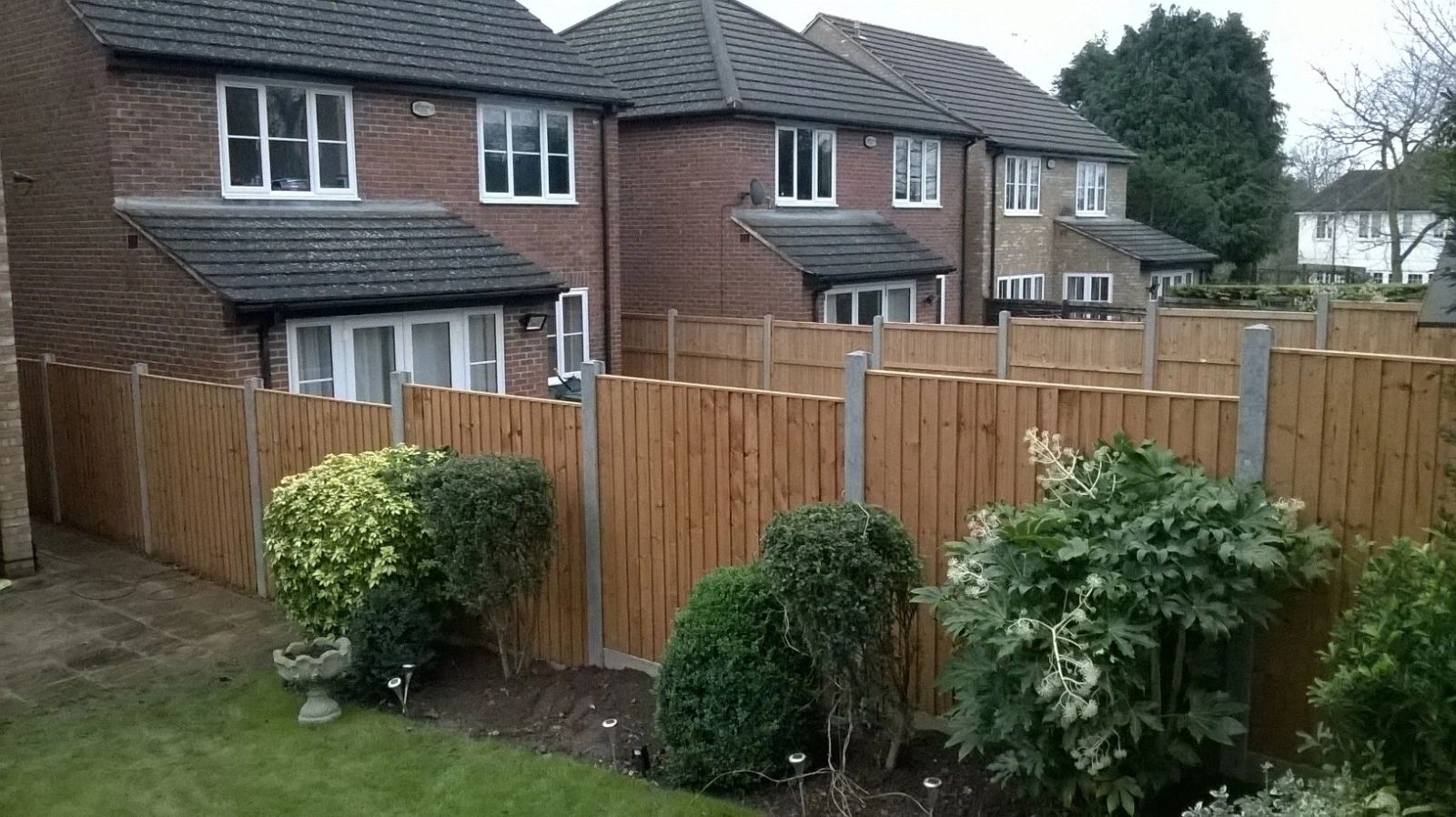
Developer-installed boundary fencing on new-build estates is sometimes built to a minimum standard rather than the long-term spec an owner might choose themselves, and can show its first faults — sagging gates, shallow-set posts — within the first couple of years.
Where a fence is still within the developer's defects period, it's worth raising problems through that route before commissioning separate replacement work.
Once outside the defects period, upgrading a builder-grade boundary to a more durable spec is one of the more common jobs we see on estates a few years old.
Front boundary choices and kerb appeal
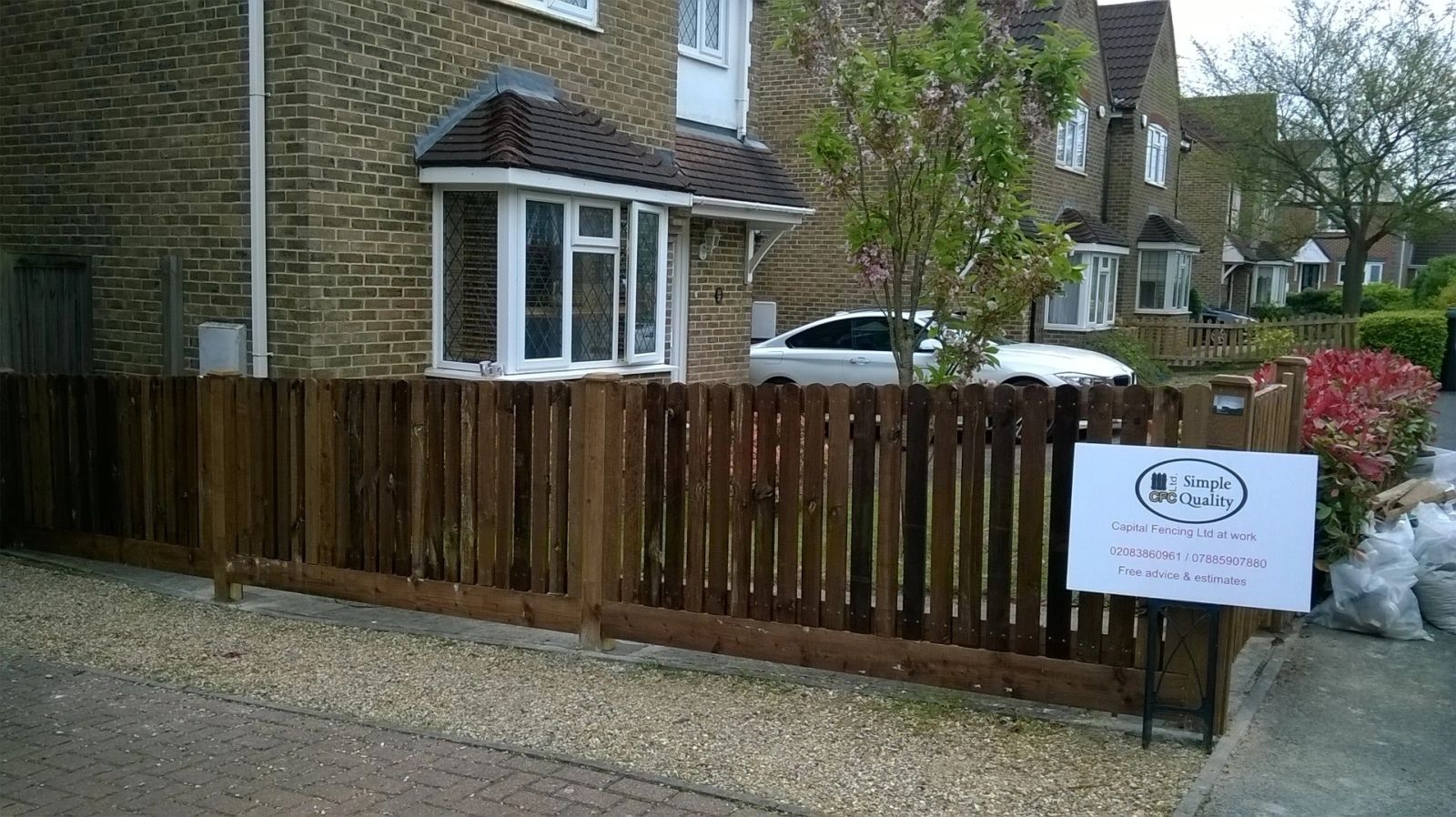
A front boundary is one of the first things anyone sees of a property, and low-key choices — a consistent gate style, tidy capping, a colour that complements the brickwork — do more for kerb appeal than an expensive but mismatched material choice.
Open or low front boundaries tend to suit properties where the frontage itself is attractive and worth showing off, while a higher, more solid front boundary suits a busier road or a desire for more privacy from passers-by.
It's worth thinking about a front boundary as a long-term fixture rather than following short-lived trends, since it's one of the more visible and slower-to-replace elements of a property's exterior.
Diagonal bracing struts on gate posts
A diagonal timber or metal strut run from partway up a gate post back to a buried anchor or second post resists the twisting and leaning force a heavy gate exerts on its hinge post over time, particularly on wide or heavy gates.
Without bracing, that twisting load is carried entirely by the post's own embedment in the ground, which can gradually work the post out of true even where the concrete footing itself remains intact.
Bracing is generally specified based on gate weight and width rather than applied universally, since a light pedestrian gate rarely generates enough leverage to need it while a wide vehicle gate almost always does.
Boundary near a railway or utility corridor
A boundary next to a railway or utility corridor may be governed by the operator's own standards as well as normal planning rules, and access for their maintenance staff sometimes has to be preserved even where the land is privately owned.
Any work close to a railway boundary generally needs the operator notified in advance, and specific fence types or heights may be mandated rather than left to the landowner's choice.