London & Hertfordshire Free Site Visit
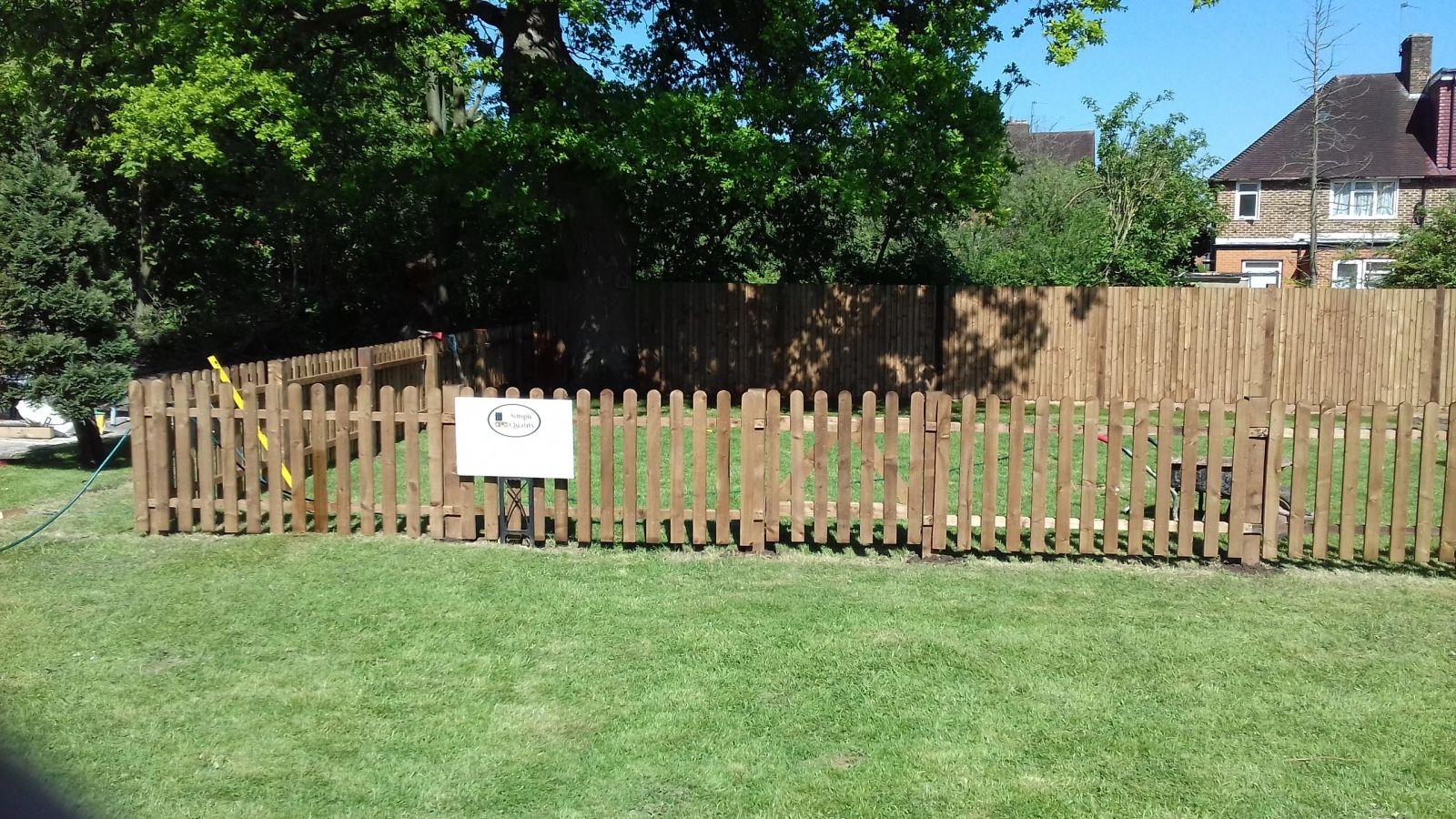
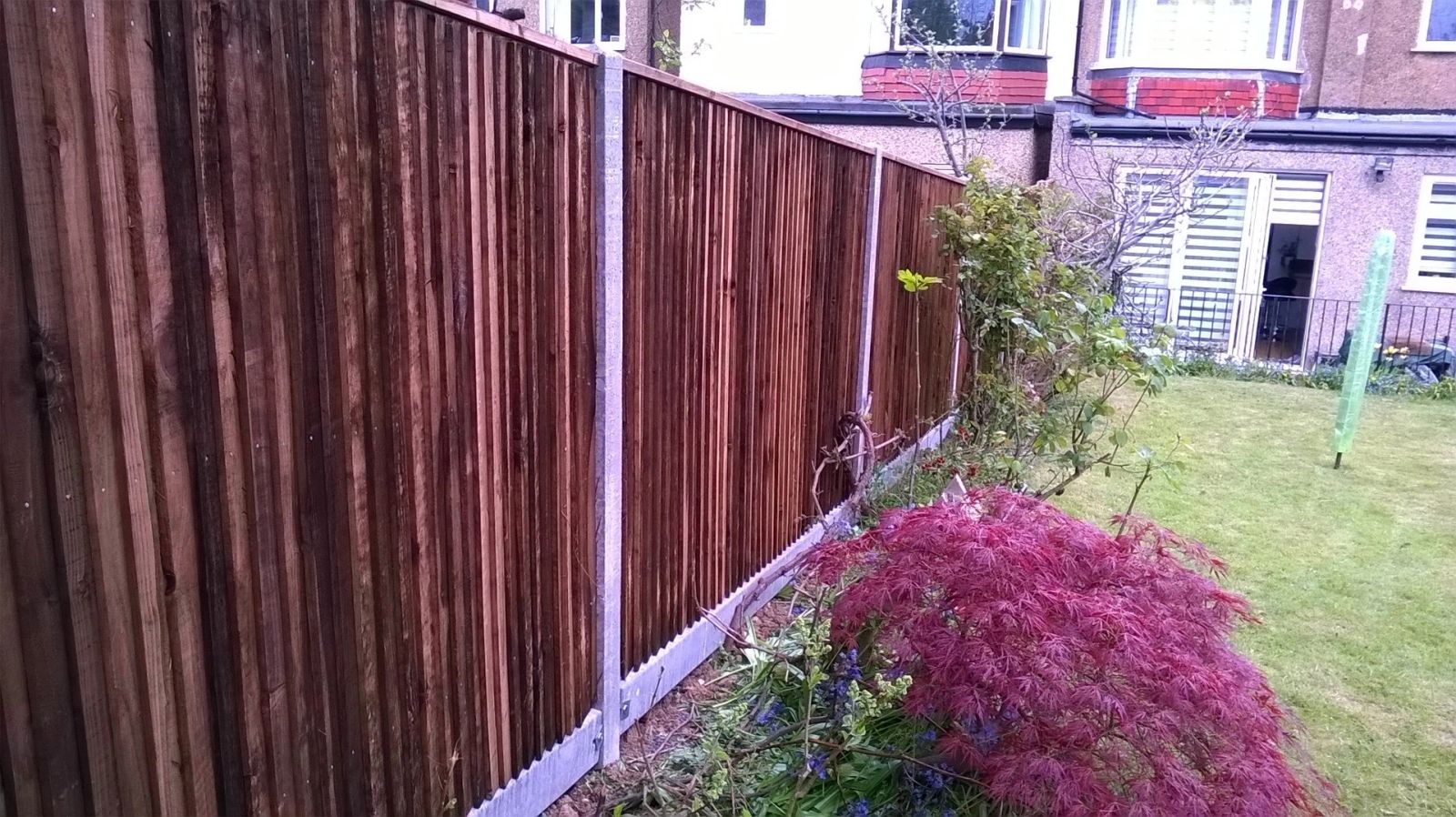
closeboard fence run installed by Capital Fencing in Barnet (EN5)
Barnet · EN5 / N20

Corner Plot Fencing in Barnet — Built for conservation guidance, sight-line splays and permitted-development limits

Corner Plot Fencing in Barnet is a specific brief for us — houses on a corner with two road-facing boundaries — visibility, privacy and highway sight-lines all in play. The default local answer isn't a stock catalogue drop: it's front boundary 900mm painted picket or bar-and-rail on the visibility splay, side boundary 1.8m closeboard beyond the sight-line. On Barnet sites we also spec around shared-boundary disputes are common on the older terraced streets, so neat post lines and clear ownership marks matter, which is where a lot of corner-plot fencing jobs quietly fail two years in. Roads such as Gladsmuir Road and Salisbury Road are typical of the local layout. Old Court House Recreation Ground is a useful local reference point. Hadley Green Conservation Area constrains front-boundary heights and materials, with painted picket or low brick-and-rail typical of the streetscape.

Corner Plot Fencing in Barnet is a specific brief for us — houses on a corner with two road-facing boundaries — visibility, privacy and highway sight-lines all in play. The default local answer isn't a stock catalogue drop: it's front boundary 900mm painted picket or bar-and-rail on the visibility splay, side boundary 1.8m closeboard beyond the sight-line. On Barnet sites we also spec around shared-boundary disputes are common on the older terraced streets, so neat post lines and clear ownership marks matter, which is where a lot of corner-plot fencing jobs quietly fail two years in. Roads such as Gladsmuir Road and Salisbury Road are typical of the local layout. Old Court House Recreation Ground is a useful local reference point. Hadley Green Conservation Area constrains front-boundary heights and materials, with painted picket or low brick-and-rail typical of the streetscape.

Typical corner-plot fencing briefs in Barnet

  • brick pier and metal railing frontage kept lower on the splay so parked cars can pull out safely
  • matched picket to the front, closeboard to the side, single point of change at the corner post

Why this spec, for houses on a corner with two road-facing boundaries — visibility, privacy and highway sight-lines all in play

  • highway visibility standards handled properly — no council-notice rebuild six months in
  • clean junction between two boundary types instead of one tired fence run stopping at a wall
  • corner post carries loads from two directions — we upsize as standard, not as an add-on
Default spec

How we build corner-plot fencing in Barnet

front boundary 900mm painted picket or bar-and-rail on the visibility splay, side boundary 1.8m closeboard beyond the sight-line. On Barnet jobs we adjust for shared-boundary disputes are common on the older terraced streets, so neat post lines and clear ownership marks matter.

Property mix locally: Victorian terraces, post-war semis and a band of larger Edwardian villas around Hadley Green. Typical gardens: narrow rear gardens with mature trees and London clay underfoot. Postcodes we regularly service: EN5, N20.

Where corner-plot fencing isn't the right answer

  • highways-adopted verge situations where any change needs a Section 184 licence — different job, different route
  • corner conservation frontages where only period railings are compliant

Corner Plot Fencing FAQs — Barnet

Can I have full-height fencing on the side road?

On corner-plot fencing jobs in Barnet (EN5), our default answer is: front boundary 900mm painted picket or bar-and-rail on the visibility splay, side boundary 1.8m closeboard beyond the sight-line. For context: clean junction between two boundary types instead of one tired fence run stopping at a wall. We handle the council conversation as part of the job, not as an after-thought.

Do I need council permission for a corner plot boundary?

Across Barnet we spec around shared-boundary disputes are common on the older terraced streets, so neat post lines and clear ownership marks matter, so on corner-plot fencing that usually means picket or bar-and-rail on the sight-line splay. We'll walk you through highway visibility standards handled properly — no council-notice rebuild six months in on the site visit before you commit.

Where does the highway sight-line splay actually start?

Barnet coverage means we can survey most EN5 addresses inside a week — houses on a corner with two road-facing boundaries — visibility, privacy and highway sight-lines all in play. For context: clean junction between two boundary types instead of one tired fence run stopping at a wall. We handle the council conversation as part of the job, not as an after-thought.

How is the corner post different from a normal post?

Practically: front-and-side boundary run around a corner plot keeping highway sight-line to 900mm at the junction. That's the Barnet version of this job, not a generic one. We'll walk you through highway visibility standards handled properly — no council-notice rebuild six months in on the site visit before you commit.

What happens if my corner boundary blocks a driver's view?

On corner-plot fencing jobs in Barnet (EN5), our default answer is: front boundary 900mm painted picket or bar-and-rail on the visibility splay, side boundary 1.8m closeboard beyond the sight-line. The honest trade-off is carrying a full 1.8m closeboard all the way to the pavement corner — councils issue removal notices for exactly this — which is exactly what our default spec designs out.

Recent corner plot fencing work
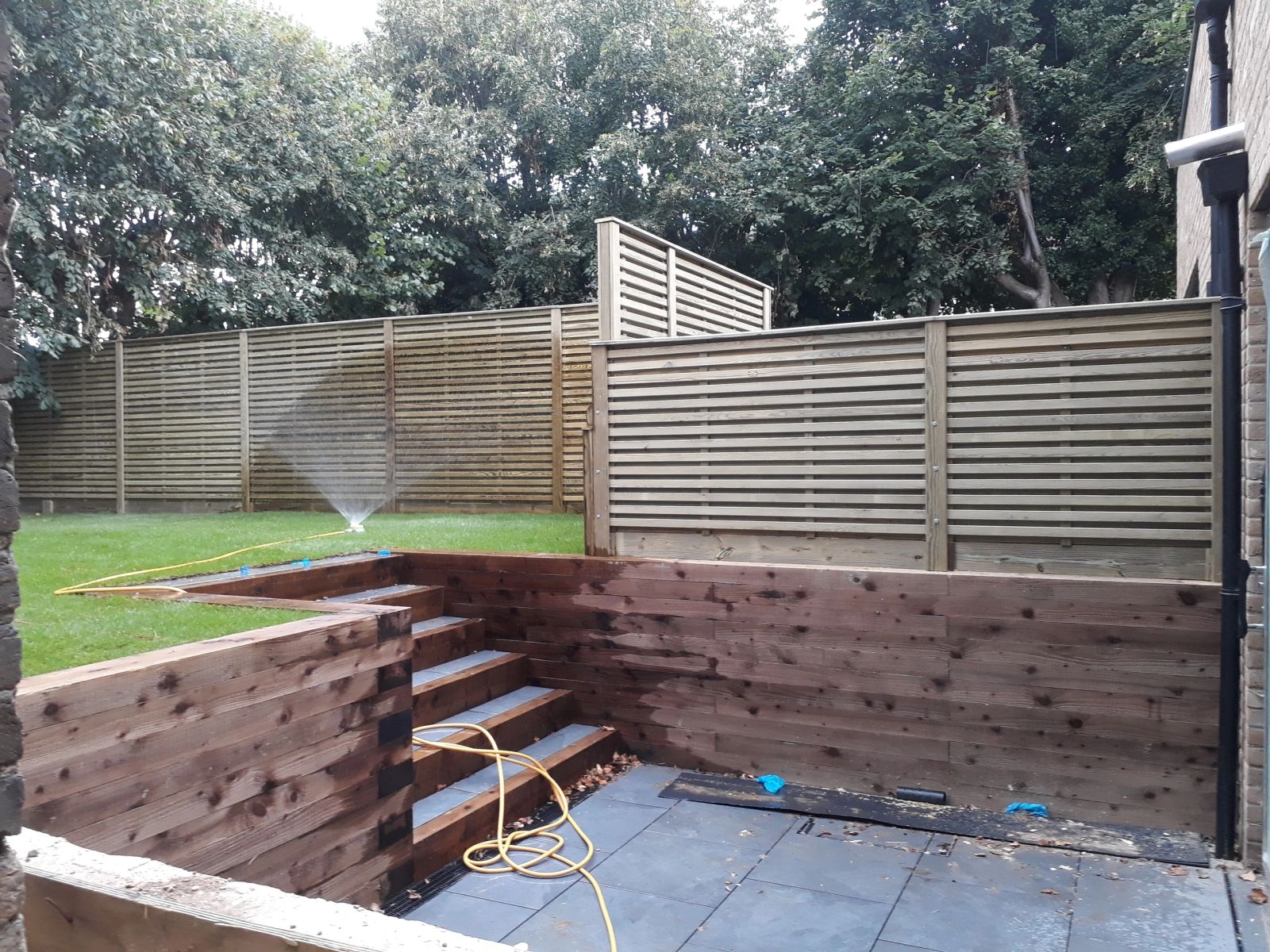
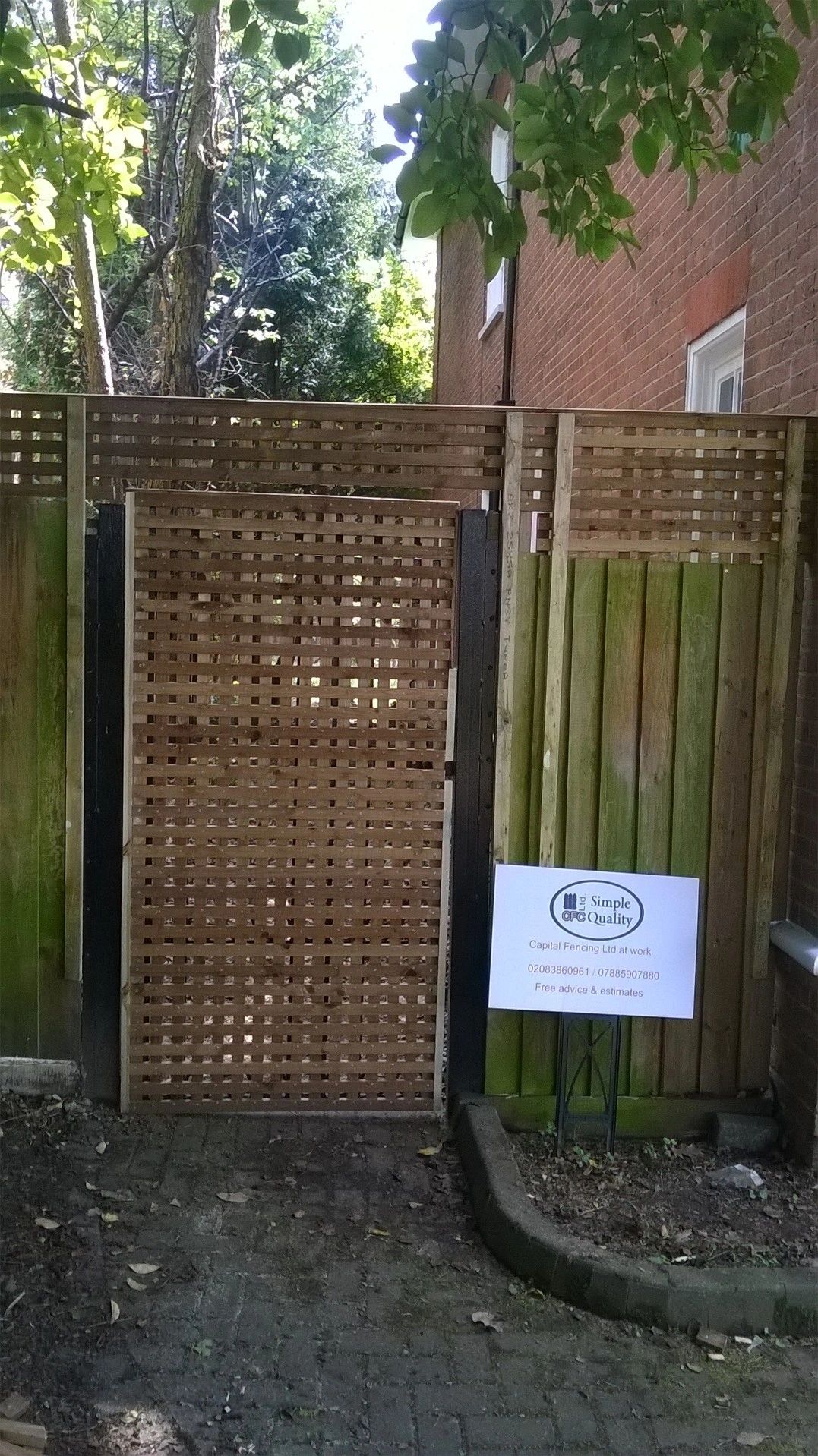
closeboard fence run installed by Capital Fencing in Barnet (EN5)panel fence install installed by Capital Fencing in Barnet (EN5)trellis-topped fence installed by Capital Fencing in Barnet (EN5)bespoke decorative fence installed by Capital Fencing in Barnet (EN5)

Site notes: corner plot fencing in EN5

Matching a new gate to the existing boundary

A replacement gate is sized and detailed to match the piers or posts either side of the opening rather than fitted as a stock size, since a gate that doesn't sit flush against its opening looks obviously replaced even when well built.

Where the surrounding fence has a specific profile or capping detail, the gate frame is matched to it.

Boundary fencing on an allotment site

An allotment site boundary is often lower-spec than a commercial compound but still needs to deter casual theft of tools, produce and sheds, so a stock fence or low chain-link topped with a single strand of barbed wire is a common, proportionate choice.

Individual plot gates within the site are usually simpler again, since the main perimeter is doing the primary security work and plot-level fencing is more about defining boundaries between tenants.

Palisade pale profiles: D-section versus W-section

D-section pales have a rounded face that offers less finger and foot grip than a flat pale, while W-section pales fold the steel into a shallow trough shape that resists bending under a lever without adding weight.

W-section is the more common choice on a taller or higher-security run because the fold adds stiffness across the pale's width, whereas D-section is often reserved for lower, more decorative palisade work.

Re-plumbing posts after ground movement

Seasonal clay movement can tilt a post a few degrees without breaking the footing outright, and re-plumbing involves breaking out enough of the old concrete to reset the post vertical rather than packing the gap and leaving the tilt.

Where movement is ongoing rather than a one-off event, re-plumbing without addressing drainage or ground preparation risks the same tilt recurring within a season or two.

Perimeter fencing for a self-storage facility

A self-storage site's perimeter fence works alongside individual unit doors as a second layer of security, and is usually specified with a single controlled entry point so out-of-hours access can be logged or restricted even if some customers hold their own keys.

Height and topping on this type of perimeter tend toward the upper end of commercial practice because the contents behind any given unit door are unknown and the site is often unstaffed for long periods.

Composite wood-polymer ratios

Wood-plastic composite fencing boards are made from a blend of wood fibre and polymer, and the ratio between the two materially affects the finished product's stiffness, weight and how closely it resembles real timber grain.

A higher wood-fibre content generally gives a more timber-like appearance and feel but can also make the board more absorbent and slightly more prone to swelling at cut edges than a polymer-dominant mix.

Composite boards from different manufacturers aren't interchangeable even when nominally similar in size, since differing ratios change how the board expands with temperature and how it should be fixed and spaced.

Metal panel systems as an alternative on very exposed sites

On sites where timber panel failure from wind loading is a recurring problem despite heavier posts and shorter bays, a powder-coated steel or aluminium panel system offers a genuinely different approach, since the material doesn't flex, crack or delaminate the way a timber panel eventually does under repeated wind load.

These systems cost more than timber upfront and have a different aesthetic that not every client wants, but on a genuinely difficult exposed boundary they remove the recurring panel-replacement cycle entirely.

It's worth presenting as an option specifically where a client has already replaced timber panels on the same exposed run more than once, rather than as a default first suggestion.

Gravel-board clearance over uneven ground

A gravel board sitting flush with the soil on one section of a run can end up buried a couple of inches by the time the ground rises further along an uneven boundary, trapping moisture against timber that was specified to sit clear of the soil.

Stepping the board height slightly at each post, rather than running one continuous level line, keeps a consistent clearance above grade along the whole run.

Concrete gravel boards tolerate this ground contact better than timber ones, which is one reason they're specified as standard on plots with visibly uneven levels.

Checking for buried services before digging out a failed post

A repair that involves digging out an old footing carries the same risk of hitting a buried cable or pipe as a brand-new installation, and that risk doesn't go away just because a post has stood in that spot for years already.

Using a cable and pipe locator before digging, and digging by hand rather than with power tools near any suspected service run, is standard practice on repair work close to a house, garage or existing utility connection.

Decking oil versus fence stain maintenance cycles

Decking oil is formulated to cope with foot traffic and standing water in a way that a vertical fence stain isn't, and typically needs reapplying annually on a well-used deck compared with the two-to-three year cycle for a fence.

The horizontal surface of a deck also collects standing water and UV exposure differently to a vertical panel face, wearing unevenly in high-traffic paths compared with less-used corners.

Clients used to a fence's maintenance rhythm sometimes underestimate how much more frequently a deck's finish needs attention, which is worth setting expectations on at the time of installation.

Compression versus tension fixing of infill panels

Some panel systems clip into a compression-fit channel between posts, relying on the panel being cut to a precise size to stay in place under load; others are bolted under tension to the post face, which tolerates more variation in panel size but adds visible fixing points.

Compression-fit systems look cleaner but are harder to make tamper-resistant, since a panel that can be removed without tools for maintenance can usually also be removed without tools by someone else.

Security at a garage flank wall boundary junction

A garage flank wall often forms part of the boundary line itself, and the gap between the end of the garage and the next boundary feature is a common blind spot that gets missed when a security upgrade focuses only on the open fence sections either side.

Where a flank wall is lower than the rest of the boundary's security height, an additional short fence run or topping across just that gap brings the whole line back up to a consistent standard.

Replacing a single damaged board

Where only one or two boards on a gate face have split or rotted and the frame itself is sound, those boards can usually be replaced individually rather than remaking the whole gate.

Matching the profile and thickness of the original boards matters for both appearance and how the new timber takes up moisture alongside the old.

Diagnosing stiffness that eases through the day

A gate that's noticeably stiffer first thing in the morning and frees up as the day goes on is often responding to overnight condensation or dew on the hinge pins and latch mechanism rather than a structural fault.

This pattern is worth distinguishing from a fault that's present all day regardless of temperature, since the two point to very different causes and fixes.

Obstruction offences under the Highways Act

The Highways Act 1980 makes it an offence to obstruct a public highway, including the footway, without lawful authority, which is the underlying reason fencing, skips or materials on a pavement need proper authorisation.

This applies regardless of whether the obstruction is temporary for a delivery or intended as a permanent boundary feature encroaching onto highway land.

Where any part of planned boundary work might extend onto or over a public footway or verge, checking with the highway authority first avoids a straightforward enforcement issue later.

Relocating a builders' compound fence as a project phases

A builders' compound fence is often installed in stages as a construction project progresses, with the secure line moving inward as completed areas are handed over and outward again if the site boundary expands into an adjoining phase.

Because compound fencing is frequently relocated, panel systems with reusable feet or block-based supports are generally favoured over concreted posts, even though a concreted post gives a more permanent fixing where the boundary line is fixed for the whole project.

Repairing a post damaged by a worn drop bolt receiver

A drop bolt on a double gate is driven into a socket set in the ground or in an adjoining post, and repeated slamming or a poorly aligned bolt can gradually damage the timber or crack the concrete around that socket.

Repair usually involves a new or repositioned socket set into sound material rather than simply refitting the same worn receiver, since a loose socket lets the bolt rattle and wear further even after the immediate damage is patched.

British Standards relevant to fencing

BS 1722 covers specifications for fences and gates across a range of types including chain link, wooden palisade, and estate fencing, setting out minimum post spacing, wire gauges and timber dimensions for each category.

These standards aren't legally mandatory on a private domestic job in the way building regulations are, but they're the reference point used in commercial specifications, school and public sector tenders, and by insurers assessing whether a boundary structure was reasonably built.

Where a job is speculatively described as 'to British Standard', it's worth confirming which specific part of BS 1722 is meant, since the standard covers a wide family of very different fence types.

Earthing and bonding requirements for a substation compound fence

A metal fence around an electrical substation compound needs to be correctly bonded to the site's earthing system, since an ungrounded metal fence near live electrical equipment can become dangerously energised under fault conditions.

Bonding work at a substation compound is carried out to the network operator's own specification rather than a general fencing standard, and a fencing contractor working on this type of site coordinates closely with the operator's engineers on sequencing and isolation.

Anti-lift hinge pins on a security gate

A standard hinge pin can be lifted out from outside a gate if the pin isn't captive, effectively removing the gate from its frame without touching the lock at all, which is a well-known weakness on older gates fitted with basic hinges.

An anti-lift hinge design, or a simple dowel welded to prevent the pin lifting clear, closes this gap cheaply and is worth checking for on any existing gate being assessed as part of a security upgrade.

Creosote and its substitutes

Traditional creosote, a tar-oil wood preservative, gives strong protection against rot and insects but is now restricted to professional and agricultural use in the UK following changes in chemical regulation, and isn't available for general retail sale.

Modern water-based and oil-based substitute preservatives aim to replicate creosote's protective performance without the same handling and environmental restrictions, though some traditionalists consider the older tar-oil formulations more effective on long-term exposed structural timber.

Fencing sold as 'creosoted' to the public today is typically treated with one of these substitute formulations rather than genuine creosote, since supply of the original product to non-professional users has been curtailed.

Gravel board material choices

A gravel board sits at the base of a panel fence to keep the panel itself clear of ground moisture and splashback, and is commonly available in treated timber, concrete or composite, each with different durability trade-offs at that most exposed position.

Timber gravel boards are the cheapest to replace individually but also the first component to rot, since they sit closest to damp ground and soil splash, while concrete gravel boards resist rot entirely but can crack under impact or ground movement.

Composite gravel boards split the difference, resisting moisture better than timber without concrete's brittleness, though they typically cost more than either alternative for the same length.

Whether the brief is front-and-side boundary run around a corner plot keeping highway sight-line to 900mm at the junction or matched picket to the front, closeboard to the side, single point of change at the corner post, we quote it from a site visit, not a photo. Barnet is inside our core working patch and most jobs are booked in inside a fortnight. Roads such as Kings Road and Calvert Road are typical of the local layout. Old Court House Recreation Ground is a useful local reference point. Kings Road drops steeply toward the East Coast Main Line, and the gradient there is a well-known feature of the local topography.

Get In Touch

Get My Free Quote — 24h Response

No callout fee · Free site visit · Friendly local team covering London & Hertfordshire.

Call us
07885907880
or 02036484746
Email
capital_fencing@yahoo.com
WhatsApp
Message us anytime
Area
London & Hertfordshire
Payment
Card payments accepted

Pay by debit or credit card, bank transfer or cash once the work and price are agreed. No deposit taken online.

Request a Free Quote

We'll get back to you within 24 hours.

Free Site Visit No Callout Fee
Call WhatsAppQuote