London & Hertfordshire Free Site Visit
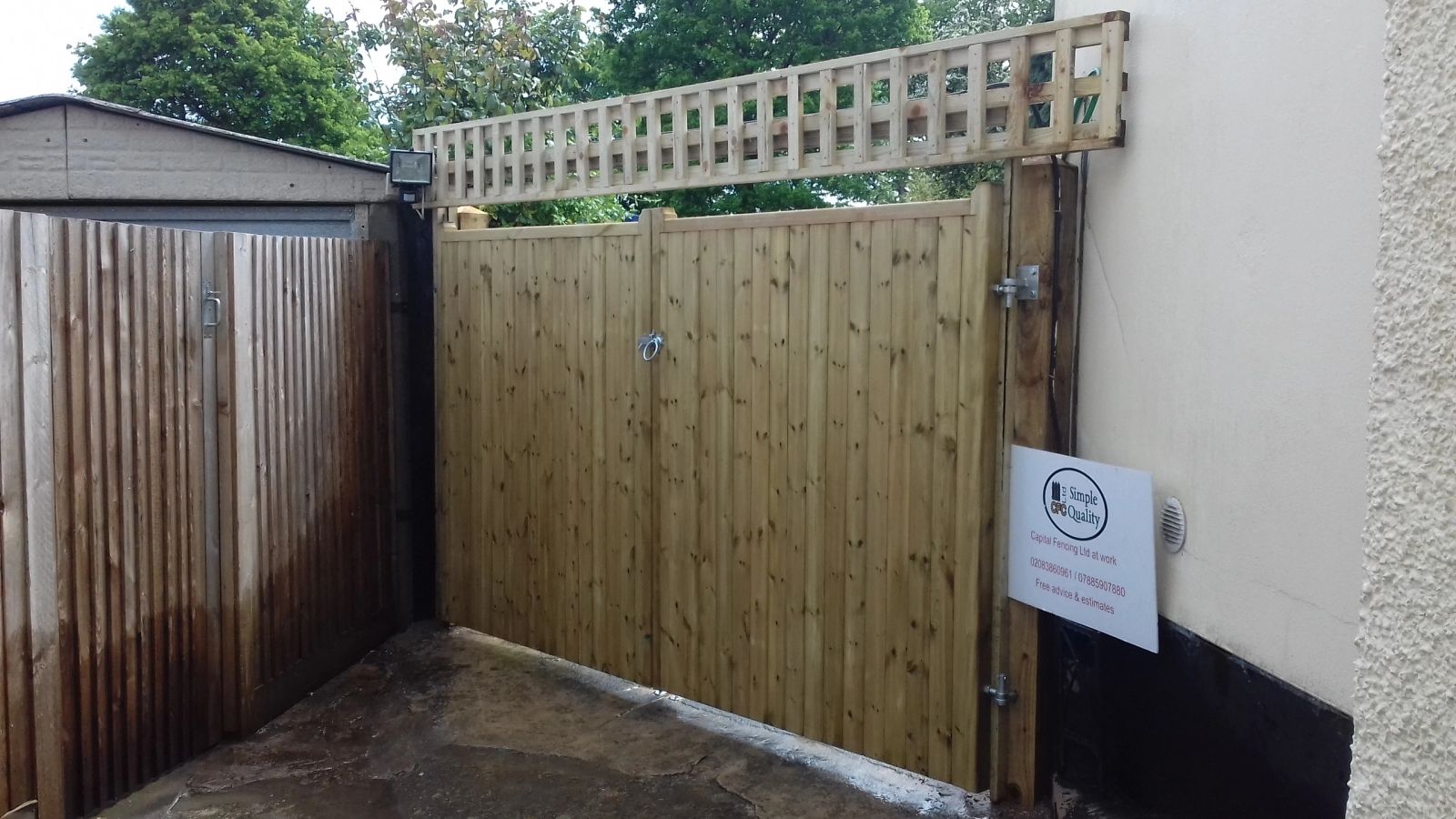
bespoke wooden gate installed by Capital Fencing in Watford (WD17)
Watford · WD17 / WD18 / WD19

Local side-return gates specialist covering Watford & bushey

Side Return Gates in Watford is a specific brief for us — London terraces and semis with a narrow alley between the house and the neighbouring wall. The default local answer isn't a stock catalogue drop: it's 44mm framed hardwood or planed softwood, tongue-and-groove infill, adjustable ball-race hinges, closing stop and drop-bolt. On Watford sites we also spec around tree-root heave is common near cassiobury and whippendell wood, so concrete-set posts are non-negotiable, which is where a lot of side-return gates jobs quietly fail two years in. Roads such as Langley Way and Nascot Wood Road are typical of the local layout. Cassiobury Park is a useful local reference point. The Grand Union Canal runs along the edge of Cassio Road, with a Canal & River Trust easement maintained along the towpath.

Side Return Gates in Watford is a specific brief for us — London terraces and semis with a narrow alley between the house and the neighbouring wall. The default local answer isn't a stock catalogue drop: it's 44mm framed hardwood or planed softwood, tongue-and-groove infill, adjustable ball-race hinges, closing stop and drop-bolt. On Watford sites we also spec around tree-root heave is common near cassiobury and whippendell wood, so concrete-set posts are non-negotiable, which is where a lot of side-return gates jobs quietly fail two years in. Roads such as Langley Way and Nascot Wood Road are typical of the local layout. Cassiobury Park is a useful local reference point. The Grand Union Canal runs along the edge of Cassio Road, with a Canal & River Trust easement maintained along the towpath.

Default spec

How we build side-return gates in Watford

44mm framed hardwood or planed softwood, tongue-and-groove infill, adjustable ball-race hinges, closing stop and drop-bolt. On Watford jobs we adjust for tree-root heave is common near cassiobury and whippendell wood, so concrete-set posts are non-negotiable.

Property mix locally: Victorian terraces around the centre, 1930s semis in Oxhey, and large detached homes in Cassiobury. Typical gardens: mixed — tight back-to-backs near the town centre, generous plots toward Cassiobury Park. Postcodes we regularly service: WD17, WD18, WD19.

Why this spec, for London terraces and semis with a narrow alley between the house and the neighbouring wall

  • framed builds don't drop the way board-and-batten side gates do in year two
  • adjustable hinges handle the seasonal timber movement every London side gate experiences
  • made to the exact opening — no packing pieces, no gaps for burglars or foxes

Where side-return gates isn't the right answer

  • openings under 700mm where a person can't comfortably pass with a bin — a fixed panel is often the honest answer
  • shared alley gates where freehold consent from both parties hasn't been agreed

Typical side-return gates briefs in Watford

  • tongue-and-groove side gate framed on adjustable ball-race hinges to cope with seasonal timber movement
  • hardwood side gate between a rendered wall and a brick pier, 780mm opening, drop-bolt into a concrete slab socket

Side Return Gates FAQs — Watford

How wide can a single side gate span before it needs a wheel?

On side-return gates jobs in Watford (WD17), our default answer is: 44mm framed hardwood or planed softwood, tongue-and-groove infill, adjustable ball-race hinges, closing stop and drop-bolt. For context: adjustable hinges handle the seasonal timber movement every London side gate experiences. Measured, quoted and installed by the same small crew.

Can bin-store and pedestrian access share one gate?

Across Watford we spec around tree-root heave is common near cassiobury and whippendell wood, so concrete-set posts are non-negotiable, so on side-return gates that usually means iroko hardwood on galvanised ironmongery for 15+ year service. For context: adjustable hinges handle the seasonal timber movement every London side gate experiences. Measured, quoted and installed by the same small crew.

Is a drop-bolt necessary as well as a lock?

Watford Borough coverage means we can survey most WD17 addresses inside a week — London terraces and semis with a narrow alley between the house and the neighbouring wall. For context: adjustable hinges handle the seasonal timber movement every London side gate experiences. Measured, quoted and installed by the same small crew.

How do you stop a side gate dropping over time?

Practically: hardwood side gate between a rendered wall and a brick pier, 780mm opening, drop-bolt into a concrete slab socket. That's the Watford version of this job, not a generic one. We'll walk you through framed builds don't drop the way board-and-batten side gates do in year two on the site visit before you commit.

Do you handle the wall fixing on both sides?

On side-return gates jobs in Watford (WD17), our default answer is: 44mm framed hardwood or planed softwood, tongue-and-groove infill, adjustable ball-race hinges, closing stop and drop-bolt. We'll walk you through framed builds don't drop the way board-and-batten side gates do in year two on the site visit before you commit.

Recent side return gates work
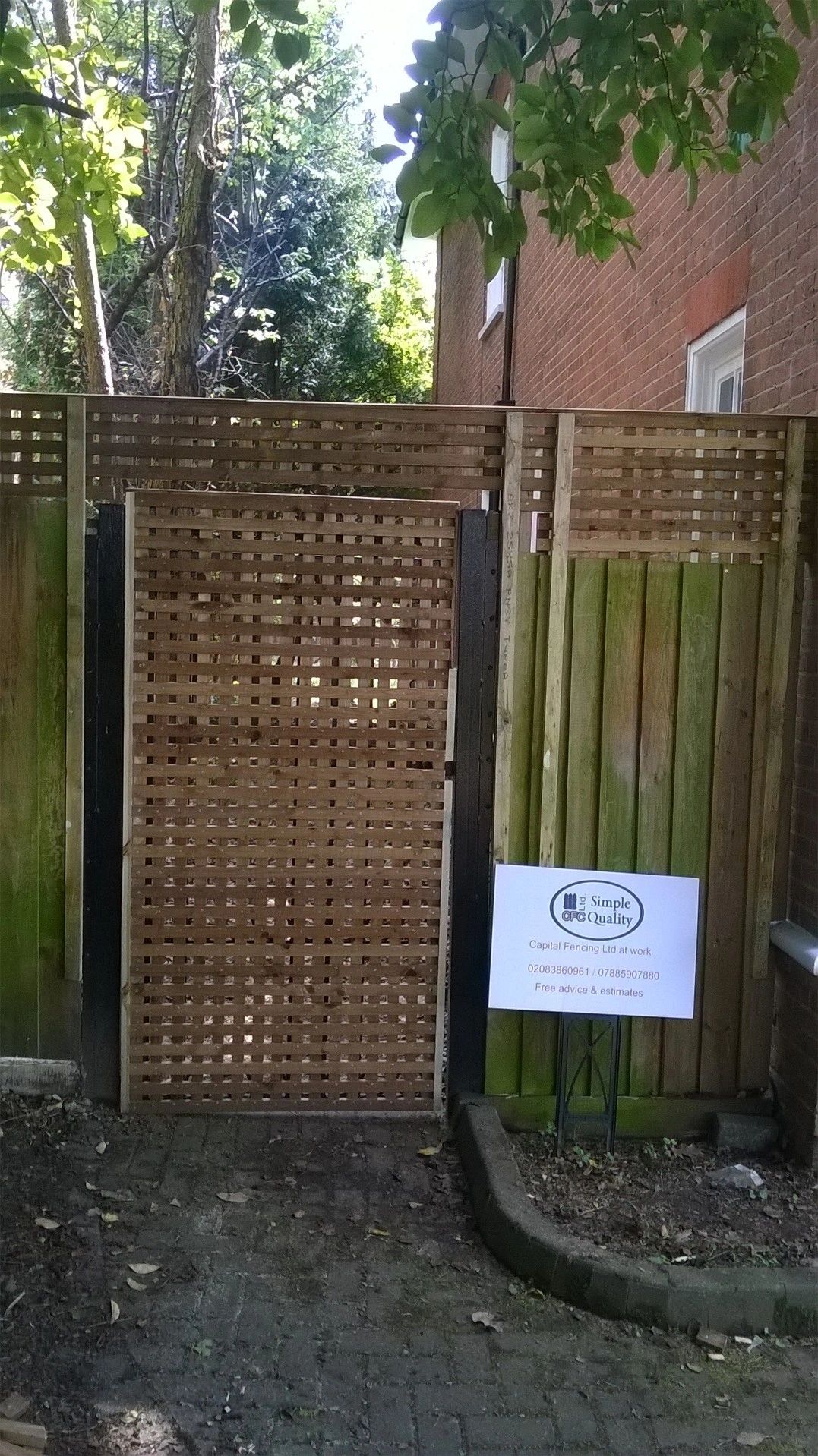
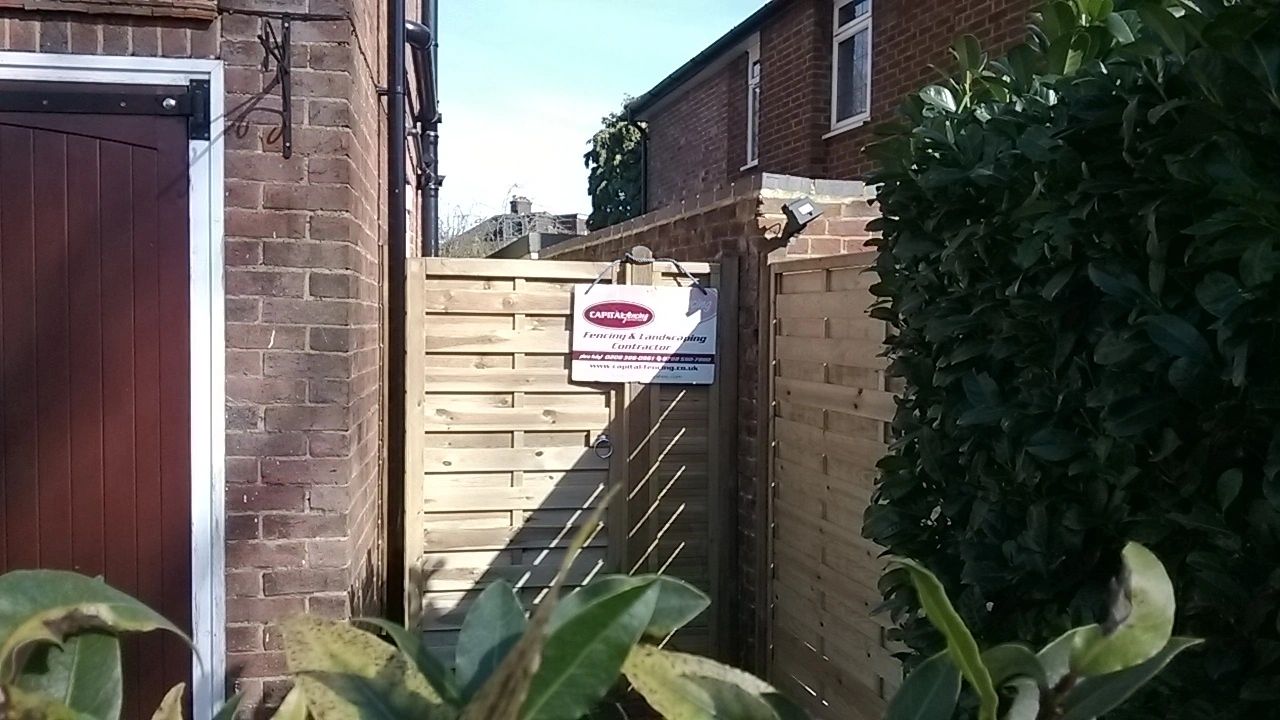
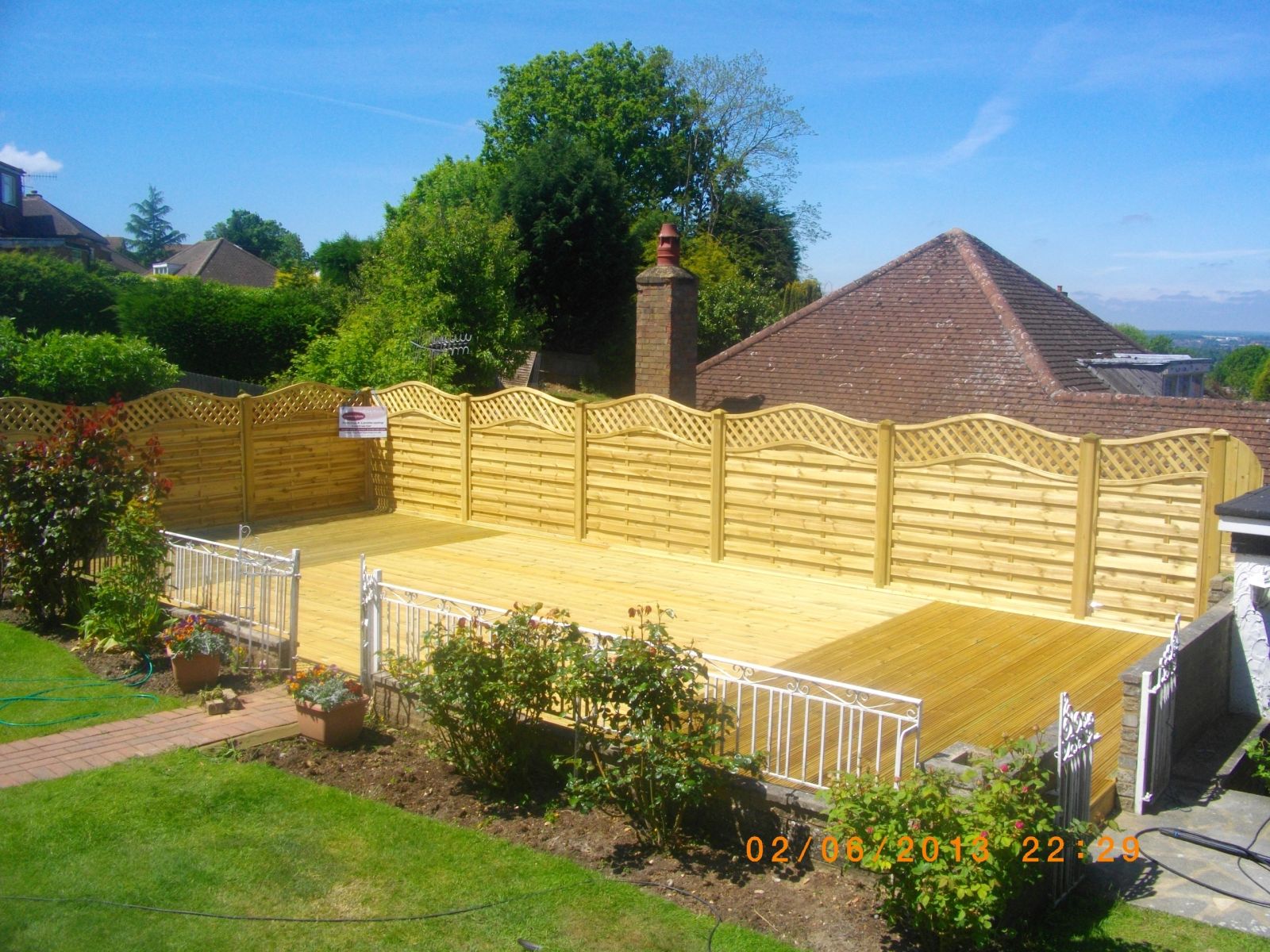
bespoke wooden gate installed by Capital Fencing in Watford (WD17)double driveway gates installed by Capital Fencing in Watford (WD17)hardwood side gate installed by Capital Fencing in Watford (WD17)metal entrance gate installed by Capital Fencing in Watford (WD17)

How we approach side return gates on Watford properties

Getting materials to a repair with no rear vehicle access

Where a repair is at the far end of a long rear garden with no gate wide enough for a vehicle, concrete, timber and tools all have to be carried in by hand, which changes how a job is planned even if the repair itself is small.

Bagged quick-set concrete carried in and mixed on site is often more practical in this situation than trying to barrow ready-mix any distance, simply because of the volume that needs to be moved by hand.

Rising butt hinges for self-lifting clearance

A rising butt hinge lifts the gate slightly as it opens, which helps it clear a rug, threshold upstand or slightly uneven paving that a standard hinge would catch on, then lowers it again as it closes.

They're more common on side gates and garden doors than on driveway gates, where the clearance problem they solve is less likely to occur.

Galvanised versus stainless fixings

Hot-dip galvanised fixings are the standard for most timber fence repairs and resist corrosion well in normal ground and weather conditions at a lower cost than stainless.

Stainless fixings are worth specifying near the coast or where treated timber with a high copper content accelerates corrosion of standard galvanised fittings, since that combination corrodes noticeably faster than inland, untreated timber.

Shiplap board profiles

Shiplap boards are machined with a rebated lap joint along each long edge, so adjoining boards interlock rather than simply overlapping flat, which sheds water more effectively than a plain overlap.

The rebate also means shiplap panels sit with a smaller visible overlap than feather-edge for the same weather resistance, giving a flatter, more even panel face.

Because the interlocking edges rely on a consistent machined profile, shiplap doesn't tolerate the same board-to-board variation as waney-edge, and a warped board can be harder to seat correctly in the joint.

Choosing a skip or a grab lorry for waste removal

A skip left on site suits a job generating waste steadily over several days and where there's a legal spot to place it, such as a driveway, but it needs a permit if it sits on the public highway.

A grab lorry collects loose spoil, rubble and old fencing directly without a skip being dropped and left, which suits a single big clearance visit and avoids occupying space on a narrow driveway or street for the whole job.

For a small domestic run, van-and-tip removal on the last day is often simpler than either option, and the right choice generally comes down to waste volume and how long the site can accommodate a static skip.

What a site survey covers

A proper site survey checks the boundary line against the deed plan where available, probes ground conditions at a few points along the run, and confirms access for both delivery vehicles and hand-carried materials.

It should also flag anything that changes cost before it becomes a surprise later — buried services, a shared boundary needing neighbour agreement, overhead cables limiting how tall equipment can be used, or a slope needing a stepped rather than level run.

A survey that skips any of these and goes straight to a headline price is the most common reason a quote changes significantly once work actually starts.

Basic safety checks before starting a repair

Before any post is dug out or panel removed, checking the fence isn't currently under load from a leaning tree, a taut washing line or a climbing plant reduces the risk of something moving unexpectedly once a fixing is cut free.

Gloves and eye protection matter as much on a small repair as a full installation, since old nails, splintered timber and rusted wire fixings are common causes of minor injury on repair work specifically.

Gaps at party walls and stepped brickwork

Where a fence meets a party wall or a stepped brick boundary, an ill-fitting junction leaves a gap that undoes the security of the whole run, so infill panels or a scribed timber closer are cut to follow the step rather than left square.

On an older terrace the brickwork step is rarely uniform along its length, so each junction is measured on site instead of assuming a standard offset.

Contaminated or capped land general caution

Land with a history of industrial, landfill or heavy commercial use can be capped with a clean soil or membrane layer over contaminated material below, installed specifically to prevent exposure, and breaking through that cap with a post hole risks disturbing what it was designed to contain.

Signs worth treating with caution include unusually dark or ashy soil, chemical odours, unexpected debris at shallow depth, or a site known to have had a previous industrial use even if long redeveloped for housing.

Where contamination is a realistic possibility, checking any available site history or environmental report before excavating is a sensible precaution, and hand-digging with careful observation of the spoil is safer than blind augering.

Diagonal bracing struts on gate posts

A diagonal timber or metal strut run from partway up a gate post back to a buried anchor or second post resists the twisting and leaning force a heavy gate exerts on its hinge post over time, particularly on wide or heavy gates.

Without bracing, that twisting load is carried entirely by the post's own embedment in the ground, which can gradually work the post out of true even where the concrete footing itself remains intact.

Bracing is generally specified based on gate weight and width rather than applied universally, since a light pedestrian gate rarely generates enough leverage to need it while a wide vehicle gate almost always does.

Arris rail brackets and rail-end repairs

The triangular arris rail commonly rots or splits where it meets the post, since that mortise or bracket joint traps water against end grain more than any other point on the rail.

A rail-end repair usually involves cutting back to sound timber and refitting with a galvanised arris rail bracket rather than re-cutting a new mortise into an already-weakened post.

Tree root damage to a shared boundary structure

Where a neighbour's tree roots have visibly damaged a shared boundary wall or fence footing, resolving responsibility for repair can depend on tree ownership, the nature of any easement, and whether prior warning was given about root damage.

This is a fact-specific question rather than one with a single automatic answer, and can occasionally end up needing legal advice where the cost of repair is significant.

Documenting the damage with photographs and dates as it develops is useful evidence regardless of which direction a later conversation about responsibility takes.

Mixing old and new timber colour on a repair

Freshly treated timber is noticeably lighter or greener than an older run that's already weathered, and that colour difference is temporary rather than a defect, evening out over the first year or two of UV exposure and weathering.

Where colour match matters immediately, a treatment or stain closer to the weathered tone can be applied to the new timber, though it won't be an exact match on day one.

Diagnosing a fence problem before quoting

A repair quote starts with identifying which of the usual failure points is actually responsible — post, panel, gravel board or a full run — because pricing a full replacement for what's actually a single post repair costs the client far more than necessary.

We probe timber at ground level and check the whole run for related stress, not just the section that's obviously failed.

Fixing a post that has rotated in its concrete base

A post can twist within a slightly oversized or cracked footing without leaning, so the panels either side pull out of square even though the post still stands upright, which is easy to miss on a quick visual check.

Repair means breaking out enough concrete to free the post, resetting it square to the run, and packing and re-pouring rather than trying to twist it back while still gripped by the old footing.

UV stabilisers in composite and PVC fencing

UV stabiliser additives are blended into composite and PVC fencing products during manufacture to slow the surface degradation and colour fade that ultraviolet exposure otherwise causes in polymer materials over time.

Products with a lower proportion of UV stabiliser, often reflected in a lower price point, tend to show chalking, a dusty faded surface, and colour loss earlier than better-stabilised equivalents exposed to the same sunlight.

South and west-facing runs receive substantially more cumulative UV exposure than shaded or north-facing runs, so the same product can visibly fade at different rates depending purely on orientation and surrounding shade.

Segregating timber and concrete waste

Treated timber, plain untreated offcuts and broken concrete are usually classed and processed differently at a waste facility, so keeping them in separate piles or skip compartments on site can reduce disposal cost and avoid a mixed load being rejected.

Old concrete post bases and gravel boards are inert waste and can sometimes be crushed and reused as hardcore rather than sent to landfill, which is worth checking with the waste carrier before assuming it all goes in one load.

Metal fittings — old hinges, bolts, wire ties — pulled out during a strip-down are usually worth separating too, since scrap metal is handled through a different route to general construction waste.

The general boundaries rule explained

Land Registry title plans in England and Wales normally show only the 'general boundary' of a property, meaning the line on the plan is indicative rather than a precise, surveyed measurement to the centimetre.

That's why a title plan alone rarely settles an argument about whether a fence sits a few inches one way or the other.

For most domestic fencing this doesn't matter, but where a dispute is brewing it's worth knowing the plan wasn't drawn to resolve exactly that kind of question.

Ledged-and-braced gate construction

A ledged-and-braced gate is built from vertical boards fixed to horizontal ledges with a diagonal brace between them, rather than a mortice-jointed frame, which makes it cheaper to build but more dependent on the brace alone to resist racking.

Repairs on this type usually focus on the brace and its fixings rather than joints, since there's no mortice-and-tenon corner to come loose.

Timber strength grading classes

Structural timber is graded into strength classes such as C16 or C24 based on visual inspection of defects like knots and slope of grain, or by machine stress grading that measures stiffness directly.

C24 timber has been graded to a higher strength and stiffness threshold than C16, and is specified where a structural calculation demands it, such as a longer unsupported gate post span, rather than chosen purely by appearance.

Fencing timber is rarely strength-graded in the same formal way as construction timber, which is one reason gate posts subject to real structural calculation sometimes specify a graded section rather than standard fencing stock.

Digging near land drains

Older gardens, especially those on heavier clay, sometimes have unrecorded clay pipe or perforated plastic land drains laid to relieve waterlogging, and these rarely appear on any plan.

Hitting one with an auger usually shows up as a sudden drop in resistance followed by water pooling in the hole from a direction that doesn't match the water table generally on site.

A damaged land drain should be reconnected or rerouted rather than just backfilled over, since a broken run can redirect water against a post base for years afterwards.

Working over a neighbour's flowerbed

Repairing a shared boundary sometimes means working from the neighbour's side, particularly where the fence faces that way or access from the owner's side is blocked, and that access should be agreed with the neighbour before work starts.

Protecting planting beds and lawn on the working side during the repair avoids turning a fence job into a wider dispute over incidental damage.

Side Return Gates across WD17, WD18, WD19 is a regular run for us. We'll quote honestly, tell you if side-return gates isn't the right answer for your site, and book the job in within a week or two of a signed quote. measured, quoted and installed by the same small crew. Roads such as Nascot Wood Road and Rickmansworth Road are typical of the local layout. Whippendell Wood is a useful local reference point. Nascot Wood Road backs onto mature woodland with beech and hornbeam trees subject to tree preservation orders.

Get In Touch

Get My Free Quote — 24h Response

No callout fee · Free site visit · Friendly local team covering London & Hertfordshire.

Call us
07885907880
or 02036484746
Email
capital_fencing@yahoo.com
WhatsApp
Message us anytime
Area
London & Hertfordshire
Payment
Card payments accepted

Pay by debit or credit card, bank transfer or cash once the work and price are agreed. No deposit taken online.

Request a Free Quote

We'll get back to you within 24 hours.

Free Site Visit No Callout Fee
Call WhatsAppQuote