Green walls and planting myths
A green wall or dense hedge is often assumed to block noise the way a solid fence does, but foliage alone has very little mass and provides only a small acoustic benefit, mostly by adding minor absorption rather than blocking a sound path.
Planting in front of a solid acoustic fence can genuinely help at the margins and improve the visual outlook, but it isn't a substitute for the barrier itself.
Matching a new gate to the existing boundary
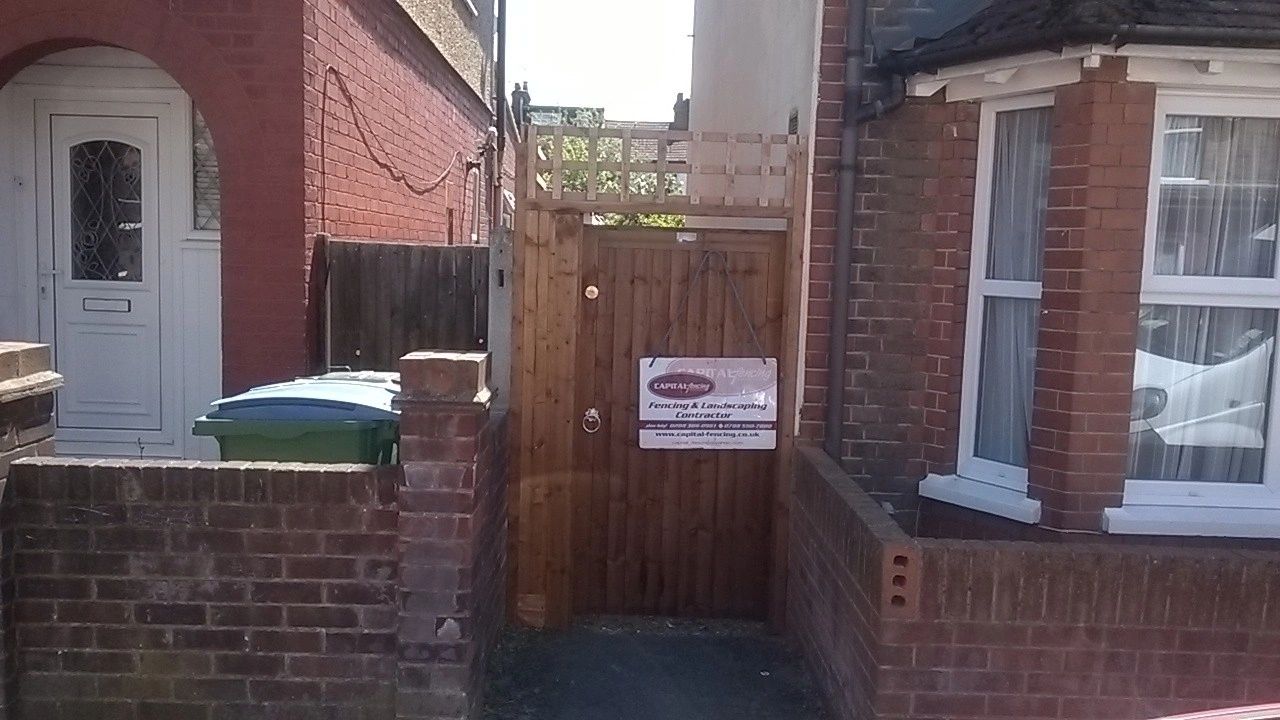
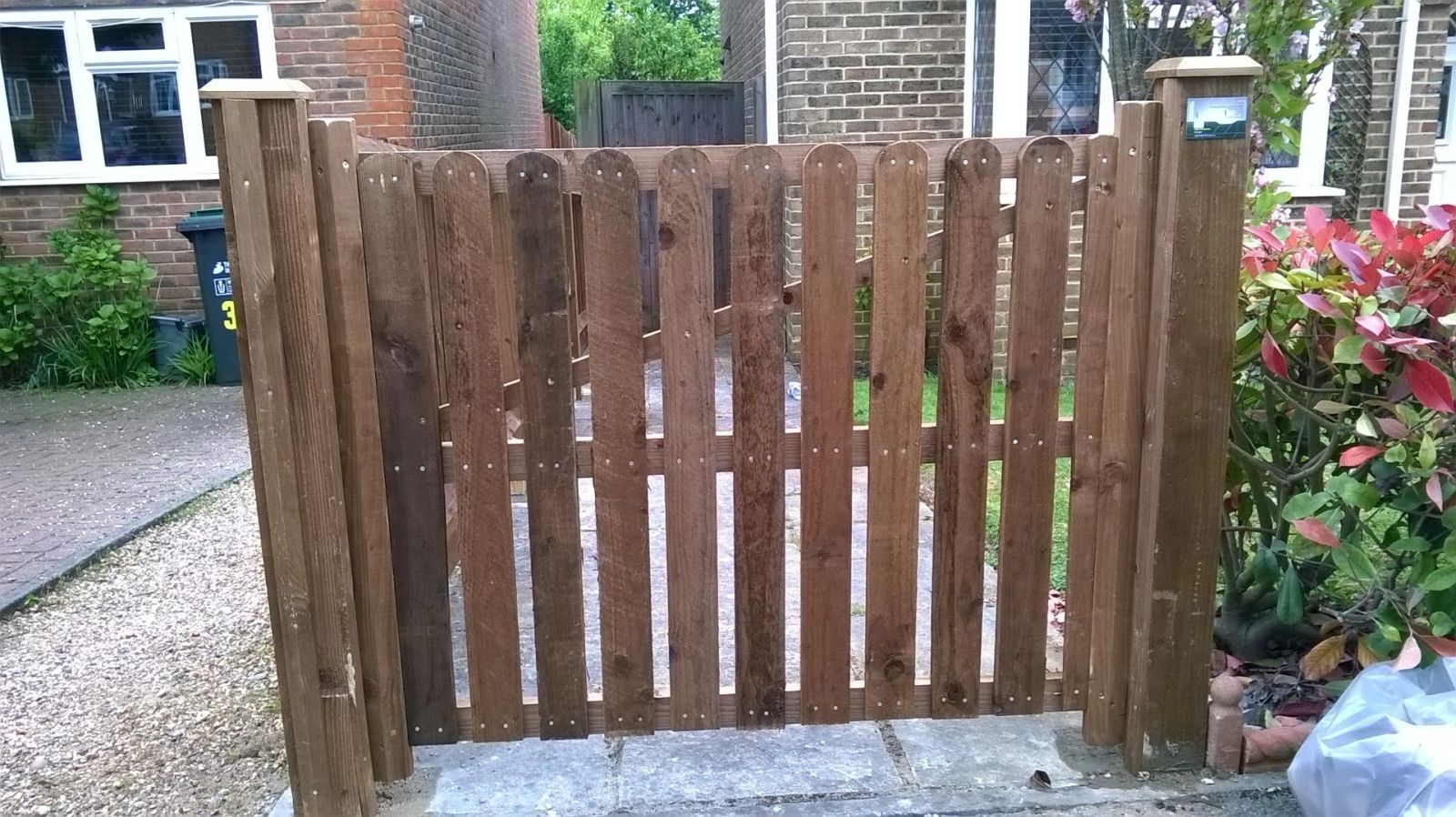
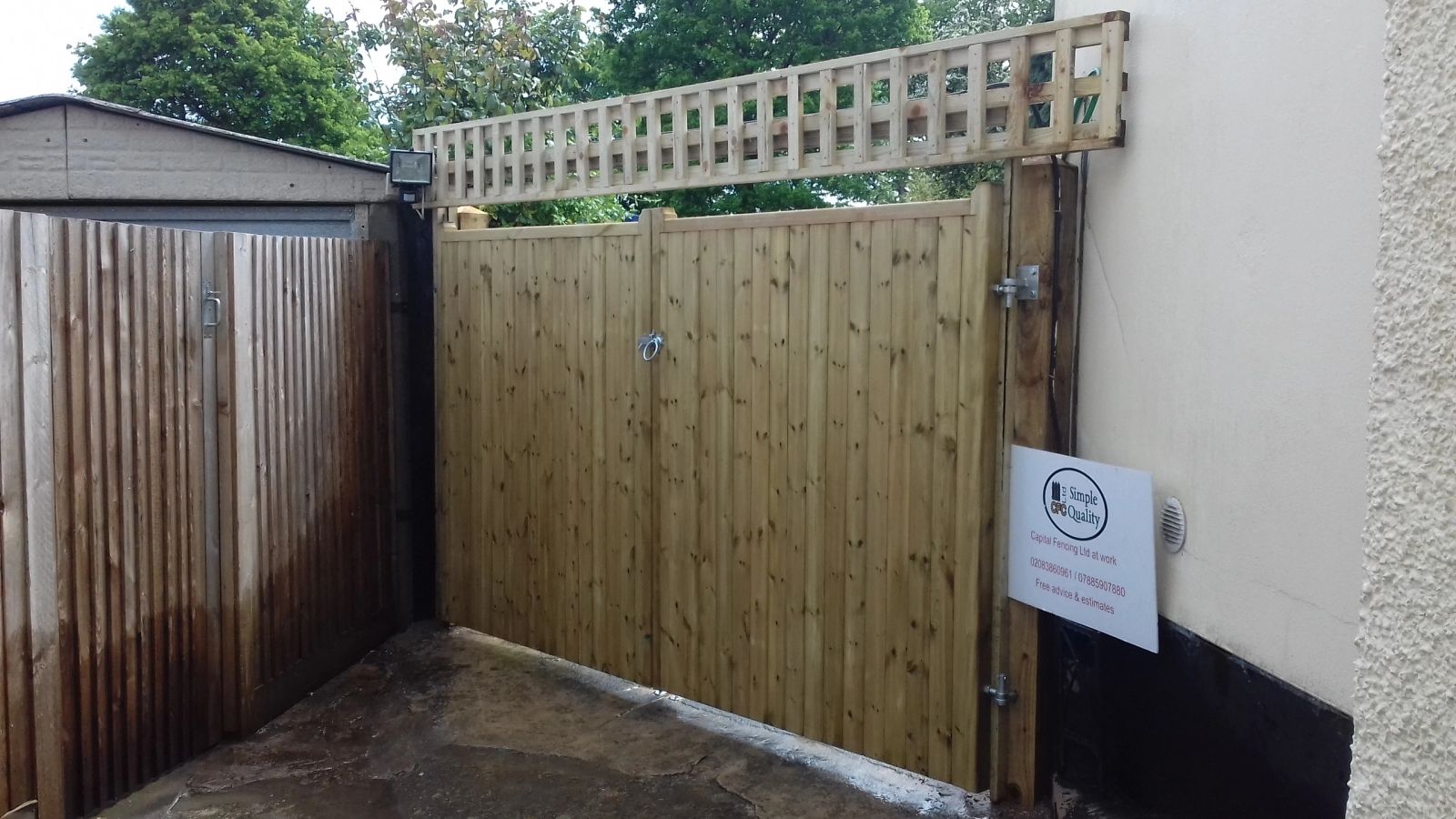
A replacement gate is sized and detailed to match the piers or posts either side of the opening rather than fitted as a stock size, since a gate that doesn't sit flush against its opening looks obviously replaced even when well built.
Where the surrounding fence has a specific profile or capping detail, the gate frame is matched to it.
Party wall and neighbour consultation
Where an acoustic barrier sits on or very near a shared boundary, agreeing the work with the neighbour in writing beforehand avoids later disputes over ownership, appearance and maintenance responsibility.
On a semi-detached or terraced property, a taller acoustic fence can also affect a neighbour's light or outlook, which is worth raising with them directly rather than only checking the legal minimum.
Fixing to an existing wall to add mass
Where an existing wall already forms part of the boundary but doesn't give enough height or mass for the noise involved, extending it upward or fixing an acoustic panel section to the top can add the extra performance needed without rebuilding the whole boundary.
The wall's structural condition and the fixing method both need checking first, since an old wall may not be able to safely carry the extra height or weight without additional support.
Bat and bird nesting season timing
Wild bird nests are protected while in use under the Wildlife and Countryside Act, which in practice means hedge-cutting and dense vegetation clearance along a boundary is generally best avoided during the main nesting season, roughly March to August, unless the hedge has been checked and confirmed clear.
Bats are protected year-round, but works affecting their roosting sites — old sheds, mature trees with cavities, ivy-clad walls — carry particular risk in spring and autumn when bats are moving between summer and winter roosts.
On any boundary job involving significant vegetation or old structure removal, a quick visual check for active nests or signs of bat use before starting is a simple way to avoid inadvertently committing an offence.
Returns and wing walls to stop flanking
Sound can flank around the end of a barrier that doesn't extend far enough past the noise source or the area being protected, undoing much of the benefit of an otherwise well-built run.
A return or short wing wall angled back from the main barrier closes this flanking path, and the extra length needed depends on the geometry between the source, the barrier end and the area being screened.
Noise from works and considerate constructor practice
Percussive work like post-driving, cutting concrete gravel boards or using a breaker on old foundations generates noise that can exceed what's reasonable outside the agreed working hours, even where the overall job is short.
A simple courtesy notice to immediate neighbours ahead of noisy days, giving a rough time window, reduces the chance of a complaint escalating to environmental health, which has statutory powers to serve an abatement notice on persistent nuisance noise.
Sequencing the noisiest tasks earlier in the working day and away from very early morning or evening, even within the permitted hours, is standard considerate practice on jobs close to occupied houses.
Asbestos awareness near older garage flanks
Older garages, outbuildings and some boundary walls built before the 1999 asbestos ban can incorporate asbestos-containing materials in flank panels, corrugated roofing or old fence panel infill, particularly on properties from the mid-20th century.
Disturbing suspected asbestos material isn't something to tackle as part of routine fence replacement — it needs a competent assessment and, if confirmed, removal by a licensed contractor in line with HSE guidance.
Where an older boundary structure looks like it might contain asbestos sheeting, the sensible step is to leave it undisturbed and get it checked before any adjacent groundworks begin.
Post cap design and end-grain water shedding
The cut top of a fence post exposes end grain, which absorbs water far faster than the sealed or treated face of the post, making it one of the most vulnerable points on an otherwise sound post if left uncapped.
A pyramid or weathered-top post cap sheds water away from that end grain rather than letting it pool on a flat cut surface, extending the practical life of the post noticeably for a small extra cost.
Where posts are cut to length on site rather than supplied pre-capped, re-treating the freshly cut end before fitting a cap matters just as much as the cap itself, since paint or preservative rarely penetrates deep enough at the mill to protect a subsequent site cut.
Working over septic or drainage runs
Properties without mains drainage, more common on the rural fringes of Hertfordshire, often have a septic tank or soakaway drainage field with pipework running across the garden that a fence line can unknowingly cross.
A collapsed or compressed drainage pipe under a post base is a common cause of a fence settling unevenly a season or two after installation.
Where a septic system's layout isn't documented, a damp or lush strip of grass running away from the tank is often the visible sign of a soakaway field that needs avoiding when setting posts.
Clearing an old, ineffective boundary
An existing lap-panel fence or low wall that isn't doing its job acoustically is removed and taken off site, and any post stumps left in the ground are broken out so the new, heavier run has a genuinely fresh base rather than being built around old fixings.
Timber offcuts from trimming the double-skin boards to length are also cleared as standard.
Rights of access to maintain a boundary
Some older deeds include an explicit right for a neighbour to enter adjoining land to maintain their side of a boundary structure, but this isn't automatic everywhere and shouldn't be assumed.
Where no such right exists in the paperwork, entering a neighbour's garden to repair or replace a fence normally needs their permission, arranged directly rather than taken for granted.
The Access to Neighbouring Land Act 1992 provides a separate, more formal route for essential works where agreement can't be reached, though it's aimed at more serious situations than routine fence replacement.