Wooden & Metal Gates Specialists Across Haringey & hackney
If you've been quoted for gates in Haringey, you already know the catch round here: Ladder-street back-to-back gardens mean every fence run has two owners and three neighbours to keep informed. We build to that, not around it — every gates job we install in N4 is specced with that local reality first. Alexandra Park Road, Green Lanes Bruce Castle Park Wightman Road Ladder rear boundary. 1.8m closeboard with concrete posts across a shared party line, letter of agreement countersigned. Cleared a two-year stalemate between neighbours in one visit. Haringey's Ladder streets between Green Lanes and Wightman Road are packed Victorian terraces with 4-6m rear plots — every boundary is a party line, so we agree ownership in writing before quoting.
If you've been quoted for gates in Haringey, you already know the catch round here: Ladder-street back-to-back gardens mean every fence run has two owners and three neighbours to keep informed. We build to that, not around it — every gates job we install in N4 is specced with that local reality first. Alexandra Park Road, Green Lanes Bruce Castle Park Wightman Road Ladder rear boundary. 1.8m closeboard with concrete posts across a shared party line, letter of agreement countersigned. Cleared a two-year stalemate between neighbours in one visit. Haringey's Ladder streets between Green Lanes and Wightman Road are packed Victorian terraces with 4-6m rear plots — every boundary is a party line, so we agree ownership in writing before quoting.
What we've learned working Haringey
Haringey's Ladder streets between Green Lanes and Wightman Road are packed Victorian terraces with 4-6m rear plots — every boundary is a party line, so we agree ownership in writing before quoting. The Ally Pally slope and Ferme Park side sit on London clay with a real gradient, so gravel boards get stepped rather than raked. Turnpike Lane and Wood Green retail parades tilt the mix toward roller-shutter yard boundaries.
Streets we've worked on
- Wightman Road
- Green Lanes
- West Green Road
- Ferme Park Road
- Alexandra Park Road
- Falkland Road
We orient by
- Alexandra Palace
- Finsbury Park (north edge)
- Bruce Castle Park
- Harringay Ladder
- Turnpike Lane market
Recently completed in Haringey
- gates brief
Wightman Road Ladder rear boundary
Spec: 1.8m closeboard with concrete posts across a shared party line, letter of agreement countersigned
Outcome: Cleared a two-year stalemate between neighbours in one visit.
- gates brief
Alexandra Park Road driveway gate
Spec: Iroko hardwood side gate rebated into original brick pier with a Banham lock
Outcome: Matched the 1900s frontage the conservation officer had flagged.
How we work in Haringey
- 01Call or messagePhone, WhatsApp or the form — quickest way to start a Haringey job.
- 02Free site visitWe measure up, talk through gates options, and note ladder-street back-to-back gardens mean every fence run has two owners and three neighbours to keep informed.
- 03Itemised quoteWithin 48 hours — materials, labour, removal, finish.
- 04Booked & builtUsually within 1–2 weeks. Our own crew, no subcontracting.
- 05Walk-round & aftercareOn-site walk-round at completion plus aftercare for Haringey customers.
Typical Haringey properties we work on
Victorian terraces (Harringay Ladder, Crouch End), 1930s semis in Muswell Hill, and post-war estates around Tottenham. The gardens behind them are long thin Victorian rear gardens with London clay and mature street trees.
That shapes the gates brief — every quote we write here factors in ladder-street back-to-back gardens mean every fence run has two owners and three neighbours to keep informed.
Materials we use in Haringey
Specified where it suits the brief — depth, exposure, garden style.
Specified where it suits the brief — depth, exposure, garden style.
Specified where it suits the brief — depth, exposure, garden style.
Specified where it suits the brief — depth, exposure, garden style.
Specified where it suits the brief — depth, exposure, garden style.
Specified where it suits the brief — depth, exposure, garden style.
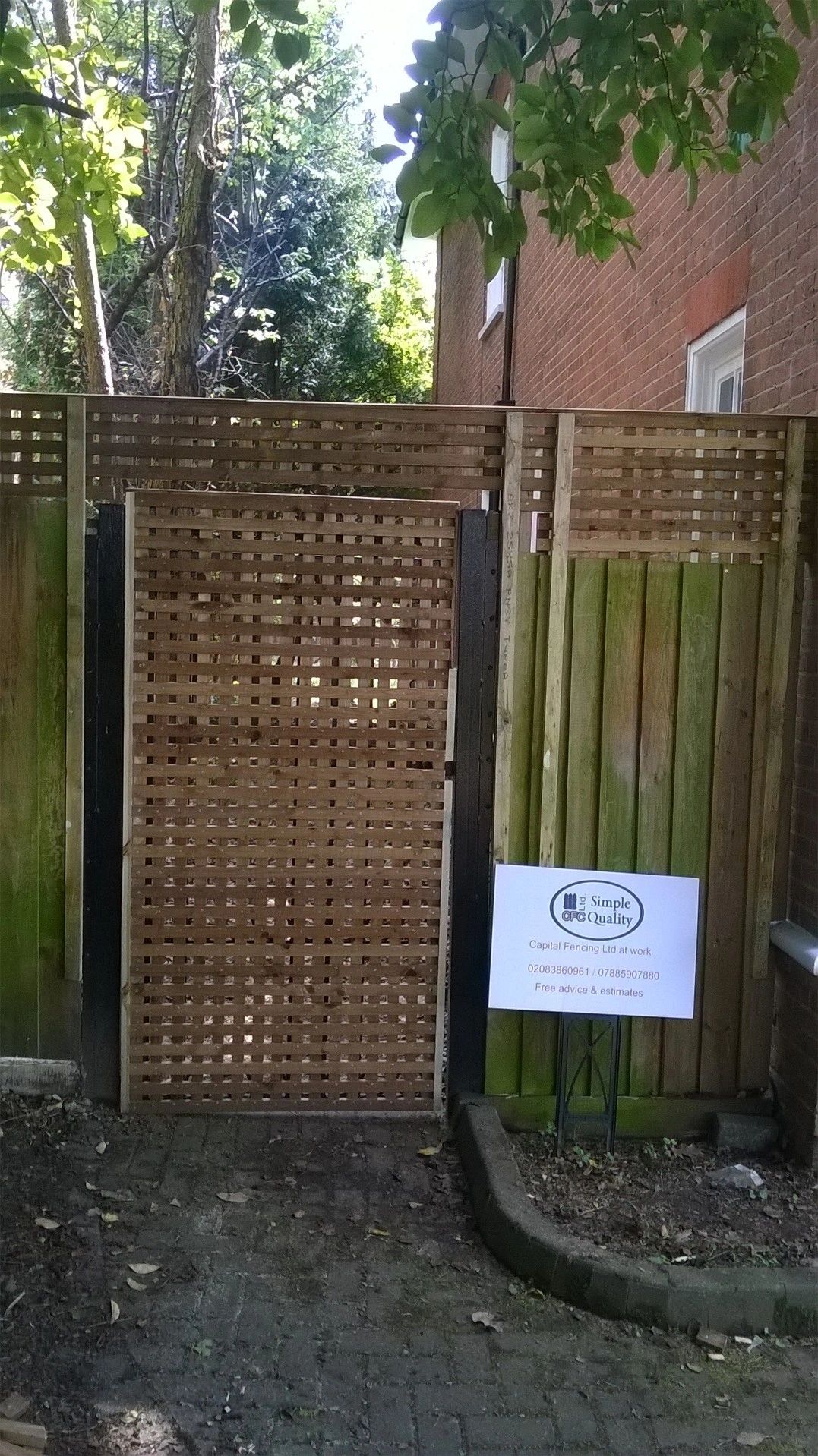
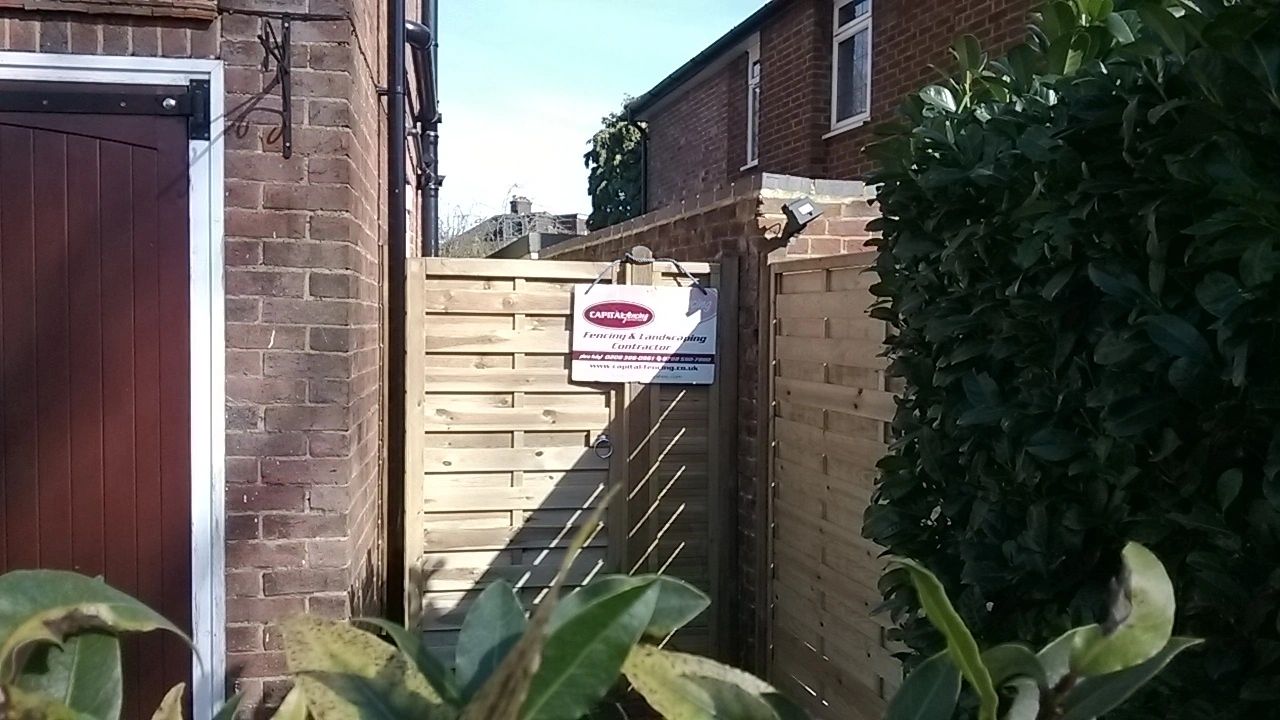
Recent gates work near Haringey
Nearby areas we cover from Haringey
Within practical driving distance of Haringey via A105 Green Lanes / A503 Seven Sisters Road and A406 North Circular (5 min) / M25 J25 (20 min).
FAQ — gates in Haringey
Do you need planning permission for gates in Haringey?+
Standard rear-garden gates under 2m doesn't normally need permission, but front-garden work near a highway is the most common exception. We'll flag it on the quote. Ferme Park Road, Alexandra Park Road Finsbury Park (north edge) Wightman Road Ladder rear boundary. 1.8m closeboard with concrete posts across a shared party line, letter of agreement countersigned. Cleared a two-year stalemate between neighbours in one visit. Haringey's Ladder streets between Green Lanes and Wightman Road are packed Victorian terraces with 4-6m rear plots — every boundary is a party line, so we agree ownership in writing before quoting.
Can you handle the soil and ground conditions in Haringey?+
Yes — long thin Victorian rear gardens with London clay and mature street trees. We concrete-set every post as standard, and where trees or services are in the way we work around them properly.
What materials do you recommend for gates in Haringey?+
For most Haringey jobs we lean toward softwood or iroko hardwood, but the brief decides — your garden style, long thin Victorian rear gardens with London clay and mature street trees, and how long you want it to last.
Will you match the existing gates on the street in Haringey?+
On Victorian terraces (Harringay Ladder streets in Haringey we usually try to match the existing line — height, style and finish — unless the brief is a deliberate change.
Do you work with landlords and letting agents around Haringey?+
Yes — we have a number of regular landlord clients across Greater London, and we can invoice through agents and turn jobs around between tenancies.
Haringey gates — specced around ladder-street back-to-back gardens mean every fence run has two owners and three neighbours to keep informed
15+ years across Haringey. £5M public liability, all workmanship guaranteed. Talk to us before you commit elsewhere. Green Lanes, West Green Road Harringay Ladder Wightman Road Ladder rear boundary. 1.8m closeboard with concrete posts across a shared party line, letter of agreement countersigned. Cleared a two-year stalemate between neighbours in one visit. The Ally Pally slope and Ferme Park side sit on London clay with a real gradient, so gravel boards get stepped rather than raked.
Related pages
In short — Wooden & Metal Gates in Haringey
Victorian terraces (Harringay Ladder in Haringey usually means long thin Victorian rear gardens with London clay and mature street trees — and a gates spec that has to track those levels. We've been doing exactly that across N4/N8/N15/N17/N22 for years. Wightman Road, Green Lanes Alexandra Palace Alexandra Park Road driveway gate. Iroko hardwood side gate rebated into original brick pier with a Banham lock. Matched the 1900s frontage the conservation officer had flagged. Haringey's Ladder streets between Green Lanes and Wightman Road are packed Victorian terraces with 4-6m rear plots — every boundary is a party line, so we agree ownership in writing before quoting.