London & Hertfordshire Free Site Visit
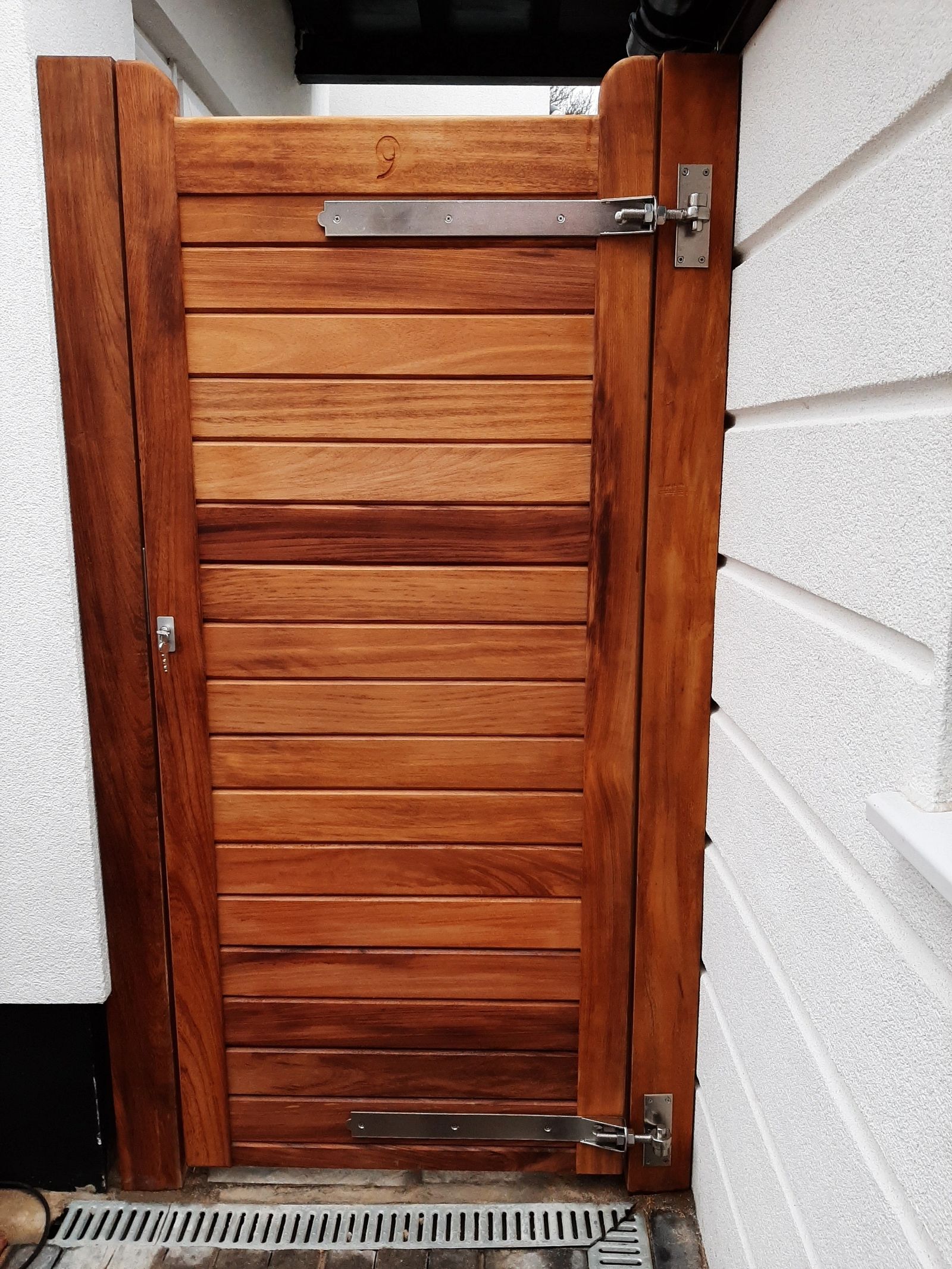
bespoke wooden gate installed by Capital Fencing in Haringey (N4)
Haringey · Haringey

Wooden & Metal Gates Specialists Across Haringey & hackney

If you've been quoted for gates in Haringey, you already know the catch round here: Ladder-street back-to-back gardens mean every fence run has two owners and three neighbours to keep informed. We build to that, not around it — every gates job we install in N4 is specced with that local reality first. Alexandra Park Road, Green Lanes Bruce Castle Park Haringey covers a wide area including the Harringay Ladder, a distinctive grid of Victorian terraced streets between Green Lanes and Wightman Road.

If you've been quoted for gates in Haringey, you already know the catch round here: Ladder-street back-to-back gardens mean every fence run has two owners and three neighbours to keep informed. We build to that, not around it — every gates job we install in N4 is specced with that local reality first. Alexandra Park Road, Green Lanes Bruce Castle Park Haringey covers a wide area including the Harringay Ladder, a distinctive grid of Victorian terraced streets between Green Lanes and Wightman Road.

On-the-ground in Haringey

Local context for Haringey

Haringey covers a wide area including the Harringay Ladder, a distinctive grid of Victorian terraced streets between Green Lanes and Wightman Road. Alexandra Palace sits on high ground overlooking much of the borough, and the slope down from the Palace affects garden gradients on the surrounding streets. Turnpike Lane and Wood Green form the borough's main retail centres.

Streets in the area

  • Wightman Road
  • Green Lanes
  • West Green Road
  • Ferme Park Road
  • Alexandra Park Road
  • Falkland Road

Local landmarks

  • Alexandra Palace
  • Finsbury Park (north edge)
  • Bruce Castle Park
  • Harringay Ladder
  • Turnpike Lane market
Typical property

Victorian terraces (Harringay Ladder, Crouch End), 1930s semis in Muswell Hill, and post-war estates around Tottenham

Typical garden

long thin Victorian rear gardens with London clay and mature street trees

How we approach wooden & metal gates on Haringey properties

Wind loading on a solid acoustic screen

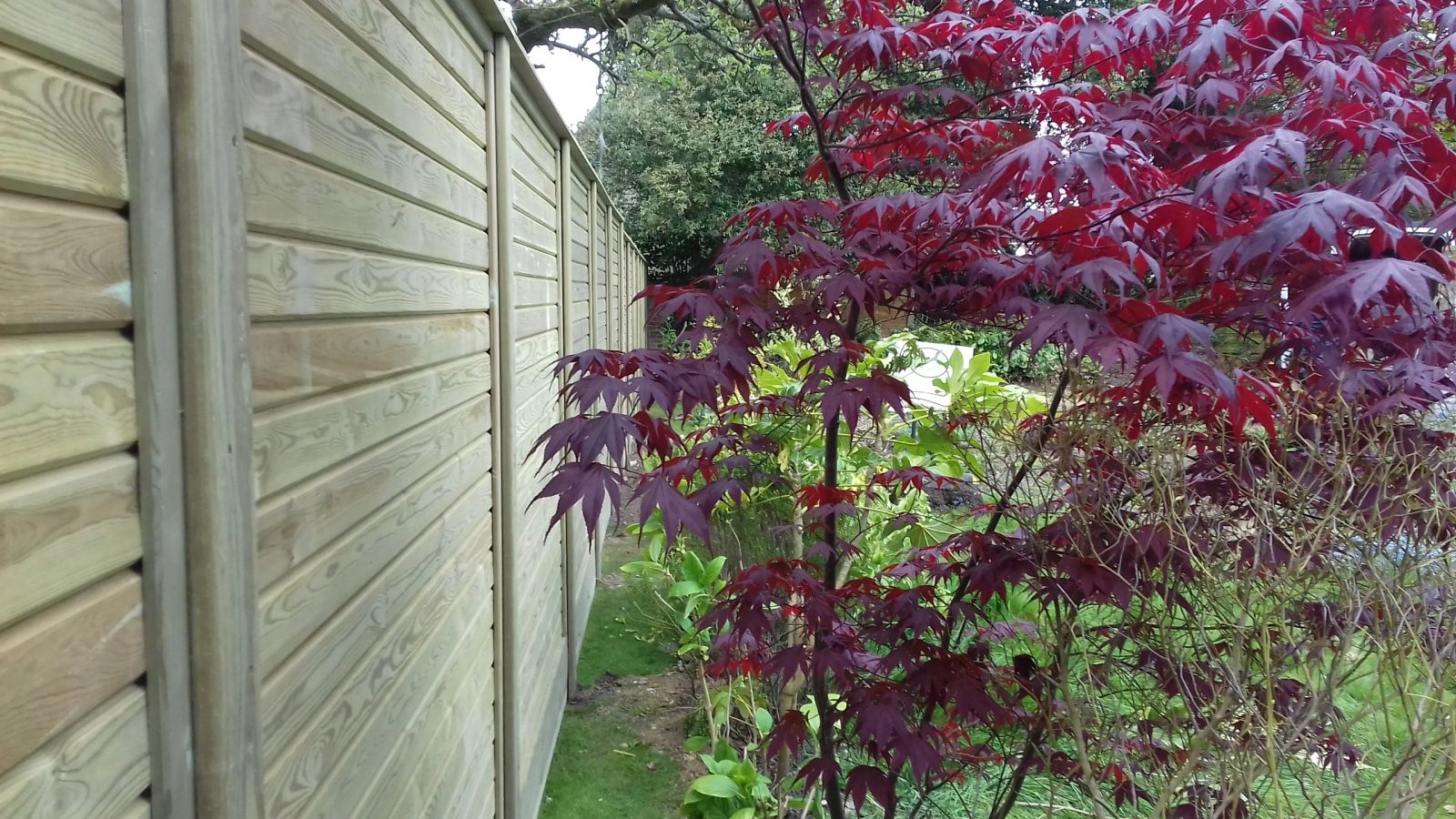
A solid, gap-free acoustic panel catches significantly more wind than an open fence of the same height, so bay spans are kept shorter and posts upsized on any run that's fully exposed to prevailing wind.

This matters most on an elevated plot or a boundary running the full length of a garden with nothing upwind to break the load.

Deck board gapping to allow seasonal movement

Timber deck boards expand slightly when they absorb moisture and contract as they dry, so boards laid without a small gap between them can cup, bow or push against each other as conditions change through the year.

The correct gap depends on the moisture content of the timber at the time of laying — kiln-dried boards laid tight in winter may need a slightly wider gap than the same boards laid already at a higher moisture content in summer.

Composite boards move with temperature rather than moisture and have their own manufacturer-specified gap and expansion allowance, particularly at butt joints and against fixed edging.

Shared private water sources crossing a boundary

Some older rural properties share a private water supply, such as a well or borehole, with pipework running across one or more boundaries under a recorded easement.

Fencing work that might disturb this kind of shared supply pipe needs particular care, since interrupting it can affect a neighbour's water supply entirely, not just a garden feature.

Checking the title for any recorded private water supply arrangement is worth doing on older rural properties before any boundary groundworks proceed.

Seasonal ground conditions affecting installation

Clay ground shrinks and cracks in a dry summer and swells again over winter, which can loosen a post fixed during one season and tightened again by movement in another — installation timing is factored into how deep and how set a post needs to be.

A frozen or waterlogged base isn't workable for concreting, so winter installations sometimes need a delayed pour or a temporary prop until ground conditions allow the footing to cure properly.

Safety standards for automated gates

Automated gates fall under machinery safety regulations, which means a force-limiting device or safety edge to stop the gate on contact with an obstruction, and photocells or other sensors to detect someone in the gate's path, aren't optional extras.

A risk assessment covering the specific installation — proximity to a public footpath, likely pedestrian use, manual override in a power cut — should be part of any automation job, not an afterthought once the gate's already built.

Annual servicing of the motor, safety sensors and mechanical stops keeps an automated gate compliant and catches wear before it becomes a safety issue rather than just an inconvenience.

Drainage easements running under a fence line

Some boundaries have a formal drainage easement recorded against the title, protecting a buried pipe or watercourse that a neighbouring property has the right to maintain access to.

Fence posts set directly over or immediately alongside a protected drainage run can technically breach the terms of the easement even if the pipe itself isn't damaged during installation.

Checking the title register, and asking the water company to confirm any known drainage records, is sensible before digging post holes on an older plot with an unclear drainage history.

Industrial press and stamping noise

A stamping press or similar industrial machine produces sharp, repeated impact noise that can carry significant low-frequency content, and low-frequency impact noise is notably difficult for a garden-scale timber barrier to attenuate.

Where a residential boundary backs onto light industrial premises using this kind of equipment, a fence can reduce the higher-frequency component of the noise but rarely resolves the low-frequency thump on its own.

Shared ownership properties and boundary consent

Shared ownership homeowners typically still need the housing association or landlord's consent for structural boundary alterations, in line with the terms of the lease, even though they own a share of the property.

This mirrors the position for full leaseholders in many respects, and skipping the consent step can create complications later, particularly when it comes to staircasing to full ownership or reselling.

Checking the specific lease terms, or asking the shared ownership provider directly, avoids doing boundary work that technically breaches the agreement.

Earthing and bonding requirements for a substation compound fence

A metal fence around an electrical substation compound needs to be correctly bonded to the site's earthing system, since an ungrounded metal fence near live electrical equipment can become dangerously energised under fault conditions.

Bonding work at a substation compound is carried out to the network operator's own specification rather than a general fencing standard, and a fencing contractor working on this type of site coordinates closely with the operator's engineers on sequencing and isolation.

Replacing a single damaged cassette

A cassette-style acoustic panel system allows a single damaged unit to be lifted out and replaced without disturbing the rest of the run, which is a practical advantage over a built-up timber skin where damage often means reworking a wider section.

Matching the replacement cassette's mass and finish to the existing run keeps both appearance and performance consistent along the boundary.

Downpipe discharge points near a fence base

A downpipe discharging directly onto open ground near a fence line, rather than into a proper drain or soakaway, concentrates a large volume of roof water at one specific point along the boundary during heavy rain.

Over time this creates a permanently saturated patch that behaves like a high water table locally, even though the rest of the garden drains normally.

Redirecting the discharge with a short length of pipe or a small soakaway a metre or two from the fence line resolves the issue far more effectively than trying to compensate with a more resistant post base.
How we work in Haringey

  1. 01
    Call or message
    Phone, WhatsApp or the form — quickest way to start a Haringey job.
  2. 02
    Free site visit
    We measure up, talk through gates options, and note ladder-street back-to-back gardens mean every fence run has two owners and three neighbours to keep informed.
  3. 03
    Itemised quote
    Within 48 hours — materials, labour, removal, finish.
  4. 04
    Booked & built
    Usually within 1–2 weeks. Our own crew, no subcontracting.
  5. 05
    Walk-round & aftercare
    On-site walk-round at completion plus aftercare for Haringey customers.

Typical Haringey properties we work on

Victorian terraces (Harringay Ladder, Crouch End), 1930s semis in Muswell Hill, and post-war estates around Tottenham. The gardens behind them are long thin Victorian rear gardens with London clay and mature street trees.

That shapes the gates brief — every quote we write here factors in ladder-street back-to-back gardens mean every fence run has two owners and three neighbours to keep informed.

Materials we use in Haringey

softwood

Specified where it suits the brief — depth, exposure, garden style.

iroko hardwood

Specified where it suits the brief — depth, exposure, garden style.

oak

Specified where it suits the brief — depth, exposure, garden style.

galvanised steel

Specified where it suits the brief — depth, exposure, garden style.

wrought iron

Specified where it suits the brief — depth, exposure, garden style.

composite-faced timber

Specified where it suits the brief — depth, exposure, garden style.

Recent gates work near Haringey

bespoke wooden gate installed by Capital Fencing in Haringey (N4)
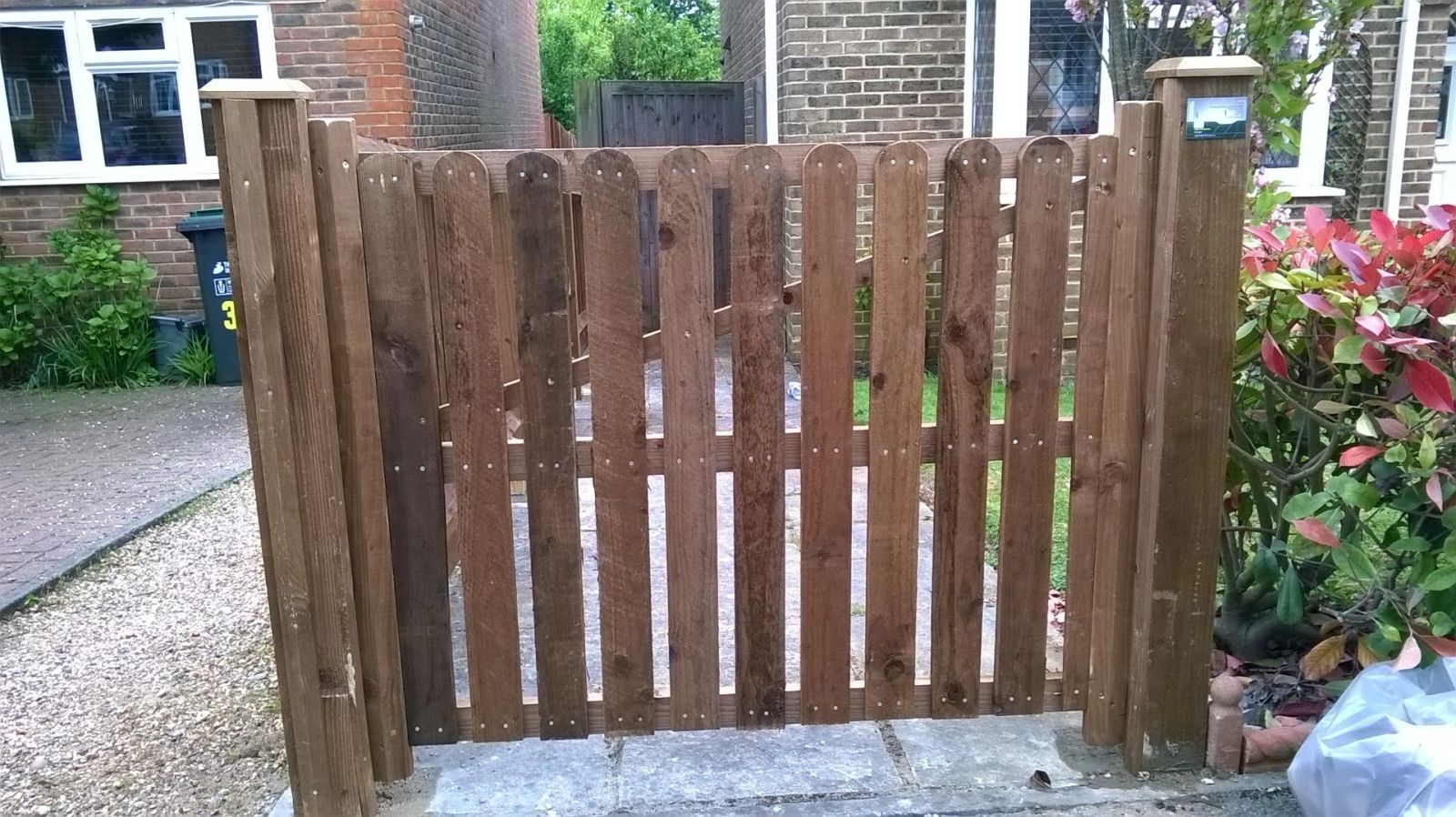
double driveway gates installed by Capital Fencing in Haringey (N4)
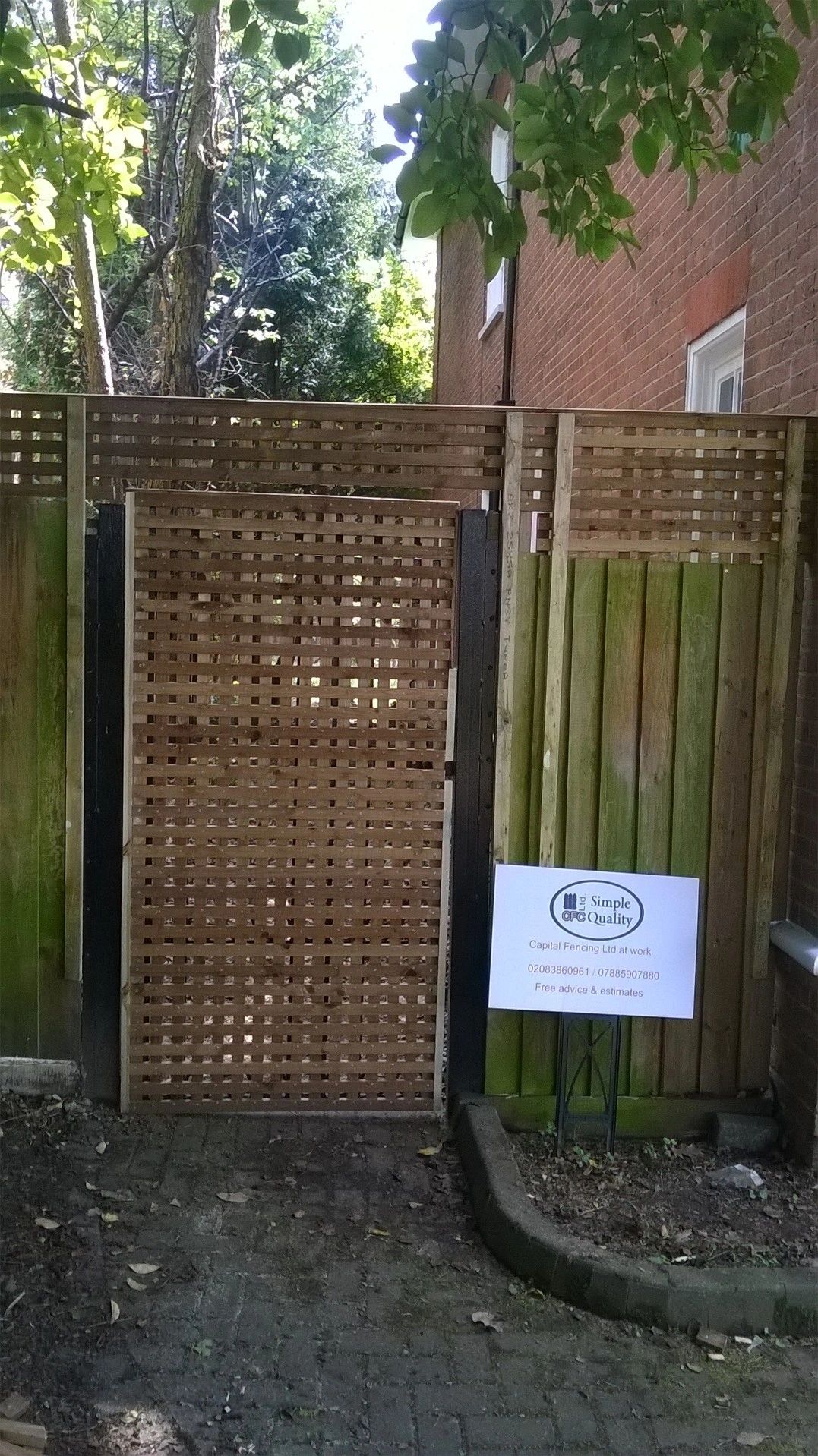
hardwood side gate installed by Capital Fencing in Haringey (N4)
metal entrance gate installed by Capital Fencing in Haringey (N4)
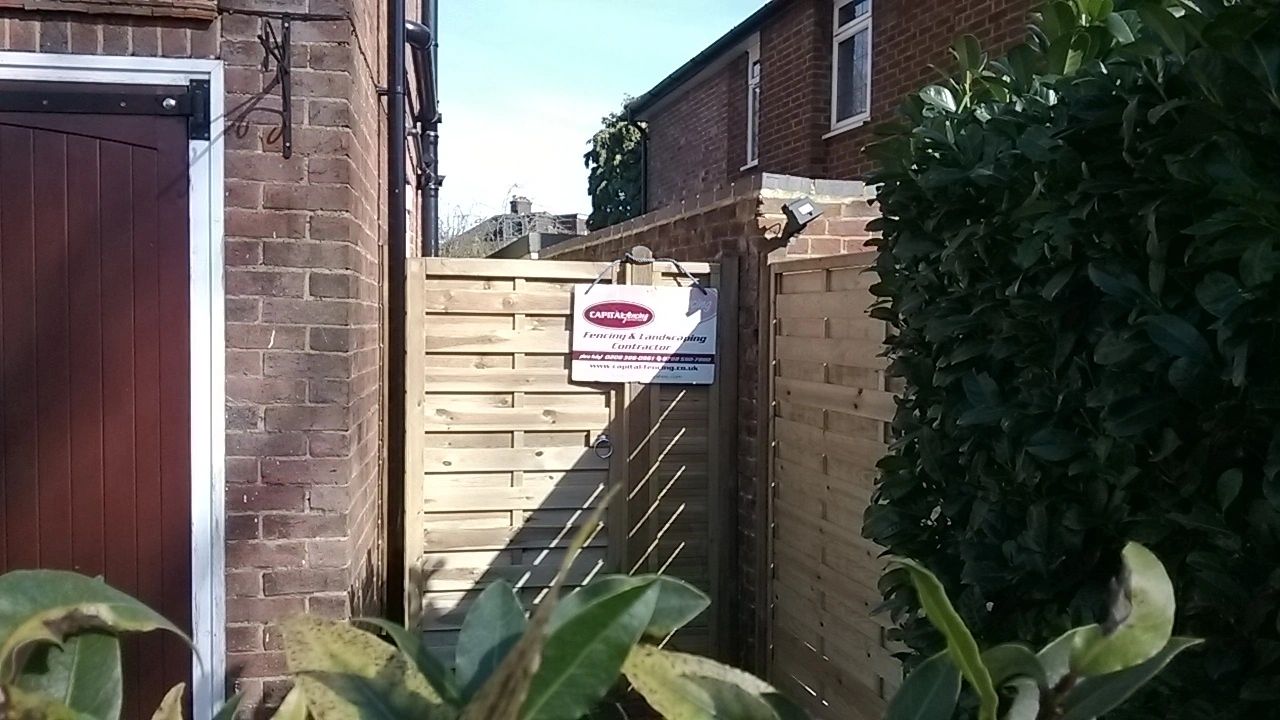
closeboard side gate installed by Capital Fencing in Haringey (N4)
hit-and-miss gate installed by Capital Fencing in Haringey (N4)

Nearby areas we cover from Haringey

Within practical driving distance of Haringey via A105 Green Lanes / A503 Seven Sisters Road and A406 North Circular (5 min) / M25 J25 (20 min).

FAQ — gates in Haringey

Do you need planning permission for gates in Haringey?+

Standard rear-garden gates under 2m doesn't normally need permission, but front-garden work near a highway is the most common exception. We'll flag it on the quote. Ferme Park Road, Alexandra Park Road Finsbury Park (north edge) Haringey covers a wide area including the Harringay Ladder, a distinctive grid of Victorian terraced streets between Green Lanes and Wightman Road.

Can you handle the soil and ground conditions in Haringey?+

Yes — long thin Victorian rear gardens with London clay and mature street trees. We concrete-set every post as standard, and where trees or services are in the way we work around them properly.

What materials do you recommend for gates in Haringey?+

For most Haringey jobs we lean toward softwood or iroko hardwood, but the brief decides — your garden style, long thin Victorian rear gardens with London clay and mature street trees, and how long you want it to last.

Will you match the existing gates on the street in Haringey?+

On Victorian terraces (Harringay Ladder streets in Haringey we usually try to match the existing line — height, style and finish — unless the brief is a deliberate change.

Do you work with landlords and letting agents around Haringey?+

Yes — we have a number of regular landlord clients across Greater London, and we can invoice through agents and turn jobs around between tenancies.

Haringey gates — specced around ladder-street back-to-back gardens mean every fence run has two owners and three neighbours to keep informed

Free site visit, written quote, and a crew that installs what it quotes. Talk to us before you commit elsewhere. Green Lanes, West Green Road Harringay Ladder Alexandra Palace sits on high ground overlooking much of the borough, and the slope down from the Palace affects garden gradients on the surrounding streets.

Related pages

In short — Wooden & Metal Gates in Haringey

Victorian terraces (Harringay Ladder in Haringey usually means long thin Victorian rear gardens with London clay and mature street trees — and a gates spec that has to track those levels. That's what we spec for across N4/N8/N15/N17/N22. Wightman Road, Green Lanes Alexandra Palace Haringey covers a wide area including the Harringay Ladder, a distinctive grid of Victorian terraced streets between Green Lanes and Wightman Road.

Call WhatsAppQuote