
Comparisons
Aluminium Gates: Pros, Cons and Where They Fit Best
Last updated
The short answer
Aluminium gates are light, do not rust and come powder coated, so they need very little upkeep and are easy to open or automate. The trade offs are that they dent more easily than steel, usually cost more than a simple timber gate, and often come in set designs. They suit modern homes wanting a low maintenance gate.
At a glance
- Strengths
- Light, no rust, factory colour finish
- Weaknesses
- Dents more easily than steel, set designs
- Upkeep
- An occasional wash
- Alternatives
- Steel for strength, timber for warmth
Aluminium gates are light, do not rust and keep their colour, which is why they are popular. They are not the answer to every opening, though.
Aluminium has become a common choice for driveway and pedestrian gates, often in slatted designs in grey or black. Owners like the clean look and the promise of little upkeep. Before choosing one, it helps to know where aluminium is strongest and where steel or timber may serve you better.
We supply and fit aluminium driveway and pedestrian gates across London and Hertfordshire, alongside steel, timber and composite gates. This guide sets out the honest trade offs.
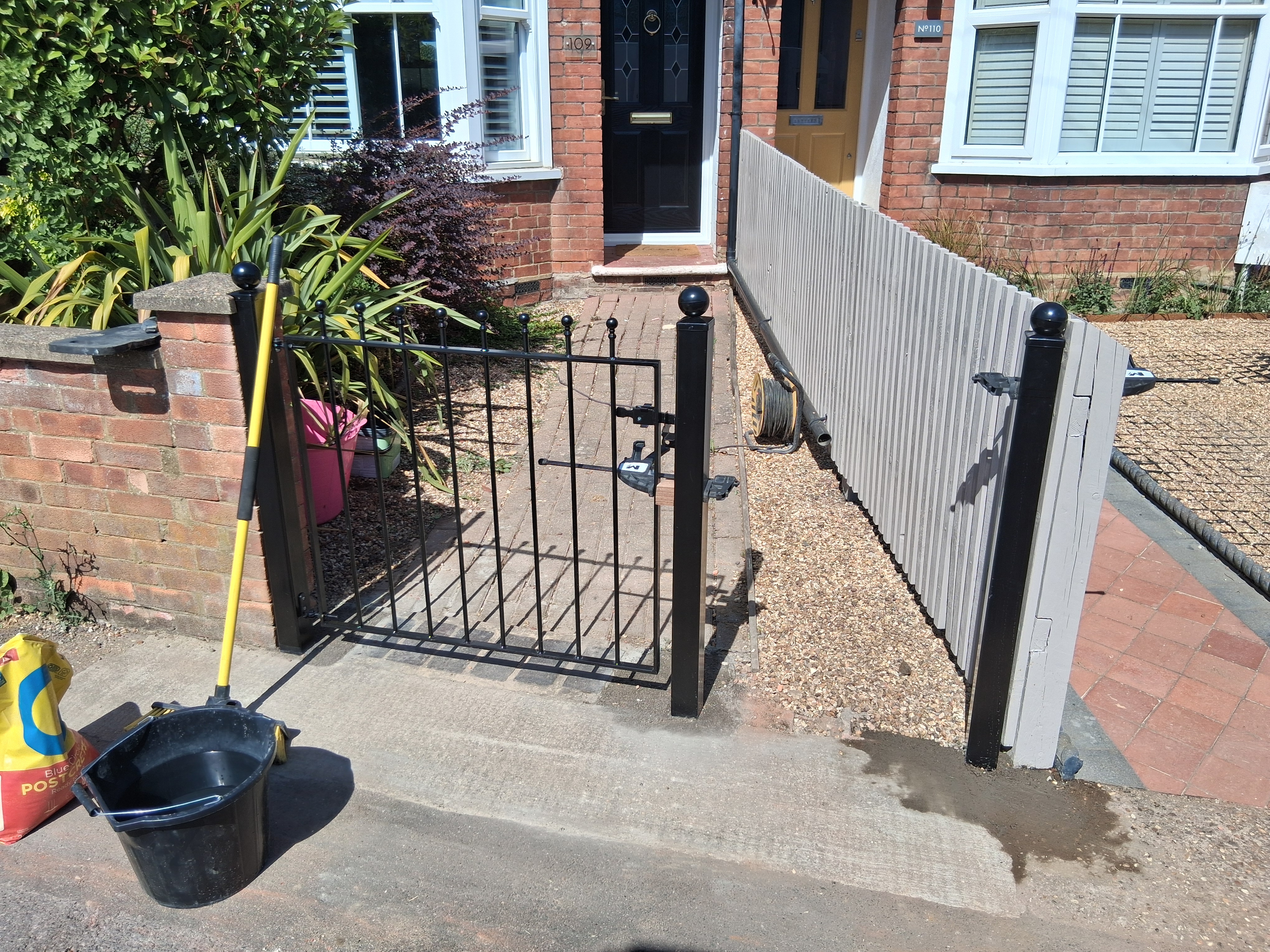
What aluminium does well
The main advantage is weight. An aluminium leaf is far lighter than a steel or solid hardwood leaf of the same size, which is easier on hinges and posts, easier to open by hand and easier for automation to move. Aluminium does not rust, so there is no flaking paint and orange streaking at the joints years later.
Most aluminium gates are powder coated in the factory, which gives an even, durable colour. A wash now and then is usually all the finish needs.
- Light leaves that are kind to hinges and posts
- No rust, even near the bottom where water sits
- Factory powder coat in a range of colours
- Slim slatted designs that suit modern houses
The drawbacks
Aluminium is softer than steel, so a hard knock from a car or a heavy object can dent a slat or rail where a steel gate would shrug it off. Aluminium gates also usually cost more than a simple timber gate of the same size. Because many are made to set designs, the choice of patterns can be narrower than for a gate built from scratch in timber or steel.
Damage to a powder coat can be touched up, but a perfect match on a scratched factory finish is not always possible.
Aluminium against steel
Steel is the stronger choice for security, heavy use and very wide openings, and it can be fabricated in almost any design, from plain bars to decorative scrollwork. It is also heavier, so posts, hinges and any automation must be sized for it, and it needs protection against rust. Aluminium wins where low weight and minimal upkeep matter more than brute strength.
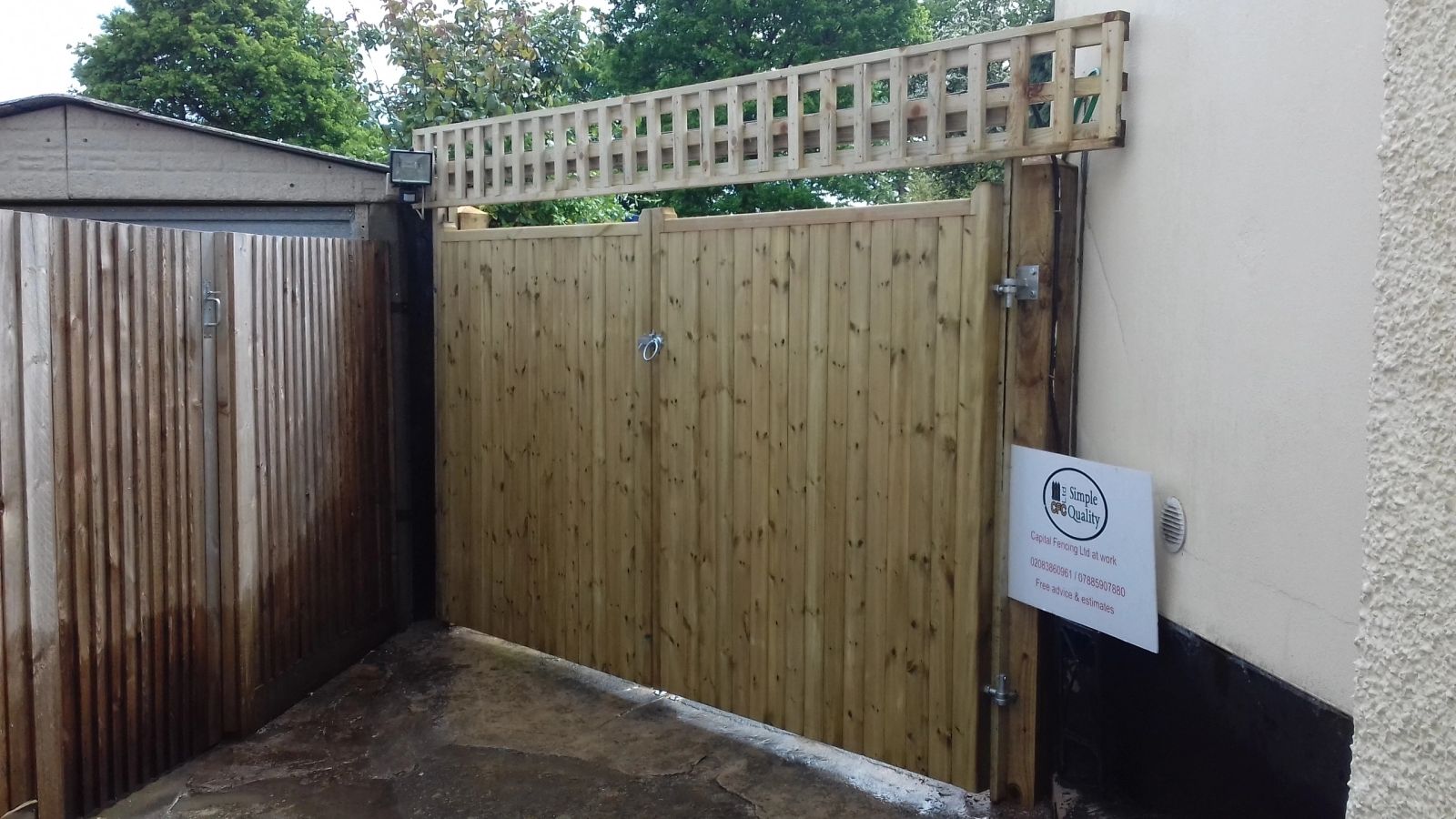
Aluminium against timber
Timber gives warmth and can be made to match a fence exactly, and hardwoods such as iroko make very handsome gates. Timber needs oiling or painting and will move a little with the seasons. Aluminium will not swell, shrink or need recoating, but it will never look like wood up close, even in wood effect finishes.
Posts and fitting still matter
A light gate still needs proper posts. We set gate posts for the leaf and the opening, check the gate hangs level and closes onto its latch cleanly, and make sure the leaves clear the ground across the full swing. Where a gate may be automated later, we allow for that when choosing posts and hinges.
Security and privacy
Slatted aluminium designs can be made with tight gaps for privacy or wider spacing for a more open look. For security, the gate is only as strong as its lock, its hinges and the posts it hangs on, so those deserve as much thought as the material. A quality lock and keep fitted to a well set post does more than a heavier gate hung badly.
Pedestrian gates in the same range let you match a side or path gate to the main driveway gate, which keeps the front of the house consistent.
Is aluminium right for you?
If you want a light, modern gate that needs almost no upkeep, aluminium is hard to beat. If you need maximum strength, an unusual design or a match to timber fencing, steel or wood may be better. Send photos of the opening and its width, and we will send a written estimate for the options that suit.
Frequently asked
Do aluminium gates rust?
No. Aluminium does not rust in the way steel does, which is one of its main advantages for gates.
Are aluminium gates strong enough for a driveway?
For most homes, yes. They are not as hard to dent as steel, so steel may suit openings that take heavy knocks or need higher security.
Can aluminium gates be automated?
Yes, and their low weight suits automation. We hang the gate ready and a specialist fits the motors and controls.
Do aluminium gates need painting?
No. Most are powder coated in the factory and only need an occasional wash.
Can you make an aluminium side gate to match my driveway gate?
Matching pedestrian gates are available in many aluminium designs, so a side gate and driveway gate can be paired.
How do I clean an aluminium gate?
Wash it with warm soapy water and a soft cloth or brush, then rinse. Avoid abrasive pads and strong solvents, which can dull or scratch the powder coat. Check hinges and the latch at the same time and tighten anything that has worked loose.
Want this priced properly for your garden?
Photos first, then a written estimate across London and Hertfordshire, a written specification, and a fixed price. No obligation.