
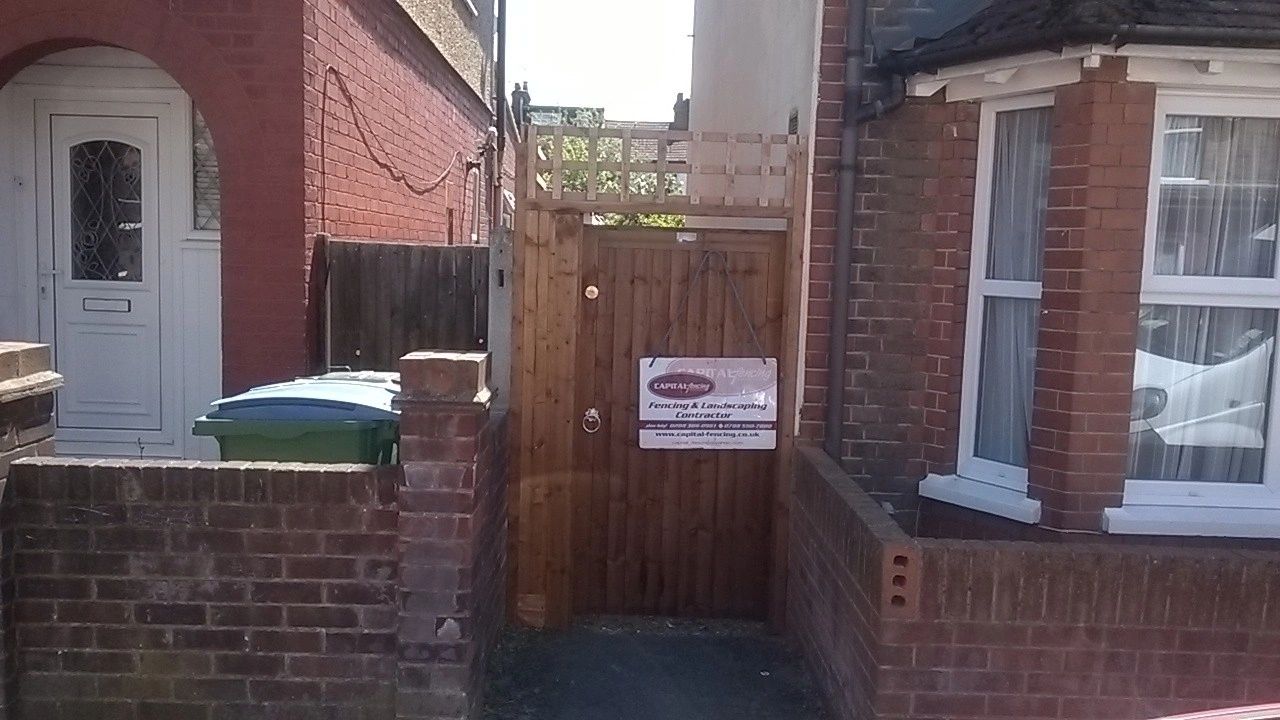
The side gate is the most used and most neglected gate on most houses. Bins go through it, bikes go through it, and it is the easiest way into the back garden for anyone who should not be there. A good one is solid, closes on its own weight without slamming, and locks from the garden side.
This page is about timber side gates. For steel and wrought iron style side gates, see our metal side gates page.
Matched to the fence
A side gate usually sits between the house wall and a fence run. We build it to match: closeboard boarding for a closeboard fence, a framed panel style for panel fencing, or slatted for a hit and miss run. Height is matched to the fence so the line stays level.
Built to stay square
Side gates are framed and braced, with the brace running up towards the hinge side so the leaf does not drop. Boards are fixed to the frame rather than just to each other. On wider side returns we may suggest a pair of gates rather than one heavy leaf.
Softwood or hardwood
Pressure treated softwood is good value and suits most side gates. Hardwood such as iroko is denser, more stable and lasts longer, and is worth considering where the gate faces the street. The difference in cost and life is set out in our wooden gates buyers guide.
Security hardware
- Heavy hinges, fixed with coach screws or bolts rather than short screws
- Drop bolts or tower bolts on the garden side
- Latches that can be padlocked, or a lock that works from both sides
- A stop so the gate closes to the same place
Posts and fixing
Where the gate hangs on the house wall, a timber post is fixed to the brickwork. On the fence side, the gate post is set in concrete and sized heavier than the fence posts, because it carries the whole leaf. Most sagging side gates we see have been hung on an ordinary fence post.