
How it's done
Can You Put a Shed on Decking?
Last updated
The short answer
A shed can stand on decking only when the deck and its ground supports are designed for the complete shed and contents load. Boards alone are not a foundation. The frame, footings, fixings, drainage and ventilation all need assessment, and an existing deck may require strengthening or a separate base.
At a glance
- Main question
- Can the frame carry the complete load?
- Not a foundation
- Decking boards by themselves
- Existing deck
- Inspect supports before adding a shed
- Moisture
- Preserve drainage and ventilation below
Only if the deck and its supports are designed for the shed's complete load. Ordinary decking boards are not a shed foundation, and trapped damp beneath the shed needs addressing.
Using an existing deck as the base for a shed sounds efficient: the area is already level and clear of the lawn. But a shed concentrates the weight of its floor, walls, roof, contents and sometimes people onto a relatively small footprint.
A deck built only as a walking surface may not have been designed for that. This guide explains why the frame and ground supports matter more than the visible boards, and what needs checking before a shed is placed there.
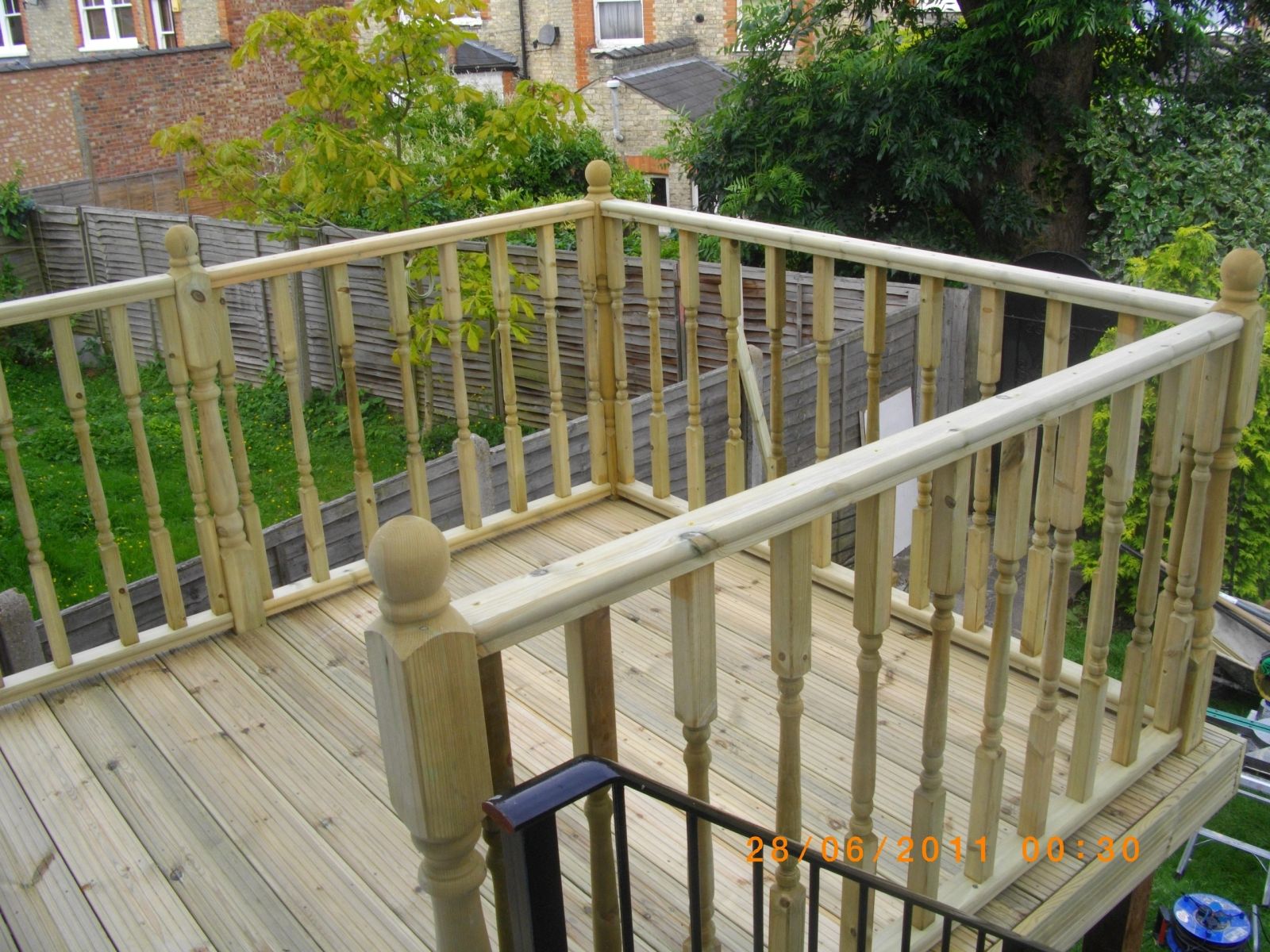
Start with the complete load
The shed itself is only the beginning. Tools, machinery, stored materials and anything mounted to its walls all add weight, and snow or maintenance access may introduce further demands. Different parts of the structure can transfer that weight through a few feet or bearers rather than evenly across every board.
Those loads need a deliberate route through the deck frame to suitable ground supports. Without that route, the surface may deflect or the frame below may be overstressed.
Decking boards are not the foundation
The boards are the wearing surface. They should not be expected to carry a shed between widely spaced joists or to compensate for a frame with inadequate supports. A shed base normally needs its own properly planned bearing arrangement.
Standing the shed on loose blocks laid randomly over the boards does not solve the issue. It merely creates more concentrated pressure points and can make the structure rock.
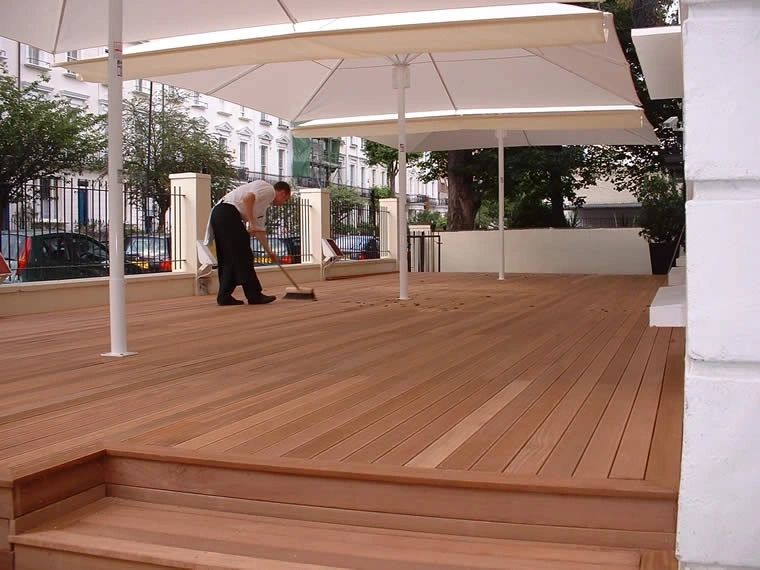
Check the existing frame and footings
An existing deck needs its joists, bearers, posts and bases inspected, including any signs of rot, movement or previous alterations. The original design and the position of the proposed shed both matter.
If the frame was not built for this purpose, strengthening may be possible in some cases, while a separate foundation may be more sensible in others. That decision should follow an inspection rather than assuming all raised decks are equivalent.
A purpose built deck can be designed for it
When the shed is included from the outset, supports and framing can be arranged around its footprint and intended contents. The walking area and shed base can then work as one coordinated structure rather than two objects competing for the same boards.
The final levels, door approach and any steps should be planned at the same time. A shed added after the boards are finished may create an awkward threshold or block ventilation that the original design relied upon.
Moisture beneath and around the shed
A shed roof sheds water onto or beside the deck unless suitable detailing directs it away. The floor of the shed can also restrict airflow over the boards beneath it, creating an area that dries slowly after rain.
Good ventilation below the deck, clear drainage and suitable protection for the shed floor all matter. Trapping wet leaves between the two structures creates an inspection blind spot where timber can deteriorate unnoticed.
Fixing and movement between structures
The shed needs to remain stable in the conditions it will face, but fixing it casually through decking boards is not the same as anchoring it into a designed base. Any connection should relate to the supporting structure and the shed manufacturer's guidance.
Timber deck components and the shed will also respond to moisture. Joints and clearances should avoid one structure being forced to absorb every movement of the other.
Access for future inspection and repair
Once a shed is in place, parts of the deck may become difficult to reach. Think about how boards, frame supports and nearby fences will be inspected later. A design that permanently hides every vulnerable connection makes routine maintenance much harder.
- Keep access to drain covers and existing services
- Allow water to escape from the shed perimeter
- Avoid sealing ventilation openings below the deck
- Leave practical routes for future repairs
- Do not attach adjacent fencing to the shed for support
What to send before deciding
Provide the shed's dimensions and construction details if known, along with photographs of the deck, its supports and the proposed position. Include what you intend to store inside, because a light garden store and a heavily loaded workshop are different briefs.
For a new combined project, rough sizes and photos are enough to begin a written estimate. For an existing deck, a visit is needed to assess whether the frame can be adapted or whether the shed requires a separate base.
Frequently asked
Can a small shed go straight onto decking boards?
Not on the boards alone. The complete load needs a designed route through the frame to suitable supports, regardless of how light the empty shed appears.
Can an existing deck be strengthened for a shed?
Sometimes, but its joists, supports, condition and the shed footprint must be inspected first. A separate foundation may be the better solution.
Does a shed on decking need ventilation?
Yes. Both the deck and shed need moisture management. Blocking airflow or allowing water to collect between them can accelerate deterioration in timber components.
Can I bolt the shed through the deck boards?
Boards alone are not a structural anchor. Any fixing needs to connect to an appropriately designed support and suit the shed and deck construction.
Shed and deck in the same plan?
Send both sizes, what you will store and photos of the existing supports if there are any. We will assess the load path before quoting.