
How it's done
Child Safe Garden Gates: Latches, Gaps and Hinges
Last updated
The short answer
A child friendly garden gate should close and latch reliably, have an appropriate catch position, and avoid unsafe gaps, footholds and closing hazards. Check the whole boundary and nearby objects too. Self closing hardware supports safe habits but never replaces adult supervision or regular inspection.
At a glance
- Closing
- Reliable closer paired with a self latching catch
- Check around
- Gaps, footholds and nearby climbable objects
- Hardware
- Controlled closing without slamming
- Whole system
- Gate, posts, fence and daily supervision
A child friendly gate closes reliably, cannot be opened too easily, and avoids unsafe gaps and footholds. The fence, posts and daily habits are part of the same system.
A garden gate is often the weakest point in an otherwise secure boundary. Children learn to operate catches, gates get left open for deliveries, and a leaf that drags on the ground may never quite reach its latch.
No single fitting makes a gate universally child safe. The layout, users and maintenance all matter. This guide sets out practical features to discuss when installing or improving a gate, without treating it as a substitute for supervision.
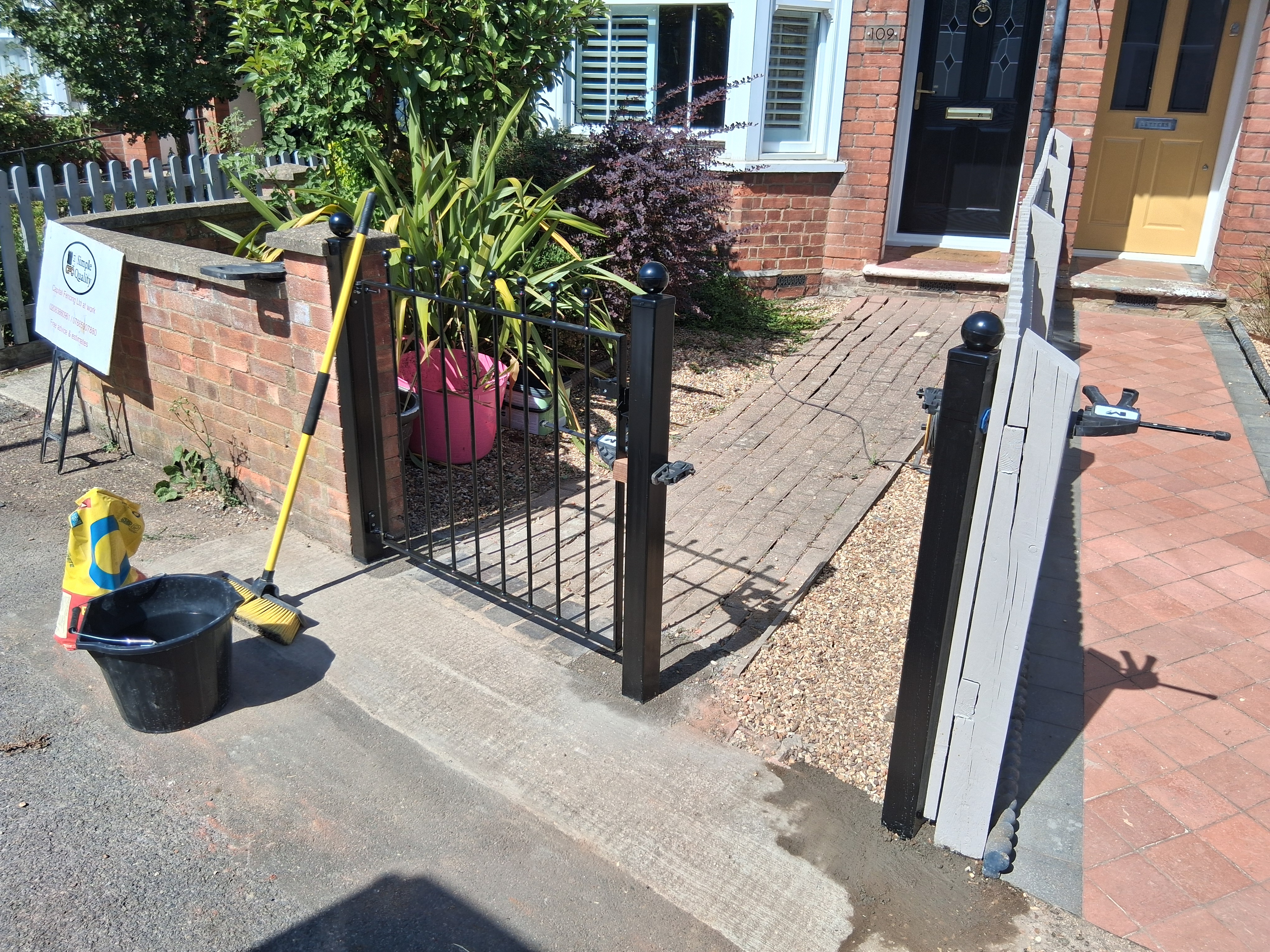
Begin with the route you want to control
A gate onto a road, a shared alley or a driveway presents a different risk from one between two parts of a private garden. Consider where a child could go once the leaf opens and whether a vehicle, pond, steps or another hazard lies beyond it.
That context determines how important self closing, locking and visibility are. It also helps decide whether the gate should be the only barrier or one part of a wider arrangement.
Self closing and self latching
A closer brings the leaf back towards the frame, while a self latching catch engages when it arrives. Both are needed if the aim is for the gate to shut behind someone without relying on memory.
The gate must move freely first. Swollen timber, dropped hinges or a leaning post can stop the leaf short of its catch. Increasing closer force is not the correct remedy for those faults.
Latch position and ease of opening
A catch mounted out of a small child's reach can reduce casual opening, but adults and older children still need to use it conveniently. Think about which side requires access and whether visitors or carers will understand how it works.
Locks add another decision. A gate used as an exit should not create a trap or require an awkward sequence in an emergency. The right arrangement depends on the property and everyone who uses it.
Gaps around and beneath the leaf
Openings at the sides and bottom should be considered in relation to the children using the garden. Large spaces may allow a child to squeeze through or reach towards the latch from outside. Ground levels can change the gap as the gate swings.
The adjacent fence and posts need the same attention. There is little value in a carefully detailed gate beside an open bay, loose panel or gap at the end of the run.
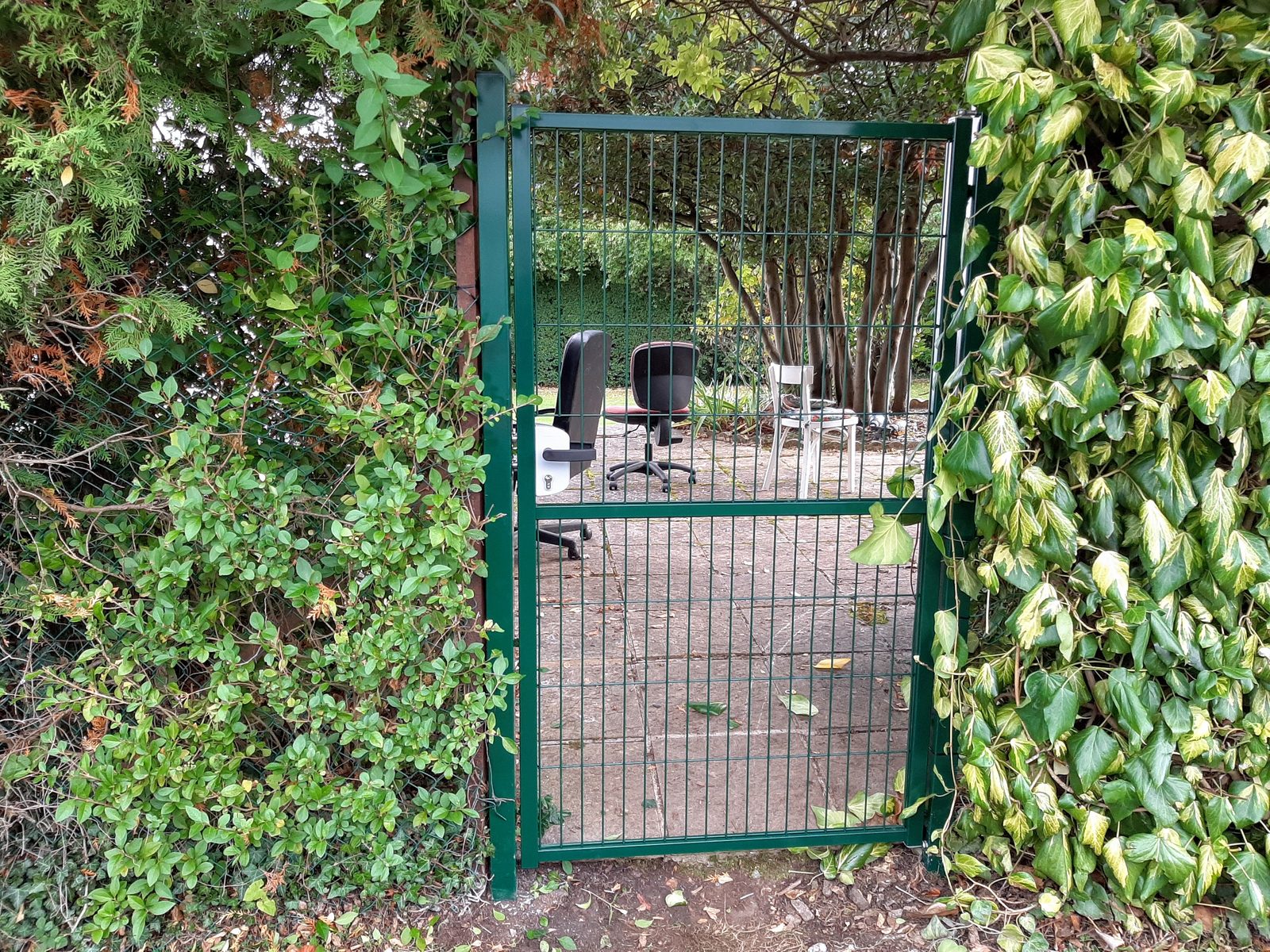
Footholds and climbable details
Horizontal rails, decorative braces, nearby storage and low walls can all act as steps. A gate that looks difficult to climb from one side may offer a convenient ladder from the other.
Look at the area as a child could use it, including objects that are moved around the garden. Bins, planters and outdoor toys placed beside the gate can change the risk even when the gate itself has not changed.
Finger traps and closing speed
Hinge and closing edges deserve attention, particularly on heavier leaves. A strong spring can slam a gate shut, creating a different hazard from the one it was meant to solve. A suitable closer can control the final part of the movement.
Stops, latch plates and fixings should not leave sharp or projecting edges in normal handling areas. Regular checks matter because worn hardware can alter both the closing speed and the gaps.
Sight lines and everyday use
Open infill can let an adult see a child approaching the gate, while a solid gate provides privacy but removes that view. Neither is automatically right. The position of the gate and the way the garden is supervised should inform the choice.
- Check that the gate latches every time
- Keep climbable objects away from both faces
- Inspect hinges, closers and posts for movement
- Teach visitors how the catch works
- Treat the gate as support for supervision, not a replacement
Improving an existing gate
Start by recording whether it closes squarely and whether the latch engages without being lifted. Photographs of both faces, the hinges, catch and gaps help identify whether adjustment, new hardware or a different leaf is needed.
We can then suggest work that suits the gate and its posts. If the whole boundary has weak points, those should be included in the plan rather than concentrating only on the catch that is easiest to see.
Gate not latching every time?
Show us both faces, the catch and the hinge side. We will check the gate and its posts before suggesting closer or latch improvements.
Frequently asked
Should a garden gate for children close itself?
Self closing with a reliable self latching catch is often useful, provided the gate moves freely and closes at a controlled speed. It still needs regular checking.
Is a lock better than a high latch?
They do different jobs and the right choice depends on the users and exit route. Adults must be able to operate the gate safely, including in an emergency.
Can my existing gate be made self closing?
Often, if the leaf and posts are sound and correctly aligned. Any dragging, sagging or latch misalignment should be corrected before fitting the closer.
Are solid gates safer than open gates?
Not automatically. Solid gates provide privacy, while open infill preserves sight lines. Gaps, footholds, closing behaviour and the surroundings all need assessment.