
Comparisons
Dog Proof Garden Fencing: What Actually Keeps Dogs In
Last updated
The short answer
A dog proof fence stops dogs going over, under, through and out of the gate. In practice that means enough height for your dog, gravel boards closing the gap at the base, no loose boards or wide gaps, a smooth face on the dog's side, and a self closing gate that latches every time.
Official guidance: Planning Portal: fences, gates and garden walls
At a glance
- Over
- Enough height and no climbable rails
- Under
- Gravel boards, set down if the dog digs
- Through
- No loose boards or wide gaps
- Gate
- Self closing, latches, no gap below
Dogs get out in four ways: over, under, through and via the gate. A dog proof fence deals with all four, not just the height.
When a dog escapes, the first thought is usually that the fence is too low. Often it is not. The dog has found a gap under a panel, pushed through a loose board, climbed a rail, or simply waited for the side gate to swing open.
This guide goes through each escape route and the fence details that close it, so you can see which matter for your dog and your garden.
Height: enough, and within the rules
The height a dog needs depends on its size and how much it wants to jump. Most garden boundaries can go up to the general two metre limit without planning permission, lower next to a road, so there is usually room for a fence tall enough for even an athletic dog. Smooth faces with no horizontal rails on the dog's side make it far harder to scramble up.
Closing the gap at the bottom
A gap of a few centimetres under a panel is an open door to a small dog or a determined puppy. Gravel boards fitted along the base close that gap and keep the timber off the soil at the same time. On sloping ground the boards need stepping or cutting to follow the levels so no triangle of space is left at each post.
Stopping diggers
Some dogs dig rather than jump. A gravel board set slightly into the ground helps, and for persistent diggers a strip of buried mesh or a run of paving along the inside of the fence line takes away the soft soil they rely on.
- Gravel boards set down into the soil
- Mesh buried along the inside of the run
- Paving or edging along favourite digging spots
Gaps, boards and footholds
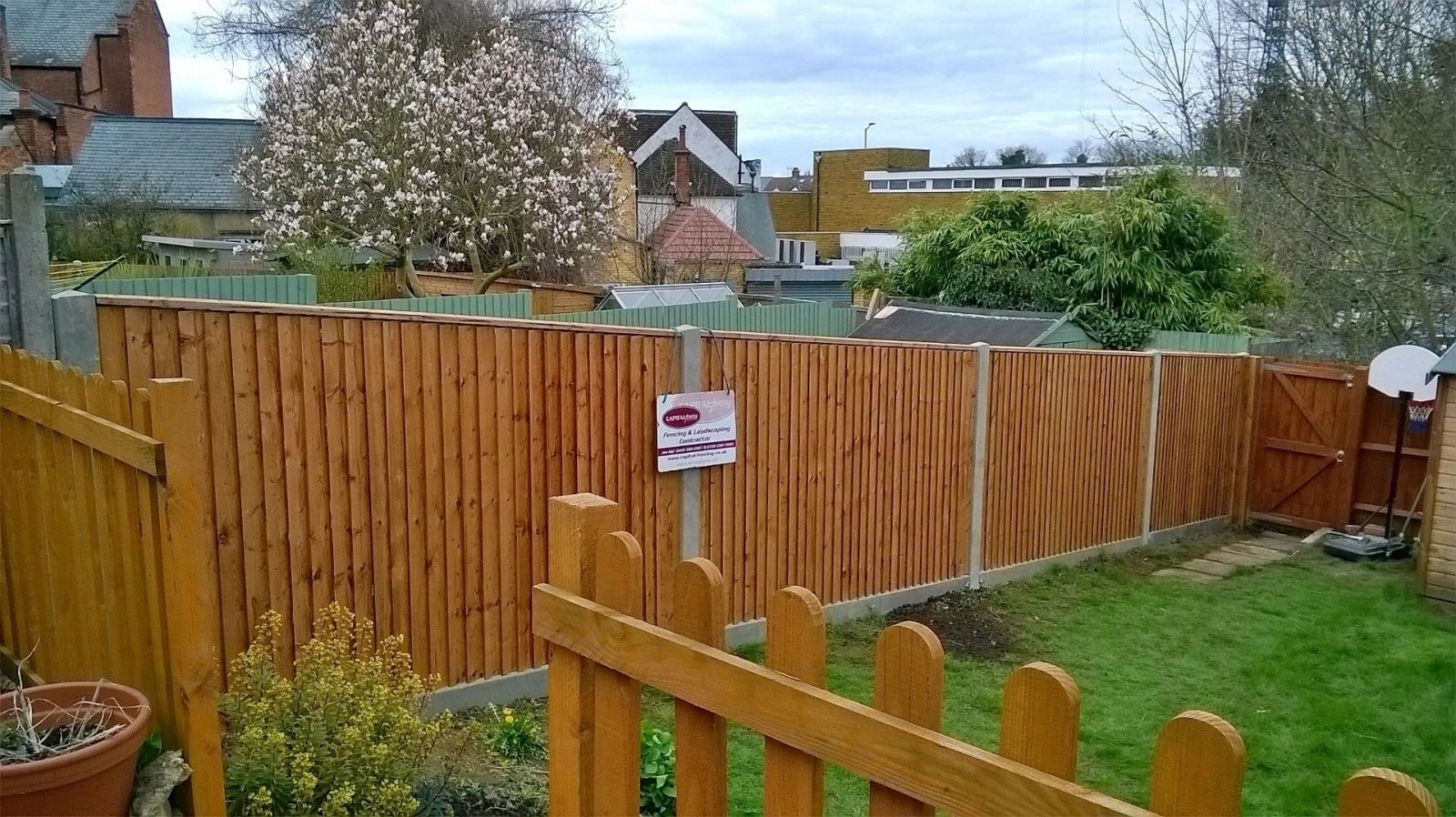
Hit and miss and slatted fences look good but the spaces must be narrow enough that a nose or a paw cannot lever a board. Closeboard fencing has no gaps and the rails sit on one face, so we put the smooth side towards the dog where the layout allows. Loose or rotten boards are a common weak spot on older fences.
Gates and latches
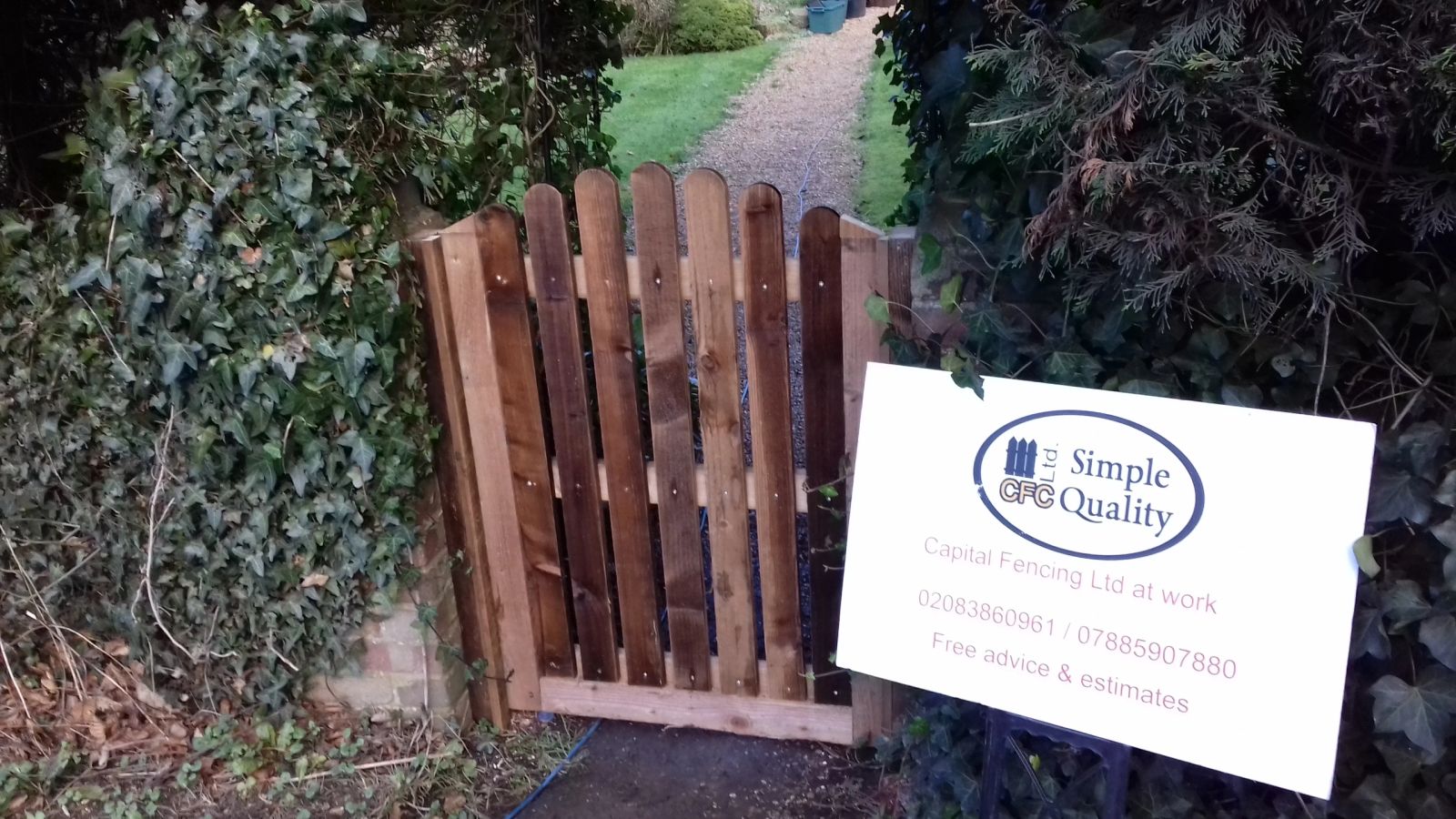
A side gate is the most common escape route. It needs to close on its own, latch every time and leave no gap underneath. A self closing hinge or spring, a latch set out of the dog's reach and a gate that has not dropped on its hinges all matter more than the gate's height. Our side gates page shows the kinds we make.
Inside the garden as well as the boundary
Escape routes are not only on the boundary. Bins, planters, log stores and garden furniture pushed against the fence give a dog a step up, so keep them a little way in from the line. A raised bed or a shed roof next to the fence can undo the effect of a taller panel entirely.
It also helps to check the fence after storms and through the seasons. A board that springs loose in wet weather or a gravel board that rots at one end can become a new exit before anyone notices.
Front gardens and dogs
Front gardens bring their own issues. The general height limit next to a road or its footpath is lower, so a tall fence is often not an option there. Railings with closely spaced bars, a solid low fence with a secure gate, or keeping the dog to the rear garden are the usual answers. A gate onto the street needs particular care, because that is where an escape is most dangerous.
Neighbours and shared boundaries
If the fence that needs improving belongs to a neighbour, talk to them before changing it. Many are happy to share the cost of a sounder boundary, especially if their own pets or children benefit. Where they are not, a second, independent fence just inside your own line is an option, though it takes a little garden space.
Choosing a fence type for dogs
Closeboard with gravel boards is the usual choice for a secure, solid boundary. Panel fencing can work if the panels are sound and well fixed. Metal railings suit front gardens but the bar spacing has to suit the dog. Tell us about your dog when you send photos and measurements, and we will suggest a specification for the written estimate.
Frequently asked
What is the best fence for dogs?
For most gardens a closeboard fence with gravel boards along the base, a smooth face on the dog's side and a self closing gate. The right height depends on the dog.
How do I stop my dog digging under the fence?
Set gravel boards into the ground and add buried mesh or paving along the inside of the fence where the dog digs.
Can I make my existing fence dog proof?
Often, by adding or replacing gravel boards, refixing loose boards and sorting the gate. If posts are rotten, those need dealing with first.
Do I need permission for a taller fence for my dog?
Usually not up to the general height limits. Above them, or next to a road, check the Planning Portal guidance and your council.
Tell us how your dog gets out
Over, under, through or the gate: describe it with a few photos and we will suggest the fence details that close that route.